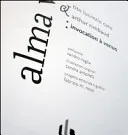
Alma Venus-Invocation à Venus
 74
74

Alma Venus-Invocation à Venus
The 2014 edition of *Alma Venus* offers a focused lens on Lucretius's complex *De Rerum Natura*, specifically extracting and re-emphasizing the poem's treatment of Venus. This approach, while potentially streamlining the original's vast scope, highlights Lucretius's innovative use of poetic form to convey rigorous Epicurean philosophy. The interpretation of Venus as a primordial generative force, rather than a purely anthropomorphic deity, is a significant aspect. However, the isolation of these passages risks divorcing them from the broader anti-teleological arguments of the original work. A notable strength is the clarity with which the poem's atomistic physics is presented, even within its veneration of Venus. Conversely, the edition might underplay Lucretius's direct polemics against religious traditions. Ultimately, *Alma Venus* serves as a valuable, albeit specialized, entry point into Lucretius's materialist cosmology.
📝 Description
74
Alma Venus, a 2014 edition, focuses on Lucretius's understanding of Venus as a cosmic force.
Alma Venus, meaning 'Soul Venus' or 'Invocation to Venus,' is a philosophical poem attributed to Tito Lucrezio Caro. It is not a devotional text but a dense work that engages with Epicurean physics and ethics. The poem seeks to explain the universe and humanity's place within it, viewing Venus as a symbol of generative and life-affirming principles. This edition is intended for scholars of classical philosophy and Latin literature, as well as practitioners of esoteric traditions interested in pre-Christian Western mysticism. Readers should have a strong background in philosophical inquiry and be ready for an intellectually demanding engagement with ancient cosmology and ethics.
The original work, Lucretius's *De Rerum Natura*, dates to the 1st century BCE. This edition appears to be a focused interpretation or extraction concerning the goddess Venus. Lucretius's original poem was a radical Epicurean treatise that advocated atomism and a mechanistic view of the cosmos. It challenged prevailing religious and philosophical doctrines of its time. The survival of the poem offers a rare glimpse into a materialist worldview in antiquity.
This text is situated within the tradition of Neoplatonism and later Renaissance Hermeticism, which often reinterpreted classical deities and philosophies through a mystical lens. While Lucretius's original *De Rerum Natura* was a materialist work, the focus on Venus as a generative principle can be seen as aligning with esoteric interpretations that find divine or cosmic forces within natural phenomena. This approach bridges classical philosophy with later magical and mystical systems that sought to understand the underlying energies of existence, particularly those related to creation and life.
💡 Why Read This Book?
• Understand Venus as a primal force: Learn how Lucretius reinterprets the goddess Venus not just as a deity of love, but as the fundamental principle of generation and propagation underpinning the entire cosmos, as detailed in the poem's early sections. • Grasp Epicurean physics poetically: Discover the mechanics of atomism and the void as explained through Lucretius's verse, demonstrating how a materialist worldview was articulated in ancient Rome. • Explore ancient materialist ethics: Gain insight into the pursuit of *ataraxia* (tranquility) by understanding the nature of things and overcoming the fear of death and divine retribution, concepts central to Lucretius's philosophy.
⭐ Reader Reviews
Honest opinions from readers who have explored this book.
❓ Frequently Asked Questions
What is the primary philosophical school associated with *Alma Venus*?
The philosophical school most directly associated with *Alma Venus* is Epicureanism. The work, based on Lucretius's *De Rerum Natura*, champions atomism, the absence of divine intervention in human affairs, and the pursuit of pleasure as the highest good.
When was the original work *De Rerum Natura* written?
The original epic poem *De Rerum Natura* by Tito Lucrezio Caro was written in the 1st century BCE, likely between 75 and 50 BCE, during the late Roman Republic.
How does *Alma Venus* interpret the figure of Venus?
*Alma Venus* interprets Venus not solely as a goddess of romantic love, but as a powerful, universal generative force essential for the creation and sustenance of all life, a concept woven throughout the poem's cosmology.
What is *ataraxia* and how does Lucretius relate it to Venus?
*Ataraxia* is a state of profound tranquility and freedom from disturbance. Lucretius connects it to understanding the natural world, including the generative force of Venus, thereby dispelling fears of gods and death.
Is *Alma Venus* a religious text or a philosophical one?
While it uses poetic language and invokes Venus, *Alma Venus* is fundamentally a philosophical text. It employs the figure of Venus to articulate an Epicurean, materialist understanding of the universe, aiming to liberate readers from superstition.
What specific scientific concept does Lucretius explain in relation to Venus?
Lucretius explains the concept of *generation* through the atomic theory, positing that the continuous creation and propagation of life, symbolized by Venus, arises from the random but ordered interactions of atoms.
🔮 Key Themes & Symbolism
Cosmic Generation and Venus
The text reinterprets Venus as the primordial principle of generation, the engine of life's propagation throughout the cosmos. This is not merely about human procreation but the fundamental creative force that organizes atoms into sentient beings and natural phenomena. It highlights how Lucretius integrates this vitalistic concept into his materialist framework, presenting Venus as the active principle that ensures the continuation of the universe, as described in the poem's early passages.
Epicurean Atomism in Verse
Alma Venus showcases Lucretius's mastery in rendering the complex atomistic physics of Epicurus into elegant Latin poetry. It details the universe's construction from indivisible atoms moving through the void, the concept of the 'swerve' (*clinamen*) allowing for free will, and the formation of all matter, including souls. This theme emphasizes the poem's role in disseminating a scientific, mechanistic worldview against prevalent spiritualist doctrines.
Liberation from Fear
A core theme is the liberation of humanity from irrational fears, particularly the fear of death and the gods. By explaining natural phenomena through atomic interactions, the text argues against divine retribution and the afterlife. The understanding of Venus as a natural force, rather than an arbitrary deity, contributes to this, fostering a rational approach to life and promoting *ataraxia* or mental tranquility.
The Nature of the Soul
The work explores the Epicurean view of the soul as a material entity, composed of fine atoms dispersed throughout the body. It asserts that the soul perishes with the body, thereby refuting notions of immortality and divine judgment. This perspective is crucial for achieving *ataraxia*, as it removes the anxiety associated with eternal punishment or continued existence after death, grounding human experience in the physical realm.
💬 Memorable Quotes
Direct passages from the work, attributed to the author.
“Fear of death is the greatest obstacle to a tranquil life.”
— This interpretation highlights Lucretius's core Epicurean tenet: that understanding the material nature of existence and the mortality of the soul is key to achieving *ataraxia* and living a life free from superstitious dread.
“The universe is composed of atoms and void, governed by natural laws.”
— This statement captures the foundational principle of Epicurean physics as presented by Lucretius, asserting a mechanistic, materialist view of reality that excludes supernatural intervention or teleological design.
“Nature operates without the need for divine management.”
— This interpretation emphasizes Lucretius's radical departure from traditional religious thought, arguing that natural phenomena, including the generative force of Venus, arise from the inherent properties of atoms and the void, not from the will of gods.
💡 Key Ideas
Editorial paraphrase of the work's core concepts — not direct quotes.
The generative power of Venus is the force that makes all things come into being.
This paraphrased concept captures Lucretius's elevation of Venus beyond a mere love goddess to the fundamental principle of cosmic creation and propagation, essential for the existence of all life within his atomistic universe.
Pleasure, understood as freedom from pain and disturbance, is the highest good.
This paraphrased concept articulates the Epicurean ethical goal: the pursuit of *hedone*, not as sensual indulgence, but as a state of balanced well-being and mental peace achieved through wisdom and understanding.
🌙 Esoteric Significance
Tradition
While rooted in classical Latin literature and Epicurean philosophy, *Alma Venus* speaks to esoteric traditions by reinterpreting a classical deity as a potent cosmic principle. It can be seen as a precursor to later Western esoteric thought that sought to synthesize classical philosophy with mystical concepts, albeit from a materialist rather than overtly spiritualist foundation. Its focus on generative forces and the inherent order of nature aligns with Hermetic principles of correspondence and macrocosm/microcosm.
Symbolism
The central symbol is Venus, transformed from a goddess of love into the embodiment of *'vis generandi'*, the inherent power of generation and propagation that drives the universe. Another key motif is the atom, representing the fundamental, indivisible building blocks of reality, whose interactions, governed by natural laws, create all phenomena. The void, conversely, symbolizes the space and potentiality within which these atomic processes unfold.
Modern Relevance
Contemporary thinkers and practitioners in fields ranging from ecological philosophy to certain branches of modern paganism and process theology draw upon Lucretius's concept of a self-generating, immanent cosmic force. The poem's emphasis on understanding natural processes to achieve tranquility and its materialist underpinnings continue to inform discussions on consciousness, ethics, and the relationship between science and spirituality.
👥 Who Should Read This Book
['• Scholars of classical philosophy: Gain a deeper understanding of Epicureanism and its poetic articulation by Lucretius, particularly concerning the materialist interpretation of natural forces.', '• Esoteric practitioners interested in classical roots: Explore how ancient figures and concepts were reinterpreted within a materialist framework, offering a unique perspective on generative principles.', '• Students of comparative literature and religion: Analyze the tension between poetic invocation and philosophical materialism, and how Lucretius used Venus to convey scientific ideas.']
📜 Historical Context
Lucretius's original *De Rerum Natura*, from which *Alma Venus* draws, emerged in the turbulent 1st century BCE Roman Republic. It was a radical departure from prevailing philosophical and religious norms, which were heavily influenced by Stoicism and Platonism. Lucretius championed the atomistic physics and ethics of Epicurus, a Hellenistic school of thought that emphasized pleasure (as absence of pain) and a mechanistic, godless universe. This was a direct challenge to the prevailing belief in divine providence and an ordered cosmos guided by fate or reason. Contemporary thinkers like Cicero, while acknowledging Lucretius's poetic skill, were critical of his Epicurean materialism. The poem's survival, notably through a manuscript rediscovered in the early 15th century by Poggio Bracciolini, allowed it to significantly influence Renaissance humanism and later Enlightenment thinkers, despite its controversial, materialist stance which often led to suspicion and censorship in later centuries.
📔 Journal Prompts
The generative power of Venus as a cosmic principle: How does this concept challenge traditional views of creation?
Reflect on the Epicurean goal of *ataraxia* in the context of understanding mortality.
Analyze Lucretius's use of poetic language to explain atomism.
Consider the implications of a universe governed solely by atoms and void.
How does the reinterpretation of Venus as a generative force influence your perception of nature?
🗂️ Glossary
Alma Venus
Latin for 'Soul Venus' or 'Invoking Venus.' In this context, it refers to a focused exploration of the principle of generation embodied by Venus within Lucretius's philosophy.
Epicureanism
A Hellenistic philosophy founded by Epicurus, advocating atomism, the pursuit of pleasure (as absence of pain and disturbance), and a rational understanding of the natural world.
Ataraxia
A Greek term signifying a state of profound tranquility, serenity, and freedom from mental disturbance and fear. Central to Epicurean ethics.
Atomism
The philosophical theory that all matter is composed of fundamental, indivisible particles called atoms, which move in infinite void. A core concept in Lucretius's work.
Clinamen
Latin for 'swerve.' The concept of a slight, unpredictable deviation in the motion of atoms, which Lucretius introduced to explain free will and the formation of complex structures.
Vis generandi
Latin for 'generative power' or 'force of generation.' Refers to the fundamental principle of creation and propagation that Lucretius associates with Venus.
De Rerum Natura
The original Latin epic poem by Tito Lucrezio Caro, meaning 'On the Nature of Things,' which provides the philosophical and poetic basis for *Alma Venus*.