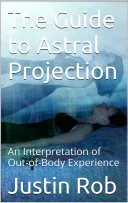
The Guide to Astral Projection
 84
84

The Guide to Astral Projection
Justin Rob’s *The Guide to Astral Projection* offers a clear, if somewhat conventional, primer on separating consciousness from the physical form. The work’s strength lies in its straightforward presentation of techniques, demystifying a topic often shrouded in arcane language. Rob anchors the practice in observable phenomena, distinguishing between passive OBEs and willful astral travel. However, the book occasionally leans into an assumed ontology of the "astral body" and "astral plane" without fully engaging with alternative interpretations or scientific skepticism, which limits its critical depth. The detailed explanation of the "silver cord" concept, while traditional, could benefit from more nuanced discussion regarding its symbolic or literal interpretations. Despite this, Rob provides a functional roadmap for those seeking direct exploration of non-physical states.
📝 Description
84
Justin Rob's 2014 book explains astral projection as a deliberate out-of-body experience.
The Guide to Astral Projection defines astral projection as a conscious separation of the mind, or 'astral body,' from the physical form. It distinguishes this practice from accidental out-of-body events tied to illness or near-death states, framing it instead as a skill attainable through focused intent. The book asserts that the astral plane is a real dimension that this separated consciousness can access, separate from our familiar physical world.
This work is for anyone interested in consciousness, esoteric traditions, and what lies beyond material existence. It speaks to those who have had unusual sensory perceptions, vivid dreams, or feelings of detachment from their bodies and want to consciously understand or repeat these experiences. Readers interested in comparing spiritual beliefs and the history of exploring consciousness will also find value here.
While concepts of subtle bodies and non-physical realms appear in many spiritual traditions, modern discussions of astral projection gained momentum in the late 19th and early 20th centuries, notably through figures associated with Theosophy. Justin Rob's 2014 book builds on this historical foundation, incorporating practical methods drawn from occult literature. It adapts these older teachings for contemporary readers seeking direct experience with non-physical dimensions.
💡 Why Read This Book?
• Learn specific visualization and relaxation techniques outlined in Chapter 3 to intentionally induce out-of-body states, offering a practical method for exploring consciousness beyond typical dreaming. • Understand the concept of the "astral body" as presented by Rob, differentiating it from the physical form and exploring its purported capabilities as detailed in the initial chapters. • Gain insight into the historical context of astral projection, particularly its connection to early 20th-century occultism, providing a framework for understanding its place within esoteric traditions.
⭐ Reader Reviews
Honest opinions from readers who have explored this book.
❓ Frequently Asked Questions
Can astral projection be learned by anyone?
Justin Rob suggests that with consistent practice and the right techniques, many individuals can learn to achieve astral projection. The book emphasizes that patience and dedicated effort are key factors for success.
What is the difference between astral projection and dreaming?
While both involve altered states of consciousness, astral projection is described as a conscious, often lucid, out-of-body experience where the "astral body" is believed to travel. Dreaming can be more passive and less controlled, though lucid dreaming shares some characteristics.
Is it dangerous to practice astral projection?
The guide addresses common fears, generally presenting astral projection as safe when approached with proper preparation and intention. Rob likely discusses methods to maintain grounding and ensure a safe return to the physical body.
What is the "silver cord" mentioned in astral projection?
The "silver cord" is a traditional concept representing the energetic link between the astral body and the physical body during an out-of-body experience. It is believed to prevent the astral body from becoming permanently lost.
When was 'The Guide to Astral Projection' first published?
The book 'The Guide to Astral Projection' by Justin Rob was first published on December 8, 2014, making it a relatively contemporary guide to the practice.
What is the astral plane?
The astral plane is described as a non-physical dimension or realm of existence that the astral body is believed to travel to during astral projection. It is often depicted as a plane of consciousness and energy.
🔮 Key Themes & Symbolism
Consciousness Separation
The central theme revolves around the separation of consciousness, or the "astral body," from the physical form. The work details how this separation can be achieved intentionally, moving beyond passive experiences like sleep paralysis or near-death events. It explores the nature of this separated consciousness and its ability to perceive and interact with non-physical environments, positioning it as a fundamental aspect of human potential beyond material existence.
The Astral Plane
This book elaborates on the concept of the astral plane as a distinct dimension accessible during out-of-body experiences. It describes this realm not as a mere hallucination but as a landscape populated by energies, thought-forms, and potentially other entities. Understanding the astral plane is presented as crucial for navigating these experiences safely and purposefully, offering a glimpse into realities that transcend ordinary sensory perception.
Practical Techniques
A significant focus is placed on providing actionable methods for inducing astral projection. This includes guided meditations, visualization exercises, and specific mental states aimed at facilitating the detachment of the astral body. The guide offers a structured approach, moving from basic relaxation to more advanced separation techniques, empowering readers to engage with these practices directly and experimentally.
The Silver Cord
The concept of the "silver cord" is explored as a vital energetic tether connecting the astral body to the physical form during projection. This symbolic, and perhaps literal, connection is presented as a safeguard, ensuring the practitioner's safe return. The book likely discusses its nature and importance in reassuring practitioners about the risks associated with leaving the physical body.
💬 Memorable Quotes
Direct passages from the work, attributed to the author.
“People often experience this state during illness or when involved in a near death experience.”
— This highlights that while the book teaches intentional projection, the phenomenon itself is observed in profound, often involuntary, human experiences, linking it to altered states of consciousness.
“It is also possible to practice astral projection at will.”
— This directly contrasts with involuntary experiences, positioning the book's purpose as providing the means for conscious control and deliberate exploration of out-of-body states.
“The soul leaves the physical body and travels to the astral plane.”
— This concise statement expresses the fundamental action and destination described in astral projection, framing it as a journey of the soul or consciousness.
“The astral plane is a distinct dimension accessible during out-of-body experiences.”
— This interpretation emphasizes the book's view of the astral plane not as imagination, but as a tangible, albeit non-physical, reality that can be visited.
💡 Key Ideas
Editorial paraphrase of the work's core concepts — not direct quotes.
Astral projection is an interpretation of out-of-body experience that assumes the existence of an 'astral body' separate from the physical body.
This quote defines the core premise of the book, establishing the existence of a non-physical vehicle for consciousness that can detach and travel independently of the physical form.
🌙 Esoteric Significance
Tradition
This work fits within the broad Western esoteric tradition, particularly drawing from Hermeticism and modern Theosophical/New Age thought concerning subtle bodies and planes of existence. It departs from purely philosophical or religious interpretations by focusing on the practical, experiential achievement of phenomena like astral projection, aligning with the magician's emphasis on direct experience and will-driven exploration.
Symbolism
The "silver cord" is a primary symbol, representing the vital link and safety mechanism for the astral traveler, connecting the ethereal body to the physical. The "astral body" itself functions symbolically as the true vehicle of consciousness, capable of transcending material limitations. The "astral plane" symbolizes a field of thought and energy, a subjective landscape shaped by consciousness.
Modern Relevance
Contemporary practitioners of lucid dreaming, remote viewing, and certain forms of meditation draw upon the foundational concepts presented in works like this. Thinkers and communities exploring consciousness hacking, non-duality, and expanded states of awareness find practical applications and conceptual frameworks within Rob's guide, continuing the lineage of experiential exploration of consciousness.
👥 Who Should Read This Book
• Individuals seeking practical, step-by-step instructions for inducing out-of-body experiences, who want to move beyond theoretical understanding to direct practice. • Students of esoteric traditions and comparative spirituality interested in the historical and conceptual development of astral projection theories, particularly post-19th century occultism. • Those who have experienced spontaneous out-of-body phenomena and wish to understand, control, or replicate these states intentionally, seeking a guide to navigate these unusual perceptions.
📜 Historical Context
Published in 2014, Justin Rob's *The Guide to Astral Projection* emerges in an era where interest in consciousness studies and esoteric practices has seen a resurgence, partly fueled by online communities and accessible literature. This period follows the peak influence of Theosophy and later New Age movements, which popularized concepts of subtle bodies and non-physical planes, building on ideas from figures like Helena Blavatsky and Rudolf Steiner. While Rob's work offers practical techniques, it engages with a lineage that includes early 20th-century figures like Sylvan Muldoon, who extensively documented OBEs and the "astral body." Unlike academic parapsychology, which might seek empirical validation, Rob's approach is experiential and practical, aiming to equip readers with methods for direct investigation, a stance common in occult traditions distinct from mainstream scientific inquiry.
📔 Journal Prompts
Reflection on the concept of the "astral body" and its perceived separation from the physical form.
Analysis of personal experiences that align with descriptions of the astral plane.
Consideration of the "silver cord" metaphor and its implications for safety during OBEs.
Developing a personal practice routine based on the techniques presented in Chapter 3.
Exploration of the perceived differences between lucid dreaming and intended astral projection.
🗂️ Glossary
Astral Projection
An out-of-body experience (OBE) during which consciousness, often in an "astral body," is believed to leave the physical body and travel to the astral plane.
Out-of-Body Experience (OBE)
A subjective experience where an individual feels their consciousness has left their physical body and is observing it from a different vantage point.
Astral Body
A subtle, non-physical body composed of "astral matter" or energy, believed to be the vehicle of consciousness during astral projection.
Astral Plane
A non-physical dimension or field of existence, often described as a plane of consciousness, energy, and thought-forms, accessible during OBEs.
Silver Cord
An energetic or psychic tether believed to connect the astral body to the physical body during an out-of-body experience, ensuring a safe return.
Separation
The process by which the astral body detaches from the physical body, initiating an out-of-body experience.
Willful Projection
Astral projection that is intentionally induced and controlled by the practitioner, as opposed to spontaneous or involuntary occurrences.