Human Encounters and Karma
 76
76

Human Encounters and Karma
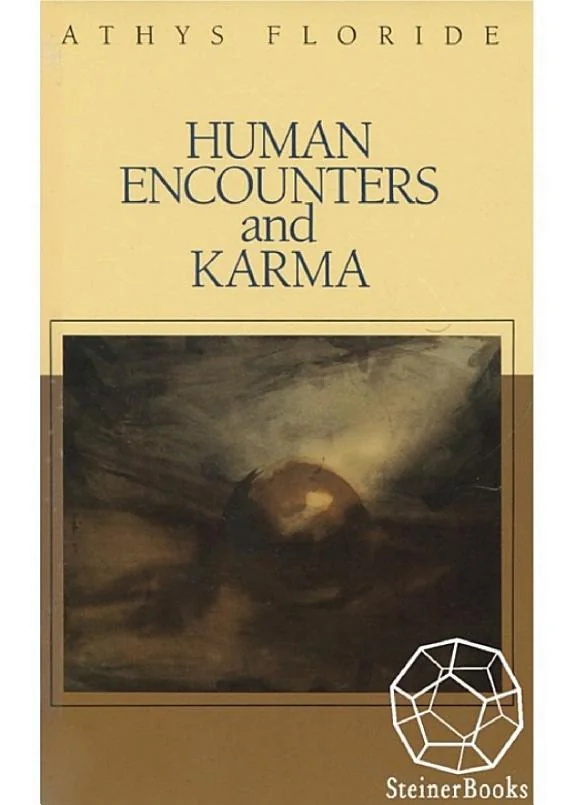
Athys Floride’s Human Encounters and Karma attempts a bold synthesis, framing everyday interactions as parallel to the sacred rites of the Mass. The concept of seeing annunciation, sacrifice, transubstantiation, and communion within interpersonal dynamics is striking. Floride’s adherence to the conceptual architecture of Rudolf Steiner’s spiritual science is evident, particularly in the emphasis on karma and the development of spiritual perception. The book's strength lies in its earnest attempt to elevate the mundane to the spiritual plane, offering a structured approach to relationship awareness. However, the direct mapping of the Mass onto human encounters, while conceptually interesting, can feel didactic and may not resonate universally. The reliance on Steiner’s specific terminology might also present a barrier for those less familiar with Anthroposophy. Ultimately, the work offers a unique, albeit specific, lens through which to re-examine human connection.
📝 Description
76
Athys Floride's 1990 book positions human relationships as a path for spiritual development.
Human Encounters and Karma provides a spiritual framework for understanding interpersonal dynamics. It suggests that daily interactions can mirror sacred rites, allowing individuals to find a sense of the holy in ordinary life. The book begins by examining the precise moment before an encounter. It proposes that an awareness of past and future karmic implications can transform these interactions.
This work is for individuals seeking deeper spiritual meaning in their everyday social lives. It appeals to those interested in esoteric philosophy, particularly those who appreciate Rudolf Steiner's teachings and wish to apply spiritual principles to their human relationships. Readers aiming to understand the energetic and karmic underpinnings of connection will find this text valuable. The central concept is the spiritualization of human encounters, viewing them as opportunities for karmic evolution.
Published in October 1990, Human Encounters and Karma emerged during a period of renewed interest in Anthroposophy and spiritual science, influenced by Rudolf Steiner's work. The 1990s saw growing exploration of alternative spiritualities and a desire to integrate esoteric understanding into practical, daily life. This book sought to bridge abstract spiritual concepts and the lived reality of human connection, drawing parallels between spiritual encounters and the Catholic Mass.
💡 Why Read This Book?
• You will learn to perceive your daily interactions through a spiritual lens, recognizing them as potential pathways for karmic development, drawing from the book's detailed stages mirroring the Mass. • Gain a practical understanding of karma within relationships, moving beyond abstract notions to see its tangible impact on human encounters as explored in the text's karmic framework. • Discover how to infuse your everyday life with sacredness by applying the book's methods for spiritualizing encounters, inspired by the author's specific parallels to rites like transubstantiation.
⭐ Reader Reviews
Honest opinions from readers who have explored this book.
❓ Frequently Asked Questions
What is the core idea behind Human Encounters and Karma?
The book proposes that human relationships can be spiritualized, mirroring the sacred rites of the Mass, and that awareness of karma is key to understanding these connections.
Who is Athys Floride and what is their background?
Athys Floride is an author whose work, including Human Encounters and Karma, is deeply rooted in the spiritual science and teachings of Rudolf Steiner and Anthroposophy.
When was Human Encounters and Karma first published?
The book was first published in October 1990, reflecting a period of interest in esoteric and spiritual development.
How does the book relate to Rudolf Steiner's work?
It draws significantly on Rudolf Steiner's concepts, particularly concerning karma and the spiritual nature of human evolution and social interaction.
What does the author mean by 'transubstantiation' in relationships?
The author uses 'transubstantiation' metaphorically to describe the profound spiritual transformation that can occur within human encounters when they are approached with conscious awareness.
Is this book suitable for beginners in esoteric studies?
While accessible, it benefits from some familiarity with Anthroposophical concepts, as it directly engages with the work of Rudolf Steiner.
🔮 Key Themes & Symbolism
Spiritualizing Encounters
The central theme posits that every human interaction is an opportunity for spiritual growth. By bringing conscious awareness to the moments before, during, and after an encounter, individuals can transform ordinary meetings into sacred events. This involves recognizing the karmic threads connecting people and understanding how each interaction contributes to a broader spiritual evolution, mirroring the stages of the Mass.
Karma in Relationships
The book emphasizes the crucial role of karma in shaping human connections. It suggests that understanding both past karmic patterns and future karmic potentials allows for a deeper appreciation of our relationships. This awareness is presented not as a deterministic force, but as a dynamic element that can be consciously worked with to foster spiritual development and more meaningful interactions.
The Sacred in the Everyday
Human Encounters and Karma seeks to bridge the perceived gap between the spiritual and the mundane. It argues that the sacred is not confined to specific rituals or places but can be actively cultivated within everyday life, particularly through our relationships. By applying spiritual principles to interpersonal dynamics, readers are encouraged to find and create moments of holiness in their daily experiences.
Anthroposophical Parallels
Drawing heavily on the work of Rudolf Steiner, the book uses his spiritual science as a foundation. The concept of the Mass serving as a template for human encounters is a direct application of Anthroposophical thinking, aiming to make complex spiritual ideas more accessible and applicable to the lived experience of modern individuals.
💬 Memorable Quotes
Direct passages from the work, attributed to the author.
“Awareness of past and future karma in our relationships can help us regain the sacred in our everyday lives.”
— This highlights the book's core premise: karma isn't just a concept but a practical tool for spiritualizing human connections and finding holiness in daily interactions.
“We can begin to enter a process that parallels the Mass: annunciation, sacrifice, transubstantiation, and communion.”
— This metaphor frames interpersonal dynamics as a sacred ritual, suggesting that relationships undergo profound spiritual transformations akin to the stages of the Mass.
“The moment before the encounter is crucial for initiating a spiritual process.”
— This points to the importance of conscious preparation and intention when approaching any human interaction, setting the stage for a spiritually significant exchange.
“Regaining the sacred is possible through an interhuman spiritual path.”
— This interpretation suggests that the path to spiritual realization lies not in isolation, but in the conscious, spiritual engagement with other human beings.
“Our full humanity is revealed in our relationships.”
— This emphasizes that the depth and breadth of our being are best understood and expressed through our interactions with others, particularly when viewed through a karmic and spiritual lens.
🌙 Esoteric Significance
Tradition
This work firmly resides within the tradition of Anthroposophy, founded by Rudolf Steiner. It adapts Steiner's core concepts of karma, reincarnation, and spiritual science to a specific focus on human relationships. While Steiner himself extensively lectured on social forms and the spiritual significance of encounters, Floride's work attempts a unique structuring of these ideas by mapping them onto the liturgical structure of the Mass.
Symbolism
The primary symbolic framework is the Mass itself, particularly its stages: annunciation (the initial awareness or calling), sacrifice (the willingness to engage and potentially face challenges), transubstantiation (the profound spiritual transformation within the encounter), and communion (the resulting spiritual union or understanding). Karma also functions symbolically, representing the interconnected web of cause and effect that binds human interactions across lifetimes.
Modern Relevance
Contemporary practitioners of Anthroposophy continue to engage with these ideas, applying them to social initiatives, education (Waldorf schools), and therapeutic practices. Thinkers and groups exploring conscious relationship, ethical development, and the spiritual dimensions of social interaction may find Floride's structured approach a valuable resource for deepening their understanding.
👥 Who Should Read This Book
• Students of Rudolf Steiner's work seeking practical applications of Anthroposophical principles to their social lives and understanding of karma. • Individuals interested in comparative religion and esoteric studies who wish to explore how liturgical structures can inform everyday human interactions. • Those seeking a deeper spiritual framework for understanding and improving their personal relationships and community dynamics.
📜 Historical Context
Published in October 1990, Human Encounters and Karma emerged within a Western esoteric landscape that was increasingly looking for practical applications of spiritual philosophy. The preceding decades had seen a surge in interest in Anthroposophy, largely due to the continued dissemination of Rudolf Steiner's extensive lectures and writings. This period was marked by a desire to integrate spiritual insights into daily life, moving beyond purely theoretical or devotional practices. The book’s approach, which frames interpersonal dynamics through the lens of Steiner’s spiritual science and draws parallels to the Catholic Mass, reflects a specific trend within Anthroposophical circles aiming to make these teachings more accessible. While not a major public event, its publication contributed to the ongoing discourse within esoteric communities interested in karma, reincarnation, and the spiritual evolution of humanity. It existed alongside other movements exploring similar themes, such as New Age spirituality and various forms of humanistic psychology seeking to understand interpersonal dynamics.
📔 Journal Prompts
The moment before an encounter: what karmic awareness informs your intention?
Reflecting on the 'sacrifice' within a recent human interaction, what spiritual lesson emerged?
How does the concept of 'transubstantiation' apply to a challenging relationship you currently navigate?
Mapping your own human encounters onto the stages of the Mass: where do you see spiritual parallels?
The interplay of past and future karma in a specific relationship: what patterns do you observe?
🗂️ Glossary
Karma
In the context of this book, karma refers to the spiritual law of cause and effect governing human actions and their consequences, extending across lifetimes and influencing interpersonal relationships.
Anthroposophy
A spiritual philosophy founded by Rudolf Steiner, seeking to understand the spiritual nature of human beings and the cosmos through methods of spiritual perception.
Spiritual Science
The term used within Anthroposophy to describe the systematic study of spiritual realities and laws, analogous to natural science but employing different methods of cognition.
Transubstantiation
Used metaphorically here, it refers to the profound spiritual transformation that can occur within a human encounter, changing its essential nature.
Annunciation
In this context, the initial moment of awareness or spiritual insight preceding a significant human encounter.
Interhuman Spiritual Path
A path of spiritual development realized through conscious engagement and interaction with other human beings, rather than through solitary practice.
Communion
The state of spiritual connection, understanding, or unity achieved through a transformed human encounter.
This book appears in 1 collection
🔮 Readers Also Liked
Browse all →








From the “Karma” Collection
View all →









More Free Occult Philosophy Books
View all →