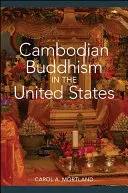
Cambodian Buddhism in the United States
 75
75

Cambodian Buddhism in the United States
Carol A. Mortland's "Cambodian Buddhism in the United States" is a meticulously researched account that avoids sensationalism, focusing instead on the lived realities of a transplanted faith. The strength lies in its longitudinal perspective, drawing from research conducted over three and a half decades, which allows for an observation of change and continuity. Mortland’s detailed ethnographic approach, utilizing participant observation and interviews, brings the daily practices of Khmer temples vividly to life. A notable aspect is the exploration of how traditional spirit beliefs and healing practices are interwoven with Buddhist tenets, a phenomenon often overlooked in broader studies. If there's a limitation, it's that the sheer density of ethnographic detail, while valuable, might make it challenging for the casual reader to access. The section detailing the adaptation of funerary rites post-1975 offers a particularly poignant look at cultural preservation. This work is a significant contribution to the study of diaspora religions.
📝 Description
75
Carol A. Mortland's 1997 study documents Cambodian Buddhism in the United States.
This anthropological study examines Cambodian Buddhism as it developed among Khmer refugees in the United States. Mortland's research, conducted over three decades, offers a detailed account of the religious practices of this community nationwide. The work traces how faith was transplanted and reshaped following the Khmer Rouge regime and the subsequent diaspora after 1975.
It details the adaptation of community structures, rituals, and beliefs in a new environment. The study also highlights the integration of indigenous spirit beliefs and healing practices within American Buddhist temples. Mortland's findings reveal the everyday expressions of faith and the roles of monks and laypeople in maintaining spiritual continuity for Cambodian Americans.
This work examines the adaptation of a specific Buddhist tradition within a diaspora context. It touches upon how traditional practices, including spirit beliefs and healing, interweave with formal doctrine. The book shows the dynamic nature of contemplative traditions when transplanted, demonstrating how they retain core elements while developing new forms of expression in response to a different cultural and social environment.
💡 Why Read This Book?
• Gain insight into the specific adaptations of Theravada Buddhism within a diasporic context, particularly concerning the integration of spirit beliefs, as documented through Mortland's extensive fieldwork. • Understand the impact of the post-1975 Khmer diaspora on religious institutions and practices in the United States, learning how communities maintained cultural identity. • Explore the methods of anthropological research, such as participant observation and life histories, as applied to the study of religious life in Khmer temples across America.
⭐ Reader Reviews
Honest opinions from readers who have explored this book.
❓ Frequently Asked Questions
What is the primary focus of "Cambodian Buddhism in the United States"?
This book is the first comprehensive anthropological study detailing how Khmer Buddhism is practiced by Cambodian refugees in the United States, based on research spanning over three decades.
What research methods did Carol A. Mortland employ?
Mortland utilized participant observation, open-ended interviews, life histories, and dialogues with both Khmer monks and laypeople during her extensive research.
When was "Cambodian Buddhism in the United States" first published?
The book was first published on July 25, 2017.
Does the book discuss the influence of the Khmer Rouge regime?
Yes, the book situates Cambodian Buddhism in the U.S. within the historical context of the Khmer Rouge regime and the subsequent diaspora.
Are spirit beliefs and healing practices covered?
Yes, the study explores the everyday practice of Khmer religion, including the integration of spirit beliefs and healing methods.
Who is the author of this anthropological study?
The author is Carol A. Mortland, whose research formed the basis for this comprehensive examination of Cambodian Buddhism in America.
🔮 Key Themes & Symbolism
Diaspora and Religious Adaptation
This theme examines the critical process by which Cambodian Buddhist traditions were transplanted and transformed following the diaspora, particularly after the 1975 Khmer Rouge regime. Mortland's decades of research illustrate how Khmer refugees established and maintained their religious practices in the United States, adapting rituals and community structures to a new environment. The work highlights the resilience of faith and cultural identity amidst displacement, showcasing how temples became vital centers for preserving heritage and fostering community cohesion in unfamiliar surroundings.
Integration of Spirit Beliefs
A significant aspect explored is the intricate tying of indigenous Cambodian spirit beliefs and healing practices into the fabric of Buddhism as practiced by the diaspora community. This theme moves beyond a singular, doctrinal understanding of Buddhism to reveal a more syncretic, lived religion. The book details how these beliefs, often related to local spirits or ancestral veneration, coexist and interact with formal Buddhist teachings and rituals, providing a more holistic view of spiritual life and well-being among Khmer Americans.
Everyday Religious Practice
This theme focuses on the granular, day-to-day manifestations of Khmer Buddhism in the United States. Mortland's use of participant observation and life histories brings to light the rituals, ceremonies, and social interactions that constitute religious life for Cambodian immigrants. It emphasizes the roles of both monks and laypeople in sustaining these practices, illustrating how faith is enacted not just in formal temple services but also in domestic settings and community gatherings, underscoring the lived experience of religion.
The Role of Monks and Laity
The study meticulously details the dynamic relationship between monastic figures and lay practitioners within Cambodian Buddhist temples in the U.S. It explores the specific duties, spiritual authority, and community responsibilities of monks, as well as the active participation and devotional lives of the laity. This theme highlights the collaborative effort required to maintain religious institutions and cultural traditions in a diaspora setting, showcasing how mutual support and engagement are central to the survival and evolution of their faith.
💬 Memorable Quotes
Direct passages from the work, attributed to the author.
“Based on research conducted at Khmer temples and sites throughout the country over a period of three and a half decades...”
— This emphasizes the extensive, longitudinal nature of Mortland's research, lending significant weight and depth to her ethnographic findings on Cambodian Buddhist communities in the U.S.
“Carol A. Mortland uses participant observation, open-ended interviews, life histories, and dialogues...”
— This highlights the robust ethnographic methodology employed, ensuring a rich, multi-faceted understanding of the subject matter through direct engagement and varied data collection techniques.
“Cambodian Buddhism in the United States is the first comprehensive anthropological study of Khmer Buddhism as practiced by Khmer refugees in the United States.”
— This statement underscores the foundational importance and unique contribution of Mortland's work to the academic understanding of this specific religious and cultural group's experience.
“The book explores the everyday practice of Khmer religion, including spirit beliefs and healing.”
— This signifies the study's commitment to documenting the full spectrum of religious expression, incorporating elements often considered 'folk' or 'traditional' alongside formal Buddhist teachings.
💡 Key Ideas
Editorial paraphrase of the work's core concepts — not direct quotes.
The work explores the everyday practice of Khmer religion, including spirit beliefs and healing.
This passage points to the book's focus on the lived, practical aspects of Cambodian Buddhism, moving beyond theoretical doctrine to encompass folk beliefs and therapeutic rituals.
🌙 Esoteric Significance
Tradition
While Theravada Buddhism is the primary formal tradition, this work engages with aspects often considered folk or animistic, which intersects with broader esoteric interests in the lived, practical application of spiritual beliefs. It departs from strictly doctrinal analyses by incorporating spirit veneration and healing practices, aligning with esoteric traditions that explore the liminal spaces between formal religion and popular belief systems.
Symbolism
The book implicitly explores symbols associated with protection and well-being, such as guardian spirits (neak ta) and various healing rituals that may involve specific amulets or incantations, though not explicitly framed as 'esoteric' symbols. The temple itself, as a locus of spiritual energy and community, functions as a powerful symbol of continuity and resilience for the diaspora.
Modern Relevance
Contemporary scholars and practitioners interested in applied Buddhism, syncretic religious phenomena, and the anthropology of religion draw upon Mortland’s work. It informs discussions on cultural preservation within immigrant communities, the intersection of psychology and spirituality in healing, and the evolving field of religious diversity in North America.
👥 Who Should Read This Book
• Scholars of religious studies and anthropology focusing on diaspora communities and Southeast Asian cultures will find this offers foundational ethnographic data. • Individuals interested in the immigrant experience and cultural adaptation will gain a nuanced understanding of how faith sustains communities. • Practitioners and students of Buddhism seeking to explore the diverse expressions of the tradition beyond Western interpretations will discover rich insights.
📜 Historical Context
Published in 2017, Carol A. Mortland's work emerges in an era of increased academic interest in diaspora studies and the sociology of religion. Its significance lies in filling a critical gap concerning the Cambodian Buddhist experience in the United States, a community profoundly shaped by the trauma of the Khmer Rouge regime and subsequent displacement beginning in 1975. While scholarship on Southeast Asian Buddhism existed, Mortland's study was the first comprehensive anthropological examination specifically focused on the U.S. context. The intellectual climate allowed for nuanced explorations of immigrant religious life, moving beyond earlier assimilationist models. Mortland’s meticulous, multi-decade research approach provides a counterpoint to more generalized studies of Buddhism, offering specific insights into how traditions adapt under pressure. Unlike immediate post-WWII studies that might have focused on assimilation, this work engages with the complexities of maintaining cultural and religious identity in a pluralistic society.
📔 Journal Prompts
The integration of spirit beliefs and healing practices within Khmer temples.
Reflecting on the role of community in sustaining religious traditions post-1975.
The adaptation of Buddhist rituals in a new cultural landscape.
Comparing participant observation methods with other ethnographic approaches.
Analyzing the significance of Khmer temples as cultural anchors in the U.S.
🗂️ Glossary
Khmer Buddhism
Refers to the specific form of Theravada Buddhism practiced by the Cambodian people, often incorporating local traditions and beliefs.
Theravada Buddhism
The 'School of the Elders,' one of the two major branches of Buddhism, prevalent in Southeast Asia, emphasizing the original teachings of the Buddha.
Diaspora
The dispersion or scattering of people from their homeland, often due to conflict or persecution, forming communities in new locations.
Participant Observation
An ethnographic research method where the researcher immerses themselves in a community to observe and participate in its daily life.
Life Histories
A qualitative research method involving the collection of detailed personal accounts of an individual's life experiences.
Spirit Beliefs
Beliefs concerning supernatural beings, often localized spirits or ancestral presences, which may be integrated into a larger religious framework.
Khmer Rouge regime
The authoritarian government of Cambodia from 1975 to 1979, responsible for widespread atrocities and the genocide of its own population.