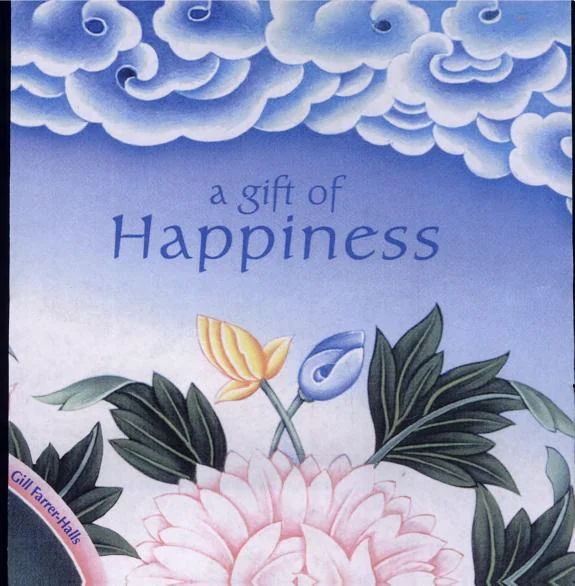
A Gift of Happiness
 76
76

A Gift of Happiness
Gill Farrer-Halls' A Gift of Happiness offers a grounded approach to cultivating inner satisfaction. Its strength lies in its clear articulation of how recognizing mental patterns can directly influence our lived experience. The book avoids abstract theorizing, instead focusing on actionable principles that can be integrated into everyday life. A particularly resonant passage discusses the subtle ways in which our habitual reactions, stemming from unexamined assumptions, create unnecessary suffering. While the prose is generally direct, at times the series' broader aims for 'harmony and enlightenment' can feel a touch generalized, slightly diluting the specific impact of the practical advice. Nevertheless, for those seeking a straightforward manual on improving their mental disposition, it serves as a valuable, unpretentious resource. It’s a practical manual for internal well-being.
📝 Description
76
First published in 2004, Gill Farrer-Halls' A Gift of Happiness argues contentment comes from within.
This book proposes that happiness is not something found externally, but cultivated internally through awareness of thoughts and actions. It offers practical methods for individuals seeking to improve their well-being and personal satisfaction. The work appeals to those interested in self-improvement, psychological insight, and applying contemplative practices to everyday life. Readers will find gentle guidance and a focus on actionable wisdom throughout its pages. The core ideas center on self-awareness, discerning judgment, and aligning mental, verbal, and physical conduct. It stresses happiness is a skill to be developed, not merely a passive state.
The book emerged in the early 2000s, a time when public interest in mindfulness and accessible spiritual literature grew. This period saw increasing dialogue between Eastern contemplative traditions and Western psychology, a conversation Farrer-Halls' work joins. It builds upon earlier books that brought concepts of mental discipline for well-being to a wider audience. The book encourages introspection and the conscious application of insight to all parts of one's life.
A Gift of Happiness is situated within the contemporary interest in secularized Buddhist principles and positive psychology that gained traction in the early 21st century. It reflects a broader cultural movement that sought to bridge ancient contemplative practices, particularly from traditions like Buddhism, with modern psychological frameworks. The book engages with the idea that mental training and self-observation, long central to Eastern spiritual paths, can be applied directly to achieve greater well-being in daily Western life.
💡 Why Read This Book?
• Gain practical techniques for recognizing and managing mental processes, directly applicable to daily frustrations, as detailed in the book's focus on "discriminating wisdom." • Understand how the integration of body, speech, and mind, as presented in the 2004 publication, can lead to a more harmonious existence. • Discover actionable steps toward internal satisfaction, moving beyond abstract notions to concrete practices for self-cultivation outlined by Gill Farrer-Halls.
⭐ Reader Reviews
Honest opinions from readers who have explored this book.
❓ Frequently Asked Questions
What is the central philosophy behind A Gift of Happiness?
The central philosophy is that happiness and satisfaction are cultivated internally through awareness of one's mental processes and the application of discriminating wisdom to all actions, rather than being dependent on external circumstances.
Who is Gill Farrer-Halls and what is her background?
Gill Farrer-Halls is an author known for works on spirituality and self-development. While specific biographical details beyond her authorship are not extensively detailed in the blurb, her work suggests a background in contemplative traditions or psychology.
What does 'discriminating wisdom' mean in the context of this book?
Discriminative wisdom, as applied in the book, refers to the ability to discern the true nature of phenomena, to understand cause and effect in one's mental and physical actions, and to make wise choices based on this understanding.
Is A Gift of Happiness part of a series?
Yes, A Gift of Happiness is part of an inspirational series that also includes titles like 'A Gift of Awakening' and 'A Gift of Inner Peace,' all aiming to provide greater understanding and enlightenment.
What are the primary benefits of reading A Gift of Happiness?
Readers can expect to learn methods for achieving greater self-awareness, developing practical skills for managing their mental states, and fostering a more profound sense of personal satisfaction and harmony in their lives.
When was A Gift of Happiness first published?
A Gift of Happiness was first published in March 2004, positioning it within the early 2000s wave of accessible self-help and spiritual literature.
🔮 Key Themes & Symbolism
Mindful Awareness
The book champions the cultivation of present-moment awareness as the central to personal well-being. It guides readers to observe their thoughts, emotions, and bodily sensations without judgment, recognizing these as the building blocks of their experience. This practice is presented not as an escape from reality, but as a method to engage with it more clearly and effectively, leading to a reduction in reactive patterns.
Discriminative Wisdom
Central to achieving happiness is the development of 'discriminating wisdom.' This involves the capacity to distinguish between what is beneficial and what is detrimental, both in thought and action. The book explains how this faculty, when honed, allows individuals to make conscious choices that align with their deeper well-being, rather than being driven by impulse or ingrained habits.
Integration of Conduct
Farrer-Halls emphasizes the interconnectedness of one's actions across different domains: body, speech, and mind. True happiness arises when these aspects of being are harmonized. The work explores how applying awareness and wisdom to physical actions, the words we speak, and our internal mental states creates a cohesive and balanced approach to life.
Internal Cultivation
The core message is that happiness is an internal state to be cultivated, not an external reward to be sought. The book provides a framework for understanding that the potential for contentment resides within each individual. By shifting focus from external acquisition to internal development, readers are empowered to build lasting satisfaction from the inside out.
💬 Memorable Quotes
Direct passages from the work, attributed to the author.
“We can unlock the potential for happiness and satisfaction that lies within each of us by becoming aware of our mental processes and then applying discriminating wisdom to all our actions of body, speech, and mind.”
— This foundational statement captures the book's premise: that internal resources, accessed through mindful observation and wise discernment, are the key to enduring contentment.
“Each volume of the series... combines author Gi”
— This fragmented quote suggests a consistent editorial approach across the series, where the author's unique voice and perspective are integral to delivering the intended message of harmony and enlightenment.
“Happiness is an internal cultivation.”
— This concise interpretation of the book's core tenet underscores that well-being is an active practice and a skill to be developed from within, rather than a passive state.
“Awareness of mental processes is crucial.”
— This distilled concept emphasizes the importance of introspection and self-observation as the first step toward managing one's inner world and fostering positive change.
💡 Key Ideas
Editorial paraphrase of the work's core concepts — not direct quotes.
The work explores how to achieve greater understanding, harmony, and enlightenment.
This paraphrased concept highlights the series' overarching goal, indicating that individual volumes like 'A Gift of Happiness' contribute to a broader path of personal and spiritual development.
🌙 Esoteric Significance
Tradition
While not explicitly aligned with a single esoteric lineage, "A Gift of Happiness" draws heavily from principles found in Buddhist psychology and general contemplative traditions. Its emphasis on mindfulness, the nature of the mind, and the cultivation of wisdom aligns with practices found in Vipassanā meditation and Advaita Vedanta, which explore the non-dual nature of consciousness and the illusion of the separate self.
Symbolism
The book primarily utilizes conceptual symbolism rather than overt imagery. The 'gift' itself symbolizes an inherent potential within each individual that can be unwrapped through conscious effort. 'Awareness' can be seen as a lens or mirror, reflecting the true nature of mental processes, while 'discriminating wisdom' acts as a skillful tool, like a finely honed blade, to cut through delusion and attachment.
Modern Relevance
The work's principles remain highly relevant in contemporary discussions on mental health, stress reduction, and personal development. It appeals to modern mindfulness-based therapies (MBCT, MBSR) and the broader wellness industry. Thinkers and practitioners focused on secular ethics, positive psychology, and the integration of ancient wisdom into modern life often echo Farrer-Halls' emphasis on internal locus of control and mindful living.
👥 Who Should Read This Book
• Individuals seeking practical, secular methods for managing stress and cultivating a more positive outlook, who may feel overwhelmed by complex spiritual doctrines. • Beginners interested in mindfulness and self-awareness practices, looking for an accessible entry point that focuses on actionable steps. • Readers exploring the intersection of psychology and contemplative traditions, wanting to understand how internal mental states influence overall well-being.
📜 Historical Context
Gill Farrer-Halls' "A Gift of Happiness" (2004) emerged in an era where Western psychological discourse increasingly integrated contemplative practices. The early 2000s saw a surge in interest surrounding mindfulness, spurred by figures like Jon Kabat-Zinn, and a growing accessibility of Buddhist-inspired concepts in secular self-help. The book positioned itself within this milieu, offering a more direct, less tradition-bound approach than some of its predecessors. It tapped into a cultural current seeking practical tools for mental well-being, distinct from more dogmatic religious frameworks. While not directly engaging with academic debates, its publication coincided with the rise of positive psychology, a field championed by Martin Seligman, which also focused on the science of happiness and human flourishing. The book's contribution was in translating complex psychological and contemplative principles into readily applicable advice for a broad audience, differentiating it from more specialized academic texts or rigid spiritual doctrines.
📔 Journal Prompts
The role of discriminating wisdom in daily choices.
Observing mental processes without judgment.
Harmonizing body, speech, and mind.
Identifying personal obstacles to happiness.
Cultivating the internal gift of satisfaction.
🗂️ Glossary
Awareness
The state of being conscious of something, particularly one's own thoughts, feelings, and surrounding environment. In this context, it implies a non-judgmental observation of mental processes.
Mental Processes
The internal cognitive activities of the mind, including thoughts, emotions, perceptions, and intentions. Understanding these is key to applying discriminating wisdom.
Discriminative Wisdom
The faculty of clear discernment, enabling one to understand the true nature of things, differentiate between beneficial and harmful actions, and make wise decisions.
Body, Speech, and Mind
The three primary channels through which individuals interact with the world and manifest their inner state. The book advocates for their integrated and harmonious functioning.
Internal Cultivation
The process of developing one's inner resources, such as mental clarity, emotional resilience, and wisdom, as the primary means of achieving lasting well-being.
Satisfaction
A state of contentment and fulfillment derived from meeting one's needs or desires; in this book's context, it is an internal state fostered by mindful living.
Enlightenment
A state of profound spiritual insight and understanding, often associated with liberation from suffering and the attainment of ultimate truth. In this series, it represents a high level of personal growth.
This book appears in 1 collection
🔮 Readers Also Liked
Browse all →









From the “Karma” Collection
View all →








More Free Occult Philosophy Books
View all →