Lao Tzu

 74
74

Lao Tzu
Le Guin's approach to Lao Tzu is less an academic exegesis and more a personal, literary dialogue. Her selection of passages, framed by her own insightful commentary, highlights the Tao Te Ching's enduring relevance. She skillfully extracts the essence of concepts like *wu wei* (effortless action) and *ziran* (naturalness), presenting them not as abstract doctrines but as practical guides to living. The strength of this book lies in Le Guin's exceptional prose, which renders complex ideas with clarity and grace. A limitation, perhaps, is that the selection of verses is personal to Le Guin, meaning some readers might miss their own favorite passages or specific interpretations of the original text. The brief, almost aphoristic nature of many verses, as presented here, requires careful contemplation rather than quick assimilation.
This is a valuable, if subjective, entry point into the Tao Te Ching for those who admire Le Guin's literary voice.
📝 Description
74
Ursula K. Le Guin's 2018 "Lao Tzu" offers her personal reflections on the Tao Te Ching.
Ursula K. Le Guin's "Lao Tzu" is not a scholarly translation or a biography. Instead, it is Le Guin's personal encounter with the Tao Te Ching, a text attributed to the ancient Chinese philosopher Lao Tzu. Published in 2018, this book uses Le Guin's writer's sensibility and philosophical curiosity to illuminate passages she found most meaningful. She selects verses that resonated with her, presenting them through her own unique interpretive lens.
This work will connect with readers drawn to philosophy expressed through literary skill. It is for those curious about Taoism, classical Chinese thought, and enduring spiritual traditions. Readers familiar with Le Guin's fiction, which often examines societal patterns and human behavior, will recognize thematic parallels. It also serves as a thoughtful, accessible entry point for anyone wanting to understand the core tenets of the Tao Te Ching, guided by a renowned storyteller's perspective.
The Tao Te Ching, traditionally dated to the 6th century BCE but with scholarly debate placing its compilation later, emerged from a period of intense intellectual and political change in ancient China. This era also saw the rise of other major philosophical schools like Confucianism and Mohism. Le Guin's 2018 engagement with this foundational text places it within a modern context marked by renewed interest in Eastern philosophies and contemplative practices. This period fostered a wider global discussion on spirituality and ethics, partly due to figures who helped introduce Eastern thought to Western audiences.
💡 Why Read This Book?
• Gain a unique perspective on *wu wei*, understanding how Le Guin's interpretation, framed by her 2018 publication, suggests acting in alignment with natural flow as a path to effectiveness. • Explore the concept of the Tao through Le Guin's literary lens, learning how she translates the ineffable principle into accessible language for a modern audience. • Discover the practical application of simplicity and yielding, as highlighted in Le Guin's selection of verses from the ancient Chinese text, offering insights for contemporary challenges.
⭐ Reader Reviews
Honest opinions from readers who have explored this book.
❓ Frequently Asked Questions
What is the Tao Te Ching and who was Lao Tzu?
The Tao Te Ching is a foundational text of Taoism, attributed to Lao Tzu, a philosopher traditionally believed to have lived in the 6th century BCE. It explores concepts like the Tao (the Way) and *wu wei* (effortless action).
What makes Ursula K. Le Guin's "Lao Tzu" different from other translations?
Le Guin's version, published in 2018, is not a comprehensive translation but a curated selection of passages interpreted through her distinctive literary and philosophical lens, focusing on themes resonant with her own work.
When was the Tao Te Ching written?
Scholarly consensus places the compilation of the Tao Te Ching between the 4th and 7th centuries BCE, though its origins are traditionally linked to Lao Tzu in the 6th century BCE.
What are the main philosophical ideas discussed in Le Guin's book on Lao Tzu?
The book explores core Taoist concepts such as the Tao (the fundamental principle of the universe), *wu wei* (non-action or effortless action), *ziran* (naturalness), and the interdependence of opposites.
Is this book a direct translation of the Tao Te Ching?
No, it is Le Guin's personal engagement with selected passages of the Tao Te Ching, offering her interpretations and reflections rather than a complete, scholarly translation.
Who would benefit from reading Ursula K. Le Guin's "Lao Tzu"?
Readers interested in Taoism, ancient Chinese philosophy, contemplative practices, and those who appreciate Le Guin's distinctive literary style and philosophical depth will find this work particularly rewarding.
🔮 Key Themes & Symbolism
The Nature of the Tao
This work grapples with the ineffable concept of the Tao, presented as the underlying reality and governing principle of the universe. Le Guin emphasizes its elusive nature, suggesting that direct definition is impossible. The Tao is depicted as the source from which all things arise and to which they return, a flowing, dynamic force that cannot be contained or fully understood through intellect alone. It is the 'Way' that governs existence, characterized by spontaneity and naturalness, urging practitioners to align their actions with this fundamental current of reality.
Effortless Action (Wu Wei)
A central tenet explored is *wu wei*, or 'non-action.' Le Guin interprets this not as idleness, but as action taken without force, striving, or artificiality—acting in harmony with the natural order. This principle suggests that true effectiveness comes from yielding to circumstances, allowing events to unfold naturally, and acting with minimal interference. It is about finding strength in gentleness and power in passivity, a concept Le Guin illuminates through selected passages that contrast with conventional notions of ambition and control.
Simplicity and Naturalness (Ziran)
The book highlights the Taoist ideal of *ziran*, or naturalness. Le Guin draws attention to the wisdom found in simplicity, advocating for a life free from excessive desires, societal conditioning, and artificial constructs. This theme encourages a return to a more authentic, unadorned way of being, where actions and thoughts flow spontaneously from one's true nature. The text suggests that by shedding pretense and embracing simplicity, individuals can achieve a state of contentment and harmony with the world.
Paradox and Interdependence
Le Guin's engagement with Lao Tzu reveals the paradoxical nature of Taoist thought. Concepts such as the strong emerging from the weak, the loud from the quiet, and the vast from the small are explored. The interdependence of opposites—like yin and yang—is presented as fundamental to understanding reality. This theme underscores the idea that apparent contradictions are not mutually exclusive but are integral parts of a unified whole, reflecting the dynamic balance that characterizes the Tao.
💬 Memorable Quotes
Direct passages from the work, attributed to the author.
“The Tao that can be told is not the eternal Tao.”
— This opening statement immediately establishes the ineffable nature of the fundamental principle of the universe. It suggests that any attempt to define or describe the Tao using language will inevitably fall short, as the true essence lies beyond conceptual grasp.
“To know the male, but keep the female. To know the light, but keep the dark.”
— This highlights the Taoist principle of embracing duality and maintaining balance. It suggests wisdom lies not in choosing one extreme, but in acknowledging and integrating both the active (male, light) and receptive (female, dark) aspects of existence.
“The sage stays behind, and so is ahead. He is content with his lot, and so is fulfilled.”
— This illustrates the concept of *wu wei* and the paradoxical nature of Taoist wisdom. True leadership and fulfillment come not from asserting dominance, but from a humble, yielding approach that allows for natural progress and contentment.
“Governing a large country is like frying a small fish.”
— This metaphor emphasizes the need for a light touch and minimal interference when managing complex systems. Excessive handling or manipulation will only spoil the outcome, advocating for a subtle, non-intrusive approach.
“When people see some things as beautiful, other things acquire ugliness.”
— This points to the constructed nature of values and the relativity of perception. The creation of one standard inherently defines its opposite, illustrating how our judgments shape reality and create imbalance.
🌙 Esoteric Significance
Tradition
This work engages with the Taoist tradition, a foundational lineage of Chinese esoteric and philosophical thought. While not strictly an 'occult' tradition in the Western sense, Taoism possesses deep esoteric dimensions focused on harmony with the cosmos, longevity, and spiritual liberation. Le Guin's interpretation aligns with the philosophical and contemplative aspects of Taoism, emphasizing its ethical and practical guidance for living in accordance with the natural order, often seen as a cosmic principle.
Symbolism
Key symbols explored include the Tao itself, representing the ineffable, ultimate reality and source of all things. The concept of *wu wei* (effortless action) functions symbolically, representing a state of being where action is natural and unforced, like water flowing downhill. The recurring motif of the 'uncarved block' (*pu*) symbolizes naturalness, simplicity, and the original state of things before they are shaped by human artifice or desire, representing authenticity.
Modern Relevance
Le Guin's interpretation makes the Tao Te Ching accessible to contemporary readers, influencing fields like mindfulness, environmental ethics, and leadership studies. Thinkers and practitioners in these areas draw on Taoist principles, as illuminated by Le Guin, to advocate for sustainable living, non-violent communication, and more balanced approaches to personal and societal challenges. Her work bridges ancient wisdom and modern concerns, showing how Taoist ideals offer valuable perspectives on today's complex world.
👥 Who Should Read This Book
• Students of comparative philosophy: Those seeking to understand the foundational texts and core concepts of Taoism, particularly its contrast with other major philosophical traditions. • Literary enthusiasts interested in philosophical writing: Readers who admire Ursula K. Le Guin's prose and appreciate how she brings her unique voice to ancient wisdom texts. • Individuals seeking contemplative guidance: People looking for accessible wisdom on living a more balanced, harmonious, and less-driven life, grounded in principles from the Tao Te Ching.
📜 Historical Context
The Tao Te Ching, traditionally attributed to Lao Tzu around the 6th century BCE, emerged during China's Spring and Autumn period (771-476 BCE). This era was marked by political fragmentation and intense philosophical discourse, witnessing the rise of competing schools of thought such as Confucianism, Mohism, and Legalism. While Confucianism emphasized social order, ritual, and hierarchical relationships, the Taoists, including Lao Tzu, offered a counterpoint advocating for naturalness, simplicity, and alignment with the Tao. Ursula K. Le Guin's engagement with this ancient text, published in 2018, reflects a modern resurgence of interest in Eastern philosophies, particularly among those seeking alternatives to Western materialism and individualism. Her work situates the Tao Te Ching within contemporary discussions on ecology, mindfulness, and ethical living, demonstrating its enduring appeal centuries after its initial composition.
📔 Journal Prompts
The Tao's ineffability and its relation to language.
Reflections on *wu wei* in daily activities.
The beauty found in simplicity and naturalness.
Identifying interdependent opposites in personal experience.
The paradox of yielding to gain strength.
🗂️ Glossary
Tao (or Dao)
The fundamental, ineffable principle underlying all reality in Taoism. It is often translated as 'The Way,' representing the natural order and the cosmic force that governs the universe.
Wu Wei
A central Taoist concept, often translated as 'non-action' or 'effortless action.' It signifies acting in harmony with the natural flow of the Tao, without force, striving, or artificiality.
Lao Tzu
The ancient Chinese philosopher traditionally credited with authoring the Tao Te Ching. His historical existence is debated, but he is revered as the founder of Taoism.
Tao Te Ching
The foundational text of Taoism, attributed to Lao Tzu. It consists of short, poetic verses exploring the nature of the Tao, virtue, and the principles of effective living.
Ziran
A Taoist concept meaning 'naturalness' or 'spontaneity.' It refers to things being in their own state, without artificiality or external shaping, living according to one's true nature.
Spring and Autumn period
An era in Chinese history (771-476 BCE) characterized by political fragmentation and intellectual ferment, during which major philosophical schools like Confucianism and Taoism emerged.
Pu
Literally 'uncarved block.' A Taoist symbol representing simplicity, naturalness, and the original, unadulterated state of things before being shaped by human intervention or desire.
🔮 Readers Also Liked
Browse all →









More by Ursula K. Le Guin
All books →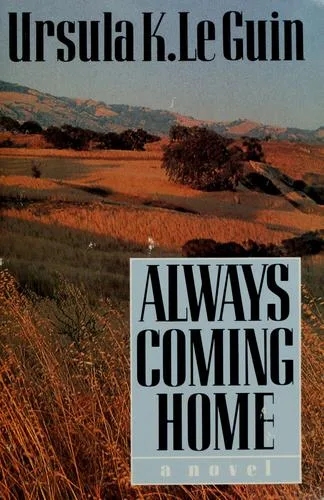
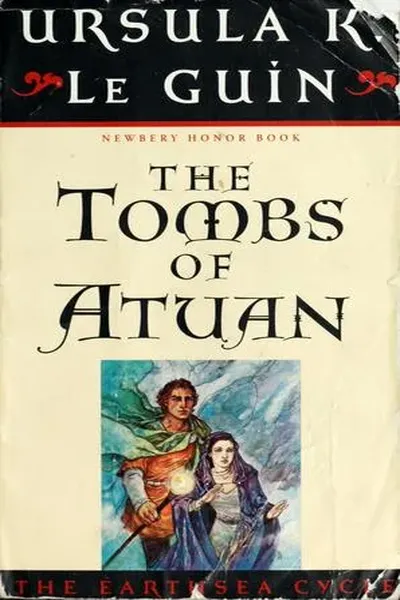


More Free Occult Philosophy Books
View all →