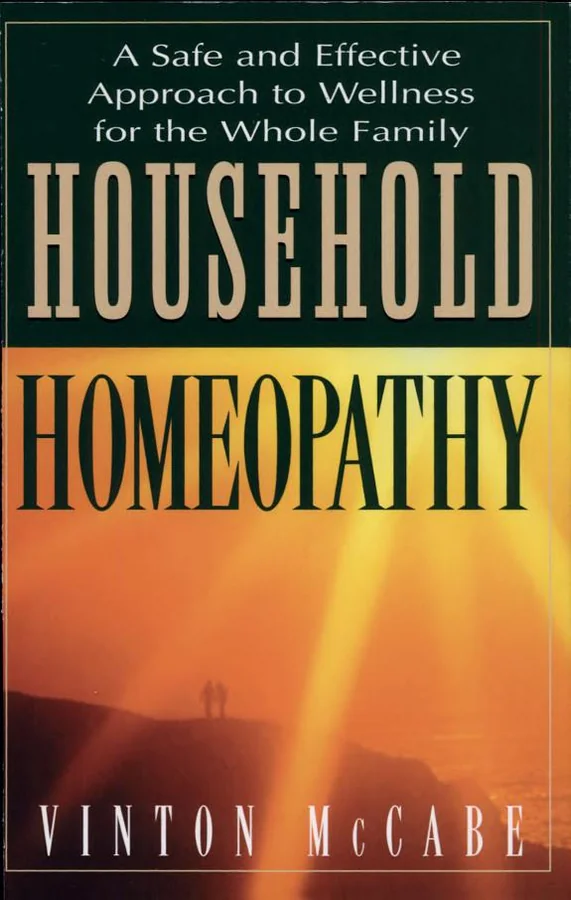
Household Homeopathy
 83
83

Household Homeopathy
Vinton McCabe’s Household Homeopathy presents a refreshingly direct manual for home-based homeopathic care. The strength of this 2004 publication lies in its straightforward presentation, stripping away much of the dense theoretical jargon that can alienate newcomers to the field. McCabe focuses intently on practical application, a commendable goal for a subject often perceived as arcane. However, the book's brevity, while an asset for accessibility, sometimes limits the depth of exploration into more complex case presentations or nuanced remedy selection. For instance, the discussion on 'Potency Selection' offers a basic framework but could benefit from more extensive illustrative examples. Despite this limitation, the work provides a solid, actionable foundation for those wishing to begin exploring homeopathy for common household ailments.
📝 Description
83
Vinton McCabe's 2004 book, Household Homeopathy, translates homeopathic principles into domestic practice.
Household Homeopathy, published in 2004, functions as a practical guide for applying homeopathic principles within a home setting. The author aims to clarify the process, offering a method for individuals to manage common ailments and foster well-being with remedies prepared at home. The text emphasizes clear language and direct advice, moving past theoretical discussions to focus on practical application.
This book is for people interested in alternative healing, especially those wanting to manage everyday health issues themselves. It suits newcomers to homeopathy who prefer a hands-on method, and also experienced users seeking a straightforward home reference. Readers curious about natural remedies and wanting to use them for their family's health will find it useful.
The work discusses essential homeopathic ideas, such as the Law of Similars ('like cures like') and the minimum dose principle. It explains how to prepare and use remedies, often made from plants, minerals, or animals. A key point is matching the remedy to an individual's specific symptoms, a concept called 'individualization'.
Household Homeopathy fits within the broader esoteric tradition of vitalism and energetic medicine. While homeopathy, founded by Samuel Hahnemann in the late 18th century, has a scientific framework, its core tenets—like the "like cures like" principle and the potentization of remedies beyond measurable substance—place it outside conventional allopathic medicine. This book connects to an esoteric interest in natural forces and the body's inherent healing capacity, aiming to empower individuals with tools for self-care that align with these vitalistic philosophies.
💡 Why Read This Book?
• Learn to identify and select appropriate remedies for common ailments, such as understanding the specific application of *Arnica montana* for bruises as detailed in the book's remedy guide. • Gain practical skills in administering homeopathic preparations, including dosage and frequency, as explained in McCabe's step-by-step instructions for home use. • Develop a foundational understanding of homeopathic principles like 'like cures like' by examining the conceptual framework presented, enabling a more informed approach to self-care.
⭐ Reader Reviews
Honest opinions from readers who have explored this book.
❓ Frequently Asked Questions
What is the core principle of homeopathy discussed in Household Homeopathy?
The book emphasizes the Law of Similars, the central tenet of homeopathy, which posits that a substance causing symptoms in a healthy person can, in a diluted form, treat similar symptoms in a sick person.
When was Household Homeopathy first published and by whom?
Household Homeopathy was first published in 2004 by Vinton McCabe, aiming to make homeopathic practices accessible for domestic use.
Does the book cover the preparation of remedies?
Yes, McCabe's work provides guidance on the preparation and administration of homeopathic remedies, focusing on methods suitable for home practitioners.
Is this book suitable for someone with no prior knowledge of homeopathy?
Absolutely. The book is designed for practical home use and aims to demystify the subject, making it accessible for beginners seeking to apply homeopathic principles.
What kind of ailments does Household Homeopathy address?
The book focuses on common household ailments and everyday health concerns, providing readers with tools to manage minor issues within their own homes.
Where does Vinton McCabe situate his approach to homeopathy?
McCabe presents a practical, hands-on approach, distinguishing it from purely theoretical or academic explorations of homeopathy, emphasizing direct application for personal well-being.
🔮 Key Themes & Symbolism
Home-Based Healing
The central theme revolves around empowering individuals to manage their health within the domestic sphere. McCabe's approach clarifies the use of homeopathic remedies for everyday ailments, moving beyond the confines of professional clinics. This focus on self-sufficiency is presented as a practical extension of natural wellness practices, encouraging users to become active participants in their own or their family's well-being through accessible materia medica and case examples.
Individualized Symptom Matching
A core concept explored is the principle of individualization, where treatment is tailored to the unique symptom picture of the person, not just the disease name. The book guides readers in observing and documenting specific symptoms—physical, mental, and emotional—to accurately match them with the most suitable homeopathic remedy, reflecting the practice's foundational tenet of 'like cures like' applied on a personal level.
Accessible Materia Medica
McCabe presents a curated selection of commonly used homeopathic remedies, making the vast materia medica more approachable for the layperson. The descriptions focus on characteristic symptoms and typical uses for each substance, such as the application of *Belladonna* for feverish conditions or *Pulsatilla* for emotional sensitivity, facilitating easier remedy selection for home practitioners.
Practical Application of Principles
The work bridges theoretical understanding with tangible action. It moves beyond abstract discussions of homeopathic philosophy to provide concrete instructions on how to select, prepare, and administer remedies. This emphasis on practical application ensures that readers can immediately begin integrating these techniques into their daily lives, fostering a sense of competence and control over common health issues.
💬 Memorable Quotes
Direct passages from the work, attributed to the author.
“Promote healing in their own homes.”
— This concise statement captures the book's primary objective: to equip readers with the knowledge and confidence to utilize homeopathic remedies for common ailments within the domestic environment, fostering self-reliance in health matters.
“A practical approach to homeopathy.”
— This highlights the book's focus on actionable advice and straightforward methods, distinguishing it from more theoretical or complex explorations of the subject and emphasizing its utility for everyday use.
“Individualized symptom profiles are key.”
— This underscores a fundamental principle of homeopathy presented in the book – that effective treatment relies on carefully matching a remedy to the unique constellation of symptoms experienced by the individual.
“Accessible materia medica for home use.”
— This suggests the book provides a user-friendly guide to homeopathic substances and their applications, curated specifically for individuals managing health concerns within their household.
“Explaining homeopathic practice.”
— This indicates the author's intent to simplify complex homeopathic concepts and procedures, making the practice understandable and manageable for those without specialized training.
🌙 Esoteric Significance
Tradition
While not explicitly aligned with a single esoteric lineage like Hermeticism or Kabbalah, Household Homeopathy engages with the vitalist philosophies that underpin many esoteric traditions. It shares common ground with practices that view the body as an energetic system susceptible to subtle influences and capable of self-healing when guided appropriately. The emphasis on 'like cures like' and potentized remedies can be seen as a practical, albeit secularized, manifestation of energetic resonance principles found in alchemical or vibrational healing concepts.
Symbolism
The primary 'symbolism' in Household Homeopathy lies not in overt mystical imagery but in the symbolic representation of natural substances through their potentized forms. Each remedy, like *Arnica montana* (mountain arnica) or *Belladonna* (deadly nightshade), carries a symbolic resonance tied to its source and its energetic signature. For example, *Arnica* symbolizes resilience and recovery from trauma, reflecting its traditional use for injuries, while *Belladonna*, with its historical association with altered states and toxicity, symbolizes rapid onset, feverish conditions.
Modern Relevance
Contemporary interest in holistic health, self-care, and natural remedies continues to draw upon the principles espoused in works like McCabe's. Modern practitioners of functional medicine and integrative health often incorporate or acknowledge homeopathic principles, particularly regarding individualized treatment. The DIY ethos promoted by the book also appeals to current trends in wellness culture, where individuals seek greater autonomy over their health choices, often exploring accessible modalities outside conventional medical frameworks.
👥 Who Should Read This Book
• Individuals new to natural healing modalities seeking a practical, step-by-step introduction to homeopathy for common household issues. • Parents and caregivers interested in exploring gentle, non-toxic remedies for family health concerns, as presented in McCabe's accessible guide. • Self-sufficiency advocates and those interested in alternative wellness practices who want to build a foundational understanding of home-based homeopathic care.
📜 Historical Context
Vinton McCabe's Household Homeopathy, published in 2004, arrived amidst a resurgence of interest in complementary and alternative medicine (CAM) in Western societies. This period saw practices like acupuncture, herbalism, and chiropractic gain broader public acceptance, often discussed alongside established medical treatments. Homeopathy, originating with Samuel Hahnemann in the late 18th century, faced ongoing debate, with proponents highlighting its efficacy and proponents of conventional medicine questioning its scientific basis. McCabe's work emerged in this context, aiming to provide a practical, accessible entry point for home use, distinguishing itself from more academic or clinical texts. Contemporaries like Dana Ullman were also active in promoting homeopathic literature to a wider audience during this era. The book's publication coincided with a growing desire among consumers for natural health solutions and greater control over their well-being.
📔 Journal Prompts
The specific application of *Arnica montana* for physical trauma.
Observation of symptom patterns and their correlation to remedy selection.
The principle of minimum dose and its implications for energetic medicine.
Personal reflections on integrating home-based remedies into daily routines.
Assessing the 'individualization' concept in relation to personal health experiences.
🗂️ Glossary
Homeopathy
A system of alternative medicine based on the principle of 'like cures like,' using highly diluted substances to stimulate the body's healing response.
Law of Similars
The fundamental principle of homeopathy stating that a substance capable of producing symptoms in a healthy person can be used to treat similar symptoms in a sick person.
Materia Medica
A comprehensive reference work detailing the properties, effects, and uses of homeopathic remedies, often organized by substance.
Potency
The degree of dilution and succussion (vigorous shaking) applied to a homeopathic remedy, believed to increase its energetic strength.
Remedy
A homeopathic preparation, typically derived from plants, minerals, or animals, used to treat specific symptoms or conditions.
Succussion
The process of vigorously shaking a diluted homeopathic substance at each stage of potentization, believed to enhance its medicinal properties.
Individualization
The homeopathic practice of selecting a remedy based on the unique and specific totality of symptoms presented by an individual, rather than solely on a disease name.
This book appears in 1 collection
🔮 Readers Also Liked
Browse all →









From the “Homeopathy” Collection
View all →





More Free Occult Philosophy Books
View all →