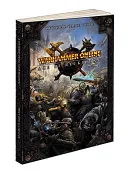
Hordes of Chaos

 71
71

Hordes of Chaos
The 2001 publication of *Hordes of Chaos* remains a foundational text for understanding the Ruinous Powers in the Warhammer Fantasy setting. Its strength lies in the detailed, often unsettling, depiction of the four Chaos Gods and their daemonic legions, presenting them with a theological weight that elevates them beyond simple monsters. The authors effectively capture the existential dread associated with these forces. However, the book's focus is intensely specific to the Warhammer universe, making its direct applicability to broader occult philosophy limited, despite its thematic resonance. A notable passage vividly describes the pervasive miasma of Nurgle's blessings, highlighting the grim, yet strangely comforting, aspect of decay. While dense with lore, it sacrifices accessibility for depth. It serves its intended audience admirably, though newcomers might find the lore impenetrable.
📝 Description
71
Published in December 2001, Hordes of Chaos details the fundamental chaotic entities of the Warhammer Fantasy universe.
This book examines the core entities of destruction within the Warhammer Fantasy setting. It describes the nature, motivations, and appearances of the Chaos Gods and their daemonic armies. The authors portray these forces not just as enemies, but as essential elements of the universe's structure. The narrative traces their origins to the Warp, an immaterial plane where thoughts and emotions become monstrous realities.
Hordes of Chaos is chiefly for readers already invested in the lore of Warhammer Fantasy Battle. It presumes a basic knowledge of the setting's conflicts and factions. The book focuses on the specific beliefs and military organizations of the Chaos forces. Those looking for the original texts that shaped the understanding of these powers will find considerable information here.
This work positions the Chaos Gods and their legions as elemental forces within a fictional cosmology, drawing parallels to dualistic or Gnostic traditions where opposing principles shape reality. The concept of the Warp as a psychic realm, shaped by emotion and thought, echoes ideas found in certain occult philosophies concerning the power of consciousness and the collective unconscious to manifest external phenomena. The book's focus on the corrupting influence of these powers on mortal races also aligns with themes of temptation and spiritual decay found in various religious and occult narratives.
💡 Why Read This Book?
• Gain a concrete understanding of the four Chaos Gods (Khorne, Tzeentch, Nurgle, Slaanesh) and their distinct domains, as detailed in the book's early chapters, providing specific archetypes of destructive and transformative forces. • Learn about the nature of Daemons as manifestations from the Warp, a concept explored in sections detailing their creation and purpose, offering insight into animistic or elemental spiritual beliefs. • Grasp the historical context of the book's 2001 publication, understanding how it codified the lore of Chaos during a key development phase for the Warhammer Fantasy setting.
⭐ Reader Reviews
Honest opinions from readers who have explored this book.
❓ Frequently Asked Questions
What are the four primary Chaos Gods described in Hordes of Chaos?
The book details Khorne, the god of blood and murder; Tzeentch, the god of magic and change; Nurgle, the god of disease and despair; and Slaanesh, the god of excess and pleasure, presenting their unique domains and followers.
What is the Warp according to Hordes of Chaos?
The Warp is described as an immaterial realm of raw emotion and psychic energy, the birthplace of Daemons and the source of Chaos's corrupting influence on the material world.
Who are the primary authors of Hordes of Chaos?
The book was authored by Gavin Thorpe, Rick Priestley, and Anthony Reynolds, all significant contributors to the Warhammer Fantasy lore.
When was Hordes of Chaos first published?
Hordes of Chaos was first published in December 2001, contributing to the established lore of the Warhammer Fantasy Battle game.
Does Hordes of Chaos discuss Chaos corruption in mortals?
Yes, the book explores how the influence of Chaos affects mortal races, leading to mutation, madness, and the formation of cults dedicated to the Ruinous Powers.
🔮 Key Themes & Symbolism
The Nature of the Warp
The Warp, as presented in *Hordes of Chaos*, is a psychic ocean of sentient emotion and raw magic, the primordial soup from which the Daemons and the very essence of Chaos emanate. This concept mirrors certain Gnostic ideas of a flawed demiurge or a primal chaos from which creation (or its perversion) arises. It's a realm where thought has immediate, often monstrous, consequence, underscoring the power of collective consciousness and emotional states to shape reality, a potent metaphor for the power of belief and feeling in esoteric traditions.
The Four Ruinous Powers
Central to the book are the four primary Chaos Gods: Khorne, Tzeentch, Nurgle, and Slaanesh. Each embodies a fundamental aspect of existence, often the destructive or excessive side: violence, change, decay, and pleasure. Their spheres of influence reflect primal urges and the darker potentials within both the cosmos and the individual psyche. This pantheon functions as a dark mirror to many polytheistic systems, representing powerful, primal forces that demand worship and offer corruption in return.
Daemonic Manifestations
Daemons are depicted not as mere creatures but as direct physical manifestations of the Chaos Gods' wills and the energies of the Warp. They are extensions of divine thought and emotion given form. This concept aligns with certain animistic or elemental traditions where spirits are believed to inhabit or embody natural forces or abstract concepts. The book details various types of Daemons, each tied to specific aspects of their patron god, illustrating the diverse ways these cosmic forces can interact with the material plane.
Chaos Corruption
The insidious spread of Chaos through mutation, madness, and societal breakdown is a key theme. Mortal races susceptible to Chaos succumb to its influence, driven by ambition, despair, or forbidden desire. This process of corruption serves as a cautionary tale, exploring the fragility of order and the ever-present temptation of forbidden power. It echoes themes found in many mythologies regarding pacts with dark entities and the inevitable price of such bargains.
💬 Memorable Quotes
Direct passages from the work, attributed to the author.
“The Warp is the area of raw emotion and psychic energy.”
— This statement emphasizes the fundamental nature of the Warp as a non-physical, sentient space driven by the collective feelings and thoughts of all beings, serving as the origin of Chaos.
“Khorne, the Blood God, craves only war and bloodshed.”
— This highlights Khorne's singular focus on violence and martial prowess, defining him as a primal deity of conflict and destruction within the Chaos pantheon.
“Tzeentch embodies change, sorcery, and the shifting tides of fate.”
— This defines Tzeentch's domain, connecting his influence to magical power, manipulation, and the inherent instability of destiny and reality itself.
“Nurgle's gifts are disease, decay, and a grim resignation.”
— This succinctly describes Nurgle's thematic elements, focusing on entropy, pestilence, and the acceptance of inevitable decline, offering a bleak perspective on existence.
“Slaanesh revels in forbidden pleasures and ultimate sensation.”
— This captures Slaanesh's essence as the god of excess, pushing the boundaries of experience to their extreme limits, often leading to depravity and obsession.
🌙 Esoteric Significance
Tradition
While not a direct text of any established esoteric tradition, *Hordes of Chaos* draws heavily on archetypes found within dualistic and Gnostic cosmologies. The concept of a malevolent or fundamentally chaotic force opposing a more ordered reality, and the idea of spiritual corruption leading to physical degradation, echoes themes present in these lineages. It functions as a modern mythos, presenting a cosmology where primal, destructive forces are inherent and ever-present, mirroring the 'darker' aspects often explored in Western esotericism.
Symbolism
The book heavily features symbolism related to the four Chaos Gods. Khorne's symbols often involve blood, skulls, and axes, representing raw violence and death. Tzeentch is associated with eyes, spirals, and shifting patterns, signifying magic, fate, and constant change. Nurgle's iconography centers on decay, pustules, and flies, embodying entropy and the cycle of disease. Slaanesh employs symbols of pleasure, excess, and perfection, often with a decadent or perverse aesthetic, representing the extreme pursuit of sensation.
Modern Relevance
Contemporary practitioners of Chaos Magick, particularly those interested in working with archetypal energies or exploring the psychological aspects of destructive forces, might find conceptual parallels in *Hordes of Chaos*. The book's detailed personification of primal urges and destructive potentials can serve as a modern mythological framework for understanding internal conflict and external chaos, offering symbolic figures for contemplation and psychological exploration.
👥 Who Should Read This Book
• Dedicated Warhammer Fantasy lore enthusiasts seeking the definitive account of the Chaos Gods and their Daemonic legions from the early 2000s. • Students of modern mythology and cosmology interested in how complex, fictional universes develop intricate pantheons and theological systems. • Readers exploring the concept of primal, destructive forces in narrative fiction and their symbolic representation within a specific, influential setting.
📜 Historical Context
Published in December 2001, *Hordes of Chaos* emerged as a significant codification of the Ruinous Powers within the Warhammer Fantasy Battle setting, a period where Games Workshop was solidifying its established lore. This era saw the game's narrative expand significantly, with authors like Gav Thorpe contributing to the detailed mythologies of its factions. The book arrived in a landscape where Chaos had been a presence since the game's inception in the 1980s, but this 2001 release offered a more definitive and comprehensive account. It consolidated earlier concepts and presented a unified theological framework for the four primary Chaos Gods, providing a counterpoint to the more ordered factions. Its reception was largely within the dedicated fanbase, cementing its status as essential reading for understanding the game's antagonists, rather than generating wider academic or cultural debate like contemporary esoteric works such as those by authors exploring Hermeticism or Chaos Magick.
📔 Journal Prompts
The Warp's nature as a area of emotion: How do collective fears and desires manifest in your own life?
Khorne's domain of bloodlust: Reflect on the primal urge for conflict and its societal expressions.
Tzeentch's influence on fate: Consider instances where perceived destiny shifted dramatically.
Nurgle's acceptance of decay: Explore the concept of entropy and resilience in natural cycles.
Slaanesh's pursuit of excess: Examine the boundaries of pleasure and its potential consequences.
🗂️ Glossary
Warp
An immaterial dimension of raw psychic energy and emotion, serving as the home of Chaos Gods and Daemons, and the source of magic in the Warhammer setting.
Daemons
Entities born from the Warp, directly embodying the desires and power of the Chaos Gods. They are manifestations of psychic energy given tangible, often monstrous, form.
Chaos Gods
The four primary malevolent deities of the Warp: Khorne, Tzeentch, Nurgle, and Slaanesh, each ruling over distinct aspects of destruction, mutation, and excess.
Ruinous Powers
An alternative term for the Chaos Gods and their followers, emphasizing their destructive and corrupting influence on the material world.
Chaos Lord
A powerful mortal champion who has gained the favour of a Chaos God, often leading armies of cultists and Daemons.
Cultists
Mortals who worship the Chaos Gods, often engaging in forbidden rituals and serving as foot soldiers for the forces of Chaos.
Codex
A type of rulebook in the Warhammer 40,000 and Fantasy Battle games that details a specific faction, including its lore, units, and special rules.
This book appears in 1 collection
🔮 Readers Also Liked
Browse all →






From the “Chaos Magic” Collection
View all →




More Free Magic & Ritual Books
View all →