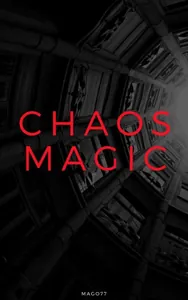
Chaos Magic and Sigils
 81
81

Chaos Magic and Sigils
E. M. Fairchilde’s ‘Chaos Magic and Sigils’ presents a refreshingly direct take on a modern magical paradigm. The book’s strength lies in its no-nonsense approach, stripping away layers of arcane jargon to reveal the core mechanics of belief manipulation and sigil creation. Fairchilde avoids the pitfalls of overly academic or dogmatic texts, instead offering a practical guide that feels like a conversation with an experienced practitioner. One particularly useful section details the process of sigil generation, emphasizing the importance of charged emotion and subsequent forgetting. However, the work occasionally feels a touch too brief, particularly in its exploration of the psychological underpinnings that give chaos magic its efficacy. While it acknowledges the 'paranormal' as a prerequisite belief, it could benefit from a deeper dive into the philosophical debates surrounding this. Ultimately, it serves as a solid, unpretentious introduction to a potent form of witchcraft.
📝 Description
81
E. M. Fairchilde's Chaos Magic and Sigils, published in April 2019, examines a practical approach to modern witchcraft.
This book explains Chaos Magic as a flexible system for personal magical practice, focusing on belief and gnosis rather than strict rules. Fairchilde argues that a practitioner's conviction and the results obtained are key, moving away from reliance on specific deities or historical magical paths. The text aims to make these core ideas understandable for those new to the subject.
It is written for people interested in practical occultism who want an introduction to magical ideas and their application. The book suits individuals who find established occult traditions too rigid or complicated. Readers interested in self-empowerment, psychological aspects of magic, and developing their own magical systems will find value here. It is for those who see the paranormal as a legitimate area of study and want to understand how belief can create real change.
Fairchilde's work connects to the Chaos Magic movement, which started in the 1970s with figures like Peter J. Carroll and Ray Sherwin. This tradition reacted against older, more structured magical systems. It favored a flexible approach, using technology and psychological concepts to achieve desired outcomes without strict adherence to tradition. 'Chaos Magic and Sigils' appears in a time of renewed interest in esoteric subjects and digital sharing, continuing the lineage of these earlier chaos magicians.
💡 Why Read This Book?
• Gain a practical understanding of sigil crafting, a core technique in chaos magic, by learning how to construct and charge them for personal intent, as detailed in the sigil creation sections. • Discover the foundational principles of chaos magic, focusing on the power of belief and personal gnosis, which Fairchilde explains as adaptable tools for achieving magical results. • Explore a more personalized approach to magic, moving beyond rigid doctrines to develop your own effective practices, as encouraged by the book's emphasis on individual results and adaptability.
⭐ Reader Reviews
Honest opinions from readers who have explored this book.
❓ Frequently Asked Questions
What is the primary focus of Chaos Magic and Sigils?
The book focuses on providing a beginner's guide to Chaos Magic, emphasizing sigil creation and the practical application of belief as tools for personal magical practice, stripping away complex dogma.
Who is E. M. Fairchilde?
E. M. Fairchilde is the author of 'Chaos Magic and Sigils,' a work first published on April 6, 2019, aimed at introducing individuals to the fundamentals of chaos magic and sigil work.
Is this book suitable for experienced occultists?
While primarily a beginner's guide, experienced practitioners might find its direct approach and emphasis on personal gnosis a useful refresher or a point of departure for their own work.
What is a sigil in the context of this book?
A sigil, as presented in 'Chaos Magic and Sigils,' is a symbol charged with intent, created through a process designed to bypass the conscious mind and embed a desire into the subconscious for manifestation.
Does the book require belief in specific deities?
No, 'Chaos Magic and Sigils' emphasizes that belief in deities is not necessary; the core of the practice relies on the practitioner's personal belief and conviction, making it highly adaptable.
What is the main difference between Chaos Magic and other forms of witchcraft?
Chaos Magic, as described in the book, is characterized by its flexibility, eclecticism, and focus on results over adherence to specific traditions, distinguishing it from more dogmatic or lineage-based witchcraft.
🔮 Key Themes & Symbolism
Sigil Crafting Essentials
The book provides a clear, step-by-step methodology for the creation and charging of sigils. It stresses the importance of intent, emotional charge, and the subsequent act of 'forgetting' the sigil to allow the subconscious to manifest the desire. Fairchilde guides the reader through selecting symbols, condensing statements of intent, and various methods for imbuing the sigil with energy, framing it as a core technique for direct magical intervention.
The Role of Belief
A central theme is the power of belief as the primary engine of magic. The work posits that belief is not static but a malleable tool that can be consciously directed. It encourages practitioners to adopt temporary belief systems or 'magical languages' to achieve desired outcomes, distinguishing itself from traditions that demand unwavering faith in specific doctrines or entities.
Personal Gnosis and Intent
Fairchilde highlights the pursuit of personal gnosis – altered states of consciousness conducive to magical work – and the precise formulation of intent. The book suggests that true magical efficacy stems from the practitioner's direct experience and focused will, rather than through intermediaries or complex rituals. It empowers the individual as the sole architect of their magical operations.
Eclecticism and Adaptability
The text champions an eclectic approach to magic, drawing from various sources and adapting them to individual needs. It positions Chaos Magic as a meta-system that facilitates the creation of personalized magical systems. This adaptability is presented as a strength, allowing practitioners to evolve their methods as their understanding and goals change over time.
💬 Memorable Quotes
Direct passages from the work, attributed to the author.
“Chaos Magic is witchery at its most basic.”
— This statement frames chaos magic not as a complex, esoteric system, but as a fundamental, stripped-down form of witchcraft focused on core principles of will and belief, accessible to anyone willing to practice.
“If you do not believe in the paranormal then this book is not for you.”
— This directly addresses the target audience, establishing a prerequisite belief in the validity of paranormal phenomena as essential for engaging with the magical concepts presented in the book.
“Otherwise, for those of you who want to bring a little magic into your lives, welcome to the magical world of magic!”
— This serves as an invitation, welcoming newcomers and signaling that the book aims to explain magic and make it an accessible, integrated part of the reader's life.
“Use this book about the various factors of witchery as basic, general knowledge as you begin.”
— This positions the book as an introductory resource, encouraging readers to build a foundational understanding of witchcraft principles before potentially moving on to more specialized or advanced practices.
“This is a beginner's guide that may enlighten you as to your practice.”
— This clearly defines the book's purpose as an introductory text intended to illuminate and guide individuals in their nascent magical endeavors, suggesting a path toward deeper understanding and application.
🌙 Esoteric Significance
Tradition
This work aligns with the late 20th and early 21st-century development of Chaos Magic, a post-modern occult movement. While not directly tied to ancient lineages like Hermeticism or Gnosticism, it borrows and adapts concepts from across the esoteric spectrum, including elements that echo ceremonial magic and shamanism, but reinterprets them through a lens of psychological manipulation and subjective reality. It departs from traditional systems by prioritizing personal gnosis and eclecticism over adherence to historical doctrines or specific cosmologies.
Symbolism
The primary symbolic motif is the sigil itself – a unique glyph designed to represent a specific intent. In the context of chaos magic, the sigil functions as a key, designed to unlock subconscious desires and potentials. Beyond sigils, the work might implicitly reference symbols of transformation and intention, drawing on archetypal imagery that speaks to the practitioner's personal belief system, making its symbolism highly individualized and context-dependent.
Modern Relevance
Contemporary practitioners of Chaos Magic, often found in online communities and forums, continue to build upon the foundations laid by early chaos magicians and popularized by works like Fairchilde's. Thinkers and practitioners exploring areas like digital witchcraft, psychological occultism, and DIY spirituality often find the adaptable and results-focused methodology of chaos magic particularly relevant to modern life, integrating it with contemporary tools and philosophical outlooks.
👥 Who Should Read This Book
• Aspiring practitioners of modern witchcraft seeking a direct, non-dogmatic entry point into magical practices. • Individuals interested in the psychological aspects of belief and consciousness manipulation for personal development or goal achievement. • Those who have found traditional occult systems too rigid or inaccessible and are looking for a more personalized, results-oriented approach to magic.
📜 Historical Context
Published in April 2019, 'Chaos Magic and Sigils' arrives decades after the formal emergence of Chaos Magic itself. This paradigm, largely formalized in the UK during the 1970s by figures such as Peter J. Carroll and Ray Sherwin, represented a significant departure from traditional ceremonial magic. Carroll's 'Liber Null' (1978) and Sherwin's 'The Book of Results' (1975) were foundational texts that championed an eclectic, results-oriented approach, often utilizing techniques derived from diverse sources like quantum physics, cybernetics, and psychology. Chaos Magic reacted against the perceived dogma and historical baggage of older esoteric systems like the Golden Dawn or Thelema. Fairchilde's work, therefore, enters a landscape already shaped by these pioneers and their contemporaries, such as Austin Osman Spare, whose sigil-creation techniques heavily influenced the chaos current. The book benefits from the established discourse but also faces the challenge of differentiating itself within a field that has already explored many of its core tenets.
📔 Journal Prompts
Formulating a clear statement of intent for a personal sigil.
Reflecting on the process of charging a sigil with emotional energy.
Considering how temporary belief systems can be employed in magical work.
Analyzing personal results achieved through sigil magic.
Exploring the concept of personal gnosis and its role in manifestation.
🗂️ Glossary
Chaos Magic
A modern magical paradigm that emphasizes eclecticism, results-oriented practice, and the manipulation of belief systems. It prioritizes personal gnosis and adaptability over adherence to specific traditions.
Sigil
A symbol created to represent a specific magical intent. In chaos magic, sigils are typically charged with energy during altered states of consciousness and then 'forgotten' to allow subconscious manifestation.
Gnosis
An altered state of consciousness often sought in magical practice, characterized by intense focus or emotional arousal, which is believed to facilitate the imprinting of magical intent.
Intent
The clearly defined goal or desire that a magical practitioner aims to achieve through their workings, such as sigil creation.
Belief
In chaos magic, belief is viewed as a tool that can be adopted, manipulated, and directed to influence reality, rather than a fixed doctrine.
Eclecticism
The practice of drawing upon and combining elements from a wide variety of sources, traditions, and techniques in magical work.
Witchery
A broad term referring to magical practice, often associated with personal power, intention, and direct engagement with the forces of nature or consciousness.