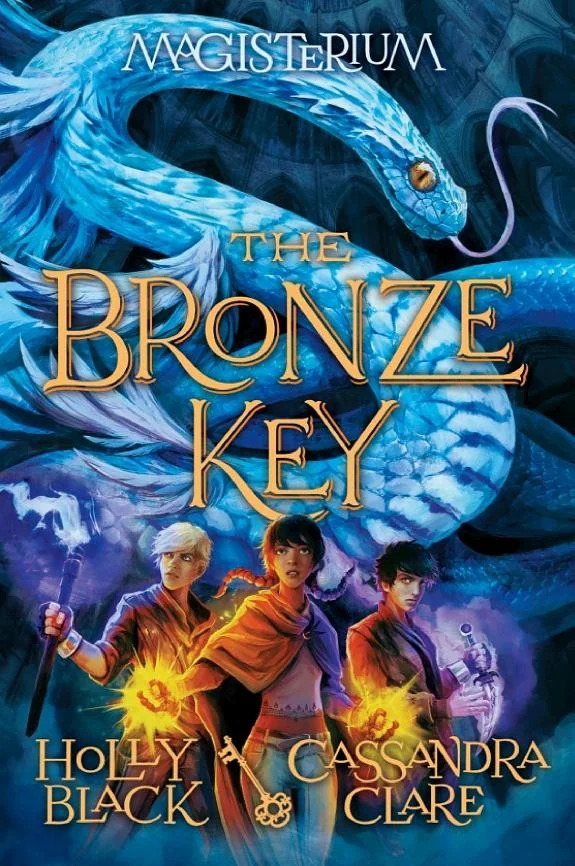
The Bronze Key (Magisterium #3)
 77
77

The Bronze Key (Magisterium #3)
The Bronze Key picks up the pace established in the previous Magisterium installments, but it occasionally falters under the weight of its own expanding mythology. The core strength remains the dynamic between Callum, Aaron, and Tamara, whose loyalty and burgeoning powers are tested severely. A particularly effective sequence involves Callum confronting the ethical implications of using certain forbidden magic, a moment that highlights the series’ willingness to explore darker themes within its YA framework. However, the plot sometimes feels overly reliant on convenient revelations and sudden shifts in antagonist motivation. While Clare and Black craft engaging prose, the pacing in the latter half can feel rushed, attempting to tie up numerous threads before the next book. The narrative’s exploration of Callum's connection to the antagonist, the Destroyer, is compelling, but the resolution within this volume feels somewhat abrupt. It's a solid entry that pushes the overarching plot forward, but one that could have benefited from more breathing room. The book ultimately serves its purpose: advancing the saga and leaving readers eager for the conclusion.
📝 Description
77
The Bronze Key, published in 2016, escalates the conflict and deepens the mysteries of the Magisterium series.
The third novel in Holly Black and Cassandra Clare's Magisterium series, The Bronze Key continues the story of Callum Hunt as he trains at the magical Magisterium. This installment heightens the tension surrounding the antagonist known as the Destroyer and questions the fundamental nature of magic itself. Readers who have followed the series will find Callum's journey through the magical world more perilous as new challenges arise.
The book appeals to fans of portal fantasies and stories set in magic schools. It features a narrative that balances action with emotional depth, focusing on the development of its characters. Themes of identity, loyalty, and the effects of wielding power are central to the plot, making it engaging for those invested in the unfolding events and the consequences of choices made.
This collaboration between Black, known for her fae stories, and Clare, author of The Mortal Instruments, offers a blend of established fantasy styles. The series taps into the popular market for young adult magical adventures, providing a contemporary fantasy feel with classic undertones.
The Magisterium series, including The Bronze Key, fits within the contemporary young adult fantasy tradition that gained momentum following major global successes. It engages with established tropes of magical schools and chosen protagonists, presenting a familiar framework for readers. The narrative explores concepts like elemental magic and the struggle against ancient evils, grounding its fantasy elements in a structured magical system that mirrors some esoteric traditions' emphasis on training and inherent power.
💡 Why Read This Book?
• Gain insight into the moral compromises faced by young mages, particularly Callum Hunt’s struggle with his own nature, as depicted in the Magisterium’s challenging curriculum. • Understand the escalating conflict against the 'Chaos-Ridden' and the ancient evil the Destroyer represents, a core plot element driving the narrative toward its climax. • Explore the theme of chosen family through the bond between Callum, Aaron, and Tamara, whose loyalty to each other is tested by external threats and internal secrets.
⭐ Reader Reviews
Honest opinions from readers who have explored this book.
❓ Frequently Asked Questions
What is the significance of the Bronze Key in the Magisterium series?
The Bronze Key is a pivotal artifact in the third book, The Bronze Key. It represents hidden knowledge and potentially immense power, central to the escalating conflict and the unfolding mysteries surrounding the antagonist and the history of the Magisterium.
Who are the main characters in The Bronze Key?
The primary protagonists are Callum Hunt, Aaron Stewart, and Tamara Rajavi. Their relationships and individual journeys, particularly Callum's internal struggles and his connection to the antagonist, form the core of the narrative.
What are the core themes explored in The Bronze Key?
The book delves into themes of good versus evil, the nature of power, destiny versus free will, loyalty, and the consequences of choices. It also examines the complexities of identity, especially for Callum.
Is The Bronze Key suitable for readers new to the Magisterium series?
No, The Bronze Key is the third installment and relies heavily on plot points and character development from the previous books, Magisterium: The Iron Trial and Magisterium: The Copper Gauntlet. Prior reading is essential.
What is the role of the Magisterium itself in the story?
The Magisterium serves as the central setting and institution where young mages are trained. It is a place of learning, but also a focal point for the ancient conflicts and secrets that drive the plot forward.
What kind of magic system does the Magisterium series feature?
The series features an elemental magic system tied to the five elements: Chaos, Earth, Air, Fire, and Water. Students are often sorted into elemental 'Paths' within the Magisterium.
🔮 Key Themes & Symbolism
The Nature of Evil
The Bronze Key intensely scrutinizes the lines between good and evil, particularly through the character of Callum Hunt. His connection to the Destroyer, an ancient and malevolent entity, forces him to confront the possibility that evil is not always external but can reside within oneself. The narrative questions whether one's lineage or past actions predetermine their destiny, challenging the simplistic dichotomy often presented in fantasy. This exploration is crucial as Callum grapples with forbidden magic and the moral compromises required to protect his friends and the Magisterium.
Destiny and Free Will
A central tension in The Bronze Key revolves around the concept of destiny, especially Callum's foretold role in a prophecy involving the Destroyer. Readers witness his struggle against what seems like an inevitable fate. The book posits that while external forces and prophecies may point towards a certain path, individual choices and actions hold the power to alter or defy it. This theme is vital as characters make difficult decisions that shape not only their own futures but the fate of the magical world.
Loyalty and Betrayal
The bonds of friendship and loyalty are severely tested in The Bronze Key. The camaraderie between Callum, Aaron, and Tamara forms the emotional core of the story, but external pressures and internal secrets create rifts. The narrative explores how trust can be eroded and how the need for self-preservation or the pursuit of difficult truths can lead to acts that appear as betrayal. The characters must navigate complex relationships where the lines between ally and potential enemy blur.
The Magisterium's Hidden Truths
Beyond its role as a magical academy, the Magisterium in The Bronze Key is revealed to be a repository of ancient secrets and a site of ongoing conflict. The book peels back layers of history, suggesting that the institution's founding and its current practices are intertwined with darker forces and forgotten truths. The 'Bronze Key' itself symbolizes access to these concealed aspects of the Magisterium's past, hinting at a more complex and potentially dangerous reality than initially presented.
💬 Memorable Quotes
Direct passages from the work, attributed to the author.
“Callum Hunt’s destiny felt less like a path and more like a cage.”
— This interpretation highlights the oppressive nature of prophecy in the narrative. It suggests that rather than a guiding force, Callum perceives his fated role as a constraint, emphasizing his internal conflict and desire for agency.
“The line between protecting his friends and becoming the monster he feared grew thinner with every choice.”
— This captures the moral ambiguity Callum faces. His attempts to safeguard his loved ones necessitate actions that push him towards the darkness he dreads, illustrating the high stakes and ethical complexities of his journey.
“Magic was not always a gift; sometimes, it was a burden passed down through blood.”
— This reflects on the inherited nature of power and its potential negative consequences. It speaks to the idea that lineage can bring not only ability but also dangerous legacies and responsibilities.
“The secrets of the Magisterium were as old and as deep as the earth itself.”
— This metaphor emphasizes the profound and ancient nature of the mysteries surrounding the magical institution. It suggests that uncovering these truths is a monumental task, fraught with the weight of history.
“Aaron’s unwavering belief in goodness was both his greatest strength and his most vulnerable point.”
— This interpretation points to Aaron's inherent idealism. While his moral compass guides him, it also makes him susceptible to manipulation or disillusionment in the harsh realities of their world.
🌙 Esoteric Significance
Tradition
While the Magisterium series is primarily a young adult fantasy, it draws upon archetypal themes common in esoteric traditions, particularly the Gnostic concept of the 'Demiurge' or a flawed creator figure, reflected in the antagonist known as the Destroyer. The idea of a hidden, inner world (the Magisterium) contrasted with the mundane world also echoes Platonic and Neoplatonic philosophies concerning the nature of reality. The series explores the duality of spirit and matter, and the potential for spiritual awakening through trials, which are foundational concepts in many mystical paths.
Symbolism
The 'Bronze Key' itself functions as a potent symbol, representing access to hidden knowledge, unlocking secrets, and the transition between different states of understanding or realms. The elemental magic system (Earth, Air, Fire, Water, Chaos) is a direct nod to classical and Hermetic elemental theories, representing fundamental forces of creation and transformation. The concept of the 'Chaos-Ridden' can be interpreted as a symbol for spiritual corruption or the influence of lower, chaotic forces that disrupt psychic and spiritual equilibrium.
Modern Relevance
Contemporary authors exploring themes of self-discovery through adversity, the nature of inherent evil versus learned behavior, and the power of chosen communities often echo the narrative structures and character arcs found in the Magisterium series. Thinkers and practitioners in modern occultism and esoteric psychology who examine the shadow self and archetypal patterns in storytelling may find parallels in Callum's internal struggles and the series' exploration of destiny. The series' success also highlights a continued popular interest in fantasy narratives that engage with magical systems and hidden worlds.
👥 Who Should Read This Book
• Young adult fantasy readers seeking a continuation of the Magisterium saga, particularly those invested in Callum Hunt's journey and the overarching conflict with the Destroyer. • Fans of magic school narratives who appreciate intricate world-building, elemental magic systems, and character-driven plots involving friendship and loyalty tested by dark forces. • Readers interested in exploring themes of destiny versus free will and the moral complexities of power within a contemporary fantasy setting.
📜 Historical Context
The Bronze Key, published in 2016, arrived during the zenith of the young adult fantasy boom, a period heavily influenced by the success of series like Harry Potter and The Hunger Games. The collaboration between Holly Black, known for her intricate fae lore, and Cassandra Clare, a titan of YA urban fantasy with The Mortal Instruments, positioned the Magisterium series as a significant contender in the genre. This era saw a high demand for magical school narratives and 'chosen one' archetypes. While not directly engaging with specific esoteric movements of the past, the series taps into a broader cultural fascination with magic and hidden worlds that has roots in earlier occult revivals. The reception was generally positive within its target demographic, praised for its engaging characters and plot, though some critics noted similarities to established fantasy tropes. The market in 2016 was saturated, making unique world-building and character dynamics crucial for standing out.
📔 Journal Prompts
Callum Hunt's precarious balance between his inherited darkness and his chosen path.
The symbolic weight of the Bronze Key and what it might unlock.
Aaron Stewart's unwavering idealism in the face of escalating danger.
Tamara Rajavi's role as a stabilizing force amidst chaos.
The ethical implications of wielding forbidden magic for a perceived greater good.
🗂️ Glossary
Magisterium
A secret, underground school where young mages are trained in the use of elemental magic, hidden from the non-magical world (Muggles/Alphas).
Chaos-Ridden
Individuals or creatures corrupted or driven mad by the element of Chaos, often exhibiting unpredictable and destructive magical abilities.
The Destroyer
An ancient, malevolent entity and the primary antagonist of the Magisterium series, possessing immense power and a connection to Callum Hunt.
Elemental Magic
Magic derived from the five core elements: Chaos, Earth, Air, Fire, and Water, which students at the Magisterium learn to control.
Alphas
The non-magical, or ordinary, human population, unaware of the existence of magic or the Magisterium.
The Bronze Key
A significant artifact in the third book, symbolizing hidden knowledge and power crucial to the unfolding plot and the secrets of the Magisterium.
Maker
A powerful, ancient being responsible for creating the magical elements and the original wizards, often revered or feared.
This book appears in 1 collection
🔮 Readers Also Liked
Browse all →







From the “Chaos Magic” Collection
View all →




More Free Magic & Ritual Books
View all →