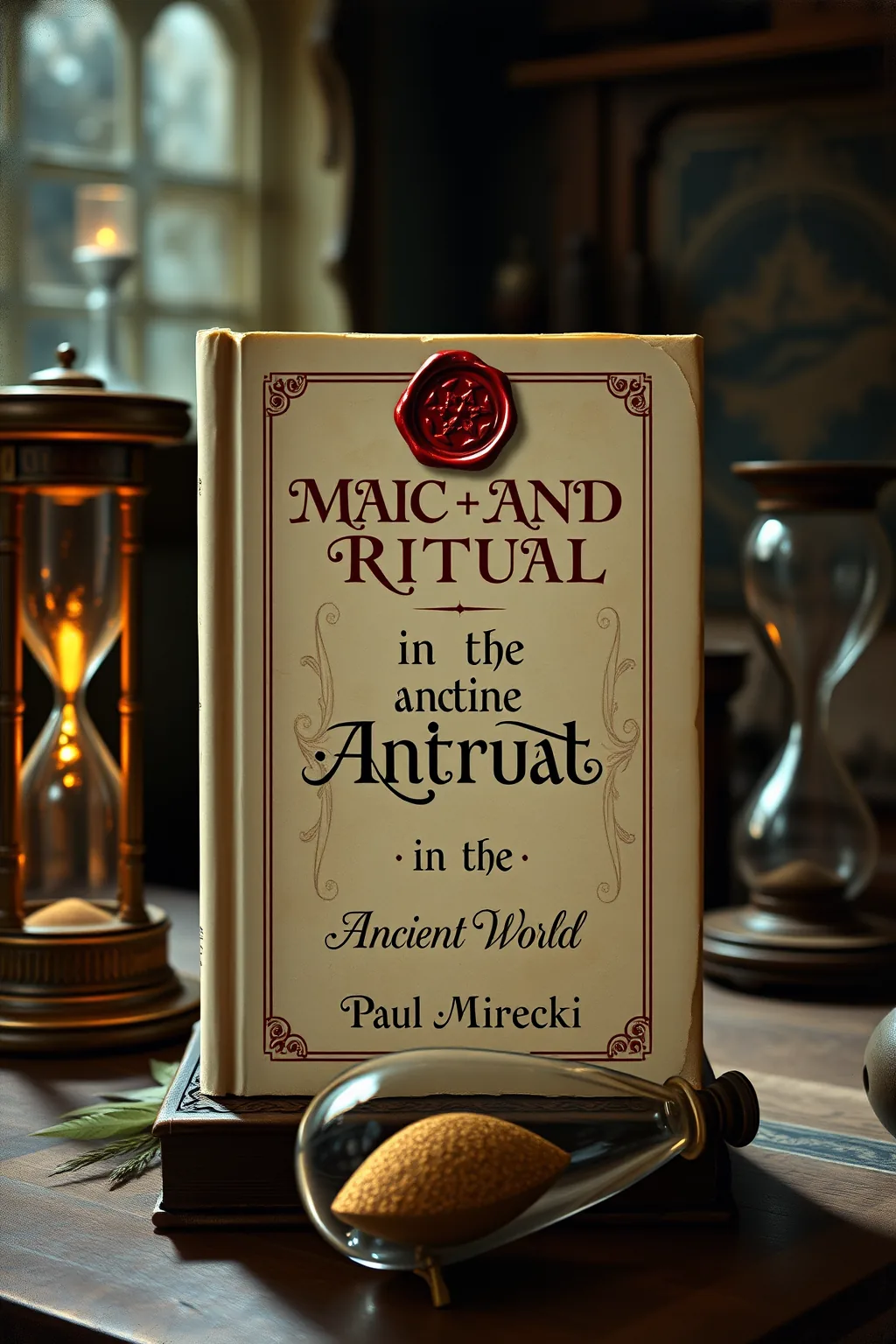
Magic and Ritual in the Ancient World
 62
62

Magic and Ritual in the Ancient World


Silas Hawthorne (Hermetic Studies Editor) — A monumental work, Mirecki's "Magic and Ritual in the Ancient World" offers an unparalleled exploration into the esoteric currents of antiquity. He meticulously reconstructs the diverse magical landscape, revealing the sophisticated understanding of cosmic forces and symbolic language that underpinned these practices. This is not merely a historical account; it is an excavation of lost wisdom, illuminating the psychological and spiritual dimensions of ancient ritual. Scholars will find invaluable depth, while practitioners will discover fertile ground for contemplation and inspiration. A foundational text for anyone seeking to understand the roots of Western esotericism.
📝 Description
62
Paul Mirecki's 2015 book examines ancient magic and ritual across cultures.
Paul Mirecki's "Magic and Ritual in the Ancient World" investigates the role of magic and ritual in various ancient civilizations. The book analyzes how these practices were integrated into daily life, belief systems, and societal structures. Mirecki focuses on the ways ancient peoples sought to understand and influence the world around them through these means.
The work covers a range of topics, including incantations, symbolic rituals, and the pursuit of esoteric knowledge. It connects these practices to broader philosophical and cosmological understandings of their time. Mirecki argues that magic was not separate from other aspects of life but often intertwined with them, reflecting a desire for control and connection to forces beyond human comprehension.
The book aims to provide a clear overview of these ancient traditions. It moves beyond simple descriptions to consider the underlying motivations and cultural significance of magical and ritualistic acts. Mirecki's research offers insight into the human impulse to engage with the unseen and the divine.
This book fits within the study of comparative religion and the history of magic. It examines how magical beliefs and practices were understood and employed by people in antiquity, often as a means of interacting with perceived supernatural forces. Mirecki places these traditions within their specific historical and cultural settings, rather than treating them as isolated mystical phenomena. The work contributes to understanding the historical roots of esoteric thought and its expression in early societies.
💡 Why Read This Book?
Unearth the foundational principles of ancient magic and ritual. Discover how these practices influenced early philosophical thought and shaped societal structures. For scholars, it's a deep dive into primary source material; for seekers, a revelation of humanity's perennial quest for meaning and connection to the unseen. Practitioners will find potent insights into the universal language of ritual and symbolism.
⭐ Reader Reviews
Honest opinions from readers who have explored this book.
❓ Frequently Asked Questions
What ancient civilizations are primarily covered?
The book extensively covers magic and ritual in major ancient civilizations, including Mesopotamia, Egypt, Greece, and Rome, offering a broad comparative perspective on their esoteric practices.
Does the book focus on theoretical magic or practical applications?
It provides a comprehensive overview of both theoretical underpinnings and practical applications of magic and ritual, examining their role in daily life, governance, and spiritual pursuits.
Is prior knowledge of ancient history required?
While prior knowledge is beneficial, Mirecki's accessible prose and clear explanations make the book approachable for readers new to the subject, guiding them through complex concepts.
What kind of evidence does Mirecki use?
Mirecki draws upon a rich array of archaeological findings, textual fragments, inscriptions, and artistic representations to reconstruct and analyze ancient magical practices and beliefs.
How does this book relate to modern esoteric studies?
It offers a crucial historical foundation, demonstrating the enduring human fascination with the occult and revealing the ancient roots of many modern magical and spiritual traditions.
🔮 Key Themes & Symbolism
The Interconnectedness of the Cosmos
Mirecki reveals how ancient peoples perceived a cosmos deeply interwoven, where celestial movements, earthly events, and human actions were inextricably linked. Magic served as a vital conduit, allowing individuals to navigate and influence this intricate web of forces. The book explores the symbolic language used to understand these connections, from astrological correspondences to divine interventions, highlighting a worldview far removed from modern materialistic perspectives and emphasizing the profound sense of agency derived from understanding these hidden currents.
Ritual as Transformative Practice
Beyond mere ceremony, ancient rituals were potent acts of transformation, designed to alter states of consciousness, bridge the gap between the material and spiritual realms, and effect profound change. This theme studies the psychological and spiritual efficacy attributed to these practices, examining the power of incantation, sacrifice, purification, and invocation. Mirecki illustrates how ritual provided a framework for individuals and communities to confront the unknown, seek divine favor, and achieve personal or collective metamorphosis, offering a glimpse into the ancient understanding of sacred power.
The Power of Symbol and Language
Central to ancient magic and ritual was the profound belief in the inherent power of symbols and language. This section explores how specific words, gestures, and images were believed to possess intrinsic magical potency, capable of invoking deities, manipulating energies, and shaping reality. Mirecki dissects the complex semiotics of ancient magical systems, demonstrating how their symbolic vocabulary offered a direct means of communication with the divine and the forces of nature, useful the profound efficacy ancient cultures ascribed to the precise deployment of sacred signs and utterances.
💬 Memorable Quotes
Direct passages from the work, attributed to the author.
“Ritual was the language through which humanity spoke to the divine, and the divine answered.”
— Highlights the reciprocal relationship between humans and the sacred, emphasizing ritual's role as a communication bridge and a means of divine interaction.
“To understand ancient magic is to understand a fundamental aspect of the human spirit's enduring quest for meaning.”
— Connects the historical study of magic to a universal human drive for purpose and comprehension of the greater mysteries of life.
“Symbols were not mere representations, but potent keys to unlocking hidden realities.”
— Underscores the active, functional role of symbolism in ancient esoteric thought, where signs held inherent power.
“The veil between worlds was thinner, and the avenues of influence were many.”
— Evokes the ancient perception of a more permeable reality, where the supernatural was readily accessible through various magical and ritualistic means.
💡 Key Ideas
Editorial paraphrase of the work's core concepts — not direct quotes.
The ancient world pulsed with a magic that was not separate from life, but woven into its very fabric.
This quote captures the book's core argument: magic was an integral, not peripheral, aspect of ancient existence, influencing all facets of society and personal experience.
🌙 Esoteric Significance
Tradition
This work significantly illuminates the foundational layers of Western esotericism, tracing its lineage back to the pre-Christian magical and religious systems of the ancient Near East and Mediterranean. It provides crucial context for later Hermetic, Gnostic, and Neoplatonic traditions by showcasing the body of magical beliefs and practices that predated and influenced them. The book demonstrates how concepts of divine power, cosmic order, and the efficacy of ritualized language were already deeply embedded in the ancient psyche, forming the bedrock upon which subsequent esoteric philosophies would be built.
Symbolism
The book dissects the profound symbolic language of the ancient world, revealing how natural phenomena, celestial bodies, animal forms, and geometric patterns were imbued with deep spiritual and magical meaning. It explores the use of archetypal imagery in rituals and incantations, demonstrating how these symbols acted as conduits for divine energy and cosmic forces. From the Egyptian hieroglyphs to the Greek constellations, Mirecki illustrates how these visual and conceptual tools were not mere decoration but potent instruments for understanding and manipulating the unseen forces that governed existence, offering a glimpse into a rich symbolic universe.
Modern Relevance
"Magic and Ritual in the Ancient World" offers a vital bridge between antiquity and the modern esoteric landscape. By understanding the ancient roots of magical thinking and ritual practice, contemporary practitioners and scholars gain a deeper appreciation for the enduring human impulse to connect with the divine and influence reality. The book highlights universal themes of intention, symbolism, and the power of focused consciousness that remain relevant today. It encourages a critical yet open-minded examination of how ancient wisdom can inform our understanding of consciousness, the cosmos, and our place within them, fostering a richer dialogue with the past.
👥 Who Should Read This Book
This comprehensive study is essential for a diverse audience. **Scholars of ancient history, religious studies, and classics** will find an invaluable resource for understanding the nuanced interplay of magic and society. **Students of esotericism and occult traditions** will discover the historical and philosophical underpinnings of their chosen paths. **Spiritual seekers** yearning for a deeper connection to the ancestral wisdom of humanity will find clear insights into ancient worldviews. **Practitioners of ritual and magic** will benefit from a rich historical context and a deeper understanding of the symbolic language and efficacy of their craft. It is a book for anyone seeking to unravel the mysteries of human belief and practice across time.
📜 Historical Context
"Magic and Ritual in the Ancient World" is situated within a period of profound intellectual and spiritual ferment, spanning from the early civilizations of Mesopotamia and Egypt through the classical eras of Greece and Rome. This era witnessed the development of sophisticated philosophical systems, the codification of religious practices, and the emergence of diverse magical traditions that often intertwined with established cults and nascent scientific inquiry. The book explores how these practices responded to societal needs, fears, and aspirations, from seeking divine favor for harvests and health to working through the complexities of political power and the mysteries of life and death. It illuminates a world where the boundaries between religion, philosophy, and magic were fluid, offering a unique lens through which to understand the ancient human condition.
📔 Journal Prompts
Reflect on a ritual you have experienced or observed. What symbolic elements were present, and what do you believe was their intended purpose or effect?
Consider the concept of 'hidden knowledge' in the ancient world. How does this compare to the pursuit of knowledge in your own life and society today?
How might the ancient belief in the interconnectedness of the cosmos influence your perception of your daily interactions and environment?
Imagine you are an ancient practitioner of magic. What would be your primary concerns, and what rituals would you employ to address them?
Explore the relationship between language and power as presented in the book. How does the careful use of words shape reality, both historically and in contemporary contexts?
🗂️ Glossary
Incantation
A series of words spoken or chanted as part of a magical ritual, believed to possess the power to invoke spirits, cast spells, or achieve specific outcomes.
Sympathetic Magic
A form of magic based on the belief that like produces like, or that a resemblance between two things influences their connection, often involving effigies or symbolic representations.
Divination
The practice of seeking knowledge of the future or the unknown by supernatural means, utilizing methods such as astrology, augury, or oracles.
Amulet
An object worn or carried, believed to possess protective powers against evil, harm, or misfortune, often inscribed with symbols or texts.
Theurgy
A system of ritual magic focused on invoking divine beings or spirits for the purpose of spiritual purification and union with the divine, rather than for personal gain.
This book appears in 2 collections
🔮 Readers Also Liked
Browse all →







From the “Ritual Magic” Collection
View all →







More Free Magic & Ritual Books
View all →