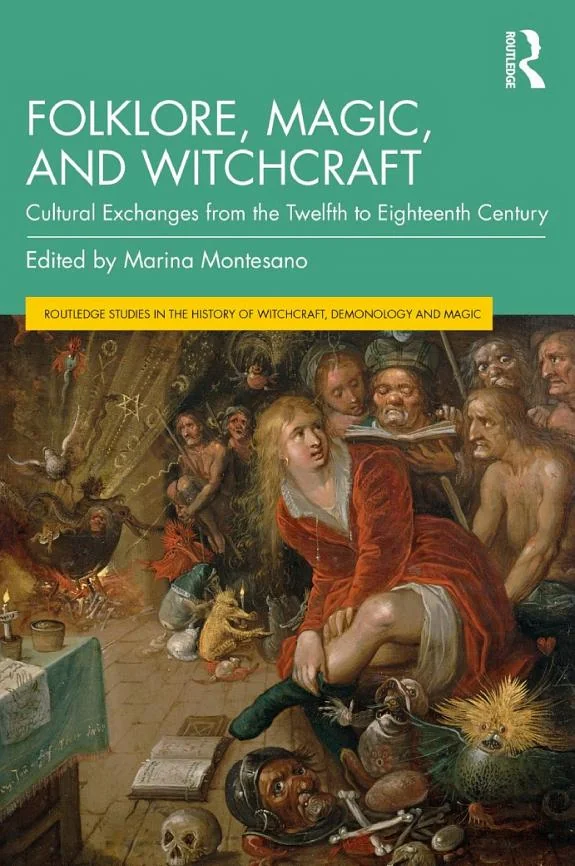
Folklore, Magic, and Witchcraft
 73
73

Folklore, Magic, and Witchcraft
Marina Montesano's collected studies offer a compelling counterpoint to the often-siloed approach to studying folklore, magic, and witchcraft. The strength of the volume lies in its consistent focus on the *movement* of ideas, demonstrating how a particular charm or a witch stereotype could travel from one region to another, shedding its original context and acquiring new meanings. A notable passage explores the transmission of specific curse formulas, highlighting their adaptability across different social strata in medieval Europe. However, the sheer breadth of the eighteen studies, while a strength in scope, can occasionally lead to a sense of fragmentation, with some chapters feeling less deeply integrated into the overarching thesis than others. The work is a valuable contribution to understanding the fluid, cross-cultural nature of belief, even if the reader must actively bridge some of the thematic gaps. It serves as a critical resource for those who see magic and folklore not as isolated phenomena, but as interconnected currents in human history.
📝 Description
73
Marina Montesano's 2022 collection gathers eighteen scholarly essays on folklore, magic, and witchcraft.
This volume compiles eighteen scholarly studies that examine the circulation and reception of folkloric motifs, magical beliefs, and witchcraft narratives across different cultures and historical periods. The collection eschews a single chronological or thematic structure, instead highlighting the dynamic interaction of cultural exchange. Its methodology moves beyond simple comparison to focus on the active transmission and adaptation of these concepts.
Scholars of folklore, the history of magic, witchcraft studies, and cultural anthropology will find this a valuable resource. It also appeals to practitioners and enthusiasts of esoteric traditions who desire an academic understanding of the historical roots and cross-cultural spread of magical and occult beliefs. Readers interested in the evolution of belief systems and the mechanisms of cultural transmission will also find it beneficial.
The studies cover historical periods from antiquity to the modern era, considering how beliefs and practices were received. The work implicitly engages with recent historiographical trends that analyze shared motifs with a focus on circulation and reception, demonstrating that ideas about magic and witchcraft were actively negotiated and transformed by various communities and individuals.
This collection situates itself within contemporary academic discourse on witchcraft and magic, moving beyond earlier, often essentialist, approaches. It emphasizes the historical processes of how beliefs and practices were transmitted, reinterpreted, and adapted across diverse cultural contexts. By focusing on the mechanics of cultural exchange, the book provides a framework for understanding the historical development and cross-cultural diffusion of magical and occult traditions, offering a scholarly perspective on subjects often relegated to folklore or sensationalized accounts.
💡 Why Read This Book?
• Gain an understanding of the 'circulation and reception' of motifs in folklore and magic, moving beyond static comparative studies, as seen in analyses of medieval curse formulas. • Discover how specific beliefs and practices, such as those related to witchcraft, were actively transmitted and transformed across different cultures and historical periods, as demonstrated by the volume's broad chronological scope. • Learn a valuable research methodology that emphasizes cultural exchange, offering a dynamic approach to studying esoteric traditions and their historical development, as presented through the eighteen diverse scholarly contributions.
⭐ Reader Reviews
Honest opinions from readers who have explored this book.
❓ Frequently Asked Questions
What historical periods does 'Folklore, Magic, and Witchcraft' cover?
The collection spans a wide chronological spectrum, from antiquity through to the modern era. Specific studies examine instances of belief circulation and reception across various centuries, providing a broad historical perspective on the evolution of magical and folkloric traditions.
What is the central methodological approach of the book?
The book emphasizes 'cultural exchange and encounters' as its central methodological focus. It moves beyond simple comparativism to explore how motifs and beliefs were actively transmitted, received, and transformed by different societies over time.
Who is Marina Montesano and what is her expertise?
Marina Montesano is an academic whose work centers on the history of magic and witchcraft. This edited volume showcases her expertise in bringing together diverse scholarly perspectives on the cross-cultural diffusion of such beliefs.
How does this book differ from traditional comparative studies of magic?
Unlike traditional comparative studies that often focus on similarities between traditions, this book highlights the dynamic process of transmission and reception. It examines how beliefs and motifs changed as they moved between cultures, revealing a more active and nuanced historical process.
What kind of motifs are discussed in the book?
The volume explores a variety of folkloric motifs, magical beliefs, and witchcraft narratives. These can include specific ritualistic elements, incantations, stereotypes associated with magic users, and the reception of these elements in different historical and geographical contexts.
Is this book suitable for beginners interested in witchcraft?
While the book is scholarly, it offers a robust historical and anthropological grounding for those interested in witchcraft. Beginners seeking a deep understanding of the historical development and cultural transmission of these beliefs will find it informative, provided they are prepared for academic rigor.
🔮 Key Themes & Symbolism
Motif Circulation
The collection meticulously traces the movement of specific folkloric motifs, magical beliefs, and witchcraft narratives across diverse cultural landscapes and historical epochs. It highlights how these elements are not static but are dynamically transmitted, adapted, and reinterpreted. For instance, a specific incantation or a stereotype of a sorcerer might appear in vastly different contexts, shedding or gaining new layers of meaning, demonstrating the fluid nature of belief systems and their transmission mechanisms.
Cultural Exchange and Encounters
This theme underscores the book's departure from pure comparativism. Instead of merely cataloging similarities, the studies focus on the active 'encounters' between cultures that lead to the exchange of ideas about magic and the supernatural. It reveals how contact, conflict, and adaptation shaped the narratives and practices associated with witchcraft and folk magic, illustrating the interconnectedness of human belief systems throughout history.
Reception of Beliefs
A crucial aspect explored is how beliefs, once transmitted, are received and understood within new cultural frameworks. This involves examining the reception of magical practices or witchcraft accusations in different social, legal, and religious contexts. The studies show that reception is not passive; it involves negotiation, resistance, and transformation, leading to a richer understanding of how magical traditions evolve and are integrated into societal structures.
Methodology Beyond Comparativism
The volume proposes and implicitly demonstrates a valuable methodology that moves beyond the limitations of traditional comparative studies. By focusing on the processes of circulation and reception, it offers a more dynamic and historically grounded approach to understanding folklore, magic, and witchcraft. This method allows for a deeper insight into the agency of individuals and communities in shaping and reshaping esoteric traditions.
💬 Memorable Quotes
Direct passages from the work, attributed to the author.
“The chapters traverse a broad spectrum both chronologically and thematically; yet together, their shared focus on cultural exchange and encounters emerges in an important way.”
— This observation from the original blurb expresses the volume's core strength: its ability to connect disparate studies through the lens of cross-cultural transmission, offering a cohesive vision despite diverse subject matter.
“The work reveals a valuable methodology that goes beyond the pure comparativism that has dominated historiography in recent decades.”
— This highlights the book's contribution to scholarship, suggesting it offers a more dynamic and nuanced approach to understanding historical beliefs than older, more static comparative methods.
“Several of the chapters touch on the adaptation of magical texts and practices across different social strata.”
— This points to the practical application of the book's themes, indicating that it explores not just the existence of magical beliefs but how they were utilized and understood by various groups within society.
“The common focus is on the circulation and reception of motifs and beliefs in the field of folklore, magic, and witchcraft.”
— This statement precisely defines the volume's unifying principle, emphasizing the dynamic journey and societal integration of supernatural concepts rather than their abstract definition.
“Eighteen studies linked together by a common focus on the circulation and reception of motifs and beliefs.”
— This emphasizes the collaborative and comprehensive nature of the volume, showcasing a collection of scholarly efforts dedicated to understanding the historical movement and societal impact of esoteric ideas.
🌙 Esoteric Significance
Tradition
While not strictly a text within a single esoteric tradition, this work significantly informs the historical understanding of traditions that incorporate folk magic, ritual, and animistic beliefs. It provides a scholarly framework for understanding the roots of many modern occult practices, tracing their lineage through historical folklore and cross-cultural exchange, rather than solely through formal initiatory lineages.
Symbolism
The book explores motifs that often carry deep symbolic weight in esoteric thought. For example, symbols associated with protection, cursing, or divination, when traced through various cultures, reveal their common archetypal roots and how their interpretations shift. The 'witch' herself becomes a complex symbol, representing societal anxieties, forbidden knowledge, and alternative spiritual paths, its meaning evolving with cultural reception.
Modern Relevance
Contemporary practitioners of Neo-Paganism, modern witchcraft, and even some ceremonial magicians can draw valuable insights from this work. Understanding the historical circulation of beliefs and the adaptation of practices provides a richer context for their own traditions, highlighting the deep historical roots and diverse influences that have shaped contemporary esoteric movements.
👥 Who Should Read This Book
• Researchers in comparative folklore and the history of magic seeking to understand the mechanisms of belief transmission beyond simple comparison. • Students of cultural history and anthropology interested in how ideas about the supernatural are shaped by societal encounters and reception. • Modern practitioners of witchcraft and esoteric arts who wish to ground their practice in a deeper, scholarly understanding of the historical evolution and cross-cultural diffusion of magical beliefs.
📜 Historical Context
Published in 2021, *Folklore, Magic, and Witchcraft* emerges in an academic landscape where the study of these topics has moved significantly beyond earlier demonological frameworks. The volume implicitly engages with post-structuralist and post-colonial approaches to history, which emphasize the fluidity of cultural boundaries and the agency of local actors in shaping belief systems. It builds upon decades of scholarship, including the work of figures like Carlo Ginzburg, whose *The Cheese and the Worms* (1976) explored the cosmology of a 16th-century miller, and Keith Thomas, whose *Religion and the Decline of Magic* (1971) charted the changing field of belief in early modern England. Montesano's collection offers a corrective to purely national or regional studies by foregrounding the transnational flow of magical ideas, a theme increasingly important in contemporary historiography. Its reception within academia is likely positive among scholars seeking to understand the interconnectedness of European and potentially global magical traditions.
📔 Journal Prompts
The circulation of motifs like specific protective charms or curse formulas across different historical periods.
The concept of 'cultural exchange and encounters' as it pertains to the transmission of witchcraft narratives.
How the reception of magical beliefs varied across different social strata in the periods discussed.
The evolution of the symbolism associated with figures accused of witchcraft throughout history.
The methodological implications of studying belief transmission through 'circulation and reception' rather than pure comparativism.
🗂️ Glossary
Motif
A recurring theme, subject, or idea in folklore, literature, or art. In this context, it refers to specific elements of stories, beliefs, or practices related to magic and witchcraft that can be traced across cultures.
Circulation
The process by which ideas, beliefs, practices, or narratives spread or are transmitted from one person, group, or culture to another over time and space.
Reception
The way in which transmitted motifs, beliefs, or practices are understood, interpreted, adapted, or resisted by the recipients within their own cultural and historical context.
Comparativism
A research methodology that seeks to understand phenomena by comparing them across different cultures or historical periods, often focusing on similarities and differences.
Historiography
The study of the writing of history, including the methods, theories, and principles used by historians. It examines how historical accounts are produced and how historical understanding evolves.
Esoteric
Intended for or likely to be understood by only a small number of people with a specialized knowledge or interest. In this context, referring to mystical, occult, or magical traditions.
Folkloric
Relating to or characteristic of folklore, the traditions, beliefs, customs, stories, and sayings of a community, passed down by word of mouth or example.
This book appears in 1 collection
🔮 Readers Also Liked
Browse all →







From the “Folklore Magic” Collection
View all →




More Free Magic & Ritual Books
View all →