The Book of Black Magic and Ceremonial Magic
 75
75

The Book of Black Magic and Ceremonial Magic
Arthur Edward Waite's compilation, "The Book of Black Magic and Ceremonial Magic," is an encyclopedic effort, more a scholarly catalog than an initiation manual. Its strength lies in its sheer breadth, gathering disparate spells and treatises from obscure origins, offering a valuable historical survey. However, Waite's evident skepticism and occasional critical distance from the material he presents can make the work feel less like an insider's guide and more like an external examination. A particularly illustrative section details the varied historical interpretations of the Enochian language, showcasing the author's meticulous, if sometimes detached, approach. The limitation lies in its academic tone, which may not satisfy those seeking direct experiential instruction. Nevertheless, for understanding the historical landscape of Western ritual magic, it remains a foundational reference.
📝 Description
75
Arthur Edward Waite compiled obscure magical texts and spells in his 1909 Book of Black Magic and Ceremonial Magic.
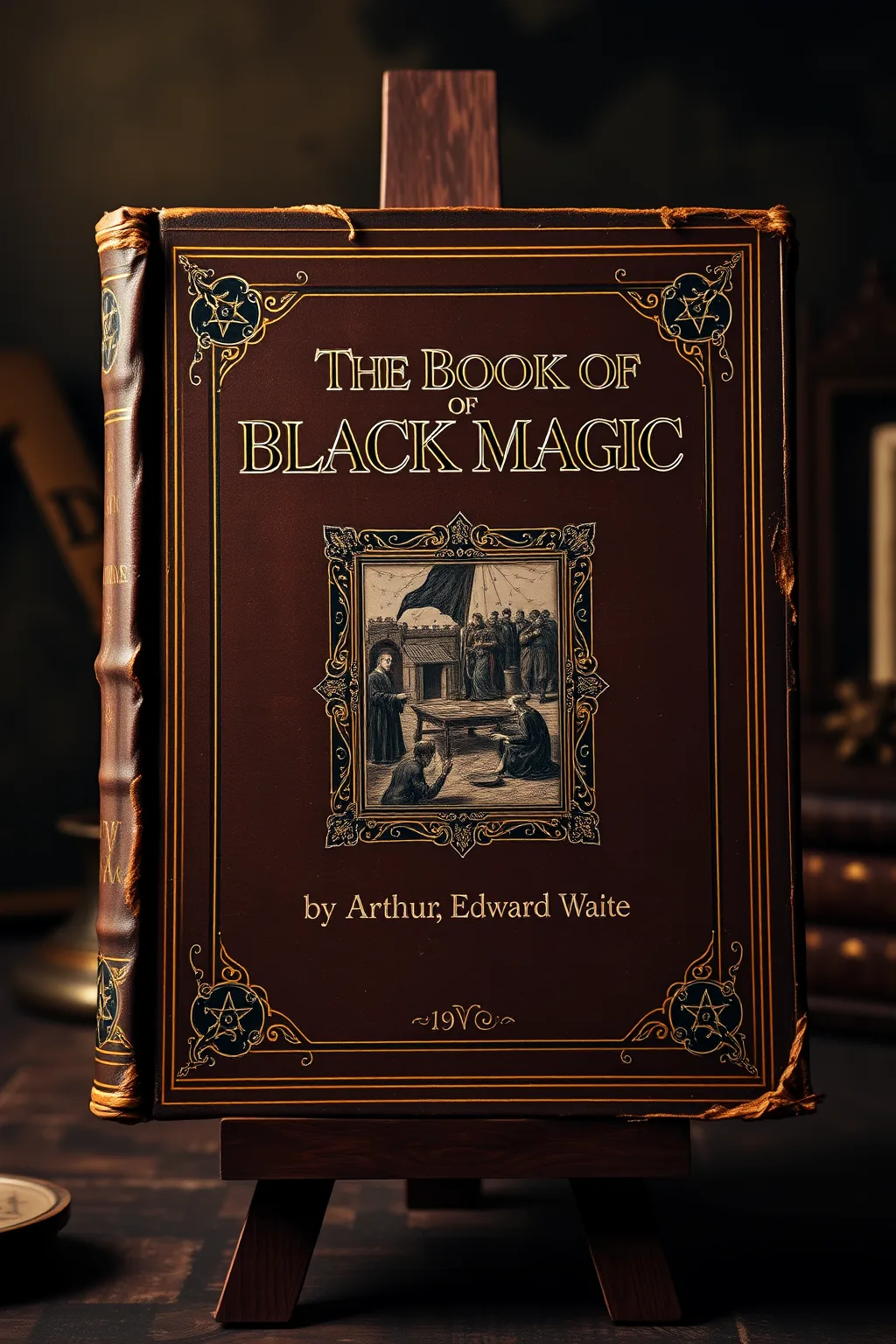
Published in 1909, Arthur Edward Waite's "The Book of Black Magic and Ceremonial Magic" is a scholarly compilation of historical magical texts and rituals. It is not a personal grimoire but an academic survey, drawing from diverse and often hard-to-find sources in Western occultism. The work details a wide array of historical magical traditions and their operational methods, aiming for a comprehensive overview.
The book is designed for serious students of Western esotericism, especially those interested in the history and practice of ceremonial magic. It will also appeal to researchers of occult history and scholars of comparative religion. Practitioners looking to understand the historical roots and texts shaping magical traditions will find it valuable. Those unfamiliar with figures like Eliphas Lévi may find the references dense, but rewarding with some prior knowledge.
Emerging from the late Victorian occult revival, Waite's compilation reflects a period of growing interest in magic and spiritualism. Though contemporaries like Madame Blavatsky and Aleister Crowley were active, Waite maintained a more historical and critical stance. This book fits into an era that sought to categorize and understand esoteric phenomena, presenting a structured look at practices often kept secret. It examines the theoretical basis and practical application of magical operations, differentiating forms of magic with a critical eye toward sensationalism.
💡 Why Read This Book?
• Gain a structured understanding of historical magical practices, as Waite meticulously categorizes different forms of ritual magic, distinguishing between alleged "black magic" and more formal ceremonial operations, offering clarity on historical distinctions. • Explore obscure magical treatises and spells compiled from diverse sources, providing direct access to historical occult texts that are otherwise difficult to locate and study, as Waite has done with great effort. • Understand the historical context of Western occultism through the lens of a significant scholar, observing Waite's critical perspective on magical movements and figures prevalent around the time of its 1909 publication.
⭐ Reader Reviews
Honest opinions from readers who have explored this book.
❓ Frequently Asked Questions
When was Arthur Edward Waite's 'The Book of Black Magic and Ceremonial Magic' first published?
Arthur Edward Waite's "The Book of Black Magic and Ceremonial Magic" was first published in 1909, reflecting the significant interest in occult studies during the late Victorian and Edwardian eras.
Is this book a practical guide for performing spells, or more of a historical overview?
The book serves primarily as a historical overview and compilation of magical spells and treatises from obscure sources. While it describes practices, its approach is more academic and historical than a direct instructional manual.
What kind of magical traditions does the book cover?
It covers a wide range of Western magical traditions, including various forms of ritual magic, spellcasting, and esoteric practices that were documented or rumored during the author's time.
Who is Arthur Edward Waite?
Arthur Edward Waite was a prolific author and scholar of the occult, deeply involved in organizations like the Hermetic Order of the Golden Dawn. He is known for his critical scholarship and extensive writings on magic, mysticism, and Freemasonry.
Does the book discuss 'black magic' specifically?
Yes, the title indicates a focus on 'black magic,' and the book explores historical beliefs and practices associated with it, often contrasting them with ceremonial magic from Waite's perspective.
Is this book suitable for beginners in occult studies?
While it offers a broad overview, its dense compilation of historical texts and Waite's academic style might be more suited to those with some existing background in esoteric history or comparative religion.
🔮 Key Themes & Symbolism
Historical Compilation of Rituals
Waite's work functions as an extensive archive, gathering disparate magical spells and treatises from a variety of obscure historical sources. This compilation offers a panoramic view of ritualistic practices prevalent in Western esotericism, particularly those that might have been considered clandestine or esoteric. The emphasis is on presenting these historical documents and their operational methods, providing researchers and practitioners with access to foundational, often difficult-to-find, materials that define ceremonial magic.
Distinction in Magical Practice
A central theme is Waite's attempt to differentiate and categorize various forms of magical operations. He carefully distinguishes between what might be popularly termed 'black magic' and more structured, ceremonial forms of magic. This involves examining the intent, method, and historical perception of these practices, reflecting Waite's scholarly approach to explaining and ordering the field of occultism, often with a critical stance on sensationalized accounts.
The Role of the Practitioner
The book implicitly and explicitly discusses the requirements and psychological state necessary for engaging in magical practices. Waite touches upon the importance of correct procedure, symbolic understanding, and the practitioner's mental and spiritual disposition. This highlights the belief within ceremonial magic that the efficacy of rituals is deeply intertwined with the inner condition and preparation of the individual performing them.
Evolution of Western Esotericism
As a product of the late 19th and early 20th centuries, the work inherently documents a specific phase in the evolution of Western esotericism. Waite's compilation and commentary provide insight into how occult traditions were being studied, interpreted, and sometimes reconstructed during a period of intense revival and scholarly interest in these subjects.
💬 Memorable Quotes
Direct passages from the work, attributed to the author.
“The author has assembled a number of magical spells and treatises from a variety of obscure sources.”
— This statement accurately reflects the book's nature as a scholarly compilation, emphasizing its value in preserving and presenting rare historical magical texts that might otherwise be lost or inaccessible to the general public.
“The result is a great overview of magic from an important figure in Western occultism.”
— This highlights Waite's significance in the field of occult studies and positions the book as a comprehensive survey, useful for understanding the historical range of magical practices as viewed by a key scholar of the era.
“A great reference book on ritual magic, of which only a few good ones exist today.”
— This points to the book's enduring utility as a reliable source for information on ceremonial magic, suggesting that high-quality, scholarly resources on this specific subject matter are rare, making Waite's work particularly valuable.
“It aims to provide a comprehensive overview, drawing from diverse and often difficult-to-access sources within Western occultism.”
— This underscores the book's ambition to be a definitive collection, stressing its role in consolidating information from specialized and hard-to-find origins, thus serving as a gateway to deeper study for interested individuals.
“Waite's evident skepticism and occasional critical distance from the material he presents can make the work feel less like an insider's guide and more like an external examination.”
— This observation suggests that while the book is rich in historical detail, it may not fully embrace the practices it describes, offering a more analytical or even detached perspective typical of Waite's scholarly approach to the occult.
🌙 Esoteric Significance
Tradition
Waite's work is rooted in the Western Esoteric Tradition, particularly drawing from Hermeticism, Kabbalah, and ceremonial magic as they evolved through figures like Eliphas Lévi. While compilatory, it reflects a scholar's attempt to codify and historicize these practices, situating them within a broader intellectual history rather than presenting them as purely initiatory or dogmatic systems. It represents a critical engagement with the magical currents of his time, seeking to provide a structured, almost academic, framework for understanding these often esoteric subjects.
Symbolism
Key symbols explored include the elements (fire, water, air, earth) as foundational forces in ritual, the importance of divine names and angelic hierarchies in invocation, and the symbolic representation of magical tools like the wand and sword. The book also touches upon the symbolism inherent in astrological correspondences and the complex symbolic language used in grimoires, emphasizing that the efficacy of ritual often lies in the correct understanding and application of these symbolic systems.
Modern Relevance
Contemporary practitioners and scholars of Western esotericism continue to reference Waite's work for its historical scope and detailed compilation of ritualistic materials. Modern magical orders and independent researchers often consult his texts to understand the lineage and development of ceremonial magic. Thinkers exploring the history of occultism, comparative religion, and the cultural impact of esoteric beliefs find Waite's critical yet comprehensive approach valuable for contextualizing magical practices within broader historical and intellectual movements.
👥 Who Should Read This Book
• Students of Western Esotericism: Those seeking to understand the historical development and diverse practices within occult traditions, particularly ceremonial magic, will find Waite's compilation invaluable. • Researchers of Magical History: Scholars and enthusiasts interested in primary source materials and critical analyses of historical magical texts will benefit from the book's broad survey and Waite's scholarly perspective. • Practitioners Seeking Context: Individuals engaged in modern magical practice who wish to ground their work in historical understanding will appreciate the book's overview of foundational spells and ritual structures.
📜 Historical Context
Arthur Edward Waite's "The Book of Black Magic and Ceremonial Magic," first published in 1909, emerged during a vibrant period of occult revival in late Victorian and Edwardian England. This era saw intense interest in spiritualism, theosophy, and various forms of esoteric practice, fueled by figures like Helena Blavatsky and Annie Besant. Waite himself was a prominent member of the Hermetic Order of the Golden Dawn, a significant magical organization, yet he often maintained a critical and scholarly distance from more sensationalist or dogmatic occult movements. His work was published in a climate where established religious and scientific paradigms were being challenged, leading many to explore alternative spiritual and philosophical systems. The book’s reception was part of a broader scholarly and public engagement with magic, contrasting with the more experiential or initiatory focus of contemporaries like Aleister Crowley, who was also active during this period and engaged with similar magical traditions, though often with different philosophical underpinnings.
📔 Journal Prompts
The historical compilation of spells and treatises, as presented by Waite.
Waite's distinction between 'black magic' and ceremonial magic.
The symbolic importance of divine names and hierarchies in ritual.
The practitioner's necessary preparation and psychological state.
The evolution of Western esoteric thought around 1909.
🗂️ Glossary
Ceremonial Magic
A branch of magic involving elaborate rituals, often incorporating invocations, symbolic actions, and specific timing, aiming to achieve spiritual or material effects through interaction with supernatural forces.
Grimoire
A textbook of magic, typically containing instructions on how to create magical tools, perform rituals and spells, and invoke spirits or deities.
Invocation
The act of calling upon a deity, spirit, or divine power, often with the intent of receiving guidance, assistance, or manifestation.
Esotericism
Systems of thought or practice characterized by esoteric knowledge, typically accessible only to a select group of initiates or those with specialized understanding.
Hermeticism
A philosophical and religious tradition based on the purported teachings of Hermes Trismegistus, emphasizing divine wisdom, the correspondence between macrocosm and microcosm, and spiritual transformation.
Kabbalah
A system of Jewish mysticism that explores the nature of God and the universe through symbolic interpretation of scripture and divine emanations, often visualized through the Tree of Life.
Occult Revival
A period, particularly in the 19th and early 20th centuries, marked by renewed interest in magical, mystical, and esoteric traditions following periods of perceived decline.