Hogfather
 81
81

Hogfather
Terry Pratchett's *Hogfather* is less a book about Santa Claus's kidnapping and more a profound, albeit hilariously disguised, examination of belief. The central conceit, that the Hogfather *must* exist because people believe in him, is handled with Pratchett's characteristic blend of sharp satire and genuine warmth. The novel shines when exploring the personifications of abstract concepts; Death's observations on the human need for belief are particularly poignant. However, the plot, while functional, occasionally feels secondary to the philosophical musings. The sheer number of characters and subplots, while typical of Pratchett, can sometimes dilute the narrative's focus. Despite this, the book's exploration of how myth and ritual sustain society is remarkably well-articulated. *Hogfather* is a delightful, thought-provoking fantasy that champions the power of shared belief.
📝 Description
81
Terry Pratchett's 2006 novel, Hogfather, imagines a world where belief itself gives entities existence.
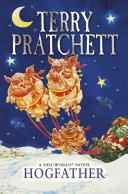
Hogfather, first published in 2006, is a novel by Terry Pratchett set during the Discworld's version of Christmas, known as Hogswatch. The story begins with the disappearance of the Hogfather, a kindly, bearded figure essential to the holiday. Without him, the festival is in danger of collapsing entirely. A determined young girl, Susan, and the anthropomorphic personification of Death must work to ensure the holiday's survival against those who wish to abolish it.
The narrative delves into the power of belief, tradition, and the necessity of manufactured myths for the functioning of society. Pratchett uses his signature blend of wit and satire to examine how abstract concepts gain form and power through collective human faith. The novel follows Death as he steps in to fulfill the Hogfather's duties, confronting the Auditors of Reality and other forces who seek to impose logic and order at the expense of imagination and wonder.
This novel engages with esoteric ideas by positing that belief is a tangible force capable of creating and sustaining entities. It mirrors concepts found in sympathetic magic and certain philosophical traditions where collective consciousness or faith can manifest phenomena. The story examines how societies construct deities or mythical figures to embody abstract principles, like Death or the Hogfather, and how the abandonment of these constructs can lead to societal decay. It touches on the idea that the stories we tell ourselves and the rituals we perform are not mere fictions but have a genuine impact on the fabric of existence.
💡 Why Read This Book?
• Gain insight into the mechanics of belief, as illustrated by the Hogfather's existence being dependent on widespread faith, a concept explored in the novel's extensive world-building. • Understand the function of personified abstract concepts, exemplified by Death's role and interactions with the Hogfather and other entities, revealing how Pratchett uses them to dissect societal norms. • Appreciate the satirical deconstruction of ritual and tradition, evident in the Hogswatch festival's origins and its importance to the Discworld's inhabitants, offering a unique perspective on cultural practices.
⭐ Reader Reviews
Honest opinions from readers who have explored this book.
❓ Frequently Asked Questions
Is Hogfather a children's book?
While *Hogfather* features fantastical elements and humor, its complex themes regarding belief, existentialism, and satire make it more suitable for older teenagers and adults. It explores mature concepts with a sophisticated, witty touch.
What is Hogswatch in Terry Pratchett's Discworld?
Hogswatch is the Discworld's equivalent of Christmas, a major festival celebrated with traditions, gift-giving, and the arrival of the Hogfather, a figure embodying the spirit of the holiday.
Who replaces the Hogfather when he is kidnapped?
When the Hogfather is abducted, Death, the personification of Death, takes over his duties. Death must ensure that the spirit of Hogswatch is maintained, despite his fundamental nature being antithetical to joviality.
What is the main philosophical theme of Hogfather?
The central philosophical theme is the power of belief and stories. The novel argues that if enough people believe in something, it can become real and exert influence, even if it's a fictional construct.
How does Hogfather relate to other Discworld books?
While part of the larger Discworld series, *Hogfather* can be read as a standalone novel. It features recurring characters like Death and the Auditors of Reality, but its plot is self-contained and focuses on the Hogswatch festival.
What is the significance of the Auditors of Reality in Hogfather?
The Auditors of Reality are a bureaucratic, emotionless force that seeks to impose order and logic on the universe. In *Hogfather*, they represent a threat to the Hogfather and the very concept of belief that they cannot comprehend.
🔮 Key Themes & Symbolism
The Ontology of Belief
The novel posits that belief possesses a tangible, almost physical, force. If enough individuals collectively believe in a concept or entity, it can manifest and exert influence in the world. This is most clearly demonstrated by the Hogfather himself, whose existence is predicated on human faith. The narrative explores how this collective belief shapes reality and tradition, suggesting that myths and stories are not mere fictions but potent forces that structure society and individual understanding.
Personification of Abstract Concepts
Pratchett masterfully employs personifications of abstract concepts, such as Death, the Hogfather, and the anthropomorphic personifications of other holidays. These characters are not just allegorical figures but active participants with their own motivations and roles. Their interactions, particularly Death's reluctant stewardship of Hogswatch, highlight the human need for these archetypes and the roles they play in providing order, comfort, and meaning in a chaotic universe.
The Nature of Ritual and Tradition
Hogswatch, the fictional festival at the heart of the story, serves as a vehicle to examine the importance and often arbitrary nature of human rituals and traditions. The book illustrates how these practices, even those with questionable origins or logic, provide structure, continuity, and a sense of collective identity. The imperative to maintain Hogswatch, despite the Hogfather's absence, underscores how vital these cultural touchstones are for societal well-being.
Order vs. Chaos (and Belief)
The Auditors of Reality represent an extreme form of sterile order, seeking to eliminate the 'messiness' of human belief and emotion. The Hogfather and the traditions he embodies, conversely, represent a form of benevolent chaos that brings joy and meaning. The novel explores the tension between these forces, suggesting that true order cannot exist without the 'irrational' elements of faith, imagination, and ritual that make life worth living.
💬 Memorable Quotes
Direct passages from the work, attributed to the author.
““The Hogfather is a lie. He is not real.” “And yet,” said Death, “he is, is he not? He is real because people believe in him.””
— This exchange captures the novel's central thesis: the power of collective belief to create reality. It highlights the tension between objective truth and subjective experience, suggesting that for many, the impact of a belief is more significant than its factual basis.
““It is easier to believe in a man who can deliver a present than in a man who cannot.””
— This observation, likely from Death, points to the pragmatic underpinnings of faith. People believe in the Hogfather not just out of tradition, but because he represents a tangible benefit – the gift. It suggests belief is often tied to perceived outcomes.
““When you look for the bad, you will find it.””
— This aphorism speaks to the human tendency to focus on negativity, a concept the Auditors might exploit. It suggests that a predisposition to see fault can blind one to the positive forces, like the spirit of Hogswatch.
““You've got to have a fairy. You've got to have a hogfather.””
— This reflects the need for myth and wonder, especially for children. It underscores the idea that these figures, however imaginary, fulfill a crucial psychological role in providing magic and hope.
💡 Key Ideas
Editorial paraphrase of the work's core concepts — not direct quotes.
“The Auditors of Reality are a lot of men in suits. And they are very, very angry.”
This quote introduces the Auditors, a chilling force of bureaucratic nihilism. It humorously yet effectively conveys their threat to the whimsical, belief-driven world of the Discworld, framing them as antagonists who abhor anything illogical or imaginative.
🌙 Esoteric Significance
Tradition
While not strictly adhering to a single esoteric lineage, *Hogfather* engages with themes common in Western Esotericism, particularly Hermeticism and Gnosticism, concerning the nature of reality and the power of thought. It echoes Gnostic ideas about the material world being sustained by belief or illusion, and Hermetic principles about the mind's role in shaping perception. The personification of concepts also aligns with symbolic systems found in Kabbalah and Theosophy, where divine attributes and cosmic forces are given form.
Symbolism
The Hogfather himself is a potent symbol of benevolent patriarchal authority, generative power, and the regenerative cycle of nature, akin to figures like the Green Man or Odin. His association with pigs and the winter solstice links him to ancient fertility rites and the concept of the 'sacred king.' Death, as a recurring figure, symbolizes the inevitable, but also a force that upholds the balance of existence, providing a grounding contrast to the Hogfather's ephemeral nature.
Modern Relevance
Contemporary thinkers exploring the psychology of belief, collective consciousness, and the impact of narrative on societal structures find resonance in Pratchett's work. His ideas are relevant to discussions in fields like memetics, where ideas propagate, and in the study of mythology and archetypes. Practices involving ritual and the intentional cultivation of positive belief, found in some modern spiritual and self-help movements, echo the novel's core premise about the power of focused intention.
👥 Who Should Read This Book
• Aspiring myth-makers and folklorists: Readers interested in how myths are constructed, maintained, and how they function within a society will find the detailed exploration of Hogswatch’s origins and rituals useful. • Philosophically inclined fantasy readers: Those who enjoy fantasy that grapples with existential questions about belief, reality, and the nature of personified concepts will appreciate the novel's intellectual depth. • Students of cultural anthropology and sociology: Readers seeking a satirical yet insightful look at the role of tradition, festivals, and shared belief systems in providing social cohesion and meaning.
📜 Historical Context
Published in 2006, *Hogfather* arrived during a flourishing period for fantasy literature, where authors increasingly infused the genre with philosophical depth and social commentary. Terry Pratchett, already a titan of comedic fantasy, was at the height of his powers, aligning with contemporaries like Neil Gaiman who were similarly pushing boundaries. Gaiman's own work on mythic figures and belief systems, particularly in *American Gods* (2001), created a parallel intellectual landscape. While Pratchett's work was widely acclaimed, it navigated a literary world where fantasy was still striving for broader critical recognition beyond its traditional audience. The novel's exploration of belief as a tangible force and its critique of sterile, bureaucratic logic can be seen as a response to a world grappling with complex geopolitical events and the rise of rigid ideologies, offering a humanist counterpoint.
📔 Journal Prompts
The Auditors' eradication of belief: How would a world devoid of the Hogfather and similar figures fundamentally alter human experience?
Death's reluctant performance of Hogswatch duties: Reflect on the obligations that arise from belief, even when they conflict with one's nature.
The efficacy of lies: Consider the pragmatic necessity of certain 'lies' or fictions, like the Hogfather, in maintaining social order and psychological well-being.
Personifications as societal mirrors: Analyze how characters like Death and the Hogfather reflect aspects of human society and its needs.
The Auditors of Reality's perspective: Imagine a logical argument for the elimination of all anthropomorphic personifications and the concept of belief.
🗂️ Glossary
Hogfather
The Discworld's equivalent of Santa Claus, a benevolent figure who delivers presents on Hogswatch night, embodying the spirit of the festival.
Hogswatch
The Discworld's primary winter festival, celebrated similarly to Christmas, involving traditions, gift-giving, and the appearance of the Hogfather.
Auditors of Reality
A collective of emotionless, bureaucratic entities who seek to impose absolute order and logic on the universe, viewing belief and anthropomorphic personifications as errors.
Personification
In this context, entities that embody abstract concepts (e.g., Death, the Hogfather, the Tooth Fairy) and exist because humans believe in them.
The Teatime Golem
A creature created by the witches to serve tea, representing a kind of magical construct designed to fulfill a specific, mundane purpose.
The Queen of the Elves
A powerful, capricious ruler of the fairy realm who represents a more dangerous, primal form of magic and belief compared to the Hogfather.
The Unadulterated Cat
A creature of pure, unadulterated feline essence, representing instinct and a primal force that resists logical control.
This book appears in 1 collection
🔮 Readers Also Liked
Browse all →







From the “Superstition” Collection
View all →


More Free Occult Philosophy Books
View all →