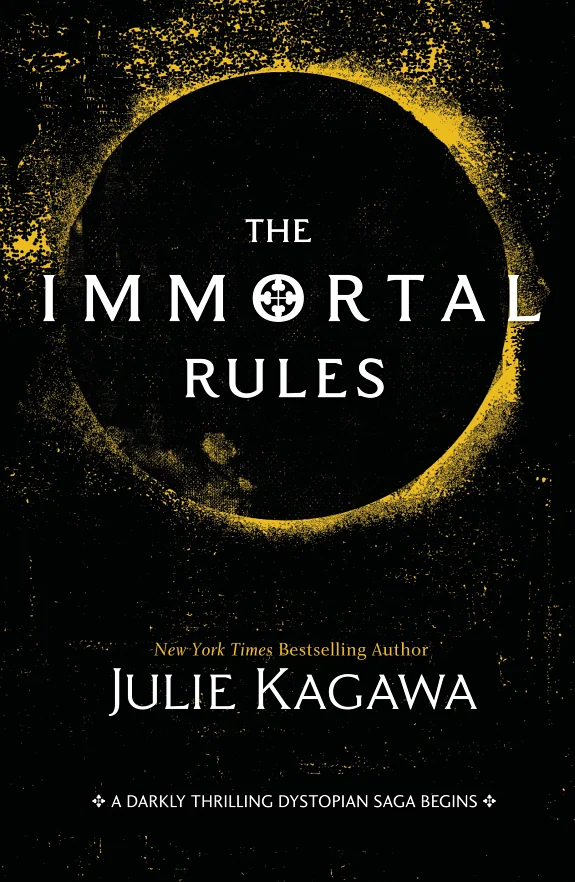
The Immortal Rules
 83
83

The Immortal Rules
Julie Kagawa’s "The Immortal Rules" offers a stark, almost brutal, vision of vampire society, diverging sharply from the romanticized figures that dominated YA literature around its 2012 publication. The central strength lies in its rigorous world-building; the "Immortal Rules" are not mere plot devices but a tangible, oppressive force shaping every aspect of vampire life. Allison Sekemoto’s existence is dictated by these laws, making her a compelling protagonist navigating a world of constant danger and moral compromise. The narrative’s pacing is relentless, driven by factional warfare and the visceral struggle for survival. A notable limitation is the occasional predictability of certain plot points, particularly for seasoned readers of the genre. The depiction of the "Rabids," feral vampires, while effective for generating tension, sometimes feels like a convenient narrative threat rather than a fully integrated element of the society. Despite this, the work’s unflinching portrayal of a harsh, survival-driven immortal existence provides a refreshing counterpoint to more sentimental interpretations. It is a solid entry for those seeking action and intricate, albeit grim, world-building in their paranormal fiction.
📝 Description
83
Julie Kagawa's 2012 novel, The Immortal Rules, reimagines vampire society as a militaristic hierarchy.
Allison Sekemoto is a teenage vampire in a world governed by the rigid "Immortal Rules." These laws dictate survival, hunting, and the control of human populations within a complex, often brutal, immortal society. Kagawa moves away from romanticized vampire tropes, presenting a survivalist thriller instead. The narrative focuses on Allison's struggle to adhere to these rules in a world rife with interspecies conflict and warring vampire factions.
The novel contrasts with popular portrayals of vampires by emphasizing a darker, more action oriented existence. It delves into the societal mechanics of non-human entities, building a world where ancient conflicts shape the present. Readers will find a mature and violent edge to Kagawa's characteristic narrative construction, focusing on high stakes and defined character arcs.
Published in 2012, "The Immortal Rules" appeared during a surge of vampire fiction but deliberately diverged from romanticized interpretations. Kagawa grounds her vampires in a stricter, more militaristic framework, aligning with a resurgence of interest in mythologically robust or traditional vampire figures. This approach moves beyond contemporary young adult paranormal romance, focusing instead on the internal logic and survival imperatives of an "Unliving" state.
💡 Why Read This Book?
• Understand the concept of the "Immortal Rules" as a rigid societal structure, not just a set of guidelines, offering a unique perspective on fictional governance. • Experience the intense survival narrative of Allison Sekemoto, a protagonist defined by her adherence to these rules in a world of constant conflict. • Explore Kagawa's darker interpretation of vampire lore, moving beyond romantic tropes to a more militaristic and pragmatic portrayal of immortal existence.
⭐ Reader Reviews
Honest opinions from readers who have explored this book.
❓ Frequently Asked Questions
What year was 'The Immortal Rules' by Julie Kagawa first published?
Julie Kagawa's 'The Immortal Rules' was first published in 2012, placing it within a significant period for popular vampire fiction.
Who is the main protagonist in 'The Immortal Rules'?
The main protagonist is Allison Sekemoto, a teenage vampire navigating the harsh realities of immortal life and the strictures of the 'Immortal Rules'.
What are the 'Rabids' in 'The Immortal Rules'?
The Rabids are a faction of vampires who have lost their sentience and devolved into feral, animalistic predators, posing a constant threat to other vampires.
Does 'The Immortal Rules' follow the same romantic themes as 'Twilight'?
No, 'The Immortal Rules' deliberately moves away from romantic themes, focusing instead on survival, warfare, and the rigid societal structure of vampires.
What is the primary conflict in 'The Immortal Rules'?
The primary conflict involves Allison's struggle for survival within her society, adhering to the 'Immortal Rules' while facing external threats from rival vampire factions and the Rabids.
🔮 Key Themes & Symbolism
The Tyranny of Rules
The core of "The Immortal Rules" lies in the oppressive nature of the "Immortal Rules." These are not suggestions but absolute laws governing every aspect of vampire existence, from hunting to territorial disputes. The narrative examines how such rigid codification, while ensuring survival, can also stifle individual agency and lead to brutal enforcement. Allison's journey is largely defined by her attempts to navigate, and sometimes circumvent, these ancient dictates, highlighting the conflict between order and personal freedom within an eternal, predatory society.
Survivalist Existence
Immortality in Kagawa's world is depicted as a constant struggle for survival rather than an eternal reward. The vampires are locked in perpetual conflict, not only with humans and the feral "Rabids" but also amongst themselves, vying for territory and resources. This theme underscores the harsh realities of their existence, where sentimentality is a luxury and ruthlessness is a necessity. The work explores the psychological toll of this ceaseless battle, portraying vampires as hardened predators forged by necessity.
Factional Warfare
The vampire world is fractured into warring factions, each with its own interpretations and enforcement of the "Immortal Rules." This creates a dynamic political landscape where alliances are fragile and betrayal is commonplace. The novel examines the origins and ongoing conflicts between these groups, such as the more organized "Kagami" and the feral "Rabids." This intricate web of inter-group warfare serves as a primary engine for the plot, driving the action and forcing characters into difficult choices.
💬 Memorable Quotes
Direct passages from the work, attributed to the author.
“The rules were ancient, etched into the very fabric of our existence.”
— This statement captures the pervasive and inescapable nature of the 'Immortal Rules.' They are presented not as man-made laws but as fundamental principles of vampire life, dictating behavior and ensuring a brutal, yet ordered, continuation of their species.
“We were the predators, but we were also the prey.”
— This highlights the precarious balance of the vampire world. Despite their power, vampires are constantly under threat, whether from humans, their own kind, or the devolved Rabids, emphasizing that their immortality is a state of perpetual danger.
“The Rabids were a reminder of what we could become.”
— This points to the existential fear within the vampire community. The Rabids represent the ultimate loss of control and humanity, serving as a chilling cautionary tale for any vampire who falters or breaks the established order.
“Immortality was not a gift, but a sentence.”
— This interpretation emphasizes the novel's darker take on eternal life. It is portrayed as a curse, a prolonged state of conflict and suffering rather than a desirable existence, forcing characters to constantly fight for their continued, yet burdensome, life.
💡 Key Ideas
Editorial paraphrase of the work's core concepts — not direct quotes.
Survival was the only law that truly mattered.
This paraphrased concept reflects the grim pragmatism at the heart of the novel. All other rules and societal structures are ultimately subservient to the fundamental need to endure in a hostile environment.
🌙 Esoteric Significance
Tradition
While "The Immortal Rules" does not explicitly align with a specific esoteric tradition like Hermeticism or Kabbalah, it engages with archetypal themes found across many occult narratives. The concept of the "Unliving" touches upon ideas of soul fragmentation or the consequences of unnatural existence, a theme present in Gnostic thought regarding the material world as a prison. The rigid, codified "Immortal Rules" can be seen as a secularized form of esoteric law or dogma, where adherence ensures survival within a dangerous, unseen realm, echoing the importance of ritual and discipline in magical practice.
Symbolism
The "Immortal Rules" themselves function as a central symbolic construct, representing the imposed order and strictures that govern existence in a dangerous, hidden world. The "Rabids" serve as a potent symbol of the loss of sentience and the descent into primal instinct, a recurring motif in occultism concerning the dangers of uncontrolled passions or the devolution of the spiritual self. The perpetual warfare between vampire factions symbolizes the eternal struggle between different forces or ideologies, a common theme in mythological and esoteric cosmology.
Modern Relevance
Contemporary urban fantasy and paranormal fiction continue to draw inspiration from Kagawa's approach to intricate, rule-based supernatural societies. Thinkers exploring the sociology of fictional worlds or the evolution of folklore in modern media might reference "The Immortal Rules" for its detailed depiction of an organized, albeit brutal, non-human civilization. The novel's emphasis on the harsh realities of supernatural existence also appeals to modern trends that seek to de-romanticize mythical creatures, appealing to audiences interested in more grounded or pragmatic interpretations of the occult.
👥 Who Should Read This Book
• Young adult readers seeking action-packed paranormal fiction with complex world-building and a focus on survival. • Fans of Julie Kagawa's previous works, particularly "The Iron Fey" series, who are interested in her exploration of darker themes and different supernatural creatures. • Readers who appreciate narratives that study the societal structures and rules governing supernatural beings, moving beyond simple romance tropes.
📜 Historical Context
Julie Kagawa’s "The Immortal Rules," published in 2012, arrived during a peak moment for paranormal romance in young adult literature, a genre heavily influenced by series like Stephenie Meyer’s "Twilight." However, Kagawa deliberately eschewed the romantic undertones prevalent at the time. Instead, her work aligned with a more traditional, or perhaps a renewed, interest in the grittier, survivalist aspects of vampire lore, reminiscent of earlier depictions that emphasized predation and societal conflict over tragic romance. While Meyer's "Twilight" (first published in 2005) focused on the forbidden love between a human and a vampire, Kagawa's novel plunges into the brutal, militaristic society of vampires themselves. It presents a world governed by strict, life-or-death rules, a stark contrast to the more individualistic and emotionally driven narratives common in the genre. The reception generally noted its darker tone and intricate world-building as distinguishing features.
📔 Journal Prompts
The oppressive nature of the "Immortal Rules": how do they shape Allison's daily existence?
Reflect on the symbolism of the "Rabids" as a representation of lost sentience.
Consider the concept of "The Unliving" and its implications for identity.
Analyze the factional conflicts: what drives the perpetual warfare among vampires?
Explore the balance between survival and personal agency within the rigid structure of vampire society.
🗂️ Glossary
The Immortal Rules
A strict, ancient code of conduct governing all vampires, dictating behavior, territorial rights, and survival strategies to maintain order and prevent annihilation.
The Unliving
A term used to refer to vampires, emphasizing their altered state of existence beyond natural life and the inherent dangers associated with it.
Rabids
A faction of vampires who have lost their minds and devolved into feral, uncontrollable beasts driven solely by instinct and bloodlust.
Kagami
A specific faction or group of vampires within the novel, often depicted as more organized and adhering closely to certain interpretations of the Immortal Rules.
Scythe
A type of weapon, often a sword or blade, used by vampires in combat, signifying their role as predators and warriors.
Human Reserves
Areas or systems established by vampires to manage and contain human populations for sustenance, reflecting the predatory relationship between the species.
Blood-Bound
A state or relationship where individuals, often vampires, are intrinsically linked or obligated to one another, frequently through shared blood or oaths.
🔮 Readers Also Liked
Browse all →








More by Julie Kagawa
All books →





More Free Occult Philosophy Books
View all →