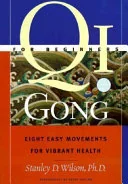
Qi Gong for Beginners
 75
75

Qi Gong for Beginners
Stanley D Wilson’s Qi Gong for Beginners provides a competent, if somewhat pedestrian, entry point into a profound practice. The book’s strength lies in its straightforward presentation of fundamental exercises, demystifying what can often appear intimidating. Wilson’s explanation of the concept of *Qi* as a tangible energy flow is particularly clear for newcomers. However, the book occasionally leans into generalized advice, lacking the depth that might satisfy a practitioner seeking nuanced energetic theory. A passage detailing the "Eight Brocades" (Ba Duan Jin) routine, for instance, is functional but could benefit from more detailed instruction on subtle energetic sensations. It serves its purpose as an accessible manual but doesn't break significant new ground in the field. Overall, it’s a solid, practical guide for absolute novices.
📝 Description
75
Stanley D Wilson's 2007 book introduces Qi Gong for beginners with accessible movements and breathing.
Qi Gong for Beginners offers a straightforward introduction to the ancient Chinese practice of cultivating and balancing vital energy, or 'qi'. The guide focuses on simple movements and breathing exercises suitable for newcomers. It simplifies complex ideas into clear, actionable steps, allowing for home practice without prior knowledge.
This book is for anyone wanting a gentle, low-impact way to enhance physical health, mental focus, and emotional balance. It will appeal to those interested in Eastern philosophies, mindfulness, and self-care. People dealing with stress, fatigue, or a need for more energy will find its methods directly useful.
The book covers the core concept of Qi, the life force believed to flow through the body. It explains how specific postures, mindful movements, and controlled breathing can harmonize this energy. Readers will learn the value of relaxation, intention, and regular practice for achieving balance and supporting the body's natural healing abilities.
Qi Gong's roots extend thousands of years into Chinese history, emerging from traditional Chinese medicine, martial arts, and Taoist philosophy. Early forms were woven into healing practices and spiritual cultivation. Wilson's 2007 publication frames these ancient principles for a modern audience interested in holistic health, making the practice of energy cultivation available to a global readership.
💡 Why Read This Book?
• You will learn foundational Qi Gong movements like the "Eight Brocades" (Ba Duan Jin), understanding their specific physical postures and the intended flow of energy, as detailed in the book's exercise sections. • You will gain a practical grasp of how to cultivate and direct your *Qi* through breathwork and mindful motion, a core principle explained early in the book's introductory chapters. • You will discover the historical lineage of Qi Gong, appreciating its ancient Chinese origins and its evolution into a contemporary health practice, as contextualized in the book's historical overview.
⭐ Reader Reviews
Honest opinions from readers who have explored this book.
❓ Frequently Asked Questions
What is Qi Gong and where did it originate?
Qi Gong is an ancient Chinese practice involving gentle movements, breathing techniques, and meditation to cultivate and balance the body's vital energy, known as *Qi*. Its origins trace back thousands of years within traditional Chinese medicine and Taoist philosophy.
Is Qi Gong suitable for absolute beginners?
Yes, Qi Gong for Beginners by Stanley D Wilson is specifically designed for individuals with no prior experience. It breaks down the practice into simple, accessible steps that can be learned and practiced at home.
What are the main benefits of practicing Qi Gong?
Practitioners often report improved physical health, increased energy levels, reduced stress, enhanced mental clarity, and greater emotional balance. The practice aims to harmonize the body's systems through the cultivation of *Qi*.
Does the book explain specific Qi Gong forms?
Yes, the book introduces and explains fundamental Qi Gong forms, such as the "Eight Brocades" (Ba Duan Jin), providing step-by-step instructions for performing the movements.
When was Qi Gong for Beginners first published?
Qi Gong for Beginners by Stanley D Wilson was first published in 2007, making its foundational teachings available to a modern audience interested in holistic wellness.
What is the concept of Qi?
*Qi* (pronounced 'chee') is a fundamental concept in traditional Chinese culture, representing vital life force or energy that flows through all living things. Qi Gong aims to harmonize and strengthen this energy.
🔮 Key Themes & Symbolism
Cultivating Vital Energy (Qi)
The central theme is the understanding and manipulation of *Qi*, the invisible life force permeating the universe and the human body. The book explains how deliberate movement, breath control, and focused intention can harmonize this energy. It details how blockages or imbalances in *Qi* can lead to physical or mental ailments, and how specific Qi Gong exercises, like those found in the "Eight Brocades," are designed to clear these blockages and promote robust health and vitality.
Mind-Body Connection
This work emphasizes the intrinsic link between mental states and physical well-being. It teaches that awareness and intention are not separate from physical action but integral to it. By focusing the mind during movement and breathwork, practitioners learn to influence their internal state, fostering relaxation, reducing stress, and enhancing bodily awareness. This integration is presented as key to unlocking the full potential of Qi Gong practice.
Accessible Health Practices
Qi Gong for Beginners positions itself as a practical tool for everyday health management. It explains ancient practices, making them accessible to anyone regardless of age or physical condition. The book focuses on gentle, low-impact exercises that can be performed in various settings, promoting self-sufficiency in maintaining health and well-being. It offers a non-pharmacological approach to managing common ailments and improving overall quality of life.
Foundational Forms
The book introduces specific, foundational Qi Gong routines that serve as building blocks for further practice. Notably, it includes explanations of the "Eight Brocades" (Ba Duan Jin), a set of eight distinct exercises widely recognized for their therapeutic benefits. By detailing these established forms, the book provides readers with concrete techniques they can immediately apply to their daily routines for tangible results.
💬 Memorable Quotes
Direct passages from the work, attributed to the author.
“Qi is the fundamental energy that animates all life.”
— This statement defines the core concept of *Qi* as presented in the book, positioning it not just as a metaphor but as the essential energetic substance underlying existence and vitality.
“The body is a vessel for Qi, and its flow determines health.”
— This interpretation highlights the book's perspective on the body's relationship with *Qi*. It suggests that physical health is directly contingent on the unimpeded circulation of this vital energy.
“Gentle movement and focused breath are the keys to unlocking Qi.”
— This highlights the practical methodology of Qi Gong as taught in the book, emphasizing that the practice is not about forceful exertion but about subtle coordination of physical action and respiration.
“Consistency in practice yields cumulative benefits.”
— This emphasizes the book's encouragement for regular engagement with Qi Gong, suggesting that the positive effects of the practice are built over time through sustained effort.
“The mind directs the Qi.”
— This succinctly captures the principle of intention in Qi Gong, underscoring that conscious focus plays an important role in guiding the flow and efficacy of the body's vital energy.
🌙 Esoteric Significance
Tradition
Qi Gong for Beginners draws heavily from the Taoist tradition within Chinese Esotericism. Taoism emphasizes living in harmony with the Tao, the natural order of the universe, through practices that cultivate internal energy. While many Taoist practices are complex and require monastic or lineage transmission, this book adapts fundamental principles of Qi cultivation for a lay audience, focusing on health and longevity as expressions of spiritual balance.
Symbolism
Key symbols include the concept of *Qi* itself, representing the vital breath or energy that animates all existence, akin to the Taoist concept of 'yuan qi' (original breath). The movements themselves, often emulating natural forms like flowing water or the flight of birds, symbolize harmony with nature. The emphasis on breath control relates to the Taoist idea of returning to one's original, unadulterated state, symbolized by the breath. The 'Eight Brocades' (Ba Duan Jin) are a set of symbolic movements designed to invigorate specific organ systems.
Modern Relevance
Contemporary practitioners of mindfulness, somatic therapies, and integrative health often incorporate Qi Gong principles. Thinkers and practitioners in fields like embodied cognition and psychoneuroimmunology find resonance in Qi Gong's explicit focus on the mind-body connection. Schools offering Tai Chi and Qi Gong classes globally, as well as online wellness platforms, frequently utilize introductory texts like Wilson's to onboard new students into these ancient energetic arts.
👥 Who Should Read This Book
['• Absolute beginners interested in exploring gentle, low-impact movement practices for physical and mental well-being, seeking a clear entry point into Qi Gong.', '• Individuals experiencing stress, fatigue, or seeking natural methods to enhance their energy levels and overall vitality, who want practical techniques they can use at home.', '• Students of Eastern philosophies and traditional Chinese medicine looking for an accessible introduction to the concept of *Qi* and its role in health.']
📜 Historical Context
Published in 2007, Stanley D Wilson's Qi Gong for Beginners arrived during a period of increasing global interest in complementary and alternative medicine, particularly practices originating from Asia. While Western engagement with Chinese medicine had been growing since the mid-20th century, Qi Gong, alongside Tai Chi, saw a surge in popularity as accessible methods for stress reduction and health maintenance. This book emerged in a landscape populated by numerous manuals, but it distinguished itself by focusing on foundational elements for absolute novices. It tapped into a broader cultural current seeking holistic wellness solutions, influenced by figures like Dr. Andrew Weil who popularized integrative health. While not facing overt censorship, the popularization of Qi Gong sometimes encountered skepticism within mainstream medical circles, often categorized alongside practices like acupuncture and herbalism, which were gradually gaining more scientific validation.
📔 Journal Prompts
The concept of *Qi* as vital energy: how does this idea compare to your current understanding of health?
Reflecting on the "Eight Brocades" movements: which posture felt most grounding, and why?
How can consistent, gentle practice, as advocated in the book, be integrated into a busy modern schedule?
The mind-body connection: describe a moment where your mental state directly impacted your physical sensation during practice.
Considering the ancient origins of Qi Gong: what draws you to practices with a long historical lineage?
🗂️ Glossary
Qi (Chi)
The fundamental life force or vital energy believed in traditional Chinese culture to flow through all living things. Its harmonious flow is considered essential for health and well-being.
Qi Gong
An ancient Chinese practice combining gentle movement, breath control, and meditation to cultivate, balance, and strengthen the body's vital energy (*Qi*).
Eight Brocades (Ba Duan Jin)
A well-known set of eight fundamental Qi Gong exercises, considered foundational for improving health, flexibility, and energy circulation.
Dantian
In Qi Gong and Traditional Chinese Medicine, specific energy centers in the body, often located in the lower abdomen, where *Qi* is said to be stored and cultivated.
Breathwork
Conscious control and regulation of breathing patterns, a key component of Qi Gong used to influence energy flow, calm the mind, and deepen relaxation.
Meridians
Channels or pathways throughout the body through which *Qi* is believed to flow, according to Traditional Chinese Medicine principles.
Mindfulness
A state of active, open attention on the present. When practicing Qi Gong, it involves focusing on breath, movement, and bodily sensations without judgment.
🔮 Readers Also Liked
Browse all →









More Free Occult Philosophy Books
View all →




![A high-school algebra wallet-sized proof, of the Bieberbach conjecture After L. Weinstein]](/img/thumb/a-high-school-algebra-wallet-sized-proof-of-the-bieberbach-conjecture-after-l-weinstein-shalosh-b-ekhad.webp)