History of Witchcraft

 79
79

History of Witchcraft
Montague Summers’s *History of Witchcraft* presents a formidable, dense compendium of historical records concerning the perceived phenomenon of witchcraft. Its strength lies in the sheer breadth of documentation cited, offering an exhaustive look at ecclesiastical and secular records from the medieval period through the early modern era. Summers’s detailed accounts of witch trials, particularly his examination of confessions and judicial processes, are invaluable for understanding the mechanisms of persecution. However, the work suffers from its author’s overt, unwavering belief in the reality of witchcraft as a diabolical conspiracy. This perspective, while historically significant in itself, colors the entire narrative, leaving little room for skeptical analysis or consideration of psychological and social factors beyond demonic influence. A notable passage details the pronouncements of the *Malleus Maleficarum*, treating its pronouncements with a gravity that borders on endorsement. Despite its methodological limitations, the book remains a significant, albeit biased, primary source for the history of demonology.
📝 Description
79
Montague Summers first published his *History of Witchcraft* in 1994.
Montague Summers's *History of Witchcraft*, originally published in 1994, examines the historical perception and prosecution of witchcraft across Europe. This is not a manual for modern practitioners but a scholarly analysis of how sorcery and accused individuals were understood and treated through various periods and cultures. Summers details legal actions, religious condemnations, and popular beliefs that shaped the historical narrative of witchcraft over centuries.
The book is suited for students of historical demonology, legal history, and the sociology of belief. Readers interested in cultural anxieties about perceived malevolence, the development of religious doctrine on heresy, and the processes of witch trials will find substantial content. It is less appropriate for those seeking contemporary magical theory or practical spellbooks, as its focus is strictly historical and anthropological.
Summers's research emerged during a time when academic study of witchcraft was growing, though often still colored by earlier theological viewpoints. The work confronts the influence of figures like Heinrich Kramer and his *Malleus Maleficarum* (1487), a text Summers analyzes thoroughly. It also engages with intellectual trends of the late medieval and early modern eras, where theological arguments and the strengthening of church authority significantly impacted views on deviance and heresy.
Summers's work emerges from a specific academic and occult milieu of the late 19th and early 20th centuries. While presented as a historical survey, it reflects a period where scholars, often with personal interests in the occult, sought to document and understand historical witchcraft. It engages with texts like the *Malleus Maleficarum*, treating its contents with a seriousness that bridges historical analysis and a fascination with the subject matter's darker aspects. This positions the book within a tradition of occult scholarship that sought to provide historical context for magical and forbidden knowledge.
💡 Why Read This Book?
• Learn about the historical legal framework of witch trials, such as the specific procedures detailed concerning the trials in Bamberg during the 17th century, which reveal the judicial biases of the era. • Understand the theological arguments that underpinned the persecution of witchcraft, exemplified by Summers's exploration of the concept of the 'diabolical pact' as defined by theologians of the period. • Gain insight into the social anxieties reflected in historical records, particularly how widespread beliefs in bewitchment, as documented in regional folklore and confessions, shaped community fears.
⭐ Reader Reviews
Honest opinions from readers who have explored this book.
❓ Frequently Asked Questions
What historical periods does Montague Summers's *History of Witchcraft* primarily cover?
The book largely focuses on the medieval and early modern periods in Europe, detailing events and beliefs from approximately the 13th century through the 18th century, with significant attention paid to the height of the witch hunts.
Is Montague Summers's *History of Witchcraft* a practical guide to modern witchcraft?
No, this book is a historical and theological study. It examines historical beliefs, trials, and demonological theories rather than providing instructions or insights into contemporary magical practices.
What is the *Malleus Maleficarum* and how is it discussed in the book?
The *Malleus Maleficarum*, published in 1487, was a treatise on witchcraft by Heinrich Kramer. Summers analyzes this text extensively, discussing its influence on demonological thought and witch trial procedures during the early modern period.
Does the author believe in the reality of witchcraft as described in historical accounts?
Yes, Montague Summers approached the subject from the perspective of a believer in the historical reality of witchcraft as a diabolical phenomenon, which significantly shapes his interpretation of events.
What kind of sources does Summers draw upon for his historical research?
Summers utilizes a wide array of primary sources, including ecclesiastical records, legal documents from witch trials across Europe, theological treatises, and contemporary accounts of alleged magical practices and demonic activity.
When was *History of Witchcraft* by Montague Summers first published?
While the research and writing may have occurred earlier, Montague Summers's *History of Witchcraft* was first published posthumously in 1994.
🔮 Key Themes & Symbolism
Demonological Frameworks
The work meticulously details the evolution of demonological thought, particularly how theological doctrines shaped the understanding of witchcraft. Summers studies concepts like the diabolical pact, the Sabbat, and the nature of demonic influence, presenting them as factual occurrences within the historical context he describes. He analyzes how scholars and inquisitors constructed elaborate systems to identify, prosecute, and condemn individuals accused of consorting with the Devil, drawing heavily on scholastic philosophy and biblical exegesis.
Witch Trials and Legal Processes
A significant portion of the book is dedicated to the procedural aspects of witch trials across various European jurisdictions. Summers examines legal texts, judicial records, and confessions, illustrating the methods used to extract testimony and the often brutal legal processes involved. He highlights regional variations in jurisprudence, from inquisitorial procedures in some areas to more secular court systems in others, and discusses the role of torture and the burden of proof (or lack thereof) in securing convictions.
Theological Condemnations
Summers explores the pronouncements of religious authorities, including papal bulls and synodal decrees, that condemned witchcraft and heresy. He traces the intellectual lineage from early Christian views on magic to the more formalized demonology of the late Middle Ages and Renaissance. The book emphasizes how the Church's official stance, influenced by figures like Heinrich Kramer, legitimized the persecution and viewed witchcraft not merely as superstition but as a serious threat to Christendom.
Folklore and Popular Belief
Intertwined with theological and legal discussions, the work addresses the folk beliefs and practices that were often labeled as witchcraft. Summers examines accounts of maleficium (harmful magic), charms, curses, and local superstitions. He analyzes how these popular traditions, sometimes rooted in pre-Christian practices or misunderstood folk rituals, became entangled with the more sinister diabolical narratives promoted by religious and secular authorities, leading to widespread accusations.
💬 Memorable Quotes
Direct passages from the work, attributed to the author.
“The Devil is the author of all heresy.”
— This statement captures the core belief driving much of the historical persecution of witchcraft: that all perceived deviations from religious orthodoxy were ultimately orchestrated by Satan himself, framing witchcraft as a primary tool of infernal opposition to divine order.
“Witchcraft is the most heinous of all crimes.”
— This reflects the extreme severity with which witchcraft was regarded by many authorities during the period covered. It was often seen not just as a crime against individuals or society, but as a grave offense against God, necessitating the harshest punishments.
“Confessions were often extracted under duress.”
— Summers acknowledges, albeit implicitly through the detailed accounts of trials, that the judicial processes frequently involved methods designed to elicit confessions, including torture, which raises questions about the veracity of many historical testimonies.
“The witches’ Sabbat was a parody of the Mass.”
— This interpretation highlights a common theme in demonological literature: the belief that alleged witches engaged in perverse rituals intended to mock Christian sacraments and worship the Devil, viewing the Sabbat as a direct inversion of sacred rites.
“The *Malleus Maleficarum* provided a blueprint for prosecution.”
— This highlights the significant influence of Heinrich Kramer's infamous manual on the legal and theological understanding of witchcraft, positioning it as a foundational text for inquisitors and judges across Europe.
🌙 Esoteric Significance
Tradition
Summers's work is deeply rooted in the Catholic theological tradition, specifically its historical engagement with demonology. While not a practitioner's manual, it serves as a historical record of how demonic forces and their alleged human agents were understood within a specific orthodox religious framework. It aligns with historical esoteric interpretations that viewed the Devil and witchcraft as potent, real forces actively opposing divine will, a perspective common in pre-modern occult studies before more philosophical or psychological interpretations became prevalent.
Symbolism
The book frequently references symbols associated with diabolism, such as the 'Devil's Mark'—a physical sign believed to be imprinted on witches by Satan, often described as insensitive to pain. Another recurring motif is the 'Sabbat,' a supposed nocturnal assembly of witches, which represented a blasphemous inversion of Christian rituals and communion, symbolizing a complete rejection of divine order in favor of infernal allegiance.
Modern Relevance
Contemporary scholars of Western esotericism and historical theology often engage with Summers's work as a primary source for understanding historical belief systems and the construction of demonological narratives. While his conclusions are widely debated, his detailed cataloging of historical trials and theological arguments remains a valuable, if biased, resource for those studying the evolution of occultism, folk magic, and the historical perception of marginalized spiritual practices.
👥 Who Should Read This Book
• Students of religious history and demonology seeking to understand the historical theological constructs surrounding witchcraft accusations, particularly the influence of texts like the *Malleus Maleficarum*. • Researchers of legal and social history interested in the mechanisms and discourse of witch trials in medieval and early modern Europe, as documented through judicial records. • Individuals exploring the historical perception of magic and heresy, who wish to examine how folk beliefs and organized religion intersected and often clashed during periods of intense persecution.
📜 Historical Context
Montague Summers's *History of Witchcraft*, first published in 1994, draws upon a rich tradition of historical research into demonology, though it reflects the author's own staunchly orthodox and belief-driven perspective. Written during a period when academic discourse on witchcraft was increasingly focusing on social, psychological, and economic factors, Summers's work stands apart for its adherence to a more traditional, theological interpretation. He engages directly with the legacy of 15th-century figures like Heinrich Kramer, author of the *Malleus Maleficarum* (1487), a text he treats with considerable gravity. Summers's scholarship emerged decades after the foundational works of historians like Margaret Murray, who controversially proposed a continuity of pagan witch cults, and alongside contemporaneous scholars such as Jeffrey Burton Russell, who explored the historical development of the Devil figure. The reception of Summers's own work is often framed by his uncritical acceptance of the reality of demonic pacts and maleficium, positioning him as a proponent of an older, religiously infused historiography.
📔 Journal Prompts
Reflect on the theological justifications for viewing witchcraft as a crime against God, as detailed in the early chapters.
Analyze the described legal procedures for witch trials, such as those used in the Bamberg witch trials, and their implications for justice.
Consider the concept of the 'diabolical pact' and its role in demonological narratives presented in the text.
Examine the portrayal of the 'Witches' Sabbat' and its symbolic meaning as a perversion of Christian rites.
Evaluate how historical folklore and popular beliefs, like those concerning maleficium, were incorporated into the official demonology discussed.
🗂️ Glossary
Diabolical Pact
A formal agreement, often believed to be made through a ritual, wherein an individual pledges their soul or service to the Devil in exchange for supernatural powers or worldly benefits.
Maleficium
Latin for 'harmful magic' or 'witchcraft.' It refers to the alleged ability of witches to cause harm to people, animals, crops, or property through supernatural means.
Malleus Maleficarum
A Latin title meaning 'Hammer of Witches.' This infamous treatise from 1487, authored by Heinrich Kramer and Jacob Sprenger, served as a guide for identifying, prosecuting, and punishing witches.
Sabbat
In demonological lore, a nocturnal meeting of witches, reputedly presided over by the Devil, often involving blasphemous rituals, idolatry, and acts of depravity. It was seen as a perversion of the Christian Mass.
Devil's Mark
A physical blemish, scar, or abnormality on a witch's body, believed to be a sign of their pact with the Devil. It was often thought to be insensitive to pain and was used as a means of identification.
Inquisitorial Procedure
A legal system, often employed by the Church, where the judge actively investigates the facts of a case, rather than merely presiding over adversarial proceedings between prosecution and defense.
Heresy
A belief or theory that is strongly at variance with established beliefs or customs, particularly the dogma of a church. During the period, witchcraft was often conflated with or seen as a form of heresy.
🔮 Readers Also Liked
Browse all →









More by Montague Summers
All books →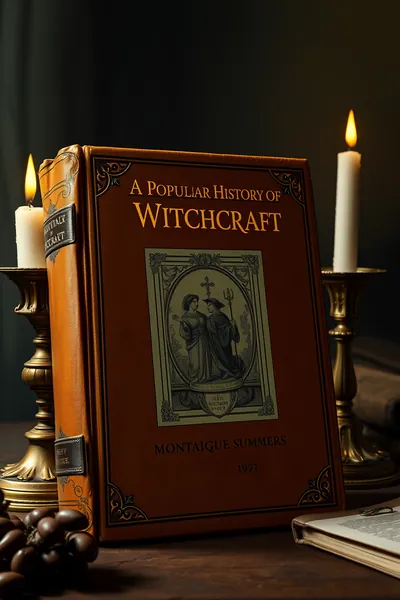




More Free Occult Philosophy Books
View all →