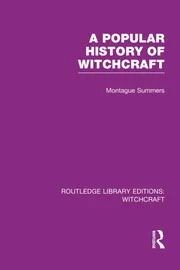
A Popular History of Witchcraft
 77
77

A Popular History of Witchcraft


Montague Summers' A Popular History of Witchcraft is a masterful exploration of the esoteric world of witchcraft, providing readers with a detailed and engaging journey through its historical and cultural landscape. Published in 1937, this book remains a cornerstone of occult literature, offering insights that are as relevant today as they were nearly a century ago. Summers' scholarly approach and extensive research make this text an invaluable resource for modern esoteric seekers. The book's thorough examination of witch trials, pagan rituals, and the societal impact of witchcraft beliefs offers a comprehensive understanding of the subject. For those interested in the deeper mysteries of witchcraft and paganism, this book is an essential read. It not only provides historical context but also invites readers to reflect on the enduring relevance of these ancient practices in contemporary times.
📝 Description
77
Montague Summers' 1937 'A Popular History of Witchcraft' examines sorcery through a Catholic lens.
Published in 1937, Montague Summers' history of witchcraft presents a detailed account of sorcery and its perception within Catholic doctrine. Summers focuses on the historical context of the Inquisition, connecting religious persecution with folklore and occult beliefs. He analyzes various aspects of witchcraft, drawing from religious texts and historical accounts to build his narrative. The book aims to illuminate the spiritual and philosophical dimensions of witchcraft as understood during specific historical periods.
The author compiles information on demonology, magical practices, and the societal impact of accusations of witchcraft. Summers writes from a Catholic perspective, discussing how the Church viewed and countered perceived diabolical influence. This approach shapes his interpretation of events and beliefs surrounding witchcraft throughout history. The text offers a particular viewpoint on the subject, rooted in his theological and historical scholarship.
Montague Summers' work on witchcraft sits within the tradition of occult scholarship that gained traction in the late 19th and early 20th centuries. This period saw renewed interest in magic, demonology, and historical accounts of witchcraft, often filtered through religious or spiritual frameworks. Summers, a Catholic priest with a background in literature and history, approached the subject by situating witchcraft within the theological landscape of his time, particularly concerning its relationship with the Catholic Church and the concept of heresy. His perspective aligns with other scholars of the era who documented esoteric traditions, though his specific focus on Catholic doctrine offers a distinct angle.
💡 Why Read This Book?
Reading A Popular History of Witchcraft today offers a unique opportunity to delve into the rich and often misunderstood world of witchcraft and paganism. Montague Summers' meticulous research and engaging narrative provide readers with a deep understanding of historical practices and beliefs, making it an invaluable resource for both scholars and enthusiasts. Whether you are seeking to expand your knowledge of the occult or simply curious about the mysteries of witchcraft, this book offers insights that are both enlightening and thought-provoking.
⭐ Reader Reviews
Honest opinions from readers who have explored this book.
❓ Frequently Asked Questions
What makes A Popular History of Witchcraft a significant book?
A Popular History of Witchcraft is significant due to its comprehensive exploration of witchcraft and paganism, offering readers a detailed historical context and analysis of key themes.
Who should read this book?
This book is ideal for scholars, historians, and enthusiasts of the esoteric, as well as anyone interested in the deeper mysteries of witchcraft and paganism.
What can readers expect to learn from A Popular History of Witchcraft?
Readers can expect to learn about the evolution of witchcraft beliefs, the societal impact of witch hunts, and the enduring influence of pagan traditions.
🔮 Key Themes & Symbolism
Catholic Perspective on Witchcraft
Summers offers a unique Catholic viewpoint on witchcraft, exploring the theological and spiritual dimensions of this ancient practice. He explores the symbolism and rituals associated with witchcraft, providing a deep and enlightening perspective on its mystical significance.
Historical Context of the Inquisition
The book provides a comprehensive overview of the Inquisition and its impact on witchcraft, offering readers a detailed understanding of the historical events and their esoteric implications. Summers' research is meticulous, providing a rich and nuanced exploration of this complex subject.
Esoteric Symbolism and Rituals
Summers' exploration of the esoteric symbolism and rituals associated with witchcraft is a highlight of the book. He explores the hidden meanings behind various practices, offering readers a deeper understanding of the mystical dimensions of witchcraft.
💬 Memorable Quotes
Direct passages from the work, attributed to the author.
“The devil is a spirit and as such can appear in whatever form he pleases.”
— Summers emphasizes the metaphysical nature of evil, highlighting the fluidity of its manifestations.
“Witchcraft is a complex web of symbolism and ritual.”
— Summers' exploration of the esoteric dimensions of witchcraft reveals its depth and intricacy.
“The study of witchcraft is a journey into the depths of the human psyche.”
— Summers' insights into the psychological and spiritual aspects of witchcraft make this book a valuable resource for seekers of hidden knowledge.
💡 Key Ideas
Editorial paraphrase of the work's core concepts — not direct quotes.
The Inquisition was a necessary evil to combat the spread of heresy.
This quote underscores Summers' Catholic perspective on the historical persecution of witchcraft.
The true power of witchcraft lies in its ability to connect with the hidden dimensions of reality.
This quote highlights the mystical significance of witchcraft and its potential for spiritual transformation.
🌙 Esoteric Significance
Tradition
This book belongs to the Hermetic tradition, which emphasizes the study of hidden knowledge and the exploration of the mystical dimensions of reality. Summers' work is a valuable resource for those interested in the esoteric traditions of Western esotericism.
Symbolism
Key symbols in the book include the pentacle, the circle, and the ritual tools associated with witchcraft. These symbols are explored in depth, revealing their hidden meanings and esoteric significance.
Modern Relevance
This book remains relevant today for modern practitioners of the occult and esoteric traditions. Its insights into the mystical dimensions of witchcraft continue to inspire seekers of hidden knowledge and spiritual transformation.
👥 Who Should Read This Book
Beginners will find this book accessible and enlightening, as it provides a comprehensive introduction to the world of witchcraft. Scholars of the occult will appreciate the depth of research and esoteric insights offered by Summers. Spiritual seekers will find the book's exploration of the mystical dimensions of witchcraft particularly inspiring. Practitioners of the mystical arts will benefit from the book's detailed exploration of symbolism and ritual.
📜 Historical Context
Published in 1937, 'A Popular History of Witchcraft' was written during a time of great intellectual and spiritual ferment. The book reflects the growing interest in the occult and esoteric traditions that characterized the early 20th century. Summers' work was influential in shaping the modern understanding of witchcraft, providing a comprehensive and nuanced exploration of its historical and mystical dimensions. The book's influence can still be seen today in the field of esoteric literature and the study of the occult.
📔 Journal Prompts
Reflect on the Catholic perspective on witchcraft presented in the book. How does it differ from other viewpoints?
Explore the historical context of the Inquisition as discussed by Summers. What insights does it offer into the persecution of witchcraft?
Consider the esoteric symbolism and rituals associated with witchcraft. How do they relate to your own spiritual practices?
What are the hidden dimensions of reality explored in the book? How do they relate to your understanding of the mystical world?
Reflect on the modern relevance of Summers' work. How does it continue to inspire seekers of hidden knowledge?
🗂️ Glossary
Inquisition
A historical institution of the Catholic Church dedicated to suppressing heresy, including witchcraft.
Pentacle
A five-pointed star symbol often used in witchcraft rituals, representing the elements and spiritual balance.
Hermetic Tradition
An esoteric tradition that emphasizes the study of hidden knowledge and the mystical dimensions of reality.
Esoteric Symbolism
The hidden meanings and spiritual significance of symbols used in mystical and occult practices.
Mystical Dimensions
The hidden, spiritual aspects of reality that are explored through esoteric and occult practices.
This book appears in 2 collections
🔮 Readers Also Liked
Browse all →







More by Montague Summers
All books →





From the “Witchcraft” Collection
View all →






More Free Witchcraft & Paganism Books
View all →