Montague Summers
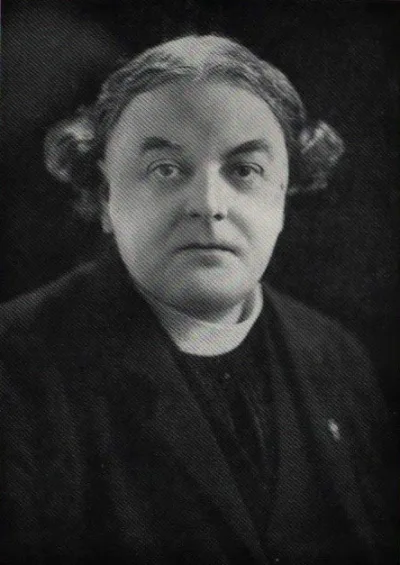
Montague Summers was an English author and clergyman known for his scholarship on Restoration drama and extensive writings on the occult.
Augustus Montague Summers (1880–1948) was an English author, clergyman, and teacher who made significant contributions to the study of Stuart Restoration drama and was a prolific writer on occult subjects. Initially preparing for a career in the Church of England, he later converted to Roman Catholicism, though his status as a priest remains debated as he was never formally affiliated with a Catholic diocese or order. Summers worked as a teacher of English and Latin while pursuing his scholarly interests. His work on the English theatre of the 17th century earned him recognition, including election to the Royal Society of Literature. He was also known for his eccentric personality and became a notable figure for his research into witchcraft, demonology, vampires, and werewolves, subjects on which he professed belief.
Summers played a role in promoting the performance of Restoration plays through societies like "The Phoenix." He published critical editions of several prominent Restoration playwrights. Later in his career, he dedicated himself fully to writing after the success of his book "A History of Witchcraft and Demonology." His scholarship, while recognized as pioneering, has also been described as occasionally flawed and idiosyncratic. Summers's writings on the occult, particularly his belief in and detailed accounts of witchcraft and other supernatural phenomena, have cemented his legacy as a key figure in 20th-century occult studies.
Scholarship on Restoration Drama
Montague Summers established himself as an independent scholar focusing on the dramatic literature of the Stuart Restoration period (1660–1688). He edited the plays of Aphra Behn and published critical editions of works by William Congreve, William Wycherley, Thomas Otway, and Thomas Shadwell. Summers was instrumental in organizing and promoting performances of these often-neglected plays through theatrical societies such as "The Phoenix." His extensive programme notes and scholarly advice contributed to his popularity in theatrical circles. While his work on Restoration drama was considered pioneering and useful by some, other scholars noted issues with sloppiness, eccentricity, and occasional dishonesty in his editing and research. Despite these criticisms, his studies on "The Restoration Theatre" and "The Playhouse of Pepys" are recognized as valuable contributions.
Writings on the Occult and Supernatural
Beyond his academic work, Summers was a prominent and influential writer on occult and supernatural topics. He authored extensive works on witchcraft, demonology, vampires, and werewolves, and notably, he professed to believe in these subjects. His 1926 book, "A History of Witchcraft and Demonology," brought him significant public attention. In 1928, he published the first full English translation of the "Malleus Maleficarum," a 15th-century witch hunter's manual, which remained the sole English translation for decades. Summers's interest in the occult may have been influenced by his reading and personal claims of attending Black Masses. His characterization as a seminal purveyor of popular occultism highlights his significant impact on the discourse surrounding these subjects in the 20th century.
Clerical and Personal Background
Born Augustus Montague Summers, he initially trained for the Anglican ministry at Oxford and Lichfield, being ordained a deacon in 1908. He later converted to Roman Catholicism, adopting the style of a Catholic priest, though his ordination is disputed and he was never officially attached to any Catholic diocese or order. This period of his life was marked by eccentricity and controversy, including alleged associations with Satanism and accusations of sexual impropriety, which led to him never proceeding to higher Anglican orders. He worked as a teacher of English, Latin, and other subjects for many years before dedicating himself fully to writing. His personal life and religious affiliations were complex and subject to speculation throughout his career.
Books by Montague Summers
14 free public domain books · Read online or download