The geography of witchcraft
 64
64

The geography of witchcraft


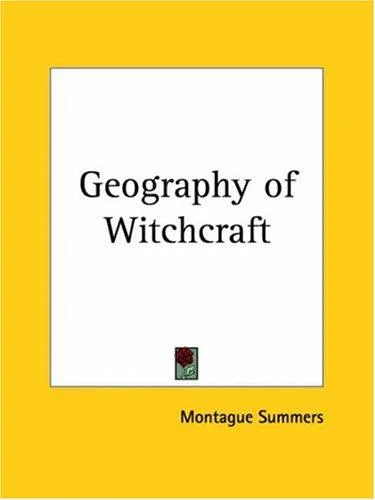
Montague Summers' 'The Geography of Witchcraft' remains an indispensable cornerstone for serious students of the occult. With scholarly rigor and an unshakeable command of historical sources, Summers navigates the labyrinthine pathways of witchcraft and demonology across diverse cultures and epochs. His work transcends mere historical cataloging, offering profound insights into the psychological and spiritual underpinnings of these ancient practices. This is not a manual for the dabbler, but a deep dive for the dedicated researcher and the philosopher seeking to understand the persistent, often hidden, currents of human spiritual expression. Its value lies in its comprehensive scope and the author's unparalleled expertise.
📝 Description
64
Montague Summers published 'The Geography of Witchcraft' in 1927, examining magic's global spread.
Montague Summers' 1927 study, 'The Geography of Witchcraft,' maps the historical and geographical movement of magical practices. Summers traces the lineage of sorcery from early superstitions found in Greek myths to more complex systems influenced by Phoenician and Egyptian traditions. He details forgotten lore concerning sorcery, demonology, and ancient rites, showing how these shaped belief systems over centuries. The book functions as a study of how magical ideas and practices diffused across different cultures and regions. It also considers the philosophical underpinnings of these practices.
Summers writes with considerable historical detail, aiming to illuminate humanity's long engagement with both forbidden knowledge and spiritual concepts. The work is suited for those interested in a detailed account of witchcraft's historical presence and its connection to various geographical locations and cultural contexts. It stands as a historical survey of occult traditions.
This book sits within the tradition of occult scholarship that emerged in the late 19th and early 20th centuries, often characterized by authors like Montague Summers himself, Eliphas Levi, and Aleister Crowley. These writers sought to document, analyze, and sometimes revive ancient magical traditions. Summers' approach, while historical, engages directly with the substance of these practices, viewing them as genuine historical forces and belief systems rather than mere folklore. His work contributed to the academic study of witchcraft and demonology from a perspective that respected its historical adherents' worldview.
💡 Why Read This Book?
Uncover the deep historical roots of witchcraft and demonology, tracing their global diffusion. Gain profound insights into ancient belief systems and the evolution of magical practices. This book is essential for scholars, practitioners, and anyone fascinated by the hidden dimensions of human history and spirituality.
⭐ Reader Reviews
Honest opinions from readers who have explored this book.
❓ Frequently Asked Questions
What historical periods does 'The Geography of Witchcraft' cover?
The book spans from the earliest recorded superstitions and mythologies of antiquity, through the classical eras, and into later periods where codified magical practices emerged, offering a vast chronological sweep.
Is this book a practical guide to performing witchcraft?
No, 'The Geography of Witchcraft' is a scholarly and historical exploration, not a practical grimoire. It focuses on the study and understanding of historical practices and beliefs.
What is the primary focus of the book's 'geography'?
The 'geography' refers to the geographical and cultural spread of witchcraft beliefs and practices, examining how they manifested and transformed in different regions and societies.
Who is the intended audience for this book?
The intended audience includes scholars of occultism, history, anthropology, and religious studies, as well as dedicated practitioners and serious seekers of esoteric knowledge.
Does the book discuss specific magical rituals or spells?
While it details the historical context and beliefs surrounding rituals and spells, the book's primary aim is academic and descriptive, not instructional.
🔮 Key Themes & Symbolism
The Transnational Currents of Magic
This theme explores how magical beliefs and practices were not confined by geographical boundaries but flowed and intermingled across ancient civilizations. From the primal rites of Greece to the sophisticated systems of Egypt and Phoenicia, Summers illustrates the interconnectedness of esoteric knowledge, demonstrating how early superstitions were elaborated, augmented, and codified through cultural exchange, forming a shared, albeit often hidden, heritage of occult science.
The Evolution of Demonology and Sorcery
Summers meticulously traces the development of concepts surrounding demonic entities and the practice of sorcery. He examines how these fears and practices were integrated into religious and social structures, evolving from primitive animism to more complex theological and philosophical frameworks. The book sheds light on the enduring human fascination with the liminal spaces between the mundane and the supernatural, and the forces perceived to govern them.
Myth, Symbolism, and Primitive Order
A central pillar of the work is the exploration of how universal mythology and religious symbolism served as the bedrock for early magical orders. Summers looks at the symbolic language of ancient cultures, revealing how myths were not merely stories but encoded systems of understanding the cosmos and humanity's place within it. This theme highlights the symbolic richness that underpinned primitive magic and its subsequent, more complex manifestations.
💬 Memorable Quotes
Direct passages from the work, attributed to the author.
“...various aboriginal beliefs and curious practices of ancient superstition which formed a primitive order of magic.”
— Highlights the foundational role of primal superstitions and indigenous practices in the genesis of what would later be recognized as magical systems.
“...to be elaborated, to be augmented from Phoenicia and from Egypt, to be studied in schools...”
— Illustrates the historical process of magical knowledge acquisition and refinement through cross-cultural influence and academic study in antiquity.
“...to be glossed and codified.”
— Emphasizes the formalization and systematization of occult knowledge over time, moving from oral traditions to written doctrines and interpretations.
“a primitive order of magic”
— Signifies the foundational, perhaps instinctual, nature of early magical practices that predated more elaborate philosophical or religious structures.
💡 Key Ideas
Editorial paraphrase of the work's core concepts — not direct quotes.
From the very earliest times there were inextricably reticulated in the complex Greek systems...
This quote underscores the ancient and interwoven nature of magical beliefs within foundational cultural mythologies, suggesting a deep, historical lineage.
🌙 Esoteric Significance
Tradition
This work stands as a monumental contribution to the study of Western Esotericism, specifically within the traditions of occult history, comparative mythology, and demonology. It bridges the gap between academic historical inquiry and the deeper, often veiled, currents of spiritual and magical thought that have persisted through the ages, offering a foundational text for understanding the evolution of these hidden disciplines.
Symbolism
Summers' exploration is rich with implicit and explicit symbolism. He dissects the symbolic language embedded within ancient myths, religious ceremonies, and magical practices, revealing how symbols served as conduits for cosmic understanding and spiritual power. The book implicitly points to the symbolic resonance of geographical locations and cultural motifs as carriers of esoteric meaning, suggesting that the 'geography' itself is a form of symbolic mapping of the unseen.
Modern Relevance
In an age often characterized by disconnection from ancient wisdom, Summers' work offers a vital link to the foundational beliefs and practices that shaped human consciousness. It provides a historical context for understanding contemporary interests in witchcraft, occultism, and mythology, grounding these pursuits in a deep, often forgotten, lineage of human spiritual exploration and revealing the enduring power of ancient symbols and archetypes.
👥 Who Should Read This Book
Scholars of religious studies, anthropology, and history will find 'The Geography of Witchcraft' an invaluable primary resource, offering deep dives into historical sources and cultural nuances. Occult practitioners and seekers of esoteric knowledge will discover a body of historical context, understanding the roots and evolution of practices they engage with. Beginners curious about the origins of witchcraft and demonology will find a comprehensive yet accessible introduction to a complex field. The book is for anyone who seeks to understand the persistent, often hidden, dimensions of human belief and spiritual seeking across time and cultures.
📜 Historical Context
Montague Summers wrote during a period of intense interest in occultism and the esoteric revival of the late 19th and early 20th centuries. This era saw a resurgence of scholarship into ancient religions, folklore, and forbidden knowledge, often driven by a desire to find deeper meaning beyond the rationalism of the age. Summers, a prominent figure in this milieu, approached his subjects with a mix of scholarly rigor and a profound, almost devotional, engagement with the material. His work reflects the era's fascination with the hidden histories of humanity, the perceived continuity of ancient mysteries, and the ongoing debate between superstition and scientific explanation.
📔 Journal Prompts
Reflect on the earliest 'aboriginal beliefs' mentioned in the text. How might these primal superstitions have shaped later, more complex magical systems?
Consider the influence of Phoenician and Egyptian traditions on Greek magic. What specific elements do you imagine were 'augmented' and how?
How does the concept of 'glossed and codified' apply to the transmission of knowledge in your own field of interest or personal practice?
Summers speaks of 'universal mythology and symbolistic religious ceremonial.' How can we discern the magical or esoteric undertones within modern myths and symbols?
The book implies a 'geography' of witchcraft. How might geographical location and cultural context influence the manifestation and perception of magical practices today?
🗂️ Glossary
Sorcellerie
A French term encompassing witchcraft, sorcery, and the practice of magic, often with negative connotations in historical contexts, referring to the arts and incantations used for perceived malevolent purposes.
Demonology
The theological or religious study of demons and evil spirits, their origins, nature, hierarchies, and influence upon the material world.
Reticulated
Interconnected or interwoven in a net-like or lattice-like structure, implying a complex and intricate system of relationships.
Aboriginal beliefs
The foundational, indigenous, and often animistic beliefs and spiritual practices of early human societies, predating more formalized religious or magical systems.
Codified
Arranged and systematized into a code or body of laws or rules, suggesting the formalization and documentation of magical theories and practices.
This book appears in 3 collections
🔮 Readers Also Liked
Browse all →






More by Montague Summers
All books →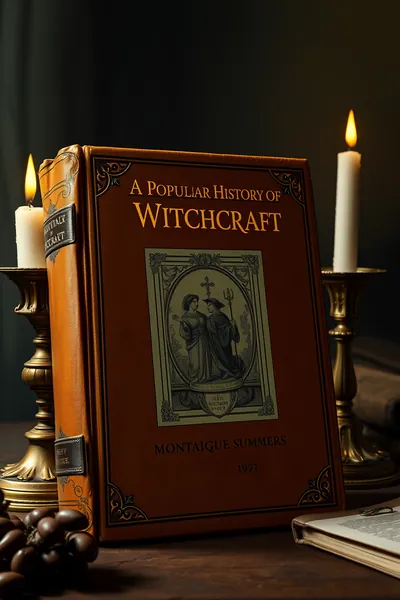





From the “Ritual Magic” Collection
View all →







More Free Magic & Ritual Books
View all →