The Wise and the Wicked
 79
79

The Wise and the Wicked
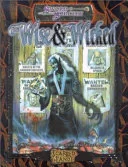
The Wise and the Wicked attempts a fascinating synthesis: mapping the symbolic language of esoteric thought onto the structured rules of the D20 system. Its ambition to provide a framework for understanding archetypal forces through game mechanics is commendable. The authors succeed in presenting a clear, if somewhat mechanical, analysis of how concepts of wisdom and villainy can be represented. However, the reliance on game rules, while its core innovation, can sometimes feel overly reductive. For instance, the section detailing character archetypes, while comprehensive in its D20 application, occasionally sacrifices nuanced characterization for mechanical stat blocks. The strength lies in its systematic approach, offering a unique lens for those immersed in TTRPG design. Its limitation is the inherent constraint of its chosen system, which may not fully capture the fluid, often paradoxical nature of the archetypes it seeks to explore. Ultimately, it serves as an intriguing, if specialized, tool for game designers and deep-lore enthusiasts.
📝 Description
79
Published in December 2001, The Wise and the Wicked applies game mechanics to esoteric philosophy.
The Wise and the Wicked, released in December 2001, offers a framework for understanding opposing forces through concepts adapted from game mechanics, particularly the D20 system. The authors use archetypal figures and narrative structures common in sword and sorcery fiction to explore deeper symbolic meanings. This book provides a structured method for conceptualizing conflict and character development within these thematic areas.
This volume is for tabletop roleplaying game enthusiasts seeking more than just rules. It will appeal to those interested in the philosophical roots of fantasy narratives and applying esoteric thought to world-building. Readers familiar with Gary Gygax and Monte Cook's contributions to the D20 system, and who want to examine the symbolic roles of heroes and villains, will find substantial content. The book is designed for gamers who consider the archetypal forces influencing their campaigns.
The book emerged during a time of growth for the D20 system, following the popularity of Dungeons & Dragons 3rd Edition. Independent publishers were creating supplemental materials that often integrated deeper narrative and philosophical elements. The Wise and the Wicked fits into this trend by using game mechanics as a tool for symbolic exploration. Its approach connects hobbyist gaming with philosophical inquiry, drawing on established figures in fantasy roleplaying.
💡 Why Read This Book?
• Learn how the D20 game system, popularized in 2001, can be used to model symbolic archetypes like 'the Wise' and 'the Wicked,' providing a unique analytical tool. • Gain specific insights into structuring narrative conflict and character development through game mechanics, as explored in the book's approach to heroes and villains. • Understand the intersection of popular roleplaying game design and esoteric concepts, offering a fresh perspective on established fantasy tropes and their symbolic meanings.
⭐ Reader Reviews
Honest opinions from readers who have explored this book.
❓ Frequently Asked Questions
What is the primary focus of The Wise and the Wicked?
The book's primary focus is on using the D20 game system, prevalent since 2001, to analyze and model esoteric concepts, particularly the archetypes of 'the Wise' and 'the Wicked' within sword & sorcery narratives.
Who are the credited authors of The Wise and the Wicked?
The book is credited to Mario Boulanger, Chris Campbell, and Roosevelt J. Eldridge, with its first publication date in December 2001.
What game system does this book adapt?
The Wise and the Wicked adapts the D20 game system, which was notably used for the 3rd Edition of popular fantasy roleplaying rules.
What kind of content does Sword & Sorcery Books typically publish according to the blurb?
According to the original blurb, Sword & Sorcery Books is an independent publisher of D20 material, producing core rulebooks, campaign sourcebooks, adventures, and accessories, featuring authors like Gary Gygax.
What is the significance of the 'Wise' and 'Wicked' concepts in the book?
These concepts are explored not as simple morality but as dynamic forces shaping characters and narratives, with the book detailing how game mechanics can represent the acquisition of knowledge (Wise) and the pursuit of power (Wicked).
Does the book contain actual game rules, or is it theoretical?
The book uses the D20 game system as a framework for its analysis and exploration of esoteric concepts, suggesting an integration of theoretical concepts with practical game design elements.
🔮 Key Themes & Symbolism
Archetypal Forces in Game Mechanics
This theme examines how the D20 system, established in the early 2000s, can serve as a codified language for understanding fundamental esoteric archetypes. The book dissects the concepts of 'the Wise' and 'the Wicked,' presenting them not as moral absolutes but as inherent, dynamic principles that drive narrative and character arcs. By mapping these concepts onto game mechanics—such as skill progression, ability scores, or conflict resolution—the work proposes a structured method for exploring their interplay within sword & sorcery settings and beyond. It offers a unique perspective for creators seeking to imbue their game worlds with deeper symbolic resonance.
The Structure of Heroes and Villains
Central to The Wise and the Wicked is the deconstruction of heroic and villainous figures through the lens of game design. The book details how to construct characters that embody specific archetypal roles, utilizing elements from the D20 system to represent their powers, motivations, and inherent nature. It explores the symbolic significance of famous heroes and infamous villains, suggesting that their archetypal functions can be mirrored and manipulated through game rules. This approach allows for a systematic understanding of antagonist and protagonist dynamics, moving beyond simple good-versus-evil tropes to explore more complex symbolic representations.
Esoteric Application of TTRPG Systems
This theme highlights the book's innovative approach of bridging the gap between popular tabletop roleplaying games and esoteric thought. Published in 2001, it capitalized on the widespread adoption of the D20 system. The work demonstrates how the structured, rule-based nature of games can be a powerful tool for exploring complex metaphysical ideas. It suggests that the very act of designing and playing games involving heroes and villains can become a practice in understanding symbolic forces. This theme appeals to those interested in the philosophical potential of interactive entertainment and the application of structured systems to non-traditional subjects.
💬 Memorable Quotes
Direct passages from the work, attributed to the author.
“Heroes and villains are defined by their symbolic roles and mechanical representation.”
— This interpretation posits that the book views character archetypes not just through narrative function but also through how their attributes and abilities are quantified within a game system, such as the D20 ruleset.
“Understanding the 'Wicked' involves analyzing their pursuit of power through structured game elements.”
— This reflects the book's approach to antagonists, suggesting that their characteristics and actions can be systematically understood and implemented using game mechanics that model ambition and disruptive force.
“Sword & Sorcery Books aimed to expand D20 material with diverse content.”
— This statement reflects the publisher's strategy around 2001 to create a wide range of supplementary materials for the D20 system, contributing significantly to the genre's independent publishing scene.
💡 Key Ideas
Editorial paraphrase of the work's core concepts — not direct quotes.
The D20 system provides a framework for modeling archetypal forces.
This paraphrased concept suggests that the rules and mechanics of the D20 system, popular since its implementation around 2001, are robust enough to represent abstract, symbolic concepts like the fundamental forces of wisdom and malevolence.
The 'Wise' embody knowledge acquisition, mappable to specific D20 skills and attributes.
This paraphrased concept highlights how the book links the archetype of wisdom to tangible game elements, showing how a character's pursuit and acquisition of knowledge can be represented through the rules of a game system.
🌙 Esoteric Significance
Tradition
While not strictly adhering to a single established esoteric lineage like Hermeticism or Kabbalah, The Wise and the Wicked draws upon universal archetypal concepts found across many mystical traditions. It particularly appeals to Gnostic ideas concerning the interplay of light and shadow, wisdom and ignorance, and the structured pathways to gnosis. The book's method of codifying these forces within a system reflects the symbolic language used in traditions that seek to map spiritual realities through defined structures and correspondences, albeit applied here through modern game design rather than ancient texts.
Symbolism
The core symbolism revolves around the duality of 'the Wise' and 'the Wicked.' 'The Wise' represents enlightenment, knowledge, and constructive force, often symbolized by clarity, light, and intellectual prowess within the game's framework. 'The Wicked,' conversely, embodies chaos, destructive power, and ambition, potentially symbolized by shadow, primal urges, or manipulative cunning. The D20 system itself becomes a symbolic medium, where dice rolls and character statistics represent the unfolding of these archetypal energies in a narrative context, mirroring how some esoteric traditions use tools like tarot or astrology.
Modern Relevance
Contemporary thinkers and practitioners in fields like narrative design, game studies, and even modern psychological archetypal analysis find value in The Wise and the Wicked. Its approach to mapping abstract forces onto concrete systems informs discussions on how structured play can facilitate self-exploration and understanding of universal dynamics. Creators seeking to imbue digital and tabletop experiences with deeper symbolic layers often reference or are influenced by such works, viewing game mechanics as a modern form of symbolic language for exploring human nature and cosmic principles.
👥 Who Should Read This Book
• Tabletop Roleplaying Game designers seeking innovative ways to integrate symbolic and esoteric themes into their game mechanics and world-building. • Enthusiasts of sword & sorcery fiction who are interested in deconstructing archetypal characters like heroes and villains through a structured, analytical lens. • Scholars and practitioners of comparative mythology and esoteric studies looking for modern applications of archetypal concepts within popular culture and interactive media.
📜 Historical Context
Published in December 2001, The Wise and the Wicked emerged during a significant expansion period for the D20 system, heavily influenced by the success of Dungeons & Dragons 3rd Edition. This era saw a surge in independent publishers creating supplemental materials, with Sword & Sorcery Books positioning itself as a major player. The book's approach, using game mechanics to explore esoteric archetypes, reflects a broader trend in hobbyist culture towards seeking deeper meaning and symbolic analysis within popular entertainment forms. It arrived in a landscape already shaped by foundational figures like Gary Gygax and Monte Cook, who were instrumental in defining the D20 ruleset. While the book itself doesn't detail specific reception events, its existence speaks to the burgeoning interest in applying structured systems to symbolic and narrative exploration, moving beyond purely functional game design.
📔 Journal Prompts
The 'Wise' archetype's representation through D20 mechanics.
Character construction for 'infamous villains' using the book's framework.
Mapping narrative conflict to symbolic forces like 'the Wicked'.
The role of Gary Gygax in shaping the D20 system's potential.
Symbolic interpretation of dice rolls in representing archetypal struggles.
🗂️ Glossary
D20 System
A tabletop roleplaying game ruleset, notably used for Dungeons & Dragons 3rd Edition (published 2000), characterized by the use of a twenty-sided die (d20) for resolving actions and determining success or failure.
Sword & Sorcery
A subgenre of fantasy fiction characterized by heroic protagonists, magical elements, and often violent, fast-paced adventures, typically set in primitive or ancient worlds.
Archetype
A fundamental, universal pattern or symbol of experience, behavior, or character that recurs across cultures and throughout history, often explored in mythology, psychology, and esoteric thought.
The Wise
In the context of this book, an archetypal force representing knowledge, insight, order, and constructive influence, often mapped onto game mechanics related to wisdom and learning.
The Wicked
In the context of this book, an archetypal force representing chaos, ambition, power-seeking, and disruptive influence, often mapped onto game mechanics related to strength and darker motivations.
Core Rulebooks
The primary books containing the fundamental rules necessary to play a specific tabletop roleplaying game system, such as the D20 system.
Campaign Sourcebooks
Supplemental materials for roleplaying games that provide additional information, settings, lore, or rules to expand a game campaign beyond the core rulebooks.
This book appears in 2 collections
🔮 Readers Also Liked
Browse all →








From the “Spellcraft” Collection
View all →

More Free Occult Philosophy Books
View all →





![Ten Great Mysteries [10 stories, 5 poems]](/img/thumb/ten-great-mysteries-10-stories-5-poems-edgar-allan-poe-433440.webp)