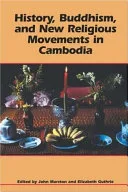
History, Buddhism, and New Religious Movements in Cambodia
 81
81

History, Buddhism, and New Religious Movements in Cambodia
John Marston's edited collection, *History, Buddhism, and New Religious Movements in Cambodia*, offers a vital, if sometimes dense, exploration of Cambodian spiritual life. The work's strength lies in its presentation of emerging scholarship, particularly its detailed examination of the complex relationship between Buddhist traditions, newer religious formations, and the Cambodian state. A standout section details the impact of the Khmer Rouge regime on religious institutions, a period of profound disruption that continues to shape contemporary practices. However, the sheer academic rigor might present a barrier for casual readers; the prose can be highly specialized. One limitation is the lack of a unified theoretical framework, leading to a somewhat fragmented, though still informative, collection. Nevertheless, for those invested in Southeast Asian religious history, this volume provides essential, up-to-date research. It is a valuable resource for understanding the intricate spiritual currents of Cambodia.
📝 Description
81
John Marston's 2019 work analyzes Buddhism and new religious movements in Cambodia.
This volume investigates the connections between religious thought and Cambodian society. It gathers research from scholars across multiple fields who examine how religious ideas and practices have formed the nation. The contributors consider the relationship between religion and the institutions that shape Cambodia, focusing on how faith influences national identity and governance.
The book looks at both historical Buddhist traditions and newer religious movements in Cambodia. It shows how these spiritual currents interact with and are shaped by the country's social and political circumstances. By using various academic disciplines, the book gives a complete picture of Cambodian religious life. It emphasizes how faith changes and its important role in forming community, culture, and the Cambodian experience.
This book contributes to the study of religion's role in shaping national narratives and social structures, particularly within Southeast Asian contexts. It examines how established Buddhist traditions and emergent spiritual groups interact with political and cultural forces. The work highlights the dynamic nature of religious belief and practice in forming community identity and influencing governance, a common area of inquiry in the study of religion and society.
💡 Why Read This Book?
• Gain insight into the specific post-Khmer Rouge religious landscape of Cambodia, understanding how historical trauma reshaped spiritual practices and beliefs. • Explore the influence of Theravada Buddhism on Cambodian national identity and political discourse, as detailed in analyses of its historical role. • Discover the emergence and impact of New Religious Movements in Cambodia, examining their unique doctrines and societal roles beyond mainstream Buddhism.
⭐ Reader Reviews
Honest opinions from readers who have explored this book.
❓ Frequently Asked Questions
What is the primary focus of 'History, Buddhism, and New Religious Movements in Cambodia'?
The book focuses on the complex relationship between religious ideas and practices in Cambodia, examining how they have shaped the nation's social and political identity, including both traditional Buddhism and newer religious movements.
When was 'History, Buddhism, and New Religious Movements in Cambodia' first published?
The first edition of 'History, Buddhism, and New Religious Movements in Cambodia' was published on June 30, 2004.
Who are the contributors to this volume and what is their commonality?
The volume features research by a new generation of scholars from various disciplines, united by their concern with the processes of religion in shaping Cambodia as a social and political body.
Does the book offer a single perspective on Cambodian nationhood?
No, the contributors examine religion's role in shaping Cambodia but do not share a uniform approach to the concept of 'nation,' reflecting diverse scholarly viewpoints.
What types of religious movements are discussed in the book?
The book discusses historical Buddhist traditions and also examines contemporary New Religious Movements that have emerged or gained prominence within Cambodia.
What disciplines are represented by the scholars in this collection?
The scholars contributing to this volume come from a variety of disciplines, indicating an interdisciplinary approach to understanding Cambodian religious history and sociology.
🔮 Key Themes & Symbolism
Buddhism and State Power
The collection critically assesses the historical and ongoing entanglement of Buddhist institutions with Cambodian state power. It explores how Theravada Buddhism has been historically utilized to legitimize political authority and foster national identity, particularly during periods of nation-building and reconstruction. The work scrutinizes the ways in which religious doctrines and monastic structures have been adapted or co-opted by political regimes, influencing both social order and ideological narratives. This theme explores the complex symbiosis, and sometimes tension, between spiritual leadership and temporal governance in Cambodia.
Post-Conflict Religious Resurgence
A significant focus is placed on the revival and transformation of religious practices following the devastating Khmer Rouge regime (1975-1979). Scholars examine how communities, often with destroyed infrastructure and decimated leadership, re-established religious life. This includes the emergence of new devotional practices, the adaptation of existing rituals, and the role of religion in collective trauma healing and reconciliation. The work highlights the resilience of faith in the face of extreme adversity and the ways in which religious movements contribute to social cohesion and the rebuilding of Cambodian society.
New Religious Movements
The volume dedicates attention to the rise and characteristics of New Religious Movements (NRMs) within Cambodia. It moves beyond a singular focus on Theravada Buddhism to investigate a spectrum of spiritual groups that may incorporate elements from Buddhism, animism, or other global traditions. The research explores their unique theological frameworks, organizational structures, and their reception by both mainstream society and the state. This theme addresses how these NRMs articulate alternative visions of spirituality and community in contemporary Cambodia.
Religion and National Identity
The interconnectedness of religious belief and the construction of Cambodian national identity is a central thread. The work investigates how shared religious practices, narratives, and symbols contribute to a sense of collective belonging and 'Khmertude.' It examines how religious discourse has been employed to define national boundaries, cultural distinctiveness, and historical continuity, especially in contrast to external influences. This theme underscores religion's role as a powerful, yet often contested, force in shaping who is considered Cambodian.
💬 Memorable Quotes
Direct passages from the work, attributed to the author.
“The contributors examine the relationship between religion and the ideas/institutions that have given shape to Cambodia as a nation.”
— This highlights the core academic objective: to understand how spiritual beliefs and organized religion are not separate from but integral to the very formation and ongoing development of Cambodian society and its national identity.
“Although they do not share the same approach to the idea of 'nation,' all are concerned with the processes of religion that shape it.”
— This points to the diversity of scholarly methodologies within the volume, while emphasizing a shared focus on the active role religion plays in constructing and maintaining the concept of the Cambodian nation.
“The volume showcases current research on Cambodian religious ideas and practices by a new generation of scholars.”
— This emphasizes the book's contribution as a contemporary academic source, presenting fresh perspectives and updated research findings from emerging experts in the field.
“The work examines both historical Buddhist traditions and contemporary New Religious Movements.”
— This indicates the breadth of coverage, moving beyond a singular focus on dominant religious forms to include a more comprehensive look at the evolving spiritual field of Cambodia.
“Religious ideas and practices have given shape to Cambodia as a social and political body.”
— This succinctly states the central thesis: religion is not merely a private belief system but a fundamental force that has actively molded Cambodia's societal structures and political realities throughout its history.
🌙 Esoteric Significance
Tradition
While not explicitly aligned with a single Western esoteric lineage like Hermeticism or Gnosticism, the work engages with themes relevant to esoteric studies through its examination of spiritual undercurrents and alternative belief systems. It operates within the broader tradition of comparative spirituality and the study of religious phenomena outside mainstream, institutionalized forms. Its focus on the lived experience of religious practice and the socio-political impact of faith systems offers a grounded, anthropological lens that can inform esoteric understandings of belief and its manifestation.
Symbolism
The symbolism explored implicitly relates to Buddhist cosmology, the iconography of deities and monastic life, and the visual language of ritual. For instance, the lotus flower, a pervasive Buddhist symbol of purity and enlightenment emerging from mud, finds resonance in Cambodian contexts, representing spiritual growth amidst societal challenges. Symbols of royal power intertwined with religious authority also emerge, reflecting a historical fusion of the secular and the sacred within the Cambodian state apparatus.
Modern Relevance
Contemporary scholars of religion and spirituality, particularly those interested in Southeast Asian traditions or the impact of political upheaval on belief systems, draw from this work. Thinkers exploring religious syncretism, the sociology of religion in post-conflict societies, and the dynamics of New Religious Movements find valuable case studies here. Practitioners of mindfulness or Buddhist meditation seeking a deeper understanding of the cultural and historical context of these practices in Cambodia might also find its analyses relevant.
👥 Who Should Read This Book
['• Academic researchers specializing in Southeast Asian religions and history, who will find contemporary scholarship on Theravada Buddhism and NRMs invaluable.', '• Students of comparative religion and anthropology, seeking to understand the intricate links between faith, culture, and nation-building in a specific context.', '• Individuals interested in the impact of historical trauma and political events on spiritual beliefs and practices, particularly post-conflict societies.']
📜 Historical Context
Published in 2004, *History, Buddhism, and New Religious Movements in Cambodia* emerged during a period of intense scholarly interest in Southeast Asian religious dynamics, particularly in the wake of the region's tumultuous 20th-century history. The intellectual currents were shaped by post-colonial studies, comparative religion, and anthropological approaches to understanding belief systems within their social and political contexts. The Khmer Rouge regime's systematic destruction of religious institutions between 1975 and 1979 cast a long shadow, prompting significant research into religious resilience and reconstruction. Key contemporaries engaged with similar themes, such as Charles Keyes, whose work explored Buddhism and national identity, and the growing body of literature on New Religious Movements globally. The book mattered by providing a platform for emerging scholars to present nuanced, interdisciplinary research that moved beyond earlier, perhaps more monolithic, understandings of Cambodian religious life, addressing the complex interplay of tradition, trauma, and innovation.
📔 Journal Prompts
The processes of religion that shape Cambodia as a social and political body: how might these manifest in other nations?
New Religious Movements in Cambodia: what commonalities or divergences exist with NRMs in other regions?
Theravada Buddhism's role in national identity: explore the mechanisms by which a dominant religion influences state ideology.
Post-Khmer Rouge religious reconstruction: reflect on the psychological and social needs met by spiritual practices after widespread trauma.
The relationship between religious institutions and political power: analyze historical examples presented in the text.
🗂️ Glossary
Theravada Buddhism
The 'Doctrine of the Elders,' the oldest surviving branch of Buddhism, prevalent in Sri Lanka, Cambodia, Thailand, Laos, and Myanmar. It emphasizes the original teachings of the Buddha as preserved in the Pali Canon.
New Religious Movements (NRMs)
Broad category of contemporary religious or spiritual groups that have emerged relatively recently, often differing significantly from established religious traditions in their beliefs, practices, or organizational structures.
Khmer Rouge
The communist regime that ruled Cambodia from 1975 to 1979, responsible for the Cambodian genocide, during which an estimated 1.5 to 2 million people died from execution, starvation, disease, or overwork.
Soteriology
The study of religious doctrines of salvation, concerning salvation and the means of salvation within various religious traditions.
Sangha
The monastic community of Buddhist monks and nuns. In a broader sense, it can refer to the entire community of Buddhists.
Animism
The belief that natural objects, phenomena, and the universe itself possess souls or consciousness; spirits inhabit natural things.
Buddhadhamma
The teachings of the Buddha, encompassing his doctrines and the principles of Buddhist philosophy and practice.















![L'évangile selon Thomas : [traduction et commentaire]](/img/thumb/lévangile-selon-thomas-traduction-et-commentaire-jacques-é-ménard-042100.webp)
