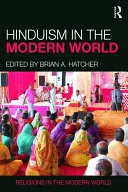
Hinduism in the Modern World
 80
80

Hinduism in the Modern World
Brian A. Hatcher's "Hinduism in the Modern World" provides a much-needed corrective to simplistic views of contemporary Hindu practice. Its strength lies in its refusal to perpetuate the tired dichotomy between "traditional" and "modern" Hinduism, instead presenting a fluid, interconnected picture. Hatcher skillfully demonstrates how seemingly disparate elements—from global yoga movements to local temple rituals—coexist and inform one another. A particularly illuminating section discusses the impact of figures like Swami Vivekananda in shaping a global Hindu identity post-1900. The book's limitation, however, is its dense academic prose, which, while precise, can present a barrier to the casual reader. It assumes a certain familiarity with academic religious studies terminology. Nevertheless, for those willing to engage, Hatcher offers a robust, scholarly framework for understanding Hinduism's contemporary vibrancy.
📝 Description
80
Brian A. Hatcher's 2015 book reframes contemporary Hindu traditions beyond outdated categories.
Brian A. Hatcher's "Hinduism in the Modern World" surveys contemporary Hindu traditions, moving past old divisions. The book examines religious life in South Asia and its global spread. It details how Hinduism has changed and continues to adapt in modern times.
This work is for scholars, students, and dedicated practitioners interested in the complex nature of Hinduism today. It helps readers understand the religion without resorting to simple "traditional" versus "modern" labels. The book is particularly useful for those studying comparative religion or South Asian culture.
Published in 2015, the book arrived during a time of growing academic interest in global religions and post-colonial religious identities. It challenges prior scholarly views that often separated "elite" Hindu thought from "popular" or "traditional" practices. Hatcher's work directly confronts this division.
While not strictly an esoteric text itself, "Hinduism in the Modern World" engages with traditions that have often been characterized as esoteric or mystical. It analyzes how movements like neo-Hinduism, influenced by figures such as Swami Vivekananda, have adapted ancient philosophical and yogic practices for modern global audiences. The book considers how these reinterpretations, often presented through organizations like the Ramakrishna Mission, continue to shape Hindu identity and practice in ways that might appear esoteric to those unfamiliar with their historical and philosophical underpinnings.
💡 Why Read This Book?
• Gain a nuanced understanding of how Hinduism is practiced globally today, moving beyond outdated academic divides, as detailed in the book's examination of "neo-Hinduism". • Comprehend the impact of figures like Swami Vivekananda on shaping modern Hindu thought and its international dissemination, a key point explored in the text. • Discover how scholarly research from the early 2000s, referenced in the book, began to challenge the "traditional" vs. "modern" dichotomy in religious studies.
⭐ Reader Reviews
Honest opinions from readers who have explored this book.
❓ Frequently Asked Questions
What is the primary argument of Hinduism in the Modern World?
The book argues against the artificial separation of "traditional" or "popular" Hinduism from "modern" or "elite" Hinduism, asserting that contemporary Hinduism is a complex, interconnected, and evolving religious phenomenon.
When was Hinduism in the Modern World first published?
Hinduism in the Modern World was first published on October 5, 2015.
Who is the author of Hinduism in the Modern World?
The author is Brian A. Hatcher, a scholar specializing in the study of religions.
What does the book say about global Hinduism?
It surveys the nature, range, and significance of modern and contemporary Hinduism not only in South Asia but also within the global diaspora, highlighting its diverse manifestations.
Does the book focus only on elite forms of Hinduism?
No, it actively seeks to overcome the misleading dichotomy between elite, intellectualist "modern" Hinduism and what has been traditionally termed "traditional" or "popular" Hinduism.
What kind of scholarly research does the book reflect?
The volume is organized to reflect the direction of recent scholarly research, emphasizing a more integrated and dynamic understanding of Hindu traditions.
🔮 Key Themes & Symbolism
Deconstructing Dichotomies
Hatcher critically examines the long-standing academic tendency to divide Hinduism into "traditional" and "modern" camps. He argues that this separation is artificial and obscures the lived reality of religious practice. The work emphasizes how ancient texts and practices are continuously reinterpreted and integrated into contemporary life, challenging scholars and practitioners to view Hinduism as a singular, albeit diverse, evolving tradition rather than fragmented pieces.
Global Hindu Diaspora
The book dedicates significant attention to the presence and evolution of Hindu communities outside of South Asia. It explores how migrants adapt their religious practices and beliefs in new cultural contexts, leading to unique syncretic forms and distinct community identities. This section highlights the resilience and adaptability of Hinduism as it traverses geographical and cultural boundaries.
Neo-Hinduism and Reform
Hatcher discusses the phenomenon of "neo-Hinduism," a term often associated with reform movements and the intellectual contributions of figures like Swami Vivekananda in the late 19th and early 20th centuries. This theme explores how these reformist impulses sought to present Hinduism in a more universalistic and accessible light, influencing both Indian nationalism and international perceptions of the religion.
Contemporary Religious Landscape
The volume provides a broad overview of the current state of Hindu practice and belief, encompassing a wide array of expressions. It moves beyond theological discussions to consider the social, cultural, and political dimensions of Hinduism today, offering insights into its significance in the modern world. This theme underscores Hinduism's continued relevance and dynamism.
💬 Memorable Quotes
Direct passages from the work, attributed to the author.
“seeks to overcome a misleading dichotomy between an elite, intellectualist "modern" Hinduism and the rest of what has so often been misleadingly termed "traditional" or "popular" Hindui”
— This foundational statement from the blurb highlights the book's central academic purpose: to dismantle a false scholarly construct that simplifies the complex reality of Hindu traditions and their practitioners.
“nature, range, and significance of modern and contemporary Hinduism”
— This phrase from the original description captures the book's ambitious scope, promising a thorough examination of how Hinduism manifests and holds meaning in the present era, across diverse contexts.
“organized to reflect the direction of recent scholarly research”
— This indicates the book's academic rigor and its engagement with current trends in religious studies, suggesting it builds upon and contributes to contemporary academic conversations about Hinduism.
“global diaspora”
— This term points to the book's focus on Hinduism beyond its South Asian origins, recognizing the significant presence and unique developments of Hindu communities worldwide.
“unprecedented attempt to survey”
— This descriptor, also from the blurb, suggests that the book offers a novel approach or comprehensive coverage that distinguishes it from previous scholarly works on the subject.
🌙 Esoteric Significance
Tradition
While not strictly an esoteric text in the Western Hermetic or Kabbalistic sense, Hatcher's work engages with traditions that have significant esoteric dimensions within Hinduism itself. It examines how concepts often associated with esoteric traditions, such as yogic practices, subtle body philosophies, and advanced meditation techniques, are understood and transmitted in modern contexts, both within India and in global spiritual movements.
Symbolism
The book implicitly touches upon the evolving symbolism within modern Hinduism. While not focusing on specific esoteric symbols like mandalas or yantras in isolation, it explores how traditional symbols are reinterpreted or how new symbolic expressions emerge within contemporary Hindu discourse, reflecting shifts in theological understanding and cultural adaptation.
Modern Relevance
Contemporary thinkers and practitioners exploring the globalization of Eastern spiritualities, comparative mysticism, and the philosophical underpinnings of modern yoga often find Hatcher's analysis relevant. His work provides a crucial academic framework for understanding the contexts in which these practices and ideas are transmitted and transformed in the 21st century.
👥 Who Should Read This Book
• Students of comparative religion seeking to understand the complexities of Hinduism beyond stereotypes, particularly those interested in post-colonial religious studies. • Scholars of South Asian culture and diaspora studies who need to grasp the evolving religious landscape and the role of Hinduism within migrant communities. • Practitioners of yoga and meditation looking for academic context on the historical and global dissemination of practices often derived from Hindu traditions.
📜 Historical Context
Published in 2015, "Hinduism in the Modern World" arrived at a time when scholars were increasingly scrutinizing the impact of globalization and diaspora on religious traditions. The intellectual currents of the early 21st century favored deconstructive approaches to religious categories, moving away from the essentialist views prevalent in earlier Orientalist scholarship. Hatcher's work directly confronts the legacy of studies that often posited a stark contrast between an "authentic," "traditional" Hinduism and its "modernized," "Westernized" counterpart, a dichotomy influenced by reform movements like those spearheaded by Swami Vivekananda around the turn of the 20th century. While the book itself might not detail specific reception events, its publication contributed to a broader academic conversation that included scholars like Mark Muesse and Martha Nussbaum, who were also examining the ethical and social dimensions of contemporary Hinduism and its global presence.
📔 Journal Prompts
The concept of "neo-Hinduism" as presented by Hatcher.
The impact of figures like Swami Vivekananda on modern Hindu thought.
How the "global diaspora" influences contemporary Hindu practices.
The academic challenge of overcoming the "traditional" vs. "modern" dichotomy in religious studies.
The significance of Hinduism's adaptability in the 21st century.
🗂️ Glossary
Diaspora
The dispersion or spread of people from their original homeland, often referring to communities that maintain cultural and religious ties to their place of origin while living abroad.
Dichotomy
A division or contrast between two things that are or are represented as being opposed or entirely different, often used here to describe the artificial separation of religious practices.
Neo-Hinduism
A term referring to reform movements within Hinduism that emerged in the 19th and 20th centuries, often seeking to reinterpret traditions in response to colonial encounters and modern intellectual currents.
Scholarly Research
Systematic investigation and study of materials and sources in order to establish facts and reach new conclusions, as reflected in academic publications and methodologies.
Elite Hinduism
Refers to the intellectual, philosophical, or theological traditions within Hinduism often associated with educated classes or specific monastic lineages.
Traditional Hinduism
A broad term often used to describe established religious practices, rituals, and beliefs passed down through generations, sometimes contrasted with modern reformulations.
Contemporary Hinduism
The diverse range of Hindu beliefs, practices, and communities as they exist and evolve in the present era, encompassing both established and emergent forms.