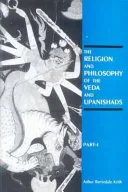
The Religion and Philosophy of the Veda and Upanishads
 72
72

The Religion and Philosophy of the Veda and Upanishads
Arthur Berriedale Keith’s "The Religion and Philosophy of the Veda and Upanishads" presents a thorough, if somewhat dry, academic dissection of foundational Indian texts. The sheer density of information is its greatest strength; Keith leaves no stone unturned in his analysis of Vedic cosmology and Upanishadic metaphysics. He meticulously traces the evolution of concepts like Brahman and Atman, demonstrating a deep command of the source material. However, the book’s academic tone can be a significant barrier for readers seeking accessible spiritual insights. The prose, while precise, often feels distant, lacking the evocative power that might convey the profound nature of the subject matter. For instance, Keith's detailed breakdown of sacrificial rituals, while informative, can feel overly technical, obscuring the underlying spiritual intent for the uninitiated. It is a foundational scholarly resource, but not an entry point for the spiritually curious alone.
📝 Description
72
Arthur Berriedale Keith's 1989 study meticulously analyzes the Veda and Upanishads.
Arthur Berriedale Keith's "The Religion and Philosophy of the Veda and Upanishads" offers a scholarly examination of ancient Indian religious and philosophical traditions. Originally published in 1989, this work meticulously analyzes the Vedic hymns, Brahmanas, Aranyakas, and the foundational Upanishads. It presents a detailed account of the cosmological ideas, ritual practices, and early philosophical concepts that shaped Hinduism. The book covers the evolution of thought from the ritualistic focus of the Vedas to the more introspective and metaphysical inquiries of the Upanishads. This volume is indispensable for scholars of religious studies, comparative philosophy, and Indology. It will also appeal to serious students of esoteric traditions who seek a rigorous academic foundation for understanding the origins of many spiritual concepts that have influenced global mysticism. Readers interested in the historical development of monotheism, pantheism, and the concept of Brahman will find its detailed exposition valuable. Keith's work emerged in an era of significant academic interest in Eastern religions and philosophies, building upon the Orientalist scholarship of the late 19th and early 20th centuries. Its detailed textual exegesis aimed to offer clarity on doctrines that were often subject to varied interpretation.
This book examines texts central to the development of Indian spiritual thought. The Upanishads, in particular, represent a shift towards philosophical inquiry and mystical insights that formed a bedrock for later esoteric traditions within Hinduism, such as Vedanta. Keith's work provides a structured analysis of these foundational scriptures, tracing the conceptual lineage from early Vedic rituals to the more abstract philosophical explorations that would influence not only Indian spirituality but also, through various transmission lines, Western esoteric thought.
💡 Why Read This Book?
• Gain a precise understanding of Brahman and Atman, concepts central to Hindu philosophy, by examining Keith's detailed textual analysis from the Upanishads, allowing for a deeper grasp of ultimate reality and the self. • Explore the historical trajectory from Vedic ritualism to Upanishadic metaphysics, as Keith outlines the development of religious thought from the Brahmanas to the philosophical dialogues, offering a clear view of intellectual evolution. • Grasp the early philosophical underpinnings of karma and samsara as presented in Keith's work, providing a concrete foundation for understanding the cyclical nature of existence and the concept of liberation (moksha).
⭐ Reader Reviews
Honest opinions from readers who have explored this book.
❓ Frequently Asked Questions
What is the primary focus of Arthur Berriedale Keith's "The Religion and Philosophy of the Veda and Upanishads"?
The book provides a scholarly analysis of the religious and philosophical doctrines found in ancient Indian Vedic literature and the Upanishads. It details concepts like Brahman, Atman, karma, and samsara, tracing their development from early Vedic hymns to later Upanishadic thought.
When was "The Religion and Philosophy of the Veda and Upanishads" first published?
The work was first published in 1989, making it a significant academic resource for understanding these ancient Indian texts from a late 20th-century scholarly perspective.
Who is Arthur Berriedale Keith and what is his contribution?
Arthur Berriedale Keith was a prominent scholar of Indian law and Sanskrit literature. His contribution in this book lies in his meticulous and detailed examination of the Vedic and Upanishadic corpus, offering a systematic exposition of their religious and philosophical content.
Does the book cover the historical development of Indian philosophy?
Yes, a key aspect of the book is its tracing of the historical and intellectual evolution from the ritualistic focus of the Vedas to the metaphysical inquiries of the Upanishads, highlighting shifts in religious thought.
Is this book suitable for beginners interested in Hinduism?
While comprehensive, the book's academic rigor and detailed textual analysis may be challenging for absolute beginners. It is more suited for students and scholars seeking a deep, factual understanding rather than a gentle introduction.
What are some key concepts discussed in the book?
Key concepts include Brahman (ultimate reality), Atman (the self), karma (action and consequence), samsara (cycle of rebirth), yajña (sacrifice), and moksha (liberation), all explored through the lens of Vedic and Upanishadic texts.
🔮 Key Themes & Symbolism
The Nature of Brahman
Keith meticulously explores the evolving concept of Brahman, the ultimate, unchanging reality, as it is presented across the Vedic and Upanishadic texts. The work details how early notions of a cosmic principle gradually coalesce into the sophisticated metaphysical doctrine of Brahman as the sole substance of the universe. This section highlights the Upanishads' move from external ritual to internal realization, emphasizing the search for unity and the divine within the self, a core tenet for many esoteric traditions drawing from this lineage.
The Doctrine of Karma and Samsara
Central to the philosophical discourse is the examination of karma and samsara. Keith elucidates the origins of the belief that actions (karma) directly influence an individual's destiny, leading to a continuous cycle of birth, death, and rebirth (samsara). The book details how these concepts, though implicitly present in earlier Vedic thought, become explicit doctrines within the Upanishads, forming the ethical and cosmological framework that has profoundly shaped Indian spirituality and influenced esoteric thought globally.
The Path to Moksha
The text investigates the concept of moksha, or liberation from the cycle of samsara. Keith analyzes the Upanishadic emphasis on knowledge (jnana) and self-realization as the means to achieve this ultimate freedom. This involves understanding the identity of Atman (the individual soul) with Brahman (the universal soul). The exploration of these liberation paths provides crucial insights for esoteric practitioners seeking transcendence and spiritual enlightenment beyond mundane existence.
Vedic Ritual and Cosmology
Before the philosophical turn, the Vedas established a complex system of rituals (yajña) and a pantheon of deities. Keith provides a detailed account of these early religious practices, including the sacrificial fires and the hymns addressed to gods like Agni, Indra, and Surya. The book outlines the cosmological views associated with these rituals, portraying a universe governed by divine forces and maintained through sacred offerings, laying the groundwork for the later philosophical explorations of cosmic order.
💬 Memorable Quotes
Direct passages from the work, attributed to the author.
“The Upanishads mark a transition from external ritual to internal contemplation.”
— This core idea signifies the shift from the Vedic focus on sacrificial ceremonies to the Upanishads' introspective philosophical inquiry into the nature of reality and the self.
“Brahman is the ultimate reality, the source and substance of all existence.”
— This succinctly captures the central metaphysical concept of the Upanishads, positing a singular, all-pervading consciousness as the fundamental ground of the universe.
“Atman is identical with Brahman.”
— This famous Mahavakya (great saying) from the Upanishads represents the pinnacle of Advaita Vedanta philosophy, asserting the non-duality of the individual soul and the ultimate reality.
“Karma determines the nature of future rebirths.”
— This interpretation highlights the law of cause and effect as a fundamental principle in ancient Indian thought, shaping the understanding of moral responsibility and the cycle of existence.
💡 Key Ideas
Editorial paraphrase of the work's core concepts — not direct quotes.
The goal is liberation from the cycle of birth and death.
This summarizes the ultimate aim of the spiritual paths described in the Upanishads, the release from samsara through wisdom and self-knowledge.
🌙 Esoteric Significance
Tradition
This work is foundational for understanding the roots of many Western esoteric traditions, particularly those influenced by Theosophy and later New Age movements that drew heavily on Indic thought. While Keith's approach is strictly academic and historical, the concepts he meticulously details—Brahman, Atman, karma, reincarnation, and liberation—form the philosophical bedrock of yogic, Vedantic, and Buddhist philosophies that have been integrated into Western occult systems seeking ultimate reality and spiritual evolution.
Symbolism
The book explores key symbols such as the syllable 'Om,' representing the primordial sound and the totality of existence, and the concept of the 'lotus heart' (anahata chakra) as a seat of spiritual awareness, though more implicitly. The sacrificial fire (yajña) itself functions as a potent symbol of transformation and connection between the human and divine realms. These symbols, though analyzed historically by Keith, carry deep esoteric meaning related to cosmic creation, consciousness, and the process of spiritual awakening.
Modern Relevance
Contemporary spiritual seekers, yoga practitioners, and scholars of comparative religion frequently engage with Keith's work as a primary reference for the original texts and their philosophical underpinnings. Thinkers and teachers in fields ranging from mindfulness and meditation to non-dual awareness practices often trace their conceptual lineage back to the ideas Keith explicates, making his scholarship relevant for understanding the historical and philosophical context of modern spiritual movements.
👥 Who Should Read This Book
• Academic researchers in religious studies, Indology, and comparative philosophy seeking a detailed, scholarly exposition of Vedic and Upanishadic thought. • Students of esoteric traditions interested in the historical and philosophical origins of concepts like Brahman, karma, and moksha that inform many mystical paths. • Readers who appreciate rigorous textual analysis and historical context for understanding ancient religious and philosophical systems, moving beyond popular interpretations.
📜 Historical Context
Arthur Berriedale Keith's "The Religion and Philosophy of the Veda and Upanishads," first published in 1989, arrived at a time when Western academic engagement with Indian traditions was well-established, yet still evolving. Building on the foundational Sanskrit scholarship of the 19th century, figures like Max Müller had already translated key Vedic texts, sparking interest in their philosophical content. Keith's work can be seen as a comprehensive synthesis and critical analysis within this lineage. While not directly contemporaneous with the Vedic period, his scholarly approach engaged with the intellectual currents of early 20th-century Indology. The reception of such works often involved rigorous peer review within academic circles, with scholars debating interpretations of complex Sanskrit texts. Keith’s detailed exegesis provided a counterpoint to more popular or overtly mystical interpretations, grounding the study in textual evidence and comparative analysis, positioning it within the broader field of comparative religion and philosophy.
📔 Journal Prompts
The concept of Brahman as ultimate reality: how does this compare to other conceptions of the divine or fundamental existence you have encountered?
Upanishadic emphasis on Atman: reflect on the nature of the self as presented in these texts versus personal experience.
The law of karma: consider its implications for personal responsibility and the understanding of causality in life events.
The transition from Vedic yajña to Upanishadic jnana: analyze the shift in spiritual focus and its potential significance.
Reflect on the pursuit of moksha: what does liberation from samsara signify in a modern context?
🗂️ Glossary
Veda
The oldest scriptures of Hinduism, consisting of four collections (Rigveda, Samaveda, Yajurveda, Atharvaveda) containing hymns, rituals, and philosophical insights.
Upanishads
Later Vedic texts considered to be the culmination of Vedic thought, focusing on philosophical concepts like Brahman, Atman, and the nature of reality.
Brahman
The ultimate, unchanging reality in Hinduism; the supreme cosmic spirit or absolute principle that is the source and sustainer of all existence.
Atman
The individual soul or self; in Upanishadic philosophy, it is often identified with Brahman, signifying the true, eternal essence of a being.
Karma
The principle of cause and effect; the sum of an individual's actions in this and previous states of existence, which determines their future fate.
Samsara
The continuous cycle of birth, death, and rebirth; the process of reincarnation driven by karma.
Moksha
Liberation or release from the cycle of samsara; the ultimate spiritual goal in Hinduism, often attained through knowledge, devotion, or right action.