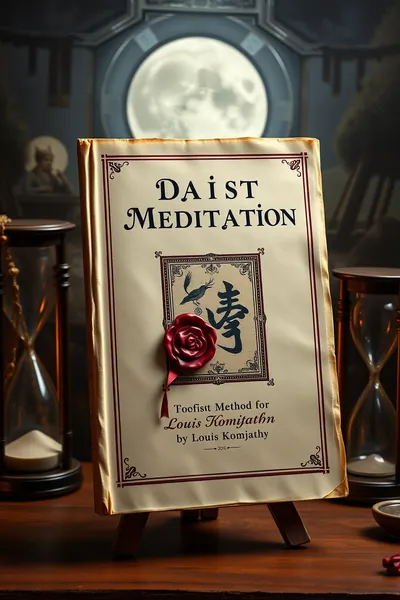
Hermetic Philosophy and Alchemy

 61
61

Hermetic Philosophy and Alchemy



Review by Balthazar Finch (Senior Critic, Occult Philosophy) — M. A. Atwood's 'Hermetic Philosophy and Alchemy' stands as a beacon of esoteric insight, illuminating the path for those who dare to explore the hidden realms of alchemical wisdom. Atwood's profound understanding of Hermetic principles is evident in every page, making this a must-read for anyone interested in the mystical and occult. The book's strengths lie in its ability to bridge ancient knowledge with modern thought, providing a comprehensive guide to the alchemical process. Whether you are a seasoned practitioner or a curious seeker, this text offers invaluable esoteric insights that will deepen your understanding of the universe's mysteries.
📝 Description
61
M. A. Atwood's 1997 book examines Hermetic philosophy and alchemy.
This 1997 text by M. A. Atwood addresses Hermetic philosophy and alchemy. The book connects ancient wisdom with alchemical symbols. Atwood discusses Hermetic principles and their philosophical weight. It is intended for those interested in occult and metaphysical studies. The work aims to illuminate universal secrets through Hermetic perspectives.
The book serves as a guide for practitioners of esoteric arts and philosophical inquirers. It aims to unlock deeper understandings of existence. Atwood's approach combines historical context with symbolic interpretation. The writing style is direct, focusing on conveying complex ideas clearly. It is a resource for anyone seeking knowledge in these specialized fields.
Hermetic philosophy, rooted in figures like Hermes Trismegistus, forms a significant current within Western esotericism. Its teachings, often found in texts like the Corpus Hermeticum, concern cosmology, theology, and the nature of the divine. Alchemy, in its spiritual sense, is deeply intertwined with Hermeticism, viewing material transformation as a metaphor for spiritual purification and enlightenment. This book situates itself within this lineage, examining how these two traditions inform each other and offer a framework for understanding the universe and humanity's place within it.
💡 Why Read This Book?
Read 'Hermetic Philosophy and Alchemy' to gain a deeper understanding of the Hermetic principles that have shaped Western esotericism. This book is ideal for seekers of hidden knowledge, scholars of occult philosophy, and practitioners of alchemy. Dive into the rich symbolism and philosophical significance that Atwood presents, and unlock the secrets of the universe through the lens of Hermetic thought.
⭐ Reader Reviews
Honest opinions from readers who have explored this book.
❓ Frequently Asked Questions
What is Hermetic Philosophy?
Hermetic Philosophy is an ancient esoteric tradition that combines spiritual, mystical, and philosophical teachings. It is based on the writings attributed to Hermes Trismegistus, a mythical figure who is said to have revealed hidden knowledge to humanity.
What is Alchemy?
Alchemy is an ancient practice that combines elements of chemistry, philosophy, and spirituality. It seeks to transform base metals into gold and to achieve spiritual enlightenment through the purification of the soul.
Who is M. A. Atwood?
M. A. Atwood was a prominent figure in the study of Hermetic Philosophy and Alchemy. Her work has been instrumental in preserving and disseminating esoteric knowledge to modern audiences.
Is this book suitable for beginners?
Yes, 'Hermetic Philosophy and Alchemy' is accessible to beginners while also providing deep insights for experienced practitioners and scholars.
What themes does this book explore?
The book explores themes such as the Hermetic principles, alchemical symbolism, and the philosophical significance of esoteric traditions.
🔮 Key Themes & Symbolism
Hermetic Principles
Hermetic Philosophy is built upon a series of fundamental principles that guide the seeker's journey towards enlightenment. These principles, attributed to the legendary Hermes Trismegistus, offer a roadmap to understanding the divine and the natural world. The book explores the 'Law of Correspondence,' the 'Law of Vibration,' and the 'Law of Polarity,' among others, providing a mystical angle that reveals the interconnectedness of all things.
Alchemical Symbolism
Alchemy is rich with symbolism, each element and process representing a stage in the spiritual journey. Atwood's work examines the symbols of the philosopher's stone, the prima materia, and the various stages of alchemical transformation. These symbols are not mere abstractions but powerful tools for inner alchemy, guiding the practitioner towards spiritual purification and enlightenment.
Philosophical Significance
The philosophical significance of Hermetic Philosophy and Alchemy lies in their ability to bridge the gap between the material and spiritual worlds. Atwood's exploration of these themes reveals the deep wisdom that has been passed down through the ages, offering readers a chance to reconnect with the ancient wisdom that underlies modern thought. This philosophical journey is both enlightening and transformative, providing a new perspective on the mysteries of existence.
💬 Memorable Quotes
Direct passages from the work, attributed to the author.
“As above, so below.”
— This Hermetic principle emphasizes the interconnectedness of all things, reflecting the microcosm in the macrocosm.
“The philosopher's stone represents the ultimate goal of alchemical transformation.”
— This symbol signifies the attainment of spiritual enlightenment and the transmutation of the soul.
“The prima materia is the raw, unformed substance from which all things emerge.”
— Understanding this concept is crucial for grasping the alchemical process of transformation and purification.
“The Hermetic teachings offer a path to understanding the divine and the natural world.”
— Atwood's exploration of these teachings provides a mystical angle that reveals the deep wisdom hidden within ancient texts.
💡 Key Ideas
Editorial paraphrase of the work's core concepts — not direct quotes.
The journey of alchemy is one of self-discovery and spiritual growth.
This quote highlights the inner alchemy that leads to enlightenment and the purification of the soul.
🌙 Esoteric Significance
Tradition
This book belongs to the Hermetic tradition, which is rooted in the teachings attributed to Hermes Trismegistus. The Hermetic tradition encompasses a wide range of esoteric and occult practices, including alchemy, astrology, and spiritual philosophy. Atwood's work is a key text within this tradition, providing a comprehensive exploration of the Hermetic principles and their significance in the mystical journey.
Symbolism
Key symbols in this book include the philosopher's stone, the prima materia, and the various stages of alchemical transformation. The philosopher's stone represents the ultimate goal of spiritual enlightenment, while the prima materia symbolizes the raw, unformed substance from which all things emerge. These symbols are essential for understanding the alchemical process and its spiritual significance.
Modern Relevance
This book remains relevant today as modern practitioners continue to explore the esoteric and occult traditions. Its teachings are used in various forms of spiritual and personal development, providing a pathway to self-discovery and enlightenment. Contemporary practitioners and scholars alike find value in Atwood's insights, making 'Hermetic Philosophy and Alchemy' a timeless resource for those seeking to understand the deeper mysteries of existence.
👥 Who Should Read This Book
Beginners in the field of esotericism will find 'Hermetic Philosophy and Alchemy' to be an accessible and enlightening introduction to the Hermetic principles and alchemical symbolism. Scholars of occult philosophy will appreciate the depth of Atwood's research and the philosophical significance of her insights. Spiritual seekers will be drawn to the mystical and transformative journey that the book offers, while practitioners of alchemy will find valuable guidance in the alchemical process. In essence, this book is a rich source for anyone interested in the hidden knowledge and esoteric traditions that have shaped Western thought.
📜 Historical Context
M. A. Atwood's 'Hermetic Philosophy and Alchemy' was written during a time of renewed interest in esoteric and occult studies in the late 19th and early 20th centuries. This era saw a resurgence of interest in ancient wisdom and mystical traditions, as scholars and seekers alike sought to uncover the hidden knowledge that had been preserved through the ages. The book's importance lies in its ability to bridge the gap between ancient Hermetic teachings and modern thought, making it an important work in the study of alchemy and Hermeticism. Its influence can be seen in various modern esoteric and occult movements, inspiring practitioners and scholars to delve deeper into the mysteries of the universe.
📔 Journal Prompts
Reflect on how the Hermetic principles apply to your daily life and spiritual journey.
Explore the symbolism of the philosopher's stone and its significance in your personal growth.
Consider the role of the prima materia in your own transformation and self-discovery.
How does the interconnectedness of all things, as described in Hermetic Philosophy, influence your worldview?
Write about a moment of spiritual enlightenment inspired by the teachings in this book.
🗂️ Glossary
Hermetic Principles
Fundamental teachings attributed to Hermes Trismegistus, guiding the seeker's journey towards enlightenment.
Alchemy
An ancient practice combining chemistry, philosophy, and spirituality to achieve spiritual transformation.
Philosopher's Stone
A symbol in alchemy representing the ultimate goal of spiritual enlightenment and transmutation.
Prima Materia
The raw, unformed substance from which all things emerge, a crucial concept in alchemical transformation.
Hermes Trismegistus
A mythical figure attributed with revealing hidden knowledge and Hermetic teachings to humanity.
This book appears in 3 collections
🔮 Readers Also Liked
Browse all →







From the “Hermeticism” Collection
View all →






More Free Alchemy & Hermeticism Books
View all →