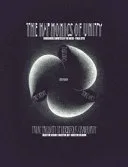
The Harmonics of Unity
 79
79

The Harmonics of Unity
Harold Terry Lindahl’s *The Harmonics of Unity* attempts to map a new evolutionary trajectory for humanity, one driven by psychic development rather than purely biological mechanisms. The author proposes that the "psyvolution" of our "psychic organs" is intrinsically linked to a "conflation" of art and science, particularly in how these inform our understanding of religion. The argument is dense, pushing the reader to consider the potential for integrated consciousness beyond current paradigms. Lindahl’s concept of "psyvolution" as a distinct phase from somatic evolution is a compelling, albeit abstract, anchor for the work. However, the text’s primary limitation lies in its dense, often jargon-laden prose, which can obscure the very insights it aims to convey. The assertion regarding the "conflation of art that informs science of religion and religion of science" is particularly challenging to unpack without significant prior philosophical grounding. Ultimately, *The Harmonics of Unity* offers a unique, albeit demanding, perspective on consciousness evolution.
📝 Description
79
Harold Terry Lindahl's 2017 book argues for a transition from biological evolution to 'psyvolution'.
Published in July 2017, The Harmonics of Unity presents Harold Terry Lindahl's argument for a shift in human evolution. Lindahl posits that humanity is moving beyond purely biological development toward a 'psyvolution,' a process driven by the emergence of specialized psychic organs. This transformation, he suggests, is deeply connected to the merging of art and science. This integration, particularly within religion and its study, forms a core aspect of this new evolutionary path.
The book is intended for those engaged in advanced study of esoteric philosophy, comparative religion, and consciousness research. It will resonate with readers interested in the connections between abstract thought, psychic development, and the philosophical foundations of religious experience. Those seeking a rigorous, interdisciplinary examination of human potential will find ample material for reflection.
Lindahl's work arises in a period where scientific investigation and metaphysical thought often intersect. The book engages with a historical current that attempts to reconcile spiritual experience with empirical observation, a lineage that includes figures like Helena Blavatsky and the Theosophical Society. Their efforts also aimed to synthesize scientific findings with esoteric doctrines. The concept of 'psyvolution' echoes 20th-century esoteric movements that investigated psychic phenomena, placing Lindahl's ideas within a broader tradition of exploring consciousness beyond conventional biological frameworks.
💡 Why Read This Book?
• Understand the concept of "psyvolution" and its proposed role in human development beyond biological evolution, as detailed in the 2017 publication. • Explore Lindahl's unique thesis on the "conflation of art that informs science of religion and religion of science," gaining a new framework for interdisciplinary study. • Gain insight into the potential development of "psychic organs" and their impact on consciousness, offering a speculative yet grounded perspective on human potential.
⭐ Reader Reviews
Honest opinions from readers who have explored this book.
❓ Frequently Asked Questions
What is the central concept of "psyvolution" in The Harmonics of Unity?
Psyvolution, as presented by Harold Terry Lindahl, refers to the evolutionary development of human consciousness driven by the emergence and refinement of "psychic organs," moving beyond solely somatic or biological evolution.
When was Harold Terry Lindahl's The Harmonics of Unity first published?
The book was first published on July 20, 2017, placing its philosophical discourse within contemporary intellectual currents.
How does the book connect art, science, and religion?
Lindahl proposes a "conflation" where art informs the science of religion, and religion informs the science of art, suggesting an integrated approach to understanding consciousness and spirituality.
What is meant by 'psychic organs' in the context of the book?
The term 'psychic organs' refers to hypothetical, evolved faculties of consciousness that enable enhanced perception, intuition, and spiritual understanding, distinct from biological sensory organs.
Is The Harmonics of Unity suitable for beginners in esoteric studies?
Due to its advanced philosophical arguments and specialized terminology, the book is more suited for experienced students of esoteric philosophy and comparative religion rather than absolute beginners.
What is the primary evolutionary shift discussed in the book?
The primary shift discussed is the transition from somatic evolution, governed by biological processes, to psyvolution, driven by the development and integration of consciousness and psychic faculties.
🔮 Key Themes & Symbolism
Psyvolution of Consciousness
The core concept of the book is 'psyvolution', positing a new phase of human evolution driven by the development of specialized psychic organs. Lindahl argues that this is a distinct progression from somatic evolution, emphasizing the growth of consciousness itself as the primary engine of advancement. This evolutionary leap is facilitated by the integration of diverse human faculties, moving beyond purely biological imperatives to explore the potential of mind and spirit.
Conflation of Art and Science
Lindahl introduces the idea of a 'conflation' between art and science, particularly in their relationship with religion. This suggests that these seemingly disparate fields are merging to inform a more holistic understanding of existence. Art is seen as informing the scientific study of religion, while religion itself provides a framework for understanding artistic expression, leading to a unified approach to knowledge and spiritual insight.
Evolution of Psychic Organs
Central to the theory of psyvolution is the concept of 'psychic organs.' These are not biological structures in the conventional sense but rather evolved faculties of consciousness that enable higher perception and spiritual awareness. The development of these organs is presented as the mechanism through which humanity transcends its current limitations and progresses towards a more unified and aware state of being.
Religion as a Scientific Framework
The work explores religion not merely as a belief system but as a potentially scientific framework for understanding the universe and human consciousness. By integrating religious insights with scientific inquiry, Lindahl suggests that a deeper comprehension of existence can be achieved. This approach challenges traditional divisions between faith and reason, proposing a synthesis that reveals the underlying unity of spiritual and material realities.
💬 Memorable Quotes
Direct passages from the work, attributed to the author.
“The transition from somatic evolution to the psyvolution of our endowment of psychic organs.”
— This foundational statement captures Lindahl's central thesis: that human evolution is shifting from a biological basis to one driven by the development of consciousness and its inherent capacities.
“The conflation of art that informs science of religion and religion of science.”
— This phrase highlights the proposed integration of creative expression and empirical study, suggesting they are merging to create new paradigms for understanding spirituality and existence.
“Our endowment of psychic organs.”
— This refers to the inherent, though perhaps latent, faculties of consciousness that Lindahl believes are developing as humanity undergoes psyvolution, enabling higher perception and spiritual understanding.
“Religion and science are converging towards a unified understanding.”
— This interpretation of the book's core argument suggests that disparate fields of inquiry are ultimately pointing towards a single, cohesive view of reality, as facilitated by the psyvolutionary process.
💡 Key Ideas
Editorial paraphrase of the work's core concepts — not direct quotes.
The evolution of human consciousness is intrinsically linked to the development of these faculties.
This paraphrased concept emphasizes that the growth of awareness is not an incidental byproduct but a direct consequence of the maturation of specific, yet undefined, psychic capacities.
🌙 Esoteric Significance
Tradition
The Harmonics of Unity situates itself within a broad current of esoteric thought that emphasizes consciousness evolution beyond physical limitations. It draws implicitly from Gnostic ideas of spiritual development and Theosophical concepts of ascending planes of existence, though it frames this through a unique lens of "psyvolution" and "psychic organs." Lindahl departs from some traditions by foregrounding the role of art and science integration as the primary driver, rather than solely focusing on specific meditative or ritualistic practices.
Symbolism
While the book's primary focus is philosophical, the concept of "psychic organs" itself functions symbolically, representing the specialized faculties of higher consciousness that humanity is evolving. The "conflation of art and science" can be seen as a symbolic representation of the integration of intuition and logic, subjective experience and objective analysis, essential for this evolutionary leap.
Modern Relevance
Contemporary thinkers in consciousness studies, integral theory, and speculative philosophy may find Lindahl's work relevant. His ideas on psyvolution and the development of psychic faculties resonate with discussions on the future of human potential and the integration of spiritual and scientific understanding, offering a unique perspective for those exploring expanded states of awareness.
👥 Who Should Read This Book
• Students of esoteric philosophy and comparative religion seeking to understand theories of consciousness evolution beyond standard biological models. • Researchers interested in the philosophical intersections of art, science, and religion, particularly how these disciplines might inform spiritual development. • Individuals exploring speculative theories on human potential and the future trajectory of consciousness, who appreciate rigorous, albeit abstract, philosophical argumentation.
📜 Historical Context
Harold Terry Lindahl's *The Harmonics of Unity*, published in 2017, enters a philosophical landscape shaped by persistent inquiries into consciousness and evolution that have spanned centuries. It carries the late 19th and early 20th-century esoteric movements, such as Theosophy spearheaded by Helena Blavatsky, which sought to reconcile spiritual traditions with emerging scientific paradigms. These movements often posited evolutionary stages of human consciousness. Lindahl's specific focus on "psyvolution" and the development of "psychic organs" can be seen as a contemporary iteration of these perennial themes. While not directly engaging with a specific contemporary author in its blurb, the work implicitly dialogues with fields like transhumanism and consciousness studies, which grapple with humanity's future trajectory. The book’s exploration of the "conflation of art that informs science of religion and religion of science" also speaks to a broader academic trend of interdisciplinary synthesis, though its esoteric framing distinguishes it from purely secular analyses.
📔 Journal Prompts
The concept of 'psyvolution' and its difference from somatic evolution.
The proposed 'conflation of art that informs science of religion and religion of science'.
The nature and potential development of 'psychic organs'.
How does the integration of art and science influence religious understanding in your experience?
Reflecting on the potential evolution of consciousness beyond current perceived limits.
🗂️ Glossary
Psyvolution
A hypothesized stage of human evolution characterized by the development of consciousness and specialized psychic faculties, distinct from and subsequent to somatic or biological evolution.
Somatic Evolution
The process of evolutionary change driven primarily by biological and physical factors affecting the body, as opposed to the development of consciousness or psychic abilities.
Psychic Organs
Hypothetical faculties or structures of consciousness that evolve to enable higher perception, intuition, and spiritual awareness, playing a key role in psyvolution.
Conflation
In this context, the merging or blending of distinct concepts or fields, specifically art, science, and religion, to create a unified understanding or driving force for evolution.
Art that informs science of religion
The idea that artistic expression and creative insight can provide valuable data, perspectives, or methodologies for the scientific study of religious phenomena and beliefs.
Religion of science
The concept that religious or spiritual principles and frameworks can inform and guide scientific inquiry, potentially leading to a more holistic or meaningful understanding of the universe.
Endowment of psychic organs
Refers to the inherent, developing, or potential capacities of consciousness that are believed to be crucial for the process of psyvolution.