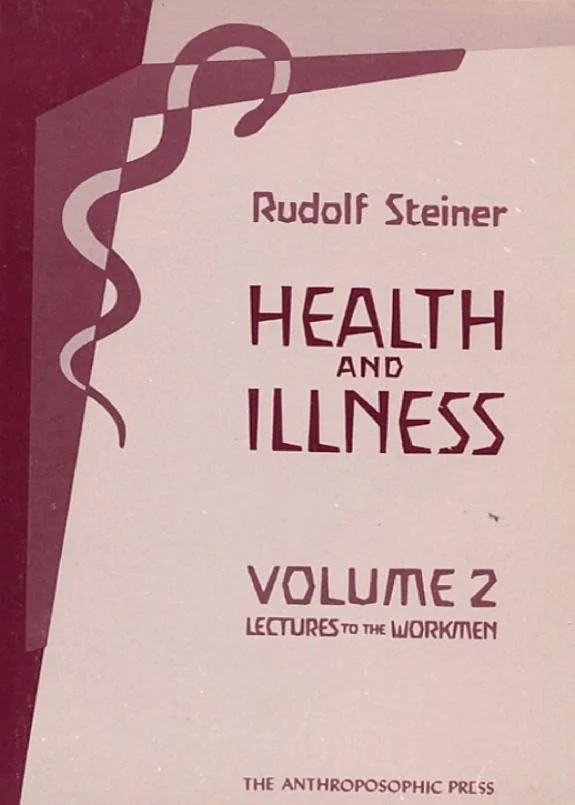
Health and Illness
 83
83

Health and Illness
Rudolf Steiner’s "Health and Illness," a collection of lectures given to workers at the Goetheanum in 1922, offers a refreshingly direct engagement with his ideas on well-being. Unlike more academic texts, these talks retain the spontaneity and conversational tone of their original delivery. Steiner addresses the workers' practical questions about health and therapeutics, making complex spiritual-scientific concepts more accessible. A particular strength lies in his ability to connect everyday ailments to broader cosmic and karmic influences, a perspective rarely found in conventional medicine. However, the colloquial style, while engaging, can sometimes lead to a lack of precise definition for certain terms, requiring readers to piece together meanings from context. One striking passage discusses how external environmental factors can directly impact the subtle bodies, illustrating a key tenet of his holistic approach. This volume serves as a valuable, albeit occasionally dense, exploration of Steiner's unique view on the human organism's spiritual dimensions.
📝 Description
83
Rudolf Steiner delivered lectures on health and illness to workers building the Goetheanum in 1922.
Rudolf Steiner's "Health and Illness" contains lectures given to workers constructing the first Goetheanum in Dornach, Switzerland, starting in 1922. These talks, originally transcribed for internal use, show Steiner speaking directly to a non-academic audience. The book maintains the informal, question-and-answer style of the original sessions, giving insight into Steiner's practical approach to complex subjects. The focus is on the workers' specific interests, particularly in therapeutics and understanding the human body and its ailments from an anthroposophical viewpoint.
The lectures were delivered during a period of significant creative output for Steiner, following the completion of the first Goetheanum. He was addressing manual laborers, encouraging open inquiry. This approach differed from academic discourse, emphasizing the practical and spiritual relevance of his ideas for daily life and work. The workers' own questions about therapeutics influenced the content, showing a need for clear explanations of Steiner's views on health and disease within his spiritual science.
This volume is suitable for anyone interested in anthroposophy, Rudolf Steiner's spiritual science, and its connection to health and healing. It appeals to those looking for different perspectives on illness, physiology, and the connection between the spiritual and physical. Readers already familiar with Steiner's work will find these lectures a good addition, and newcomers can access his ideas through this more direct, conversational format.
These lectures belong to the tradition of Anthroposophy, a spiritual philosophy founded by Rudolf Steiner. Anthroposophy seeks to understand the human being and the world through a combination of spiritual perception and rational thought. Steiner applied these principles to various fields, including medicine and healing, viewing illness not just as a physical malfunction but as having spiritual and psychological dimensions. The lectures presented here are a direct expression of this approach, made accessible to a working audience outside of traditional academic or esoteric circles.
💡 Why Read This Book?
• Gain a spiritual-scientific perspective on health and illness, understanding concepts like the etheric body's role in vitality, which differs fundamentally from materialistic medical models, as explored in lectures given from 1922. • Discover how Steiner connected physical well-being to cosmic forces and individual karma, offering a holistic framework for understanding disease beyond mere biological malfunction, as discussed in the context of the Goetheanum workers. • Learn about practical therapeutic considerations rooted in spiritual science, providing insights into the energetic and spiritual causes of ailments that contemporary alternative healing practices might draw upon.
⭐ Reader Reviews
Honest opinions from readers who have explored this book.
❓ Frequently Asked Questions
What is the origin of the lectures in Rudolf Steiner's "Health and Illness"?
The lectures were delivered to hundreds of workers from 17 nations engaged in constructing Rudolf Steiner's first Goetheanum building in Dornach, Switzerland, starting in 1922, following their morning coffee break.
What specific interest did the workers have that shaped these lectures?
The workers showed a particular interest in therapeutics and understanding health and illness from a spiritual-scientific perspective, prompting Steiner to address these topics directly.
How does Steiner's approach to health in this book differ from conventional medicine?
Steiner's approach integrates spiritual and cosmic influences on the human being, viewing illness not just as a physical malfunction but as an imbalance in etheric and astral bodies, influenced by karma.
What is the "Goetheanum" mentioned in relation to this book?
The Goetheanum is the name of the center for spiritual science founded by Rudolf Steiner in Dornach, Switzerland. The first Goetheanum building was under construction when these lectures were given in 1922.
Is "Health and Illness" suitable for someone new to Rudolf Steiner's work?
Yes, the lectures' spontaneous and dialogical nature makes them more accessible than some of Steiner's more academic works, offering a practical entry point into his ideas on health and the human constitution.
What does Steiner mean by the 'etheric body' in the context of health?
The etheric body, or life body, is considered the bearer of life forces and formative impulses. Steiner taught that its health is crucial for physical vitality, and imbalances can manifest as physical illness.
🔮 Key Themes & Symbolism
Spiritual Basis of Physiology
This work posits that human physiology is not solely a material construct but is animated by spiritual forces, primarily the etheric or life body. Steiner explains how these forces organize the physical body and how their disruption leads to illness. He connects the health of the physical form to the vitality and activity of these subtle bodies, influenced by cosmic rhythms and individual karmic predispositions, moving beyond purely biochemical explanations prevalent in the early 20th century.
Therapeutics and Spiritual Science
The lectures address the practical application of spiritual science to healing. Steiner suggests that understanding the spiritual roots of disease is essential for effective therapeutics. This involves recognizing how the astral body and the ego organization interact with the etheric and physical bodies, and how imbalances manifest physically. The book explores how interventions, whether medicinal, environmental, or psychological, can be aligned with these spiritual principles for true restoration of health.
Karma and Physical Form
A central theme is the intricate relationship between karma and the physical body. Steiner presents the idea that physical predispositions and illnesses can be understood as the unfolding of karmic patterns. The body serves as a vessel through which karmic lessons are worked out. This perspective offers a framework for understanding suffering and illness not as random events but as purposeful stages in spiritual evolution, as conveyed in his talks to the Dornach workers.
The Fourfold Human Being
Steiner frequently refers to the human being as composed of four distinct yet interconnected members: the physical body, the etheric body, the astral body, and the ego organization. "Health and Illness" explores how the harmonious interplay of these members maintains well-being, while discord or deficiency in one can lead to sickness. Understanding this fourfold constitution is presented as foundational to grasping the complex etiology of disease and the principles of healing within anthroposophy.
💬 Memorable Quotes
Direct passages from the work, attributed to the author.
“The workers wanted to know about therapeutics.”
— This concise statement highlights the practical, needs-driven origin of these lectures. It underscores Steiner's responsiveness to his audience, indicating that the discussions on health and illness arose directly from the practical concerns and interests of the people building the Goetheanum.
“The lectures retained vital, colloquial, and spontaneous qualities.”
— This description emphasizes the accessible and dynamic nature of the original talks. It suggests that the book preserves Steiner's direct communication style, making complex spiritual-scientific ideas understandable and engaging for a broad audience, not just academics.
“The construction of the first Goetheanum provided the setting.”
— This factual anchor places the lectures historically and geographically. It signifies that the context of manual labor and artistic creation at the Goetheanum site in Dornach influenced the specific focus and tone of Steiner's discussions on health.
“Rudolf Steiner addressed workers from 17 nations.”
— This detail underscores the international and diverse nature of the audience. It implies that Steiner tailored his explanations to be broadly comprehensible, transcending cultural and linguistic barriers among the laborers involved in the project.
💡 Key Ideas
Editorial paraphrase of the work's core concepts — not direct quotes.
Illness appears when the etheric body is weak.
This paraphrased concept points to a core anthroposophical view: that physical health relies on the strength and integrity of the life forces (etheric body). When these forces falter, the physical organism becomes susceptible to disease, suggesting a spiritual or energetic cause preceding physical manifestation.
🌙 Esoteric Significance
Tradition
This work fits within the Western Esoteric Tradition, specifically stemming from Rudolf Steiner's unique development of anthroposophy. While drawing inspiration from Theosophy and various mystical traditions, Steiner sought to create a more scientifically rigorous and independently verifiable path. Anthroposophy presents itself not as a religion but as a method for spiritual perception and understanding, aiming to bridge the gap between science and spirituality, offering a distinct modern esoteric lineage.
Symbolism
The primary symbolic framework is the 'fourfold human being' (physical body, etheric body, astral body, ego). The etheric body symbolizes life forces and formative energies, crucial for health; the astral body represents consciousness, feeling, and mobility; the ego signifies individuality and spiritual selfhood. Imbalances among these are seen as the root of illness, with the physical body acting as the manifest outcome. Cosmic forces and karma also function symbolically, representing the larger spiritual order influencing human destiny and physical form.
Modern Relevance
Contemporary practitioners of Anthroposophical Medicine, Waldorf education, biodynamic agriculture, and various therapeutic arts draw directly from Steiner's teachings presented here. Thinkers exploring holistic health, consciousness studies, and the integration of science and spirituality often reference Steiner's foundational concepts. His emphasis on the subtle bodies and spiritual causality continues to inform alternative healing modalities and philosophical inquiries into the nature of human existence beyond purely materialist frameworks.
👥 Who Should Read This Book
• Individuals interested in Anthroposophical Medicine: Those seeking to understand the spiritual and energetic underpinnings of health and disease as conceptualized by Rudolf Steiner, complementing conventional medical knowledge. • Students of Esotericism: Readers exploring diverse spiritual traditions will find Steiner's unique framework for understanding the human constitution and its relationship to the cosmos a significant contribution. • Practitioners of Holistic Healing: Therapists and healers looking for alternative perspectives on illness etiology and treatment modalities that integrate mind, spirit, and body will find foundational concepts here.
📜 Historical Context
Delivered in 1922, these lectures by Rudolf Steiner to the workers at the first Goetheanum site in Dornach, Switzerland, emerge from a period rich with spiritual and artistic innovation. Steiner's anthroposophy, a spiritual scientific worldview, was gaining traction, often contrasting sharply with the prevailing materialistic scientific paradigms of the era. While figures like Sigmund Freud were exploring the subconscious in psychology, Steiner focused on the spiritual constitution of the human being. The workers' direct engagement, requesting lectures on therapeutics, demonstrates a practical need and interest in applying spiritual science to everyday life beyond intellectual circles. This approach was part of Steiner's broader effort to integrate spiritual understanding into all aspects of human activity, from education and agriculture to art and medicine, challenging the compartmentalization of knowledge typical of early 20th-century thought.
📔 Journal Prompts
The etheric body's role in vitality and illness.
Connecting karmic patterns to specific physical predispositions.
How the astral body influences perception of well-being.
The ego organization's function in maintaining health.
Reflecting on the Goetheanum workers' practical questions about therapeutics.
🗂️ Glossary
Anthroposophy
A spiritual philosophy founded by Rudolf Steiner, seeking to understand the spiritual nature of the human being and the cosmos through methods of spiritual perception and rigorous contemplation.
Etheric Body (Life Body)
In Steiner's cosmology, the subtle body responsible for life forces, growth, reproduction, and maintaining the physical body's form and vitality. Its health is seen as fundamental to physical well-being.
Astral Body
The subtle body associated with consciousness, feeling, instinct, movement, and the senses. It is considered the bearer of soul experiences and the source of subjective awareness.
Ego Organization
The highest spiritual member in Steiner's model, representing individual consciousness, self-awareness, judgment, and the capacity for spiritual development and moral freedom.
Karma
In anthroposophy, the law of cause and effect governing spiritual development, wherein actions in past lives influence present circumstances and character, including physical predispositions.
Therapeutics
The branch of medicine concerned with the treatment of disease and the action of remedial agents. In this context, it refers to healing methods informed by spiritual science.
Goetheanum
The center for spiritual science founded by Rudolf Steiner in Dornach, Switzerland, named in honor of the poet Goethe. The lectures in this book were given during the construction of the first Goetheanum building.
This book appears in 1 collection
🔮 Readers Also Liked
Browse all →






From the “Anthroposophy” Collection
View all →





More Free Theosophy & Anthroposophy Books
View all →