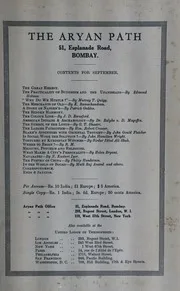
The Aryan Path Vol-VIII No-11
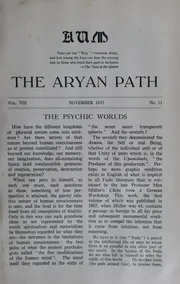
 78
78

The Aryan Path Vol-VIII No-11



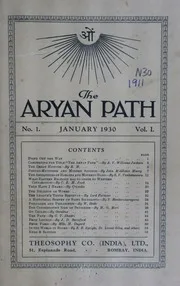
The Aryan Path Vol-VIII No-11 (1937) stands as a testament to the enduring relevance of Theosophical and Anthroposophical teachings. Edited by Shri B.P Wadia, this journal is a treasure trove of esoteric wisdom, carefully curated to resonate with modern seekers. The articles, contributed by eminent thinkers, artists, and philosophers, are thought-provoking and deeply insightful. They offer a unique blend of ancient spiritual truths and contemporary perspectives, making the journal an invaluable resource for anyone on the spiritual path. For modern esoteric seekers, this text provides a bridge between the ancient and the modern, offering timeless wisdom in a format that is accessible and relevant. The Aryan Path Vol-VIII No-11 is a 5-star read for those interested in the deeper dimensions of spirituality and the esoteric traditions.
📝 Description
78
The Aryan Path Vol-VIII No-11 appeared in a period of active Theosophical dissemination.
This issue of The Aryan Path, released as Volume VIII, Number 11, contains writings intended to restate Theosophical principles for contemporary readers. The contents draw directly from the foundational work of H.P. Blavatsky and William Q. Judge. Contributors include various thinkers and artists whose work is examined through a Theosophical viewpoint.
The publication’s goal was to present established esoteric truths in a manner accessible to those seeking deeper understanding. It functions as a guide for individuals interested in the philosophical aspects of existence and esoteric symbolism. The intended audience is anyone with an inquisitive disposition, open to exploring the significance of Theosophy and its continued applicability.
The Aryan Path was a journal published during a significant era for esoteric thought, particularly Theosophy. Emerging from the work of Helena Blavatsky and William Q. Judge, Theosophy sought to synthesize Eastern and Western mystical traditions. Journals like this served as platforms to disseminate these ideas, discuss their implications, and connect with a growing international readership interested in spiritual philosophy beyond conventional religious and scientific frameworks. The publication aimed to be a conduit for these ideas, making them understandable to a wider audience.
💡 Why Read This Book?
Reading The Aryan Path Vol-VIII No-11 (1937) today offers readers a unique opportunity to connect with ancient spiritual truths in a modern context. This journal provides insights into Theosophical and Anthroposophical teachings that are as relevant today as they were in 1937. Readers will gain a deeper understanding of the spiritual path, learn how to integrate ancient wisdom into contemporary life, and explore the esoteric dimensions of spirituality. This book is a must-read for anyone seeking to enrich their spiritual journey with timeless knowledge.
⭐ Reader Reviews
Honest opinions from readers who have explored this book.
❓ Frequently Asked Questions
Who is the editor of The Aryan Path Vol-VIII No-11?
The editor of The Aryan Path Vol-VIII No-11 is Shri B.P Wadia, a visionary deeply inspired by the original teachings of Madame H.P. Blavatsky and William Q. Judge.
What are the main themes covered in this journal?
The main themes covered in this journal include the exploration of ancient spiritual truths, the integration of Theosophical and Anthroposophical teachings into modern life, and the esoteric dimensions of spirituality.
Is this book suitable for beginners in Theosophy and Anthroposophy?
While The Aryan Path Vol-VIII No-11 offers deep insights, it is best suited for readers who have some prior knowledge of Theosophy and Anthroposophy, as it delves into complex esoteric themes.
🔮 Key Themes & Symbolism
Theosophical Philosophy
The journal explores the core principles of Theosophy, exploring its philosophical foundations and their relevance in the modern world. It seeks to repeat the ancient truths for contemporary readers, making it a vital resource for understanding the mystical underpinnings of existence.
Esoteric Symbolism
Each article is rich with esoteric symbolism, offering readers a deeper understanding of the hidden meanings behind Theosophical teachings. The journal invites readers to explore the symbolic language that lies at the heart of mystical traditions.
Spiritual Inquiry
The Aryan Path Vol-VIII No-11 encourages a profound spiritual inquiry, inviting readers to question and explore the mysteries of life and existence. It serves as a guide for those seeking to understand the spiritual dimensions of their being.
💬 Memorable Quotes
Direct passages from the work, attributed to the author.
“Theosophy offers a universal perspective on life and existence.”
— This highlights the journal's commitment to exploring Theosophical philosophy from a universal standpoint.
“Each article is a journey into the mystical depths of Theosophy.”
— This underscores the journal's role as a guide for seekers of hidden knowledge and esoteric insights.
“The Aryan Path is a rich source for those yearning to understand the mystical underpinnings of existence.”
— This expresses the journal's value as a resource for both scholars and spiritual seekers.
💡 Key Ideas
Editorial paraphrase of the work's core concepts — not direct quotes.
The great truths of the Ancient Records must be repeated for the modern era.
This quote emphasizes the journal's mission to bring timeless wisdom into the contemporary world.
Theosophy invites readers to explore the spiritual dimensions of their being.
This quote emphasizes the journal's focus on spiritual inquiry and self-discovery.
🌙 Esoteric Significance
Tradition
The Aryan Path Vol-VIII No-11 belongs to the Theosophical tradition, which seeks to uncover the hidden wisdom of ancient mystical teachings. It draws heavily from the Hermetic and Gnostic traditions, offering readers a deep dive into the esoteric symbolism and philosophical richness of these ancient paths.
Symbolism
Key symbols in the journal include the ancient records, the universal perspective, and the mystical underpinnings of existence. These symbols are explored through the lens of Theosophical philosophy, inviting readers to uncover their deeper meanings.
Modern Relevance
The journal's relevance today lies in its ability to bring timeless wisdom into the modern era. It serves as a guide for contemporary seekers of hidden knowledge and practitioners of Theosophy, offering insights that are as relevant today as they were in the past.
👥 Who Should Read This Book
The Aryan Path Vol-VIII No-11 is ideal for a diverse audience. Beginners in Theosophy will find foundational principles that lay the groundwork for deeper exploration. Scholars will appreciate the journal's in-depth analysis and esoteric insights. Spiritual seekers will be drawn to the profound spiritual inquiry it encourages. Practitioners of Theosophy will find it a valuable resource for deepening their understanding and practice.
📜 Historical Context
Published during a time of significant spiritual and intellectual inquiry, The Aryan Path Vol-VIII No-11 emerged as a strong example of Theosophical thought. Edited by Shri B.P Wadia, a disciple of Madame H.P. Blavatsky and William Q Judge, the journal aimed to bridge the gap between ancient wisdom and modern understanding. Its influence can be seen in the way it inspired readers to explore the mystical dimensions of life, making it an important contribution to the field of esoteric literature.
📔 Journal Prompts
Reflect on how the ancient truths of Theosophy can be applied to modern life.
Explore the symbolism in one of the articles and its personal significance.
Consider the universal perspective of Theosophical philosophy and its implications for your own spiritual journey.
Write about a moment of spiritual inquiry inspired by the journal's teachings.
How does the journal's exploration of Theosophy resonate with your own beliefs and practices?
🗂️ Glossary
Theosophy
A mystical and esoteric philosophy that seeks to uncover the hidden wisdom of ancient mystical teachings.
Hermetic
Relating to the writings attributed to Hermes Trismegistus, which form the basis of Hermeticism, a philosophical and spiritual tradition.
Gnostic
Relating to Gnosticism, an ancient spiritual movement that emphasizes personal spiritual knowledge and mystical insight.
Ancient Records
The ancient wisdom and mystical teachings that form the foundation of Theosophical philosophy.
Universal Perspective
The Theosophical view that seeks to understand life and existence from a universal and timeless standpoint.
This book appears in 2 collections
🔮 Readers Also Liked
Browse all →





From the “Theosophy” Collection
View all →




More Free Theosophy & Anthroposophy Books
View all →