Harry Potter (series) 1-4

 83
83

Harry Potter (series) 1-4
Rowling's "Harry Potter" series, particularly the first four volumes, functions less as a literary exploration of esoteric traditions and more as a modern mythos for a generation. The strength lies in its accessible narrative and the creation of a universally understood magical lexicon. However, the simplicity of its moral structure, while effective for its target audience, offers little in terms of genuine philosophical or occult depth. A passage like Harry's confrontation with Quirrell in "The Philosopher's Stone," where his mother's love is depicted as a tangible shield, highlights the book's reliance on emotional, rather than arcane, power. The series succeeds as popular fiction, but its esoteric value remains largely metaphorical. It's a cultural touchstone that reflects, rather than directly engages with, deeper mystical currents.
📝 Description
83
J.K. Rowling's Harry Potter series began with "The Philosopher's Stone" in 1997, introducing a hidden magical world.
This collection gathers the first four Harry Potter novels, starting with "The Philosopher's Stone" (1997) and ending with "The Goblet of Fire" (2000). The books follow Harry Potter, an orphan who learns on his eleventh birthday that he is a wizard. He attends Hogwarts School of Witchcraft and Wizardry, where he makes friends, faces dark magic, and learns about his own history and the wizarding community.
These early volumes are suitable for young adults and adults interested in fantasy and stories about growing up. Readers who enjoy themes of friendship, bravery, and the conflict between good and evil will find them engaging. The series also acts as an accessible introduction for those curious about modern fantasy's place in culture.
Published between 1997 and 2000, these novels tapped into a renewed interest in fantasy literature for younger readers. While earlier authors explored magic and moral growth, Rowling's work achieved widespread popularity. The series' rise coincided with the growth of online fan communities, changing how popular books are discussed and analyzed. Its global success was further boosted by translations and film adaptations.
💡 Why Read This Book?
• You will understand the foundational mythos of a cultural phenomenon, learning how the 1997 publication of "The Philosopher's Stone" initiated a global conversation about fantasy literature. • You will encounter the concept of "Muggle" society contrasted with the hidden wizarding world, providing a framework for understanding hidden realities often explored in esoteric thought. • You will see how themes of courage and sacrifice, particularly Harry's defense against Lord Voldemort, are presented as potent forces, mirroring symbolic protections found in various mystical traditions.
⭐ Reader Reviews
Honest opinions from readers who have explored this book.
❓ Frequently Asked Questions
When was "Harry Potter and the Goblet of Fire" first published?
"Harry Potter and the Goblet of Fire," the fourth book in the series, was first published in the year 2000, marking the midpoint of the original seven-book run.
What is the significance of the "Philosopher's Stone" in the first book?
The Philosopher's Stone, in the context of "Harry Potter and the Philosopher's Stone," is a legendary alchemical object said to produce the Elixir of Life and turn any metal into gold, serving as the central object of desire for Lord Voldemort.
Who are the main antagonists in the first four Harry Potter books?
The primary antagonist throughout the first four books is Lord Voldemort, who seeks to regain a physical form and power. Secondary antagonists include Professor Quirrell, the Basilisk, and Barty Crouch Jr. impersonating Alastor Moody.
What magical school do the characters attend?
The characters attend Hogwarts School of Witchcraft and Wizardry, a fictional boarding school located in Scotland, where young witches and wizards are trained in magical arts.
What is the role of "Muggles" in the Harry Potter universe?
Muggles are non-magical people in the Harry Potter universe. They are generally unaware of the existence of magic and the wizarding world, which operates in secrecy.
How does "Harry Potter and the Prisoner of Azkaban" differ in tone from the earlier books?
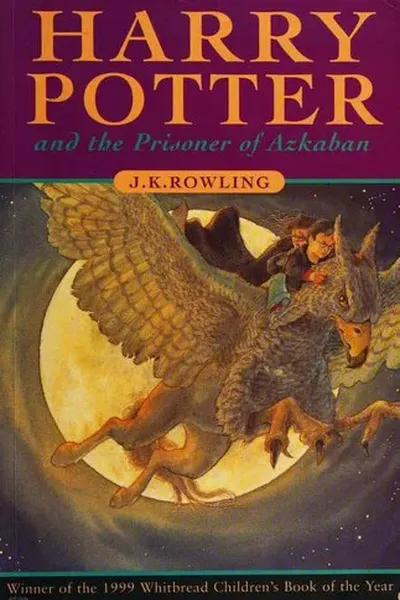
"Harry Potter and the Prisoner of Azkaban" (1999) introduces darker themes and more complex characters like Sirius Black and Remus Lupin, moving away from the simpler good-vs-evil narrative of the first two books.
🔮 Key Themes & Symbolism
The Hidden World
The series establishes a parallel magical society concealed from the mundane world of Muggles. This duality mirrors esoteric concepts of hidden knowledge and realities coexisting with the everyday. Hogwarts itself becomes a microcosm of this concealed realm, operating under its own laws and traditions, separate from the visible world. The constant need for secrecy and the interactions between magical and non-magical populations form a central tension, inviting readers to consider the nature of the unseen and its influence.
Love as a Protective Force
A recurring theme is the potent, almost tangible, protective power of love, particularly maternal love. This is most evident when Lily Potter's sacrifice shields baby Harry from Lord Voldemort's Killing Curse. This concept, while presented in a fantasy context, speaks to ideas found in various spiritual traditions where selfless love or divine protection is depicted as an insurmountable shield against malevolent forces. It suggests that emotional bonds can manifest as a form of powerful, almost magical, defense.
Destiny and Choice
The narrative frequently grapples with the interplay between destiny and free will, especially concerning Harry's prophesied role in defeating Lord Voldemort. Characters like Sybill Trelawney, the Seer, deliver prophecies that seem to preordain events. However, the books consistently emphasize that individual choices and actions shape the ultimate outcome. This reflects philosophical debates found in occult studies regarding fate, predestination, and the agency of the individual within a seemingly fated path.
The Nature of Evil
Lord Voldemort embodies a distilled form of evil, driven by a lust for power and a fear of death. His pursuit of immortality through Horcruxes and his disdain for love and compassion present a stark contrast to the values championed by the protagonists. The series explores how evil can manifest through ambition, prejudice (e.g., blood purity), and the denial of mortality, offering a simplified yet effective exploration of the shadow aspects often examined in esoteric psychology.
💬 Memorable Quotes
Direct passages from the work, attributed to the author.
“"It is our choices, Harry, that show what we truly are, far more than our abilities."”
— This statement by Albus Dumbledore underscores the series' emphasis on moral agency. It posits that character is defined not by inherent talents or magical prowess, but by the ethical decisions made in the face of adversity, a concept central to many ethical and spiritual frameworks.
“"Do not pity the dead, Harry. Pity the living, and, above all, those who live without love."”
— Dumbledore's words highlight the paramount importance of love and connection within the narrative. This perspective elevates emotional bonds and human relationships above mere existence, suggesting that a life devoid of love is a more profound tragedy than death itself.
“Interpretation: The ancient magic of love, embodied by Harry's mother's sacrifice, provided a powerful, inexplicable protection against the Killing Curse.”
— This reflects a core mystical concept where profound emotional energy or divine intervention can create a shield against destructive forces. It suggests that certain fundamental forces, like love, operate beyond rational explanation and possess immense protective power.
“Interpretation: The "Muggle" world exists unaware of the magical one, highlighting a theme of hidden realities and concealed knowledge.”
— This concept mirrors esoteric traditions that speak of veiled truths or parallel dimensions accessible only to those initiated or attuned to subtler energies, contrasting the mundane with the extraordinary.
💡 Key Ideas
Editorial paraphrase of the work's core concepts — not direct quotes.
"It takes a great deal of bravery to stand up to our enemies, but just as much to stand up to our friends."
This quote from "Harry Potter and the Sorcerer's Stone" speaks to the complexities of loyalty and moral integrity. It suggests that true courage involves not only confronting external threats but also upholding one's principles even when it means challenging those closest to you.
🌙 Esoteric Significance
Tradition
While not directly aligned with a specific historical esoteric tradition like Kabbalah or Gnosticism, the "Harry Potter" series draws heavily on archetypal mythologies and universal themes common across many spiritual paths. It functions as a modern secular myth, incorporating elements that echo Gnostic ideas of a hidden world and a chosen savior figure, as well as Hermetic principles of correspondence and the power of names and symbols. Its departure lies in its commercial accessibility and focus on narrative adventure over ritual or philosophical doctrine.
Symbolism
The series is rich with symbolic imagery. Hogwarts, the magical school, represents a sanctuary of learning and initiation into hidden knowledge, akin to mystery schools. The "Mirror of Er চাহিদা" (introduced in the first book) reflects one's deepest desires, symbolizing the often-unacknowledged subconscious drives that can lead to self-destruction or fulfillment. The concept of the "Phoenix" (like Fawkes) embodies themes of rebirth, resilience, and the triumph of life over death, a potent symbol found in numerous ancient mythologies and spiritual traditions.
Modern Relevance
Contemporary thinkers and writers exploring modern mythology, narrative psychology, and the power of storytelling often reference the "Harry Potter" series. Its impact is seen in how it has inspired a generation to engage with themes of heroism, good versus evil, and the potential for the extraordinary within the ordinary. Practices focusing on positive psychology and narrative therapy may implicitly draw from the series' emphasis on personal agency and the power of belief and hope in overcoming adversity.
👥 Who Should Read This Book
• Aspiring writers and storytellers interested in constructing immersive fantasy worlds and compelling character arcs, learning from Rowling's methodical world-building from 1997 onwards. • Readers seeking accessible narratives that explore archetypal themes of good versus evil, courage, and friendship, particularly those new to fantasy literature. • Cultural analysts and students of modern mythology who wish to understand a phenomenon that significantly shaped 21st-century popular culture and youth engagement with literature.
📜 Historical Context
The publication of the first four "Harry Potter" books between 1997 and 2000 occurred during a period of significant growth in children's and young adult fantasy literature, building on foundations laid by authors like C.S. Lewis and Ursula K. Le Guin. However, Rowling's series achieved a level of global saturation previously unseen. It arrived amidst a burgeoning internet culture, where fan communities rapidly formed online to discuss theories and share their enthusiasm, a marked difference from the more localized reception of earlier fantasy epics. While not directly engaging with specific contemporary esoteric movements like Theosophy or Hermeticism, the series tapped into a collective imagination hungry for mythic narratives. Its success was notable, earning critical acclaim and commercial triumph, though it also faced some early challenges, including initial skepticism from publishers and some parental concerns about darker themes.
📔 Journal Prompts
The concept of the "Muggle" world versus the wizarding world, and the knowledge kept secret.
Harry's scar as a physical manifestation of his connection to Lord Voldemort and their shared destiny.
The protective magic of love, as demonstrated by Lily Potter's sacrifice in 1981.
The role of house-elves like Dobby and the themes of servitude and freedom.
The significance of Hogwarts as a place of learning, community, and magical development.
🗂️ Glossary
Muggle
A non-magical person in the "Harry Potter" universe. Muggles are unaware of the existence of magic and the wizarding community, which operates in secrecy.
Hogwarts
The fictional boarding school of witchcraft and wizardry attended by Harry Potter and his friends, located in Scotland. It is a central setting for magical education and adventure.
Philosopher's Stone
A legendary alchemical substance said to grant immortality and transmute base metals into gold. Its pursuit is a key plot element in the first book, "Harry Potter and the Philosopher's Stone."
Horcrux
A magical object in which a wizard or witch has hidden a fragment of their soul to achieve immortality. Lord Voldemort's creation of Horcruxes is a central element explored in later books.
Quidditch
The popular wizarding sport played on broomsticks. It involves two teams of seven players competing to score points by throwing a ball through hoops and catching a golden snitch.
Patronus Charm
A defensive spell that conjures a silvery-white guardian, often in the shape of an animal, to repel Dementors and other dark creatures. It requires focusing on a very happy memory.
The Boy Who Lived
A moniker given to Harry Potter after he miraculously survived an attack by Lord Voldemort as an infant in 1981, an event that became legendary in the wizarding world.
🔮 Readers Also Liked
Browse all →


![Disputatio physica qua magiam doemoniacam [sic] ceu illicitam, & naturalem ceu licitam, ... 1667: Iss 181](/img/thumb/disputatio-physica-qua-magiam-doemoniacam-sic-ceu-illicitam-naturalem-ceu-licitam-1667-iss-181-bugges-laurentius.webp)



More by J. K. Rowling
All books →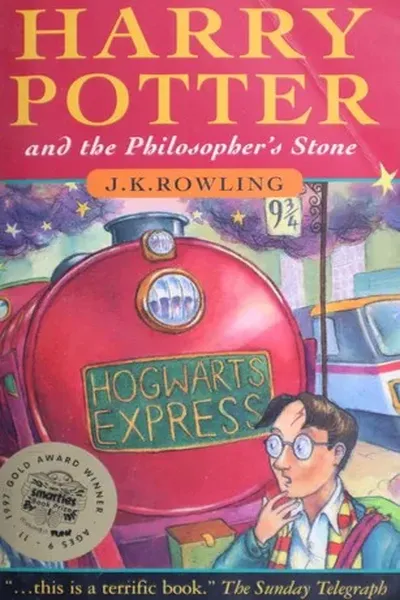


More Free Witchcraft & Paganism Books
View all →