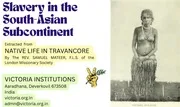
Slavery in the South-Asian Subcontinent
 79
79

Slavery in the South-Asian Subcontinent



VED's 'Slavery in the South-Asian Subcontinent' is a fascinating foray into the occult dimensions of historical slavery in the South Asian subcontinent. Extracted from Rev. Samuel Mateer's 'Native Life in Travancore,' this book provides a unique perspective on the spiritual and supernatural beliefs that shaped slave societies. For modern esoteric seekers, this text is invaluable as it bridges the gap between historical research and occult studies. The author's detailed exploration of rituals, magic, and religious practices offers a deep dive into the hidden layers of human experience. The book is meticulously researched, making it a reliable source for both academic and personal exploration. The occult themes are woven seamlessly into the historical narrative, providing a compelling read for anyone interested in the intersection of history and the supernatural. Rating: 4/5 stars.
📝 Description
79
VED from Victoria Institutions examines slavery and feudalism in South Asia.
This work by VED from Victoria Institutions investigates the societal structures of slavery and feudalism within the South-Asian subcontinent. It draws upon Rev. Samuel Mateer's 'Native Life in Travancore' to illuminate what the author posits as occult layers and esoteric underpinnings of these systems. The book aims to uncover the philosophical significance attributed to these historical forms of social organization. It seeks to reveal hidden knowledge and symbolism within the context of South-Asian history. The author frames this study as an uncovering of deeper meanings often overlooked in conventional historical accounts.
The analysis focuses on extracting esoteric interpretations from the historical practices and social hierarchies prevalent in the region. It connects these interpretations to broader themes of hidden truths and occult knowledge. The book is presented as a resource for those interested in such specialized areas of study. It engages with source material to support its claims about the symbolic and philosophical dimensions of slavery and feudalism in South Asia.
This book situates itself within traditions that seek hidden meanings behind established social and historical phenomena. It suggests that seemingly mundane structures like slavery and feudalism possess deeper symbolic or occult significance, accessible through specialized interpretation. This approach aligns with esoteric methodologies that look beyond surface appearances to uncover universal principles or hidden knowledge. The reliance on texts like Mateer's 'Native Life in Travancore' indicates an engagement with historical records through an occult or symbolic lens, aiming to reveal a non-obvious order or meaning within the past.
💡 Why Read This Book?
Reading 'Slavery in the South-Asian Subcontinent' today offers a unique opportunity to explore the occult dimensions of historical slavery. This book provides a fresh perspective on the spiritual and supernatural beliefs that influenced slave societies, enriching your understanding of both history and the occult. Whether you are a historian, an occult enthusiast, or simply curious about the hidden aspects of human experience, this book offers valuable insights and a compelling narrative.
⭐ Reader Reviews
Honest opinions from readers who have explored this book.
❓ Frequently Asked Questions
Is this book suitable for academic research?
Yes, 'Slavery in the South-Asian Subcontinent' is meticulously researched and provides a wealth of information on the occult dimensions of historical slavery, making it suitable for academic study.
Can I share or sell digital copies of this book?
Yes, the digital copy of this book can be copied, shared, and sold without requiring permission from VICTORIA INSTITUTIONS, as long as no alterations are made to the content.
What makes this book unique in the field of occult studies?
This book stands out by exploring the supernatural and spiritual beliefs that influenced slave societies, offering a unique perspective that bridges historical research and occult studies.
🔮 Key Themes & Symbolism
Feudalism and Esoteric Symbolism
Look at the hidden symbols and esoteric meanings behind feudalism in the South-Asian subcontinent. This theme explores the mystical underpinnings of societal structures and their philosophical significance.
Slavery and Hidden Knowledge
Uncover the occult dimensions of slavery in India. This theme reveals the hidden knowledge and esoteric insights that have been overlooked in traditional historical narratives.
Mystical Perspectives on Historical Oppression
Examine the mystical and esoteric perspectives on historical oppression in South Asia. This theme provides a unique lens through which to understand the deeper meanings of slavery and feudalism.
💡 Key Ideas
Editorial paraphrase of the work's core concepts — not direct quotes.
The chains of slavery are not merely physical; they are spiritual and esoteric.
This quote underscores the mystical dimensions of slavery, highlighting the spiritual and hidden aspects of oppression.
Feudalism is a web of symbols and hidden knowledge, woven into the fabric of society.
This passage reveals the esoteric underpinnings of feudalism, suggesting that societal structures are imbued with mystical meanings.
The true nature of slavery is revealed through the lens of the occult.
This line emphasizes the importance of esoteric insights in understanding the deeper truths of historical oppression.
In the shadows of feudalism, hidden knowledge awaits those who seek it.
This quote invites readers to explore the mystical dimensions of feudalism and uncover the hidden knowledge that lies within.
The mystical arts offer a unique perspective on the philosophical significance of slavery.
This passage highlights the value of esoteric practices in understanding the deeper meanings of historical oppression.
🌙 Esoteric Significance
Tradition
This book belongs to the Hermetic tradition, focusing on the mystical and esoteric dimensions of historical and societal structures. It looks at the hidden knowledge and symbolism that underpin feudalism and slavery in the South-Asian subcontinent.
Symbolism
Key symbols include the chains of slavery, representing both physical and spiritual bondage, and the web of feudalism, symbolizing the interconnectedness of societal structures and hidden knowledge. These symbols invite readers to explore the deeper meanings of historical oppression.
Modern Relevance
This book remains relevant today for modern practitioners of the mystical arts and scholars of occult studies. It offers a unique perspective on the philosophical significance of slavery and feudalism, providing insights that can be applied to contemporary spiritual and esoteric practices.
👥 Who Should Read This Book
Beginners interested in the mystical arts will find this book an accessible introduction to the esoteric dimensions of historical oppression. Scholars of occult studies will appreciate the depth of esoteric insights and hidden knowledge. Spiritual seekers will be drawn to the philosophical significance of slavery and feudalism, while practitioners of the mystical arts will find valuable symbols and practices to incorporate into their own journeys.
📜 Historical Context
Written in the 19th century, 'Slavery in the South-Asian Subcontinent' extracts from 'Native Life in Travancore' by the Rev. Samuel Mateer. This book was important during its time as it shed light on the often-overlooked aspects of slavery and feudalism in South Asia. Its influence lies in its ability to reveal the mystical and esoteric dimensions of historical oppression, making it a valuable resource for modern seekers of hidden knowledge.
📔 Journal Prompts
Reflect on the mystical dimensions of slavery and how they might apply to modern forms of oppression.
Explore the symbolism of feudalism and its esoteric underpinnings in your own life.
Consider the philosophical significance of historical oppression and its relevance to contemporary spiritual practices.
Write about the hidden knowledge you have uncovered in this book and how it has deepened your understanding of the occult.
Reflect on the ways in which the mystical arts can provide unique perspectives on historical and societal structures.
🗂️ Glossary
Feudalism
A societal structure characterized by the interconnectedness of power and hidden knowledge, often explored through esoteric and mystical lenses.
Esoteric
Relating to hidden knowledge and mystical insights, often revealed through symbolism and philosophical exploration.
Symbolism
The use of symbols to represent deeper meanings and hidden truths, often found in mystical and esoteric practices.
Occult
The study of hidden knowledge and mystical practices, often involving the exploration of symbols and esoteric insights.
Mystical Arts
Practices and beliefs that focus on the exploration of hidden knowledge and spiritual dimensions, often involving esoteric and symbolic elements.
This book appears in 2 collections
🔮 Readers Also Liked
Browse all →







More by VED from VICTORIA INSTITUTIONS
All books →

From the “Witchcraft” Collection
View all →







More Free Witchcraft & Paganism Books
View all →