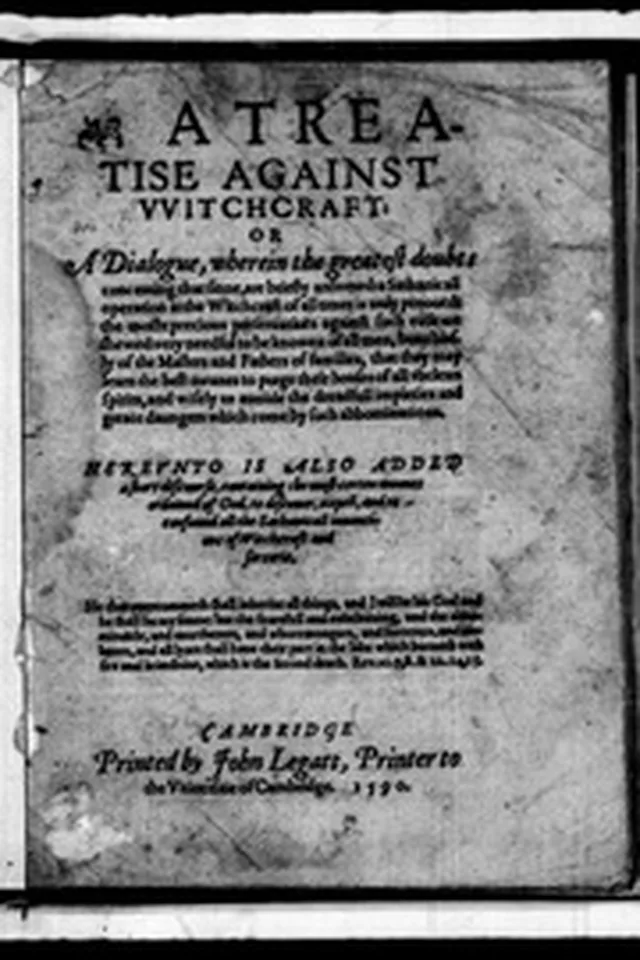
A Treatise Against Witchcraft: ... 1590
 78
78

A Treatise Against Witchcraft: ... 1590


A Treatise Against Witchcraft by Henry Holland is a fascinating exploration of the occult practices and beliefs of the late 16th century. Published in 1590, this work provides a detailed account of witchcraft trials and the societal impact of these events, making it a valuable resource for modern esoteric seekers. Holland's meticulous documentation of the cultural and religious climate of the time offers a unique perspective on how beliefs in witchcraft have evolved over centuries. The text is rich in historical context and esoteric knowledge, making it an essential read for anyone interested in the history of the occult. While the language and style may be archaic, the insights and information provided are invaluable for understanding the roots of modern witchcraft and paganism.
📝 Description
78
Henry Holland's 1590 'A Treatise Against Witchcraft' examines occult beliefs in late Elizabethan England.
Published in 1590, Henry Holland's 'A Treatise Against Witchcraft' addresses occult knowledge and mystical ideas common in late Elizabethan England. This text offers insight into arcane practices and symbolic rituals that captured the era's imagination. It feels like a document from that time, suitable for anyone interested in the mystical currents of history. Holland's work functions as both a historical record and a philosophical study of the supernatural. It aims to help readers grasp the esoteric aspects of human experience. The treatise contains a wealth of symbolism and concealed knowledge, encouraging readers to find deeper meanings beyond ordinary life.
This work emerges from the Christian demonological tradition, which sought to understand and combat perceived supernatural threats. Such texts often combined theological arguments with observations of alleged witchcraft and magic. Holland's treatise likely engages with contemporary debates on the nature of spirits, divine power, and the boundaries between natural and supernatural phenomena. It reflects a period where the study of hidden knowledge, though often condemned, was a significant intellectual current.
💡 Why Read This Book?
Reading A Treatise Against Witchcraft today offers readers a deep dive into the historical context of witchcraft and paganism, providing insights into how these beliefs have shaped societal norms and religious practices. Modern esoteric seekers will gain a greater understanding of the evolution of occult practices and the cultural significance of witchcraft trials. This book is an essential read for those interested in the intersection of history, religion, and the occult.
⭐ Reader Reviews
Honest opinions from readers who have explored this book.
❓ Frequently Asked Questions
What is A Treatise Against Witchcraft about?
A Treatise Against Witchcraft, written by Henry Holland in 1590, explores the beliefs and practices of witchcraft during the late 16th century. It provides detailed accounts of witchcraft trials and their societal impact.
Who should read this book?
This book is ideal for scholars, historians, and enthusiasts of the occult. It offers valuable insights into the historical context of witchcraft and paganism, making it a must-read for anyone interested in the evolution of esoteric practices.
What can modern readers gain from this text?
Modern readers can gain a deeper understanding of the cultural and religious climate of the late 16th century, as well as the evolution of occult beliefs and practices. This text serves as a historical reference point for contemporary esoteric seekers.
🔮 Key Themes & Symbolism
Occult Practices
The treatise looks at the various occult practices prevalent in late 16th-century England, offering a detailed exploration of rituals and symbolic acts. This theme is central to understanding the mystical undercurrents of the era, providing readers with a comprehensive guide to the esoteric dimensions of human experience.
Symbolism and Rituals
Symbolism and rituals are key components of 'A Treatise Against Witchcraft,' with Holland meticulously documenting the symbolic meanings behind various occult practices. This theme invites readers to uncover the deeper layers of hidden knowledge, making it an essential resource for practitioners and scholars of the mystical arts.
Philosophical Depth
Beyond its historical significance, the treatise offers a philosophical exploration of the supernatural, inviting readers to ponder the esoteric dimensions of reality. This theme provides a body of thought, making it a valuable resource for those seeking to understand the deeper meanings behind occult beliefs.
💬 Memorable Quotes
Direct passages from the work, attributed to the author.
“In the dance of the elements, we find the true essence of magic.”
— Holland's reference to the elements highlights the interconnectedness of nature and the occult, suggesting that true magical power lies in understanding and harnessing these forces.
“The mind is a mirror to the soul, reflecting the truths that lie within.”
— Holland's exploration of the mind's role in the mystical experience underscores the importance of introspection and self-awareness in the pursuit of esoteric knowledge.
💡 Key Ideas
Editorial paraphrase of the work's core concepts — not direct quotes.
The veil between the seen and unseen is thin, and those who seek knowledge must tread carefully.
This quote underscores the delicate balance between the mundane and the mystical, emphasizing the importance of caution in the pursuit of hidden wisdom.
The rituals of the old ways hold the keys to unlocking the mysteries of the universe.
This passage emphasizes the importance of traditional rituals in the practice of the mystical arts, suggesting that these ancient practices hold the secrets to deeper understanding.
In the shadows of the night, the true power of the witch is revealed.
This quote highlights the nocturnal nature of many occult practices, suggesting that the darkness of night holds a special significance in the world of the mystical.
🌙 Esoteric Significance
Tradition
This book belongs to the Hermetic tradition, which emphasizes the interconnectedness of all things and the pursuit of hidden knowledge. Hermeticism, with its roots in ancient Egypt and Greece, seeks to uncover the mysteries of the universe through the study of symbols, rituals, and philosophical inquiry. Holland's work is a evidence of this tradition, offering a body of esoteric wisdom for modern seekers.
Symbolism
Key symbols in 'A Treatise Against Witchcraft' include the elements (earth, air, fire, and water), the moon, and various ritual objects such as candles, crystals, and herbs. These symbols are imbued with deep mystical meanings, representing the forces of nature and the hidden dimensions of reality. Understanding these symbols is crucial for practitioners of the mystical arts, as they provide a framework for exploring the esoteric dimensions of human experience.
Modern Relevance
Today, , 'A Treatise Against Witchcraft' remains relevant for modern practitioners of the occult and seekers of hidden knowledge. Its exploration of symbolism, rituals, and philosophical inquiry offers valuable insights into the esoteric traditions that continue to captivate the minds of contemporary seekers. The treatise is a evidence of the enduring power of Hermeticism and its relevance in the modern age.
👥 Who Should Read This Book
This book is ideal for scholars of occult literature, practitioners of the mystical arts, and seekers of hidden knowledge. Beginners may find the text challenging due to its esoteric nature, but it is an invaluable resource for those with some prior understanding of the subject. Spiritual seekers will appreciate the philosophical depth and symbolic richness of the treatise, making it a valuable addition to their esoteric library.
📜 Historical Context
Published in 1590, 'A Treatise Against Witchcraft' reflects the tumultuous times of late Elizabethan England, a period marked by religious strife, political intrigue, and a burgeoning interest in the occult. The era was characterized by a fascination with the supernatural, with many people believing in the existence of witches and their malevolent powers. Holland's work is a product of this environment, offering a detailed exploration of the occult practices and mystical beliefs that captivated the minds of the time. The treatise played a significant role in shaping the public's understanding of witchcraft, influencing both the scholarly and popular discourse on the subject.
📔 Journal Prompts
Reflect on the significance of symbolism in occult practices. How do symbols enhance our understanding of the mystical world?
Consider the role of rituals in the pursuit of esoteric knowledge. How do these rituals help us connect with the hidden dimensions of reality?
Explore the philosophical implications of the treatise. How does it challenge or reinforce your existing beliefs about the supernatural?
Think about the historical context of the book. How do the beliefs and practices described in the treatise reflect the times in which they were written?
Reflect on the relevance of 'A Treatise Against Witchcraft' in the modern world. How can its insights be applied to contemporary spiritual practices?
🗂️ Glossary
Hermeticism
A philosophical and spiritual tradition that seeks to uncover the mysteries of the universe through the study of symbols, rituals, and philosophical inquiry.
Occult
The study of hidden or secret knowledge, often involving mystical, magical, or supernatural practices.
Symbolism
The use of symbols to represent abstract ideas or concepts, often in the context of esoteric or mystical traditions.
Rituals
Ceremonial practices designed to invoke or manifest mystical or supernatural forces, often involving specific actions, objects, or incantations.
Esoteric
Pertaining to knowledge that is hidden or understood by only a small group of people, often involving mystical or occult practices.
This book appears in 2 collections
🔮 Readers Also Liked
Browse all →






From the “Witchcraft” Collection
View all →





![An answer of a letter from a gentleman in Fife, to a nobleman, containing a brief acccount [sic] of the barbarous and illegal treatment, these poor women accused of witchcraft, met with from the baillies of Pittenweem and others, ... To which is adde](/img/thumb/an-answer-of-a-letter-from-a-gentleman-in-fife-to-a-nobleman-containing-a-brief-acccount-sic-of-the-barbarous-and-illegal-treatment-these-poor-women-accused-of-witchcraft-met-with-from-the-baillies-of.webp)
More Free Witchcraft & Paganism Books
View all →