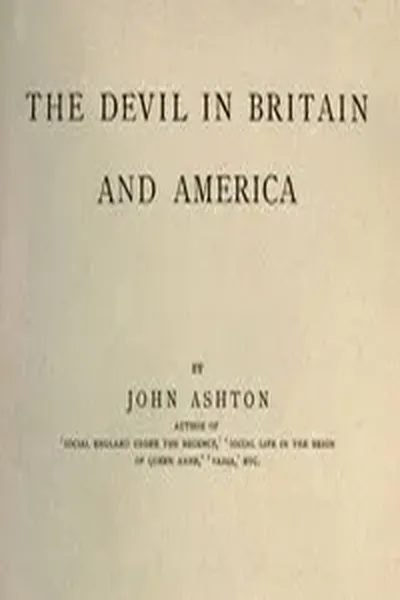
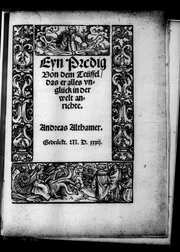
Eyn Predig von dem Teüffel, das er alles Vnglück in der Welt anrichte. 1532: Iss 38
 71
71

Eyn Predig von dem Teüffel, das er alles Vnglück in der Welt anrichte. 1532: Iss 38



Celeste Moreau (Divination & Symbolism Reviewer) — Althamer's "Eyn Predig von dem Teüffel" offers a chillingly insightful glimpse into early modern demonology, presenting a compelling argument for the Devil as the architect of global misfortune. This sermon transcends simple religious dogma, delving into the symbolic language of spiritual warfare and the perceived mechanisms of infernal influence. Althamer's powerful rhetoric reveals the anxieties of an era grappling with the tangible presence of evil. It is an indispensable read for scholars of occult history, theologians, and anyone fascinated by the profound symbolic representations of cosmic conflict and the human psyche's response to perceived malevolence. The text's strength lies in its stark portrayal of the spiritual battlefield.
📝 Description
71
In 1532, Andreas Althamer published "Eyn Predig von dem Teüffel," a sermon on the devil's role in worldly misfortune.
Andreas Althamer's 1532 "Eyn Predig von dem Teüffel" addresses the belief that the Devil causes all misfortune. The text examines the perceived origins of suffering, chaos, and calamity through a theological and metaphysical lens. Althamer's work reflects the anxieties and esoteric views prevalent in early 16th-century Europe, where the devil was understood as an active force influencing human lives. It appeals to those interested in the symbolic conflicts and hidden dynamics of existence, offering insight into historical demonology and the human need to attribute causes to unexplained events.
The sermon prompts reflection on the nature of evil, the concept of free will, and the spiritual protections believed to be available against pervasive darkness. It is a document that reveals how people in that era understood the sources of their troubles and their spiritual responses to them. The text does not shy away from confronting the darker aspects of the human condition and the spiritual battles perceived to be ongoing.
This sermon fits within the broader tradition of late medieval and early Reformation demonology. Such texts often sought to explain suffering and societal ills by attributing them to the direct action of malevolent spiritual forces. Althamer's work likely engaged with popular beliefs and theological debates of its time concerning the devil's power, the nature of temptation, and the mechanisms of spiritual warfare. It represents an effort to articulate a coherent worldview that incorporated both divine order and the pervasive influence of infernal powers, reflecting a common concern with maintaining spiritual order amidst perceived chaos.
💡 Why Read This Book?
Uncover the historical perception of cosmic malevolence and its perceived impact on human affairs. This sermon provides a unique lens into early modern anxieties about the Devil's influence, essential for understanding the roots of occult thought and theological demonology. Ideal for scholars, seekers of esoteric history, and practitioners interested in the symbolic representation of spiritual conflict.
⭐ Reader Reviews
Honest opinions from readers who have explored this book.
❓ Frequently Asked Questions
What is the primary focus of Althamer's sermon?
The sermon's primary focus is the theological and symbolic argument that the Devil is the ultimate cause of all misfortune and suffering in the world, exploring his perceived influence on human affairs.
What historical period does this text represent?
This text represents the early 16th century, specifically 1532, a period of significant religious upheaval and intense focus on demonology and spiritual warfare in Europe.
Who would benefit most from reading this sermon?
Scholars of religious history, demonology, occult studies, and those interested in the philosophical and theological underpinnings of perceived evil would find this text highly beneficial.
Is this text a practical guide to combating evil?
While it discusses the Devil's actions, it is primarily a theological and symbolic discourse rather than a practical grimoire or guide for active spiritual combat. Its value lies in understanding historical perspectives.
What is the relationship of this issue to others in the series?
This is Issue 38, situated between prior works on witchcraft and demonology and subsequent texts exploring similar themes, offering a sequential exploration of occult literature.
🔮 Key Themes & Symbolism
The Devil as Architect of Misfortune
This central theme posits the Devil not merely as a tempter, but as the active, malevolent force orchestrating all calamities, from personal tragedies to widespread suffering. Althamer's discourse explores the theological framework that attributes universal woe to infernal design, examining the perceived mechanisms through which this influence is exerted. It explores the symbolic representation of the Devil as a cosmic antagonist whose primary objective is the disruption of divine order and the torment of humanity, reflecting deep-seated anxieties and spiritual beliefs of the era.
Cosmic Struggle and Spiritual Warfare
The sermon frames human existence within a grander narrative of ongoing cosmic conflict between divine and infernal powers. It suggests that every misfortune is a skirmish in this larger spiritual war, highlighting the perceived tangible presence of the Devil and his legions in the earthly realm. This perspective imbues everyday struggles with profound spiritual significance, urging readers to recognize the unseen battles that shape their lives and the world. It underscores a worldview where vigilance and spiritual fortitude are paramount defenses against encroaching darkness.
Theology of Evil and Human Suffering
Althamer's work contributes to the historical theology of evil by offering a specific, albeit stark, interpretation of its origins and pervasiveness. It grapples with the question of why suffering exists, attributing it directly to the deliberate actions of a singular, adversarial entity. This exploration explores the psychological and spiritual implications of such a belief system, examining how it shaped societal attitudes towards misfortune, sin, and the divine. The sermon serves as a historical case study in how theological frameworks attempt to rationalize or assign agency to the often-inexplicable pain and chaos experienced by humanity.
💬 Memorable Quotes
Direct passages from the work, attributed to the author.
“Der Teüffel ist aller Vnglück Ursprung und Quell.”
— This foundational statement asserts the Devil as the primary source and wellspring of all misfortune, establishing the sermon's core thesis regarding infernal agency.
“Wo Sünde weilt, da lauert sein Bann.”
— This aphorism connects the presence of sin with the Devil's dominion, suggesting that moral failings create an opening for his malevolent influence to take hold.
“Mit Furcht und Zweifel nährt er sein Reich.”
— This poignant observation reveals the Devil's reliance on negative emotions like fear and doubt to expand his influence and solidify his power over individuals and the world.
💡 Key Ideas
Editorial paraphrase of the work's core concepts — not direct quotes.
Sein List ist groß, sein Macht allgegenwärtig.
Highlighting the Devil's profound cunning and pervasive power, this quote emphasizes his constant, omnipresent threat and the sophisticated nature of his influence.
Er sät Zwietracht und Verderben in die Welt.
Illustrating the Devil's modus operandi, this quote describes his active role in sowing discord and ruin, portraying him as a disruptive force against harmony.
🌙 Esoteric Significance
Tradition
This text belongs to the esoteric tradition of historical demonology and early modern theological discourse concerning the nature of evil. It engages with the Christian framework of spiritual warfare, but its focus on the Devil's direct agency in causing all worldly misfortune places it within a lineage of thought that sought to understand and allegorize the forces of chaos and destruction. It appeals to the broader esoteric interest in mapping the hierarchies of spiritual beings and understanding their influence on the material plane.
Symbolism
The central symbol is the Devil himself, portrayed not just as a fallen angel but as the active architect of suffering. Misfortune, chaos, and discord are symbolic manifestations of his pervasive will. The sermon employs a symbolic language where natural disasters, personal calamities, and societal unrest are interpreted as direct interventions by infernal forces. This symbolic mapping of malevolence onto worldly events reflects a deep-seated need to find order and meaning, even in the face of overwhelming negativity, by personifying and externalizing the sources of pain.
Modern Relevance
While the literal interpretation of the Devil as the sole cause of misfortune may be debated, Althamer's sermon remains relevant for its exploration of human psychology and the enduring need to understand and confront suffering. It speaks to contemporary discussions on the nature of evil, the role of belief systems in shaping perceptions of reality, and the historical roots of fear and anxiety. For esoteric practitioners and scholars, it offers valuable insight into the symbolic language and theological frameworks used to conceptualize spiritual opposition and the challenges of maintaining spiritual equilibrium.
👥 Who Should Read This Book
This sermon is useful for scholars of religious history, demonology, and the occult, providing primary source material on early modern European thought. Seekers of esoteric knowledge will find it useful for understanding historical perspectives on spiritual warfare and the personification of evil. Practitioners interested in the symbolic roots of combating negative influences will gain context from its theological arguments. While beginners might find the language dense, its historical significance makes it a worthwhile, albeit challenging, read for anyone looking at the darker, more mystical aspects of theological and occult literature.
📜 Historical Context
Published in 1532, during the tumultuous era of the Reformation, Andreas Althamer's "Eyn Predig von dem Teüffel" emerged from a Europe deeply preoccupied with theological disputes, societal upheaval, and the pervasive fear of demonic influence. The early 16th century witnessed a heightened focus on witchcraft, heresy, and the tangible presence of evil in the world, fueled by religious fervor and anxieties surrounding social change. This period saw the proliferation of demonological texts and sermons that sought to explain misfortune through the lens of spiritual warfare. Althamer's work is a product of this climate, reflecting a worldview where the Devil was not an abstract concept but a potent, active force actively working to undermine humanity and God's creation. Its publication within a series of related works suggests a broader intellectual current exploring the nature of the occult and the infernal.
📔 Journal Prompts
How does Althamer's depiction of the Devil as the sole architect of misfortune resonate with or diverge from your personal understanding of suffering?
What symbolic meanings can be extracted from the idea of 'misfortune' as a direct manifestation of infernal influence?
Consider the anxieties of the 16th century as reflected in this sermon. How do contemporary fears compare, and what are their symbolic representations?
If the Devil is the source of all misfortune, what implications does this have for human free will and responsibility?
Explore the historical context of the Reformation and its impact on theological views of good and evil as presented in this text.
🗂️ Glossary
Vnglück
A German term meaning misfortune, calamity, bad luck, or disaster. In the context of the sermon, it refers to all forms of suffering and negative events experienced in the world.
Teüffel
The German word for Devil, referring to the principal demonic entity, often understood as the adversary of God and humanity, and the source of evil.
Predig
A sermon, a religious discourse delivered by a preacher, typically intended to instruct, exhort, or edify the congregation. This sermon focuses on theological arguments about the Devil.
Infernal
Relating to or characteristic of hell or the underworld; fiendishly wicked. In this context, it refers to the domain and influence of the Devil.
Demonology
The study of demons or beliefs about demons. This sermon is a historical example of demonological discourse, exploring the nature and actions of the Devil.
This book appears in 2 collections
🔮 Readers Also Liked
Browse all →








From the “Witchcraft” Collection
View all →



More Free Witchcraft & Paganism Books
View all →