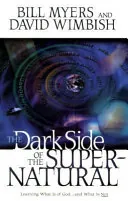
Goetia: Evocación Salomónica
 72
72

Goetia: Evocación Salomónica
Victoria Santelle's "Goetia: Evocación Salomónica" eschews the sensationalism that often plagues modern occult literature, opting instead for a rigorous, almost academic, presentation of ceremonial magic. The text's strength lies in its structured approach, particularly its detailed explication of preparatory rituals and the invocations themselves. Santelle’s interpretation of the Solomonic tradition feels grounded, avoiding the pitfalls of overly romanticized or historically inaccurate portrayals. However, the book's intense focus on practical execution, while laudable, might leave readers seeking more theoretical context or philosophical tangents feeling slightly underserved. The chapter detailing the correspondences for the 72 spirits, while essential, could benefit from a more expansive discussion of their psychological archetypes, as suggested by later esotericists. Despite this minor limitation, the work stands as a potent manual for serious practitioners aiming to engage with the Goetic arts. It offers a direct, no-nonsense pathway for those prepared for the demands of high ceremonial magic.
📝 Description
72
Victoria Santelle's 2025 Goetia: Evocación Salomónica is a practical manual for ceremonial magic.
This book functions as a grimoire, moving beyond theory to provide structured methods for spiritual practice. It emphasizes intention, preparation, and disciplined will as key elements for ceremonial work. The text aims to equip students with tools to approach complex esoteric concepts with clarity.
Goetia: Evocación Salomónica is intended for those drawn to deeper knowledge, spiritual development, ceremonial magic, and the Western Esoteric Tradition. It is for practitioners who wish to actively engage with occult theories for personal transformation and consciousness expansion. Those seeking direct methods beyond superficial spiritual answers will find its approach valuable.
The tradition of "Goetia," linked to King Solomon, concerns the evocation of spirits. This practice has historical roots in texts like the Ars Goetia, part of the Lemegeton. Santelle's work, published in 2025, adapts these ancient techniques for contemporary practitioners.
This book situates itself within the "Goetia" tradition, a branch of ceremonial magic historically associated with King Solomon and documented in texts such as the Ars Goetia, which is part of the Lemegeton. This lineage involves the evocation of specific entities. The work also references concepts from "The Sacred Magic of Abramelin" and the broader framework of "The Great Work" within the Western Esoteric Tradition. It adapts these historical practices for modern use.
💡 Why Read This Book?
• Gain practical, step-by-step instructions for performing Solomonic evocation rituals, moving beyond mere theory to active engagement with esoteric forces. • Understand the specific correspondences and sigils associated with the 72 spirits as presented in the text, enabling precise ritual work. • Explore the concept of the "Great Work" within the context of ceremonial magic, learning how internal transformation is intrinsically linked to external operations as detailed in the 2025 publication.
⭐ Reader Reviews
Honest opinions from readers who have explored this book.
❓ Frequently Asked Questions
What historical tradition does Goetia: Evocación Salomónica draw from?
The book is rooted in the Solomonic tradition of ceremonial magic, specifically referencing texts and practices associated with the "Goetia" lineage, which has a history dating back centuries and is often linked to King Solomon.
Is this book suitable for beginners in magic?
While it offers practical methods, the intensity and complexity of ceremonial magic mean it is best suited for those with some prior study or a serious commitment to disciplined esoteric practice.
What is the primary goal of the practices outlined in the book?
The primary goal is spiritual mastery and transformation through direct engagement with esoteric forces, emphasizing the development of the magician's will and internal state.
When was Goetia: Evocación Salomónica first published?
The work was first published on July 4, 2025, by Victoria Santelle/Virginia Santos.
Does the book provide historical context for the Goetia?
Yes, it situates itself within the long-standing Solomonic tradition and acknowledges the historical precedents of Goetic practices, offering a modern application.
What are the key components of the rituals described?
The rituals typically involve specific preparations, the use of sigils, invocations, and a strong emphasis on the magician's focused will and internal state.
🔮 Key Themes & Symbolism
Ceremonial Evocation
This theme focuses on the structured, ritualistic invocation of spiritual entities as presented in the Solomonic tradition. The book details the precise steps, tools, and mental states required for successful evocation, emphasizing disciplined practice over theoretical speculation. It highlights the importance of the magician's personal will and internal preparation as prerequisites for any external operation, aligning with classical ceremonial magic principles.
The Great Work
Central to Santelle's approach is the concept of the "Great Work" (Major work), viewed not just as an alchemical pursuit but as the overarching goal of spiritual development. The book frames the practice of Goetia as a means to achieve this profound transformation, integrating internal purification and external magical operations. Success in evoking entities is directly tied to the magician's progress in this larger endeavor of self-realization.
Solomonic Magic
The work is firmly anchored in the lineage of Solomonic magic, a branch of Western esotericism attributed to King Solomon. It explores the specific methods, hierarchies of spirits, and symbolic language associated with this tradition. By offering a modern interpretation and practical application, Santelle connects contemporary practitioners to this ancient magical system, providing access to its unique forms of spiritual technology and knowledge.
Will and Consciousness
A recurring motif is the critical role of the magician's focused will and cultivated consciousness. The text underscores that the efficacy of any magical act hinges on the practitioner's mental discipline, clarity of intention, and ability to maintain a stable, empowered state. This internal focus is presented as the primary engine driving the success of evocation and the attainment of the Great Work.
💬 Memorable Quotes
Direct passages from the work, attributed to the author.
“The silence of the void is not empty, but pregnant with potential.”
— This suggests that apparent nothingness is, in fact, a fertile ground for manifestation. It implies that true magical power arises from a state of deep inner stillness and receptivity, from which focused intent can then shape reality.
“Each sigil is a key, forged by will, to unlock a specific faculty or domain.”
— This highlights the functional nature of sigils within the Goetic system. They are not mere symbols but active instruments designed to open conceptual or energetic gateways, directly controlled and activated by the magician's directed consciousness.
“The mirror reflects not only the self, but the pathways between worlds.”
— This points to the symbolic and functional use of mirrors in esoteric practice. Beyond self-reflection, they serve as interfaces or portals, mediating the magician's perception and interaction with different planes of existence.
“To command the outer is to first master the inner.”
— This expresses the principle of correspondence in magic: external results are contingent upon internal development. True mastery over external forces requires rigorous self-discipline and a profound understanding of one's own psyche.
“The name is power; the intent is the current.”
— This emphasizes the dual components of effective magical operation: the correct invocation of names or titles (representing authority and connection) and the directed, focused intent of the practitioner (providing the energy and direction).
🌙 Esoteric Significance
Tradition
This work belongs to the Western Esoteric Tradition, specifically within the branch of ceremonial magic that draws heavily from the Solomonic lineage. It aligns with the grimoire tradition, which aims to provide practitioners with methods for invoking specific spiritual forces or entities. Unlike purely Kabbalistic or Hermetic texts that might focus on abstract philosophy, "Goetia: Evocación Salomónica" emphasizes the practical application of these principles through structured ritual, seeking tangible results in the practitioner's spiritual and potentially material world.
Symbolism
Central symbols include the magical circle, often depicted as a protective boundary and a sacred space for communion, representing the microcosm aligned with the macrocosm. Sigils, unique symbolic representations of spirits or intentions, function as keys to unlock specific powers or domains, acting as focal points for the magician's will. The Pentagram and Hexagram are also crucial, employed for invocation and banishing, symbolizing the mastery of elemental forces and the balance of cosmic energies within the ritual space.
Modern Relevance
Contemporary practitioners of Western ceremonial magic, particularly those interested in the practical application of grimoire traditions, draw significantly from works like this. Modern occult orders and independent magical researchers continue to explore and adapt Solomonic techniques. Thinkers in fields like consciousness studies and comparative religion also find value in analyzing the psychological and symbolic frameworks presented, examining how these ancient practices inform modern understandings of altered states and symbolic interaction.
👥 Who Should Read This Book
• Aspiring ceremonial magicians seeking a structured, practical introduction to the Solomonic Goetia, with clear instructions for ritual execution. • Experienced practitioners of Western Esotericism looking to deepen their understanding and application of grimoire magic, focusing on the specific methods presented by Santelle. • Scholars of occult history and comparative religion interested in the practical transmission and adaptation of ancient magical texts in the 21st century.
📜 Historical Context
The early 21st century has seen a resurgence of interest in practical ceremonial magic, moving beyond the theoretical explorations of the late 19th and early 20th centuries. Victoria Santelle's "Goetia: Evocación Salomónica," published in 2025, enters this landscape by providing a modern manual grounded in the historical Solomonic tradition. This tradition, exemplified by texts like the 17th-century Lemegeton (or The Lesser Key of Solomon), has long been a core part of Western esotericism. Unlike the more academic or philosophical treatments of magic prevalent in earlier eras, such as those by Eliphas Lévi or later by Aleister Crowley, Santelle’s work prioritizes direct, actionable techniques. It engages with the legacy of figures like Solomon without necessarily replicating the historical reception of these texts, which often faced scrutiny and occasional censorship. The book's publication follows decades of renewed engagement with grimoires by scholars and practitioners alike, indicating a continuous intellectual current exploring the practical application of ancient magical systems.
📔 Journal Prompts
The invocation of specific spirits: What qualities do they represent in your own psyche?
The construction of the ritual circle: How does this boundary reinforce your focus?
The role of the magician's will: Where do you find your will strengthened or challenged?
The symbolism of the sigils: How can these be integrated into your daily meditative practice?
The concept of the Great Work: What is your personal definition and path toward it?
🗂️ Glossary
Goetia
A branch of ceremonial magic concerned with the evocation of spirits, often associated with King Solomon and detailed in various grimoires like the Lemegeton.
Evocation
The magical practice of summoning or calling forth spirits or entities into a visible manifestation or discernible presence.
Solomonic Magic
A system of ceremonial magic attributed to King Solomon, characterized by the use of divine names, specific rituals, and the binding of spirits.
Sigil
A symbol or glyph created to represent a specific intention, spirit, or magical purpose, used as a focus for will and energy.
The Great Work
The Major work, often understood as the ultimate spiritual goal of alchemy and esoteric traditions, involving transformation, purification, and self-realization.
Ceremonial Magic
A structured form of magic involving ritualistic actions, symbolic objects, invocations, and specific timings to achieve magical effects.
Microcosm/Macrocosm
The principle that the human being (microcosm) reflects the structure and workings of the universe (macrocosm), and vice versa.
This book appears in 1 collection
🔮 Readers Also Liked
Browse all →









From the “Goetia” Collection
View all →





More Free Occult Philosophy Books
View all →