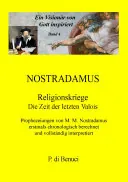
Enchantment of the Faerie Realm
 71
71

Enchantment of the Faerie Realm
Ted Andrews’s "Enchantment of the Faerie Realm" offers a straightforward guide for those curious about the unseen inhabitants of the natural world. Its strength lies in its clarity and the author’s earnest conviction that these beings are not mere myth but active presences. Andrews avoids overly complex jargon, making the concepts of elves, devas, and nature spirits approachable for the novice. However, the book sometimes leans towards a generalized description of faerie lore without deeply exploring the historical nuances of specific traditions, which might leave more seasoned practitioners wanting more specific guidance or historical context. A particularly effective passage details how to attune one's senses to subtle energies in a garden setting, moving beyond simple observation to active perception. Ultimately, it serves as a gentle, encouraging invitation to perceive the world with wider eyes.
📝 Description
71
Ted Andrews's 2012 book posits that forests, lakes, and gardens are inhabited by nature spirits.
Published in 2012, Ted Andrews's "Enchantment of the Faerie Realm" introduces readers to the world of nature spirits and elemental beings. Andrews suggests that places like forests, mountains, and even personal gardens are home to entities such as elves and devas. The book aims to guide readers toward recognizing and interacting with these presences, moving past simple folklore into active engagement with earth's elemental forces. It is written for those new to studying nature spirits, especially individuals who sense a presence in natural settings and want a way to understand these experiences. Readers interested in folklore, animism, and practical ways to connect spiritually with nature will find this work helpful. It provides a starting point for anyone wanting to understand the faerie realm beyond imagination.
This book aligns with a modern resurgence of interest in nature-based spirituality and animistic traditions. It draws on older folkloric beliefs and early 20th-century writings on elementals, offering a contemporary perspective on these concepts. Andrews's approach makes esoteric ideas about the faerie realm accessible to a general audience, encouraging a direct, personal connection with the natural world.
💡 Why Read This Book?
• Gain practical methods for recognizing nature spirits, moving beyond folklore to an active, observational practice based on Ted Andrews's guidance in "Enchantment of the Faerie Realm." • Learn to approach elemental beings with respect, understanding their presence in specific natural locations as detailed in the book's core concepts. • Discover how to cultivate an open mind and patience for perceiving unseen entities, a skill Andrews emphasizes as crucial for connecting with the faerie realm as presented in his 2012 publication.
⭐ Reader Reviews
Honest opinions from readers who have explored this book.
❓ Frequently Asked Questions
What is the primary focus of Ted Andrews' "Enchantment of the Faerie Realm"?
The book's primary focus is on introducing readers to the concept of nature spirits, elves, and devas as real inhabitants of the natural world, and providing guidance on how to perceive and potentially commune with them.
When was "Enchantment of the Faerie Realm" first published?
"Enchantment of the Faerie Realm" by Ted Andrews was first published on December 8, 2012.
Does the book offer specific rituals for contacting faeries?
While the book encourages an open mind and patience for perceiving nature spirits, it focuses more on developing a general awareness and respectful attitude rather than detailing specific, complex rituals.
What kind of natural environments are discussed in the book?
The book discusses a wide range of natural environments, including forests, lakes, mountains, caves, and even personal gardens, as places where nature spirits and faerie beings are believed to reside.
Is this book suitable for beginners in esoteric studies?
Yes, "Enchantment of the Faerie Realm" is written in an accessible style, making it highly suitable for beginners interested in nature spirits and the faerie realm.
What does the book mean by 'devas'?
In the context of the book, 'devas' refers to nature spirits or elemental beings associated with specific natural phenomena or locations, playing a role in the energetic workings of the Earth.
🔮 Key Themes & Symbolism
Presence of Nature Spirits
The book posits that faeries, elves, and devas are not mere fantasy but active, perceivable entities in natural environments. It encourages readers to shift their perspective from seeing nature as inert to recognizing it as alive with intelligent spiritual forces. This theme challenges a purely materialistic worldview, suggesting that our senses can be trained to perceive a richer, more populated reality within forests, water bodies, and even our backyards.
Communing with the Unseen
Andrews provides foundational advice for developing a connection with nature spirits. This involves cultivating an open mind, patience, and a respectful attitude. The emphasis is on subtle perception rather than forceful interaction, suggesting that developing sensitivity to the natural world is the key to recognizing the presence of these beings. It's about fostering a relationship of mutual awareness.
Animism in Modern Practice
The work revitalizes animistic principles for a contemporary audience, presenting the belief that all natural things possess a spirit or consciousness. It bridges ancient folkloric traditions with modern psychological and spiritual exploration, suggesting practical ways to engage with this worldview. The book encourages a re-enchantment of the everyday, finding the sacred and the sentient in commonplace natural settings.
Perceiving Elemental Beings
A central theme is learning to discern the presence of elemental beings—often associated with earth, air, fire, and water. Andrews guides readers to understand that these beings are part of the fabric of the natural world, influencing its vitality and form. The book offers a framework for developing the inner sight and intuitive faculties needed to acknowledge their existence and energetic signatures.
💬 Memorable Quotes
Direct passages from the work, attributed to the author.
“Forests, lakes, mountains, caves—even your garden—are alive with the spirits of nature.”
— This statement captures the book's core premise: that the natural world is inherently sentient and populated by spiritual entities, challenging the reader to reconsider their perception of mundane environments.
“With an open mind and a little patience, you can begin to recognize their presence all around you.”
— This highlights the primary requirements for interacting with the faerie realm according to Andrews: a receptive mental state and consistent effort, suggesting these are the keys to unlocking perception.
“You weren't alone [when walking in the woods].”
— This interpretation of a feeling suggests that the sense of not being alone in nature is a genuine intuition of the presence of unseen entities, validating the reader's subtle experiences.
💡 Key Ideas
Editorial paraphrase of the work's core concepts — not direct quotes.
Faeries are real, and you can learn to commune with a whole world of unseen beings.
This quote directly addresses the reader, asserting the tangible reality of faerie beings and promising that connection and communication are achievable through the methods presented in the book.
Discovering an exciting new world of marvelous beings with this informative guidebook.
This paraphrased concept emphasizes the book's function as a guide to an undiscovered, wondrous dimension of existence, promising revelation and knowledge to the reader.
🌙 Esoteric Significance
Tradition
This work aligns with contemporary Neo-pagan and nature-based spiritual traditions, drawing implicitly from animistic beliefs found in various indigenous cultures and historical European folklore. It fits within the broader spectrum of Western Esotericism that seeks to reconnect individuals with the perceived spiritual forces of the natural world, often bridging folklore with practical, personal spiritual development.
Symbolism
Key symbols include the 'garden' representing a microcosm of the natural world accessible for communion, and 'forests' and 'lakes' symbolizing wilder, more potent concentrations of elemental energy. The 'unseen beings' themselves act as symbols for the inherent consciousness and vitality within all natural phenomena, urging a deeper, more respectful perception of the environment.
Modern Relevance
Contemporary practitioners of earth-based spirituality, eco-spirituality, and modern witchcraft often draw on works like this to validate and inform their connection with nature. It speaks to movements advocating for environmental consciousness and a deeper, more spiritual relationship with the planet, influencing how individuals perceive and interact with their local ecosystems.
👥 Who Should Read This Book
• Individuals new to the study of nature spirits and elemental beings, seeking an accessible introduction to perceiving the unseen world around them. • Aspiring practitioners of earth-based spirituality or Neo-paganism who wish to deepen their connection with the natural environment and its subtle energies. • Readers interested in folklore and mythology who want to explore the possibility of these beings existing beyond mere story, engaging with a practical perspective on faerie lore.
📜 Historical Context
Published in 2012, Ted Andrews's "Enchantment of the Faerie Realm" entered a spiritual landscape increasingly interested in nature-based spirituality and animism, a trend that had been growing since the late 20th century. While not directly engaging with the academic discourse on folklore or comparative religion, the book reflects a broader contemporary fascination with the 'hidden world,' echoing themes explored by authors like Doreen Valiente in her work on witchcraft and the fae, or the earlier Theosophical concepts of elementals discussed by figures such as Helena Blavatsky. It offered a accessible entry point into these ideas, distinct from more rigorous or academically focused studies. The book's approach, prioritizing personal experience and intuitive perception over dogmatic adherence to specific traditions, aligned with a New Age sensibility that often synthesized various esoteric beliefs. Its reception was likely within circles already exploring paganism, earth-based spirituality, and general esoteric literature.
📔 Journal Prompts
Your garden's unseen inhabitants: What energies do you perceive beyond the flora?
The feeling of not being alone in nature: Describe a specific instance and what you sensed.
Elemental presence: Reflect on a natural location (forest, lake) and its distinct spiritual atmosphere.
Patience and perception: How can you cultivate a more receptive mindset for recognizing nature spirits?
The concept of devas: What role might they play in the vitality of a specific natural spot you know?
🗂️ Glossary
Faerie Realm
The perceived dimension or plane of existence inhabited by faeries, elves, and other nature spirits, often considered to exist alongside or within the physical world.
Nature Spirits
General term for elemental beings or consciousnesses believed to inhabit and animate specific aspects of the natural world, such as trees, rivers, or mountains.
Devas
In this context, refers to nature spirits or elemental intelligences associated with specific natural phenomena or geographical locations, contributing to the life force and structure of the Earth.
Commune
To communicate or share feelings or ideas intimately; in this context, to establish a connection and mutual understanding with nature spirits.
Elemental Beings
Spirits associated with the classical elements: Earth, Air, Fire, and Water. Often used interchangeably with nature spirits or fae.
Animism
The belief that natural objects, phenomena, and the universe itself possess souls or consciousness, and that spirits inhabit all things.
Perception
The ability to see, hear, or become aware of something through the senses; in this book, it extends to intuitive and subtle awareness of unseen energies.
This book appears in 2 collections
🔮 Readers Also Liked
Browse all →






From the “Elementals” Collection
View all →




More Free Occult Philosophy Books
View all →