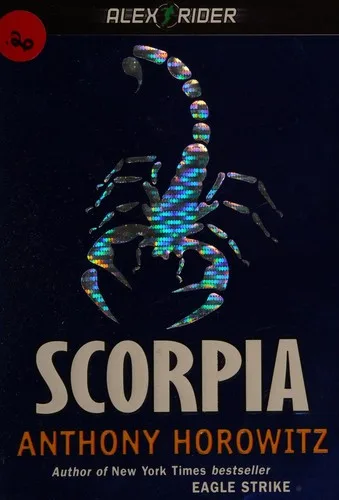
Scorpia
 75
75

Scorpia
Horowitz’s *Scorpia*, while undeniably a well-oiled machine of a thriller, suffers from a certain formulaic predictability that even its target audience might detect. The narrative’s strength lies in its relentless pace and the sheer audacity of Alex Rider’s exploits. For instance, the elaborate infiltration of Scorpia’s heavily guarded facilities is executed with Horowitz’s signature attention to detail, making for pulse-pounding sequences. However, the antagonist, Julius Hertzen, feels somewhat underdeveloped, a standard-issue Bond villain archetype rather than a truly menacing force. The plot, while intricate, occasionally strains credulity, even within its own established universe. Despite these critiques, the book delivers precisely what it promises: a thrilling escapade with a resourceful young hero facing impossible odds. *Scorpia* is a competently crafted, if uninspired, addition to the series.
📝 Description
75
In 2004, Anthony Horowitz published Scorpia, continuing the Alex Rider spy series.
Scorpia follows Alex Rider, a teenage spy for MI6, as he confronts the criminal organization of the same name. After his uncle's death, Alex is drawn into a dangerous world of international espionage. This installment pits him against Scorpia, a syndicate with a wide reach that threatens national security. Alex must use his wits and training to face this formidable enemy.
The novel appeals to young adult readers who enjoy fast-paced action and intricate plots within the spy genre. Those who like clever protagonists, daring escapes, and advanced gadgetry will find the story engaging. It shows a young character facing immense pressure and rising to the occasion with courage and ingenuity. The book is also an accessible entry point for new readers to Horowitz's work and the Alex Rider universe.
While *Scorpia* is a young adult spy thriller, its depiction of clandestine organizations and global threats taps into themes of hidden power structures and shadowy influences that resonate with esoteric thought. The novel presents a world where unseen forces manipulate events and national security is at stake, mirroring esoteric concerns about secret societies and their impact on the wider world. The focus on intelligence, covert operations, and the struggle against a powerful, pervasive enemy aligns with a tradition of examining hidden knowledge and the struggles of individuals against concealed powers.
💡 Why Read This Book?
• Gain insight into the operational methods of fictional clandestine organizations like Scorpia, learning about their global networks and recruitment tactics as depicted in the novel. • Experience the psychological impact of high-stakes espionage on a teenage protagonist, Alex Rider, and observe his coping mechanisms when confronted with extreme danger. • Understand the ethical quandaries of the spy world through Alex's forced decisions, such as his infiltration of Scorpia's operations in Venice and Gibraltar.
⭐ Reader Reviews
Honest opinions from readers who have explored this book.
❓ Frequently Asked Questions
What is the primary conflict in Anthony Horowitz's Scorpia?
The primary conflict in *Scorpia* involves Alex Rider, a teenage spy for MI6, confronting the powerful criminal syndicate known as Scorpia, which seeks to destabilize global security with advanced weaponry.
Who are the main antagonists in the Alex Rider series, specifically in Scorpia?
The main antagonists are the members of Scorpia, a ruthless criminal organization. Key figures in this book include Julius Hertzen, the organization's leader, and other operatives working within its structure.
What are some of the key locations featured in the book Scorpia?
The book features several significant international locations, including Venice, Italy, and Gibraltar, where Alex Rider undertakes crucial missions against Scorpia's operations.
What year was Scorpia by Anthony Horowitz first published?
Anthony Horowitz's *Scorpia* was first published in 2004, marking the fifth installment in the Alex Rider series.
Does Scorpia involve advanced technology or gadgets?
Yes, *Scorpia* features advanced technology and gadgets, a hallmark of the Alex Rider series, utilized by both MI6 and the Scorpia organization.
Is Scorpia a standalone novel or part of a series?
*Scorpia* is part of the Alex Rider series and is the fifth book published in 2004. It continues the adventures of the young spy, Alex Rider.
🔮 Key Themes & Symbolism
The Shadow Syndicate
Scorpia operates as a powerful, clandestine criminal organization, mirroring real-world concerns about globalized crime syndicates. Its operations extend across continents, involving sophisticated planning and ruthless execution, presenting a formidable threat that intelligence agencies like MI6 must counter. The book details their recruitment methods, their advanced weaponry, and their ultimate goal of wielding power through terror and control.
Inherited Legacies and Duty
Alex Rider is thrust into the world of espionage due to the legacy of his uncle, Ian Rider. This theme explores the idea that certain paths are seemingly predetermined or that one can inherit dangerous responsibilities. Alex grapples with the weight of his uncle's profession and the expectations placed upon him, often questioning his own willingness to engage in such a perilous existence.
Teenage Ingenuity Under Duress
A core element is Alex's ability to leverage his youth and perceived innocence to his advantage in the espionage world. He demonstrates remarkable resourcefulness, technical acumen, and bravery when facing adult adversaries and complex situations. The narrative highlights his capacity for strategic thinking and improvisation, often outmaneuvering more experienced agents and operatives.
Moral Ambiguity in Espionage
The novel touches upon the blurred lines between right and wrong in the clandestine services. Alex is often forced into morally grey areas, making difficult choices that have significant consequences. The methods employed by both MI6 and Scorpia raise questions about the ethical compromises necessary for national security and the personal cost to those involved.
💬 Memorable Quotes
Direct passages from the work, attributed to the author.
“He had been trained for this. Every mission, every exercise, every piece of intelligence had led to this moment.”
— This highlights Alex Rider's preparation and the narrative's emphasis on his suitability for the dangerous tasks assigned to him, underscoring the structured training he receives.
“He was a ghost, a phantom, a shadow moving through the enemy's heart.”
— This metaphorical description emphasizes Alex's stealth and infiltration capabilities as he operates deep within enemy territory, highlighting his skill as a spy.
“The world of spies was a dangerous place, but it was his world now.”
— This statement signifies Alex's acceptance of his new reality as a spy, acknowledging the inherent risks while also indicating a sense of belonging or purpose within this clandestine profession.
💡 Key Ideas
Editorial paraphrase of the work's core concepts — not direct quotes.
Scorpia. The name was a whisper in the corridors of power, a rumour of a criminal organisation so vast, so ruthless, it was said to be able to buy and sell nations.
This quote establishes the formidable and pervasive nature of the antagonist organization, Scorpia, immediately setting the stakes for Alex Rider's confrontation with them.
The difference between the right phrase and the almost right phrase is really a difference between lightning and a lightning bug.
While not directly from the spy narrative, this quote (often attributed to Mark Twain and relevant to writing) reflects the importance of precision and exactitude, a concept vital in espionage and in Horowitz's own craft.
🌙 Esoteric Significance
Tradition
While *Scorpia* is a contemporary thriller and not directly aligned with a specific esoteric tradition like Hermeticism or Gnosticism, its exploration of secret societies, hidden knowledge, and clandestine power structures can be seen as a secularized echo of esoteric themes. The idea of a hidden hand manipulating global events, a common trope in esoteric lore, is mirrored in Scorpia's operations. The book engages with the concept of hidden masters and secret organizations that operate beyond the purview of public knowledge, a theme often found in occult literature.
Symbolism
The most prominent symbol is the scorpion itself, representing danger, venom, and a hidden threat. It embodies the ruthless and lethal nature of the organization. Another motif is the use of advanced, almost futuristic technology, which can be interpreted as a modern manifestation of hidden knowledge or arcane power, enabling control and destruction on a massive scale. The locations, such as Venice and Gibraltar, often carry historical and symbolic weight, representing ancient trade routes and strategic military points, hinting at deeper layers of control and influence.
Modern Relevance
In contemporary times, *Scorpia*'s themes of globalized criminal networks, the use of technology for illicit purposes, and the power of secret organizations continue to resonate. Thinkers and practitioners interested in the dynamics of power, control, and the influence of unseen forces in global affairs might find parallels in the book's narrative. It serves as a fictionalized exploration of anxieties surrounding modern conspiracies and the challenges posed by sophisticated, non-state actors operating in the shadows.
👥 Who Should Read This Book
• Young adult readers seeking fast-paced adventure stories with a resourceful teenage protagonist. • Fans of the espionage genre who appreciate intricate plots, gadgets, and international settings. • Readers interested in narratives that explore themes of duty, courage, and the moral complexities of operating in high-stakes environments.
📜 Historical Context
Published in 2004, *Scorpia* emerged within a landscape increasingly dominated by young adult fiction that mirrored contemporary global anxieties. The post-9/11 era had heightened public awareness of international terrorism and clandestine organizations, themes that Horowitz expertly wove into the Alex Rider series. While not a direct engagement with complex philosophical or occult traditions, the series tapped into a fascination with espionage and global power struggles, reflecting a cultural moment where such narratives felt particularly relevant. Contemporaries like Robert Muchamore were also exploring darker, grittier themes in YA fiction. Horowitz’s work, however, maintained a more accessible, adventure-focused approach. The series' success positioned it as a significant player in the YA thriller market, contrasting with the more overtly fantastical or introspective offerings prevalent at the time.
📔 Journal Prompts
Alex Rider's confrontation with the Scorpia organization in Venice.
The inherited legacy of Ian Rider and Alex's reluctant path.
The advanced technology employed by Scorpia and MI6.
The moral compromises Alex faces during his missions.
The symbolic significance of the scorpion motif.
🗂️ Glossary
MI6
The Secret Intelligence Service, commonly known as MI6, is the United Kingdom's foreign intelligence agency. In the book, it's the agency that recruits and tasks Alex Rider.
Scorpia
A fictional, highly dangerous international criminal organization that serves as the primary antagonist in the Alex Rider series. It is depicted as a ruthless syndicate dealing in arms and terrorism.
Asset
In espionage, an asset is a person who provides information or services to an intelligence agency, often secretly. Alex Rider becomes an asset for MI6.
Clandestine
Describes something kept secret or known about only by the relevant people involved. Espionage operations and organizations like Scorpia are clandestine.
Operative
A person who is trained to work in secret for an intelligence agency or a clandestine organization. Alex Rider is a teenage operative.
Venice
A major city in northeastern Italy, built on numerous small islands in a lagoon in the Adriatic Sea. It serves as a key setting for Alex's infiltration of Scorpia's operations.
Julius Hertzen
A key antagonist within the Scorpia organization featured in the novel, serving as a significant threat to Alex Rider.
🔮 Readers Also Liked
Browse all →









More by Anthony Horowitz
All books →





More Free Occult Philosophy Books
View all →