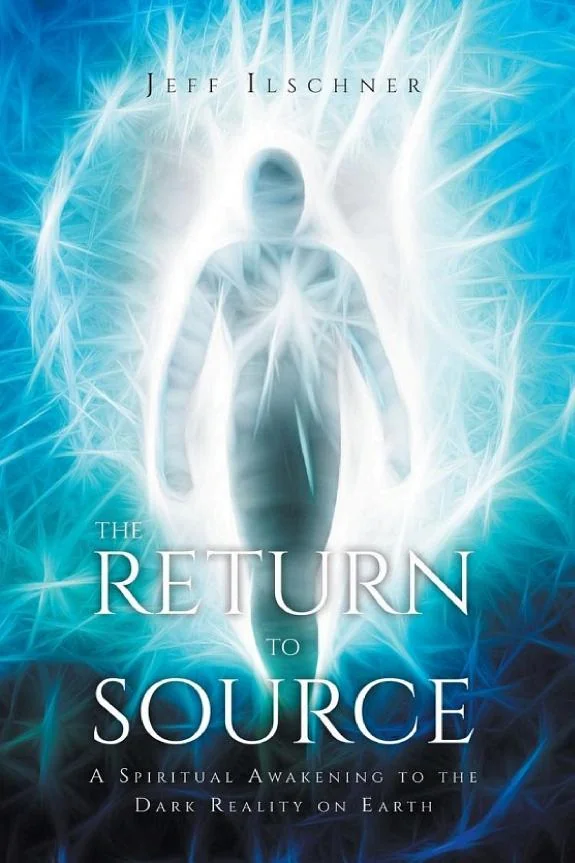
The Return to Source
 73
73

The Return to Source
Jeff Ilschner’s *The Return to Source* presents a stark, almost ascetic, challenge to conventional definitions of success. Its strength lies in its unwavering commitment to this singular thesis: that true wealth is an internal state, derived from spiritual presence rather than material acquisition. The work cuts through the clutter of modern ambition with a refreshing directness. However, this same directness can sometimes feel abrupt, leaving the reader wanting more elaboration on the practical steps toward achieving this 'return to source.' For instance, the concept of recognizing reality as an illusion, while potent, is presented more as an assertion than a fully explored practice. The book’s bluntness is its most notable feature, a welcome antidote to the often-verbose spiritual self-help genre. It’s a call to inner revolution, not gentle encouragement.
📝 Description
73
Jeff Ilschner's The Return to Source, published in 2021, critiques modern notions of success.
The book argues that true fulfillment comes not from accumulating possessions or achieving social status, but from cultivating one's inner spiritual life through present moment awareness. Ilschner suggests that external accomplishments are secondary to achieving internal alignment. A deep understanding of one's authentic self, he posits, is the true prerequisite for having all that one genuinely needs. The work is aimed at individuals who feel disillusioned with materialistic goals and seek a more meaningful definition of success. It speaks to those questioning societal pressures that equate personal worth with wealth or status. Readers interested in spiritual philosophy, self-discovery, and the nature of existence will find its perspective valuable. It is for anyone feeling a desire to move beyond superficial achievements and engage with deeper aspects of life.
Ilschner's 2021 publication appears during a time of renewed interest in esoteric thought and a growing skepticism toward rampant consumerism. The book revisits age old philosophical questions about reality and the good life. It echoes themes found in Plato's Allegory of the Cave or Gnostic traditions that viewed the material world as a kind of illusion. The work addresses current anxieties by offering a spiritual alternative to the relentless pursuit of external validation that has defined much of Western culture.
The Return to Source engages with perennial philosophical inquiries into the nature of reality and human flourishing. It echoes Gnostic ideas about the material world being illusory and Plato's concept of an ideal realm beyond sensory experience. The book's emphasis on internal realization and spiritual presence aligns with traditions that seek direct experience of the divine or ultimate truth, often contrasted with an overemphasis on external, material achievements.
💡 Why Read This Book?
• You will learn to critically examine societal definitions of success, understanding that Ilschner argues true fulfillment stems from spiritual presence, a concept he contrasts with material gain, as discussed in the book's opening. • You will gain a framework for distinguishing between superficial achievements and genuine self-realization, informed by the book's central idea that 'who you are' precedes 'what you have'. • You will be prompted to confront the illusory nature of material reality, a core tenet of the book that encourages a shift in perception beyond the physical, aligning with esoteric traditions that view the world as a construct.
⭐ Reader Reviews
Honest opinions from readers who have explored this book.
❓ Frequently Asked Questions
What is the core message of Jeff Ilschner's The Return to Source?
The book's central message redefines success, asserting that true fulfillment comes from spiritual presence and self-understanding, not material possessions or social status. It encourages readers to prioritize inner alignment over external validation.
When was The Return to Source first published?
The Return to Source was first published on August 3, 2021.
Who is Jeff Ilschner and what is his background?
Information about Jeff Ilschner's specific background is not extensively detailed in the initial publication materials, but his work suggests a focus on spiritual philosophy and self-realization.
Does the book offer practical exercises for spiritual development?
While the book emphasizes spiritual presence, its primary focus is on conceptual reorientation rather than a step-by-step guide to specific practices. It aims to shift perspective first.
What kind of reader would benefit most from The Return to Source?
Individuals disillusioned with materialistic values, seeking deeper meaning, and interested in esoteric or spiritual philosophies that prioritize inner life over external achievements would find this book particularly relevant.
How does this book differ from typical self-help literature?
Unlike much self-help, The Return to Source adopts a more critical and less conventionally encouraging tone, challenging readers directly to question societal norms rather than offering easy solutions.
🔮 Key Themes & Symbolism
Spiritual Presence Over Materialism
The core argument of *The Return to Source* is that genuine success and abundance are not found in what one possesses or achieves externally, but in the quality of one's spiritual presence. Ilschner critiques the societal obsession with material wealth and social standing, positing that these are superficial metrics. True fulfillment, he argues, arises from cultivating an inner spiritual life through conscious awareness and physical embodiment. This theme challenges readers to re-evaluate their priorities, shifting focus from outward accumulation to inward cultivation as the source of lasting satisfaction and completeness.
Reality as Illusion
A significant concept explored is the notion that conventional reality, as perceived through the senses and societal conditioning, is an illusion. *The Return to Source* urges readers to recognize this illusory nature not as a nihilistic dismissal, but as a necessary step toward overcoming its limitations. By understanding that material existence is not the ultimate truth, individuals can begin to transcend its constraints. This perspective aligns with certain Gnostic and Platonic philosophical traditions, suggesting that true liberation comes from seeing beyond the phenomenal world to a deeper, more fundamental reality.
The Nature of True Success
Ilschner fundamentally redefines 'success' in *The Return to Source*. He posits that it is not about reaching a certain social or economic level, nor about accumulating possessions. Instead, success is defined by one's state of being and spiritual alignment. The book suggests that when an individual achieves a deep connection with their authentic self and spiritual core ('where you're at with who you are'), they will inherently possess everything they truly need. This internal state is presented as the only form of success that is enduring and genuinely fulfilling.
Authenticity and Self-Realization
The book strongly advocates for the importance of authenticity and self-realization as the pathway to a meaningful life. It suggests that selling one's life 'for some simple-minded success' is a tragic error. The journey toward 'who you are' is presented as paramount, far more significant than any external accomplishment or social role. This emphasis on inner knowing and genuine selfhood is a call to reject societal pressures and artificial identities in favor of embracing one's true essence, which is seen as the ultimate source of power and contentment.
💬 Memorable Quotes
Direct passages from the work, attributed to the author.
“Your success is by what you are doing here with the spiritual life through the physical presence.”
— This highlights the book's emphasis on embodiment and spiritual awareness. It suggests that the practice of living consciously and spiritually within one's physical existence is the true measure of success, integrating inner and outer experience.
“It's not about where you're at with what you have. It's about where you're at with who you are, then you will have everything that you need.”
— This expresses the book's central thesis: self-knowledge and spiritual alignment are the keys to true abundance. It suggests that understanding one's essential being is the prerequisite for experiencing genuine fulfillment and having all necessities met.
“Do not sell your life for some simple-minded success.”
— This is a strong admonition against compromising one's integrity or spiritual path for superficial achievements. It warns readers against pursuing hollow goals that ultimately lead to dissatisfaction and a sense of loss.
“Reality is an illusion that must be recognized and overcome in order to make it out.”
— This statement points to the esoteric concept of maya or the illusory nature of the material world. It suggests that liberation and true understanding require seeing through the conventional perceived reality and transcending its limitations.
💡 Key Ideas
Editorial paraphrase of the work's core concepts — not direct quotes.
Your success is not by what you have and own or what you are involved with in your social life.
This quote challenges the common understanding of success, moving away from external markers like wealth and social status. It sets the stage for the book's core argument that true fulfillment lies in an internal, spiritual state rather than material accumulation.
🌙 Esoteric Significance
Tradition
The work aligns broadly with Hermetic and Gnostic traditions, emphasizing the illusory nature of the material world and the importance of inner gnosis (knowledge) for liberation. It shares with Hermeticism the focus on understanding one's true nature as a path to mastery, and with Gnosticism the critique of the material realm as a source of entrapment. Ilschner's approach eschews complex ritual or arcane symbolism in favor of a direct, philosophical confrontation with perceived reality, making it accessible yet profound within these lineages.
Symbolism
While not heavily reliant on overt symbols, the book's title, *The Return to Source*, itself functions as a potent metaphor. 'Source' implies an original, pure, and ultimate reality from which all emanates, a concept found in Neoplatonism and various mystical traditions. The implied journey of 'return' signifies a process of spiritual homecoming or re-integration. The dichotomy presented between 'having' and 'being' (or 'who you are') acts as a symbolic framework, contrasting the superficiality of the external world with the depth of inner truth.
Modern Relevance
In contemporary discourse, *The Return to Source* speaks to movements advocating for mindful living, anti-consumerism, and radical self-acceptance. Thinkers and communities focused on consciousness studies, existential philosophy, and neo-advaita Vedanta might find Ilschner's critique of external validation particularly relevant. Its emphasis on internal reality over external circumstances offers a counter-narrative to the pervasive pressures of social media and achievement culture, providing a philosophical anchor for those seeking authenticity in a complex modern world.
👥 Who Should Read This Book
• Individuals questioning societal definitions of success: Those feeling dissatisfied with conventional achievements and seeking a deeper, more spiritual understanding of fulfillment will find this book a direct challenge to their assumptions. • Seekers of philosophical depth: Readers interested in existentialism, Gnosticism, or Hermetic philosophy who appreciate direct, critical engagement with the nature of reality and the self will benefit. • Those experiencing existential ennui: Anyone feeling disconnected from their authentic self or overwhelmed by materialistic pursuits can find a compelling perspective shift offered by Ilschner's call to inner realization.
📜 Historical Context
Published in 2021, *The Return to Source* emerges during a period of intense global flux and a burgeoning interest in alternative spiritualities and philosophical critiques of consumer culture. It arrives decades after the counter-culture movements of the 1960s and 70s, which also questioned societal norms, but Ilschner’s work speaks to a 21st-century audience grappling with digital alienation and existential anxieties amplified by events like the COVID-19 pandemic. While not directly engaging with specific academic debates, the book echoes perennial philosophical concerns about the nature of reality, famously explored in Plato's Allegory of the Cave. It offers a stark contrast to the self-help genre's prevalent focus on goal-setting and positive affirmation, instead advocating for a radical reorientation of values akin to certain Gnostic traditions that viewed the material world with suspicion. The work’s critical stance on conventional success implicitly challenges the tenets of neoliberalism and hyper-individualism prevalent in Western thought since the late 20th century.
📔 Journal Prompts
The concept of 'simple-minded success' and its allure.
Recognizing the 'illusion' of everyday reality in practice.
Defining personal 'spiritual presence' beyond societal metrics.
The relationship between 'who you are' and 'what you have'.
Identifying steps toward 'overcoming' perceived limitations.
🗂️ Glossary
Spiritual Presence
The state of being fully conscious and aware of one's inner being and connection to a deeper reality, cultivated through intentional focus and embodied awareness.
Physical Presence
The embodiment of one's spiritual awareness within the physical form; living consciously and authentically in the material world, rather than being solely identified with external circumstances.
Simple-minded success
A pejorative term used in the book to describe superficial achievements or goals that lack true spiritual or existential value, often pursued due to societal pressure or misunderstanding.
Illusion
In the context of the book, refers to the perceived material reality that distracts from or obscures a deeper, more fundamental spiritual truth. It is something to be recognized and transcended.
Source
The ultimate origin or fundamental reality from which all existence emanates; the divine, the absolute, or the ground of being, which the individual seeks to return to or align with.
Authentic Self
The true, unconditioned nature of an individual, distinct from roles, possessions, or social conditioning; the core essence that must be realized for genuine fulfillment.
Overcome
To transcend or move beyond the limitations imposed by the illusory nature of conventional reality or societal expectations, often through a shift in consciousness and perspective.
This book appears in 1 collection
🔮 Readers Also Liked
Browse all →








From the “Spiritual Awakening” Collection
View all →






More Free Magic & Ritual Books
View all →