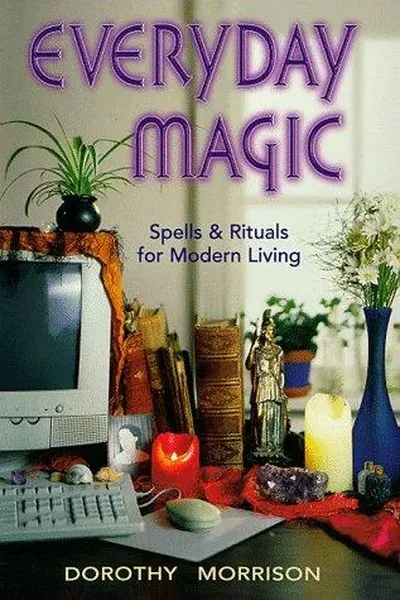
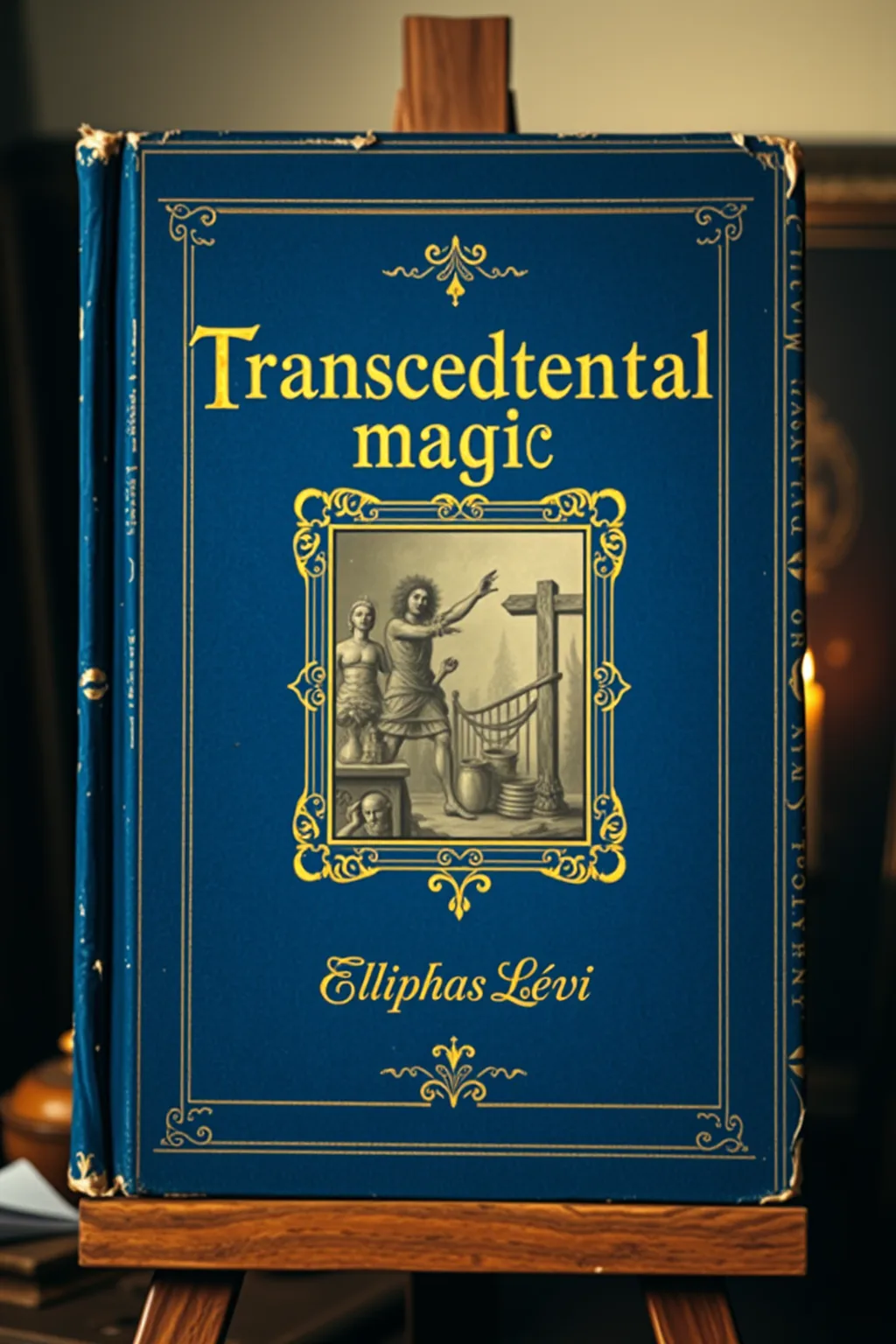
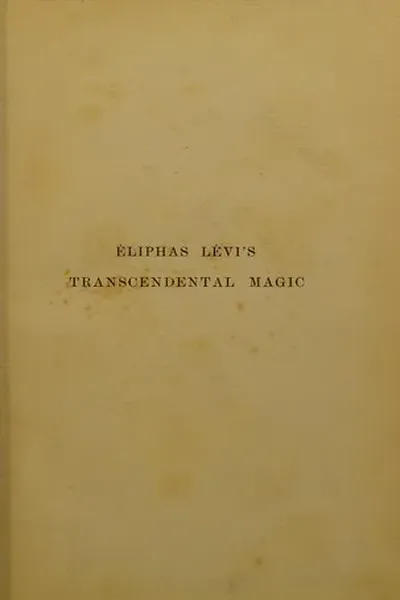
Transcendental magic
 61
61

Transcendental magic


Isolde Whitaker, Sacred Texts Editor: Eliphas Lévi's 'Transcendental Magic' remains an undisputed titan in the esoteric canon. This work masterfully bridges ancient wisdom with a nascent occult revival, offering unparalleled clarity on the principles of ceremonial magic. Lévi's erudition shines through his intricate explanations of Kabbalistic cosmology, tarot symbolism, and the vital role of will and imagination in manifesting magical intent. His prose, while demanding, rewards the earnest student with profound insights into the interconnectedness of all things. Essential reading for anyone serious about understanding the theoretical underpinnings and practical applications of Western magical traditions. It is a foundational text for practitioners and scholars alike, promising to elevate one's understanding of the Great Work.
📝 Description
61
Eliphas Lévi's 1856 book, 'Transcendental Magic, Its Doctrine and Ritual,' explains occult philosophy.
First published in 1856, Eliphas Lévi's 'Transcendental Magic, Its Doctrine and Ritual' is a significant text in the study of Western esotericism. Lévi aims to systematize occult knowledge, presenting magic as a science and a philosophy. He discusses the principles of magical correspondences, the symbolism found in traditions like the Kabbalah, and the use of ritual for spiritual advancement. The book details how the microcosm, or human being, reflects the macrocosm, the greater universe, and how understanding this connection is key to magical practice.
Lévi frames magic as a means to understand the hidden forces governing existence. He addresses concepts of divine will and human agency within the occult framework. The work is structured to guide practitioners through theoretical understanding and practical application, intending to lead the reader toward spiritual insight and a deeper comprehension of reality. It remains a reference for those interested in the theory and practice of ceremonial magic.
Eliphas Lévi wrote 'Transcendental Magic' during a period of renewed interest in spiritualism and occultism in 19th-century Europe. The book drew upon earlier Hermetic traditions, Kabbalah, and Renaissance magical texts. It sought to present a coherent system of magic, moving beyond mere superstition or folk practices. Lévi positioned his work within a lineage of esoteric thought, aiming to reveal universal laws governing both the spiritual and material worlds. His approach influenced later figures in occultism, shaping how ceremonial magic was understood and practiced.
💡 Why Read This Book?
Embark on a profound journey of self-discovery and spiritual exploration. 'Transcendental Magic' offers a comprehensive system for understanding the universe's hidden order and your place within it. Ideal for serious students of occultism, philosophy, and mysticism seeking to grasp the foundational principles of ceremonial magic, Kabbalah, and esoteric symbolism. Unlock ancient knowledge and elevate your consciousness.
⭐ Reader Reviews
Honest opinions from readers who have explored this book.
❓ Frequently Asked Questions
What is the core philosophy of 'Transcendental Magic'?
The core philosophy posits that magic is the science of understanding and manipulating the hidden forces of nature through the application of will, symbolism, and ritual. It emphasizes the unity of the cosmos and the inherent divine potential within humanity.
Is this book suitable for beginners?
While comprehensive and deep, Lévi's work is best approached by those with a foundational interest in esoteric subjects. Beginners may find certain sections challenging but can benefit from reading it alongside introductory materials on Kabbalah and occultism.
What role does symbolism play in the book?
Symbolism is paramount. Lévi meticulously deciphers the symbolic language of ancient traditions, including hieroglyphs, tarot, and astrological signs, presenting them as keys to unlocking universal truths and magical operations.
Does the book teach practical spellcasting?
Yes, it lays out the theoretical framework and principles necessary for practical magical work, including the importance of preparation, intention, and the use of specific rituals and correspondences to achieve desired outcomes.
What is the Kabbalah's significance in this text?
The Kabbalah forms the philosophical backbone of Lévi's system, providing a detailed map of the divine emanations and the structure of the universe, which is essential for understanding magical correspondences and the nature of God.
🔮 Key Themes & Symbolism
The Art and Science of Magic
Lévi presents magic not as mere superstition, but as a profound science and art, governed by immutable laws. He details the principles of astral projection, the power of the divine name, and the intricate correspondences between the celestial and terrestrial realms. This section explores the essential role of the magician's will, imagination, and understanding of universal energies in enacting change within the world, emphasizing a disciplined and intellectual approach to occult practice.
Kabbalistic Cosmology and Symbolism
A core part of Lévi's work is his comprehensive explanation of Kabbalistic doctrine. He meticulously unpacks the Tree of Life, the Sephiroth, and the paths, revealing them as a blueprint of creation and a map for spiritual ascent. The book studies the symbolic meanings of Hebrew letters, divine names, and the inherent spiritual architecture of the universe, providing readers with the essential framework for understanding esoteric concepts and their practical applications.
Doctrine of the Astral Light
Lévi introduces and elaborates on the concept of the Astral Light, an omnipresent, luminous fluid that permeates all existence and serves as the medium for divine manifestation and magical influence. This dynamic force is depicted as the primal energy of the universe, capable of being shaped by thought and will. Understanding and interacting with the Astral Light is presented as fundamental to achieving transcendental states and performing effective magical operations.
💬 Memorable Quotes
Direct passages from the work, attributed to the author.
“Magic is the science of the secret forces of nature.”
— This expresses Lévi's view of magic as a legitimate, albeit hidden, field of study and practice, emphasizing its basis in natural laws rather than arbitrary supernatural intervention.
“The key to everything is imagination.”
— This emphasizes the crucial role of the magician's inner faculties, particularly imagination, as the primary tool for shaping and directing the forces of magic and manifesting desired outcomes.
“To know, to dare, to will, and to keep silent.”
— These are the four cardinal virtues of the magician, representing the stages of magical attainment: knowledge, courage to act, unwavering intention, and discretion in practice.
“The Absolute is the first cause, the ultimate effect, and the infinite medium.”
— This profound statement defines the ultimate reality as the all-encompassing source, destination, and connecting substance of all existence, a core tenet in many mystical traditions.
💡 Key Ideas
Editorial paraphrase of the work's core concepts — not direct quotes.
The great mystery is not that man is a microcosm, but that the microcosm is everything.
This quote highlights the profound interconnectedness of all existence, suggesting that the universe is reflected within the individual, and by understanding oneself, one can understand the cosmos.
🌙 Esoteric Significance
Tradition
Lévi masterfully synthesizes elements from Hermeticism, Kabbalah, Gnosticism, Neoplatonism, and ceremonial magic. He presents a unified esoteric worldview, grounding his magical system in ancient philosophical principles and scriptural interpretations, thereby creating a comprehensive doctrine that became foundational for modern Western occultism.
Symbolism
The book is a veritable lexicon of esoteric symbolism. Lévi meticulously deciphers the hidden meanings embedded in the Tarot, the Hebrew alphabet, astrological glyphs, and alchemical imagery. These symbols are presented not as mere decorative elements but as powerful keys to understanding cosmic laws and unlocking spiritual potential.
Modern Relevance
Despite its age, 'Transcendental Magic' remains remarkably relevant. Its exploration of consciousness, the power of intention, and the interconnectedness of all things resonates deeply with contemporary seekers interested in mindfulness, manifestation, and personal empowerment. Lévi's structured approach to ritual and self-development offers timeless guidance for those reading through the complexities of modern life.
👥 Who Should Read This Book
This important work is essential for serious students of the occult, esotericism, and comparative religion. Aspiring practitioners of ceremonial magic will find it an indispensable guide to foundational principles and ritualistic practice. Scholars of Western mystery traditions will appreciate its historical significance and intellectual rigor. Seekers of spiritual truth and philosophical depth will discover a profound exploration of the universe and humanity's place within it. Even those new to the subject matter but possessing a curious mind and a desire for deeper understanding will find valuable insights.
📜 Historical Context
Published in 1856, 'Transcendental Magic' emerged during a period of intense spiritual and intellectual ferment in 19th-century Europe. The rise of spiritualism, mesmerism, and a renewed interest in ancient philosophies and occult traditions created fertile ground for Lévi's synthesis. He sought to reconcile scientific inquiry with mystical experience, offering a coherent system of magic that moved beyond the sensationalism of earlier occult dabblers. This era saw a desire to find order and meaning in a rapidly changing world, and Lévi's work provided a sophisticated framework for understanding the hidden mechanisms of reality, profoundly influencing subsequent generations of occultists, mystics, and philosophers.
📔 Journal Prompts
Reflect on the concept of the Astral Light. How might this force be understood or experienced in your daily life?
Analyze a symbol from the book (e.g., a Tarot card, a Hebrew letter). What personal meaning or universal truth does it evoke for you?
Consider the four virtues of the magician: 'To know, to dare, to will, and to keep silent.' Which virtue do you find most challenging to embody, and why?
Lévi emphasizes the microcosm reflecting the macrocosm. How can understanding your own inner world lead to a greater understanding of the external universe?
What is your personal definition of 'magic' after reading this text? How does it differ from or align with common perceptions?
🗂️ Glossary
Kabbalah
An esoteric system of Jewish mysticism that explores the divine nature and the creation of the universe through a symbolic interpretation of scripture and a structured cosmology known as the Tree of Life.
Astral Light
In Lévi's philosophy, a universal, luminous, and omnipresent fluid that acts as the medium for divine manifestation, thought, and magical influence throughout the cosmos.
Microcosm
The concept that the human being or the individual is a miniature reflection of the larger universe (macrocosm), containing within them all the principles and elements of the greater whole.
Macrocosm
The universe as a whole, considered as an ordered system, often seen as being mirrored in the smaller scale of the human being or microcosm.
Great Work (Major work)
The ultimate goal of spiritual development and magical practice, often interpreted as achieving spiritual enlightenment, divine union, or profound personal transformation.
This book appears in 2 collections
🔮 Readers Also Liked
Browse all →




More by Eliphas Lévi
All books →


From the “Ritual Magic” Collection
View all →





More Free Magic & Ritual Books
View all →





![Faust: a Tragedy [part 1], Translated from the German of Goethe](/img/thumb/faust-a-tragedy-part-1-translated-from-the-german-of-goethe-goethe-johann-wolfgang-von.webp)