Black Bestiary
 71
71

Black Bestiary
Budjette Tan and David Hontiveros's Black Bestiary offers a compelling, if sometimes uneven, continuation of their exploration into the Philippine supernatural. The strength lies in the sheer variety of creatures detailed, moving beyond familiar tropes to present genuinely fascinating entities that feel rooted in a specific cultural context. The book excels when it presents the raw accounts of these modern hunters, allowing the reader to feel the thrill and apprehension of their investigations. However, the constant questioning of the accounts' veracity, while intended to engage the reader, occasionally detracts from the immersion. A passage detailing the purported methods of training a Filipino dragon, while intriguing, borders on the fantastical without sufficient grounding to feel truly convincing. The work’s limitation is its reliance on assertion rather than deeper analysis of the cultural or psychological underpinnings of these beliefs. Black Bestiary is a spirited collection for those already invested in the lore, but might leave skeptics wanting more substance.
📝 Description
71
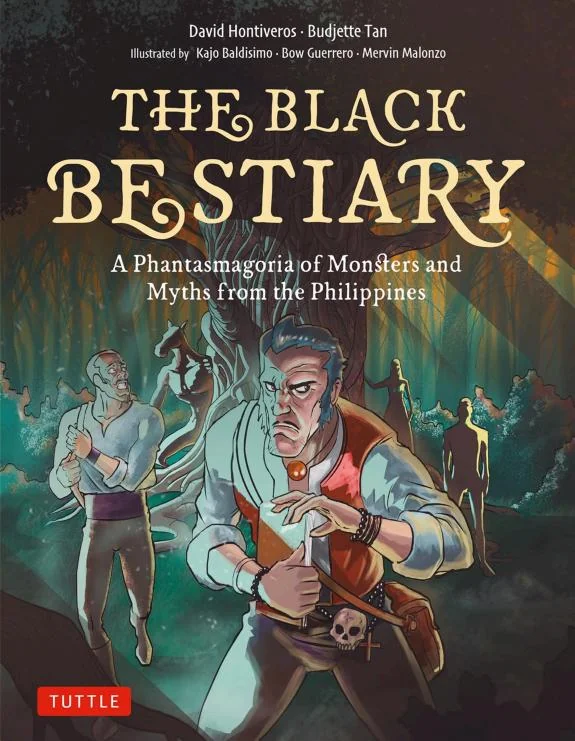
In 2022, Budjette Tan and David Hontiveros published Black Bestiary, a collection of modern encounters with Filipino supernatural entities.
Black Bestiary collects reported sightings of creatures from Filipino folklore and mythology. Authors Budjette Tan and David Hontiveros compiled these accounts, building on their previous work documenting the Philippine occult. The book details a variety of beings, from the imposing to the hidden, prompting readers to consider the truth behind these unusual claims. It functions as both a catalog of monsters and a record of personal experiences, encouraging thoughtful consideration of the supernatural.
The work is suited for fans of cryptozoology, folklore studies, and Filipino mythology. Anyone interested in the connection between belief, legend, and reported events will find relevant material. Readers who enjoyed "The Lost Journal of Alejandro Pardo" will see this as a continuation of the exploration into supernatural beings. It appeals to those who appreciate speculative narratives and are open to examining the lines between myth and reality, especially within a Southeast Asian setting.
This book fits within a contemporary interest in documenting local mythologies, particularly in the Philippines. It continues a tradition of collecting and cataloging supernatural phenomena, similar to older bestiaries or cryptozoological surveys, but grounds these accounts in modern, anecdotal reporting. Unlike purely academic ethnography, Black Bestiary emphasizes personal testimonies and the act of contemporary 'monster hunting' as a blend of investigation and folklore engagement.
💡 Why Read This Book?
• Gain specific insights into the training methods of a Filipino dragon, a unique creature detailed in the book, offering a practical glimpse into fantastical lore. • Understand the phenomenon of modern 'monster hunting' through the experiences of RJ and his companions, as documented in the 2022 publication. • Evaluate firsthand accounts of supernatural encounters, sharpening your critical thinking skills regarding folklore and reported phenomena as presented in the Black Bestiary.
⭐ Reader Reviews
Honest opinions from readers who have explored this book.
❓ Frequently Asked Questions
What is the primary focus of Black Bestiary?
Black Bestiary focuses on documenting reported encounters with supernatural creatures from Filipino folklore and mythology, presented through the accounts of modern monster hunters.
Who are the authors of Black Bestiary?
The book is authored by Budjette Tan and David Hontiveros, who previously collaborated on 'The Lost Journal of Alejandro Pardo'.
When was Black Bestiary first published?
Black Bestiary was first published on October 18, 2022.
What kind of creatures are featured in Black Bestiary?
The book features a range of creatures from Filipino folklore, including dragons and other powerful and fearsome supernatural entities previously introduced in 'The Lost Journal of Alejandro Pardo'.
Does the book present these encounters as factual?
The book presents these as reported accounts and encourages readers to decide for themselves whether they are true, exaggerated, or fabricated, fostering critical engagement.
Is Black Bestiary a sequel to another book?
Yes, Black Bestiary expands upon the lore and investigations presented in 'The Lost Journal of Alejandro Pardo', featuring new accounts and creatures.
🔮 Key Themes & Symbolism
Filipino Cryptozoology
The book serves as an expanded catalog of supernatural entities indigenous to the Philippines, moving beyond commonly known myths. It details creatures like the Filipino dragon, presenting them not merely as legends but as subjects of contemporary investigation. The authors present these beings through the lens of modern 'monster hunters,' grounding ancient folklore in present-day anecdotal reporting and challenging the reader to consider their tangible presence.
The Nature of Truth in Folklore
A central theme is the ambiguity surrounding the veracity of extraordinary claims. Black Bestiary presents collected accounts from various individuals, posing the question of how to discern truth from exaggeration or outright fabrication. This approach encourages critical thinking about belief systems, the power of storytelling, and the human fascination with the unexplained, particularly within the context of local legends.
Modern Myth Hunters
The work introduces a trio of modern investigators—RJ and his associates—who actively seek out and document encounters with supernatural creatures. This frames the study of folklore not as a purely academic or historical pursuit, but as a dynamic, hands-on endeavor. Their adventures and methods, as described in the text, highlight a contemporary engagement with the mythic world that bridges tradition and modern investigative practices.
Cultural Heritage and the Supernatural
Black Bestiary functions as a repository for a specific cultural heritage, focusing on the supernatural beings that populate Filipino mythology. By collecting and presenting these accounts, the book contributes to the preservation and exploration of this rich folklore. It underscores how these mythical entities continue to hold relevance and inspire curiosity in contemporary society, acting as a living part of cultural identity.
💬 Memorable Quotes
Direct passages from the work, attributed to the author.
“How to train a Filipino dragon and other real-life adventures of three modern monster hunters!”
— This statement expresses the book's adventurous spirit and its combination of folklore and contemporary investigation, highlighting the practical, albeit fantastical, challenges faced by its protagonists.
“Since The Lost Journal of Alejandro Pardo was published, other creature hunters have come out of the woodwork to share their spine-tingling accounts.”
— This indicates the expanding nature of the research and the community of individuals interested in documenting supernatural phenomena, suggesting a growing interest in Philippine cryptids.
“True? Exaggerated? Out-and-out lies? Read on and decide for yourself!”
— This directly challenges the reader, positioning them as the ultimate arbiter of truth and encouraging a critical, engaged reading experience rather than passive acceptance of the narratives.
“The Black Bestiary adds to the list of powerful and fearsome supernatural creatures we met in The Lost Journal of Alejandro Pardo.”
— This confirms the book's role as a follow-up, promising further exploration of formidable entities and building upon the established lore of its predecessor.
“Three modern creature hunters--RJ, [and associates implied]”
— This introduces the central figures of the narrative, framing their pursuit of the supernatural as a modern, active profession or hobby rather than a passive belief.
🌙 Esoteric Significance
Tradition
While not strictly adhering to a single Western esoteric lineage like Hermeticism or Kabbalah, Black Bestiary engages with the universal tradition of cataloging the unknown and the monstrous. It aligns with a broader, more animistic and folk-magic-oriented approach to the supernatural, common in many indigenous belief systems. Its significance lies in documenting and reinterpreting these specific Filipino entities, presenting them as potent forces worthy of investigation outside of established Western occult frameworks.
Symbolism
The 'Filipino dragon' itself serves as a potent symbol, often representing primal power, guardianship, or elemental forces within various Southeast Asian mythologies. The act of 'monster hunting' symbolizes humanity's persistent drive to confront, understand, and categorize the unknown, reflecting an ancient impulse to map the boundaries of the known world and its hidden inhabitants. The ambiguity of truth in reported encounters symbolizes the liminal space between belief and skepticism.
Modern Relevance
Contemporary thinkers and practitioners exploring indigenous spiritualities and decolonized approaches to esotericism find value in works like Black Bestiary. It provides source material for those seeking to understand or reconnect with pre-colonial mythologies and belief systems. Furthermore, its presentation of active investigators appeals to modern occultists and paranormal enthusiasts who engage with the supernatural through direct experience and empirical (albeit subjective) observation, rather than solely through theoretical study.
👥 Who Should Read This Book
• Enthusiasts of Philippine folklore and mythology seeking detailed accounts of creatures beyond common knowledge. • Cryptozoology researchers and fans interested in case studies of reported supernatural encounters from a specific cultural region. • Readers who enjoy speculative non-fiction that explores the boundaries of belief and the nature of truth in extraordinary claims.
📜 Historical Context
The publication of Black Bestiary in 2022 places it within a contemporary landscape that has seen a renewed global interest in folklore, cryptozoology, and the occult. Following the reception of its predecessor, "The Lost Journal of Alejandro Pardo," this work continues to explore the wide range of Philippine supernatural entities. Unlike purely academic ethnographies that might focus on the societal functions of myth, Tan and Hontiveros's approach leans towards anecdotal evidence and the thrill of discovery, echoing earlier popular works that sensationalized or popularized folklore, such as the early 20th-century fascination with fantastical creatures. The book's success in engaging a modern audience with these traditional tales highlights a cultural moment where local mythologies are being re-examined and celebrated, often through speculative non-fiction that blurs the lines between documented fact and imaginative storytelling. The work implicitly engages with the ongoing discourse surrounding belief and the interpretation of unexplained phenomena.
📔 Journal Prompts
The described methods for training a Filipino dragon, as presented in the text.
The role of RJ and his companions as modern creature hunters.
The distinction between 'true,' 'exaggerated,' and 'lies' in reported supernatural accounts.
The specific supernatural creatures encountered by the hunters.
Personal reflections on the concept of a 'bestiary' in contemporary contexts.
🗂️ Glossary
Bestiary
A medieval compendium of animals, real or imaginary, often with moral or allegorical interpretations. In this context, it refers to a catalog of supernatural creatures.
Filipino Dragon
A mythical serpentine creature from Philippine folklore, often depicted with distinct characteristics differing from East Asian or European dragons, embodying potent natural forces.
Monster Hunter
An individual or group who actively seeks, investigates, and documents encounters with supernatural entities or cryptids, often employing investigative techniques.
Supernatural Creatures
Beings that exist outside the known laws of nature, often associated with mythology, folklore, and paranormal phenomena.
The Lost Journal of Alejandro Pardo
A prior work by the authors that documented initial investigations into Philippine supernatural entities, serving as a foundation for Black Bestiary.
Veracity
The quality of being truthful; accuracy. In the book, it refers to the truthfulness of the reported encounters.
Folklore
The traditional beliefs, customs, and stories of a community, passed through the generations by word of mouth, forming a significant part of cultural identity.
This book appears in 1 collection
🔮 Readers Also Liked
Browse all →








From the “Folklore Magic” Collection
View all →









More Free Magic & Ritual Books
View all →