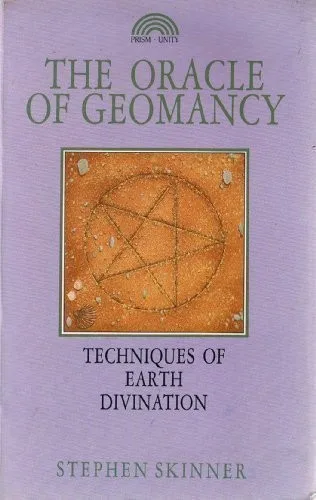
The oracle of geomancy
 62
62

The oracle of geomancy



Celeste Moreau (Divination & Symbolism Reviewer) — Stephen Skinner's 'The Oracle of Geomancy' stands as a beacon for modern students of this ancient art. Skinner meticulously deciphers the complex iconography and astrological connections of the sixteen geomantic figures, presenting them with clarity and scholarly rigor. This is not a superficial glance, but a deep dive into the philosophical underpinnings and practical application of earth divination. Its strength lies in Skinner's ability to make arcane knowledge accessible without sacrificing its inherent mystery. Essential reading for serious practitioners and scholars seeking to master the subtle language of the earth.
📝 Description
62
Stephen Skinner's 2000 book, 'The Oracle of Geomancy,' deciphers a complete system of earth divination.
Stephen Skinner's 'The Oracle of Geomancy' presents a thorough examination of this ancient divinatory art. The book details the sixteen figures of geomancy, their origins, and their associations with celestial bodies. Skinner explains how these figures are generated through simple methods, often involving chance operations like counting pebbles or marks. He discusses the historical development of geomancy, tracing its roots through Arabic, European, and potentially earlier traditions.
The text goes beyond mere prediction, arguing that geomancy offers a framework for understanding natural patterns and cosmic order. Skinner covers the principles of interpretation, showing how the figures relate to different aspects of life and the environment. He also touches on the use of geomancy in ritual and magical practices. This work aims to provide a practical guide for those interested in the mechanics and philosophy of this specific divinatory system.
Geomancy, or earth divination, is a system with a long history across various cultures. It is often categorized alongside other forms of divination like astrology, tarot, and I Ching. Within esoteric traditions, geomancy is valued for its perceived connection to terrestrial energies and its structured symbolic language. Its systematic approach makes it distinct, and practitioners often see it as a way to access knowledge about the physical and spiritual world. Skinner's work places it within this broader context of divination and Western esotericism.
💡 Why Read This Book?
Unearth the profound wisdom of earth divination with a master guide. 'The Oracle of Geomancy' reveals the intricate symbolic language of the sixteen figures, connecting cosmic patterns to terrestrial reality. Ideal for practitioners seeking to deepen their practice, scholars of esotericism, and spiritual seekers aiming to understand the subtle energies shaping their lives. Discover a potent, ancient system for insight and guidance.
⭐ Reader Reviews
Honest opinions from readers who have explored this book.
❓ Frequently Asked Questions
What is Geomancy?
Geomancy, or 'earth divination,' is an ancient system of scrying or fortune-telling that involves casting figures derived from randomly generated patterns of dots. It's considered one of the oldest divinatory arts, deeply connected to astrology and the earth's energies.
What are the sixteen geomantic figures?
These are the core symbols of geomancy, each composed of four lines of one or two dots. They are derived through a specific process and possess unique astrological dignities, meanings, and associations, representing archetypal forces.
How is Geomancy different from Tarot?
While both are divinatory systems, Geomancy is rooted in earth energies and astrology, often visualized through geometric patterns. Tarot uses symbolic imagery on cards to convey meanings, offering a more visual and narrative approach.
Can Geomancy be used for more than just prediction?
Absolutely. Geomancy is often viewed as a philosophical system, offering insights into the nature of reality, the balance of forces, and the underlying order of the universe, extending beyond simple yes/no answers.
Is this book suitable for beginners?
Yes, while comprehensive, Skinner's clear explanations make it accessible to dedicated beginners eager to learn the foundational principles and practices of geomancy.
🔮 Key Themes & Symbolism
The Sixteen Figures: Celestial Archetypes
The heart of geomancy lies in its sixteen distinct figures, each a unique arrangement of four lines of one or two dots. Skinner meticulously details these figures, unveiling their intricate connections to planetary rulers, zodiacal signs, and houses. These are not mere random patterns, but potent archetypes that encapsulate fundamental cosmic forces and earthly influences. Understanding these figures is akin to learning the alphabet of terrestrial divination, allowing practitioners to translate the earth's murmurs into coherent insights and guidance. Each figure carries a distinct personality and energetic signature, revealing much about the querent's situation and its underlying dynamics.
Earth as a Living Oracle
This work posits the earth itself as a sentient oracle, constantly communicating through subtle energies and patterns. Geomancy is the art of attuning oneself to this planetary consciousness, interpreting its messages. Skinner emphasizes the deep connection between the terrestrial realm and the celestial spheres, demonstrating how terrestrial patterns reflect cosmic influences. The book encourages a shift in perspective, viewing the ground beneath our feet not as inert matter, but as a vibrant, responsive entity. Through geomantic practice, one learns to listen to the earth's wisdom, discerning its guidance in the formation of these seemingly simple figures.
The Philosophical Underpinnings of Divination
Beyond its predictive applications, 'The Oracle of Geomancy' explores the profound philosophical implications of divinatory practices. Skinner explores how geomancy serves as a mirror to the soul and a map of cosmic causality. It prompts reflection on free will versus destiny, the nature of synchronicity, and the interconnectedness of all things. The book invites readers to consider divination not as a passive act of receiving pronouncements, but as an active engagement with the forces that shape existence, fostering a deeper understanding of one's place within the grand set of the cosmos.
💬 Memorable Quotes
Direct passages from the work, attributed to the author.
“Each figure is a doorway, revealing a facet of the unseen.”
— This highlights the symbolic power of the geomantic figures. They are presented not just as predictive tools, but as keys to unlocking deeper understandings of hidden realities and underlying causes.
“To read the earth is to read the cosmos.”
— This emphasizes the profound astrological and cosmic connections inherent in geomancy, suggesting that terrestrial patterns are reflections of universal laws and celestial influences.
“The patterns are simple, yet their wisdom is boundless.”
— This speaks to the deceptive simplicity of the geomantic figures. Their basic construction belies the vast depth of knowledge and interpretation they contain, requiring skill and intuition to fully grasp.
“Seek not to control fate, but to understand its dance.”
— This offers a philosophical perspective on divination, encouraging a posture of wisdom and acceptance rather than an attempt to manipulate destiny. It's about gaining insight into life's flow.
💡 Key Ideas
Editorial paraphrase of the work's core concepts — not direct quotes.
The earth breathes secrets, and geomancy is our respiration.
This quote captures the core idea of geomancy as a dialogue with the planet. It suggests an active, reciprocal relationship where the earth's subtle messages are interpreted through the practice.
🌙 Esoteric Significance
Tradition
Geomancy is deeply entwined with the Hermetic, astrological, and Islamic esoteric traditions. It shares fundamental principles with astrology, viewing the earth as a reflection of celestial movements. Within Islamic mysticism, it was sometimes seen as a divine gift, a way to understand God's will through earthly patterns. Its influence also extended to Western occultism, where it was integrated into magical practices and philosophical systems, viewed as a key to unlocking the hidden order of the universe.
Symbolism
The core symbolism lies in the sixteen geomantic figures themselves, each representing specific archetypal forces, qualities, and influences. These figures are derived from the binary patterns of dots, echoing principles of duality and manifestation. Their astrological correspondences further enrich their symbolic meaning, linking them to planets, signs, and houses. The process of generating the figures also holds symbolic weight, representing the interplay of chaos and order, the manifestation of divine will within the material world.
Modern Relevance
In contemporary times, geomancy offers a grounding and tangible approach to divination, contrasting with more abstract methods. Its emphasis on earth energies appeals to modern interests in nature-based spirituality and environmental consciousness. For practitioners, it provides a structured yet intuitive system for self-exploration, decision-making, and understanding complex situations. Its enduring appeal lies in its ability to offer useful insights into the human condition and its place within the larger cosmic order, providing a practical tool for reading through the complexities of modern life.
👥 Who Should Read This Book
This comprehensive guide is important for a broad spectrum of seekers. **Beginners** will find clear, step-by-step instructions for mastering the fundamentals of geomancy. **Practitioners** of other divinatory arts, such as astrology or Tarot, will discover how geomancy complements and enriches their existing knowledge. **Scholars of esotericism and occult history** will appreciate the detailed historical context and Skinner's authoritative scholarship. **Spiritual seekers** yearning for a deeper connection to the earth's wisdom and a potent tool for self-reflection and guidance will find 'The Oracle of Geomancy' an indispensable resource.
📜 Historical Context
Geomancy, often translated as 'earth divination,' boasts a lineage stretching back to the early medieval period, with roots possibly reaching further into ancient Mesopotamian and Arabian traditions. Its rise in popularity coincided with the flourishing of esoteric sciences during the Islamic Golden Age and its subsequent transmission to Europe. During the Renaissance, geomancy was considered one of the seven 'liberal arts' of divination, studied by scholars and occultists alike. Figures like Cornelius Agrippa and Paracelsus incorporated it into their mystical frameworks. It was widely consulted for personal guidance, state affairs, and even to locate hidden treasures, reflecting its pervasive influence across societal strata and its integration within the broader Hermetic and astrological traditions of the era.
📔 Journal Prompts
Reflect on the geomantic figure generated when contemplating a personal challenge. What does its symbolism reveal about the situation's core dynamics?
How do the astrological correspondences of the figures resonate with your current life circumstances or emotional state?
Consider the earth as a living oracle. What messages might it be conveying to you through the patterns of your daily life, beyond formal readings?
How can understanding the balance of elemental forces within geomantic figures be applied to achieving greater balance within yourself?
Explore the concept of 'synchronicity' in relation to your geomantic readings. How do these perceived coincidences inform your understanding of your path?
🗂️ Glossary
Geomancy
An ancient system of divination that uses patterns of dots cast on the ground or on paper to generate sixteen figures, interpreted through astrological and symbolic associations.
The Sixteen Figures
The primary symbols of geomancy, each formed by four lines of one or two dots. They represent archetypal energies and are the basis for all geomantic readings.
House (Geomantic)
In geomancy, similar to astrology, specific areas of a reading that relate to different aspects of life, such as self, possessions, siblings, or career.
Chart (Geomantic)
The complete arrangement of the sixteen geomantic figures within the twelve houses, forming the framework for a geomantic interpretation.
Querent
The person for whom a geomantic reading is performed. Their question or concern is the focal point of the interpretation.
This book appears in 1 collection
🔮 Readers Also Liked
Browse all →







More by Stephen Skinner
All books →




From the “Divination” Collection
View all →




![Paul Foster Case The Tarot ( A Key To The Wisdom Of The Ages)[ebook Pdf]](/img/thumb/paul-foster-case-the-tarot-a-key-to-the-wisdom-of-the-ages-ebook-pdf.webp)




More Free Divination & Tarot Books
View all →