Santería Cubana
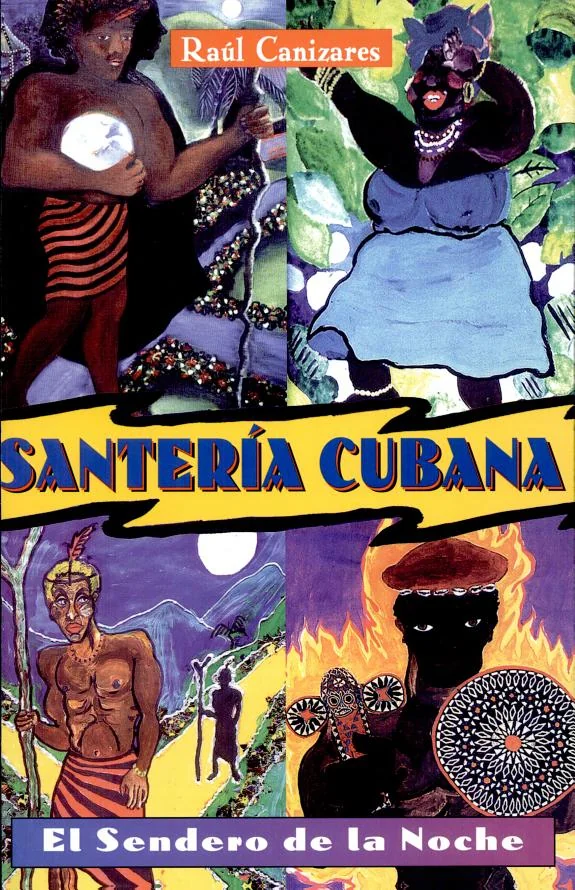
 77
77

Santería Cubana
Raul Canizares's *Santería Cubana* provides a much-needed insider's account of a faith frequently misrepresented. Canizares, initiated at a remarkably young age, writes with an authority that a purely academic observer would lack. His exposition on the relationship between the Orishas and their Catholic counterparts, a core element of Santería's syncretism, is particularly illuminating. The book's strength lies in its directness and its clear explanation of core tenets, such as the role of *ebó* (offerings). However, the text occasionally feels constrained by its author's insider status, sometimes assuming a level of familiarity with esoteric concepts that may not be present even in an engaged reader. A passage detailing the specific divination practices of *diloggún* offers clarity but could benefit from further contextualization for the uninitiated. Ultimately, *Santería Cubana* stands as a valuable, albeit sometimes dense, introduction to a profound spiritual system.
📝 Description
77
Raul Canizares's 2002 book demystifies Santería from an initiated priest's perspective.
Santería Cubana offers an insider's view of the Afro-Cuban religion. Raul Canizares, initiated into its priesthood at age seven, wrote this book to clarify practices often misunderstood by outsiders. He blends his personal experiences with analysis to reveal the religion's less apparent aspects.
The book is for readers who want a clear understanding of Santería, moving past sensationalism or shallow descriptions. It will interest students of religion, those involved with Afro-Diasporic spiritual paths, and anyone curious about the unique blend of beliefs in this faith. An open mind and a desire for genuine insight are recommended.
Published in 2002, the work appeared as global interest in diverse spiritualities grew and academic study of Afro-Diasporic religions increased. Canizares's account gives a vital insider viewpoint on a tradition frequently interpreted from the outside or pushed to the margins. The book discusses how Yoruba beliefs merged with Catholicism, a syncretic process that took shape during Cuba's colonial period.
This book belongs to the study of Afro-Diasporic religions, specifically the syncretic tradition of Santería that developed in Cuba. It details the fusion of West African Yoruba religious systems with Roman Catholicism, a process driven by the transatlantic slave trade and colonial history. Santería's spiritual cosmology centers on the Orishas, divine manifestations believed to mediate between humanity and Olodumare, the supreme creator. The religion's practices involve elaborate rituals, divination through systems like Ifá, and a strong emphasis on ancestral lineage and community bonds, all of which Canizares illuminates from an initiated perspective.
💡 Why Read This Book?
• Gain an authentic understanding of Santería directly from an initiated priest, learning about the pantheon of Orishas and their specific roles, a perspective rare in external analyses. • Understand the historical syncretism of Santería, exploring how Yoruba traditions blended with Catholicism in Cuba following the transatlantic slave trade. • Grasp the practical application of ritual and divination, such as the use of *diloggún*, as explained by Canizares, offering insight into the lived experience of the faith.
⭐ Reader Reviews
Honest opinions from readers who have explored this book.
❓ Frequently Asked Questions
What is the primary religion that Santería Cubana is often syncretized with?
Santería Cubana is most famously syncretized with Roman Catholicism. This blending of Yoruba deities (Orishas) with Catholic saints occurred during the colonial period in Cuba as enslaved Africans sought to preserve their spiritual traditions.
Who is the author of Santería Cubana and what is his background?
The author is Raul Canizares, who was initiated into the priesthood of Santería at the age of seven. His personal involvement provides an insider's perspective on the religion's practices and beliefs.
What does 'Orisha' refer to in the context of Santería?
Orishas are divine manifestations or deities in Santería, originating from the Yoruba religion. They represent natural forces and human archetypes, each with unique characteristics, domains, and ways of worship.
When was Santería Cubana first published?
The book *Santería Cubana* by Raul Canizares was first published in March 2002. This timing placed it within a growing wave of interest in Afro-Diasporic religions.
What is the Ifá system mentioned in relation to Santería?
The Ifá system is a complex divination method central to Santería and other related traditions like Ifá. It involves intricate symbolic language and is used to understand spiritual matters and receive guidance from the Orishas.
Does the book cover the role of specific rituals or ceremonies?
Yes, *Santería Cubana* details various practices within the religion, including the significance of offerings (*ebó*) and other ceremonial aspects central to maintaining balance and connection with the Orishas.
🔮 Key Themes & Symbolism
The Orisha Pantheon
The book meticulously details the Yoruba deities, known as Orishas, who form the core of Santería's spiritual framework. Canizares explains their individual characteristics, domains (such as Ogun for iron and war, Oshun for love and rivers), and their relationships with both each other and the human world. This exploration moves beyond simple identification, illustrating the active role these divine forces play in practitioners' lives and the natural environment, emphasizing their profound connection to the cosmos.
Syncretism and Historical Roots
A significant theme is the historical fusion of Yoruba religious practices with Catholicism, a process deeply embedded in Cuba's colonial past. Canizares highlights how enslaved Africans ingeniously mapped their Orishas onto Catholic saints to preserve their ancestral faith under duress. This section underscores the resilience of spiritual traditions and the complex cultural dialogue that shaped Santería into its unique Afro-Cuban form, demonstrating a persistent adaptation.
Ritual and Divination Practices
The work provides insight into the practical aspects of Santería, focusing on rituals, offerings (*ebó*), and divination systems. Canizares explains the purpose behind these practices, framing them not as mere superstition but as essential tools for communication with the divine, seeking guidance, and maintaining spiritual equilibrium. The emphasis is on the active, participatory nature of the religion, where understanding and engagement are paramount for spiritual well-being.
The Insider's Perspective
Central to the book's value is Canizares's perspective as an initiated priest. He offers an intimate, firsthand account of the spiritual journey and the community structures that support it. This viewpoint challenges external, often ethnographic, interpretations by revealing the lived experience, the personal transformation, and the deep-seated devotion that characterize genuine participation in Santería, moving from observation to participation.
💬 Memorable Quotes
Direct passages from the work, attributed to the author.
“Santería is a religion of balance, where each element has its place and purpose.”
— This statement expresses the core philosophy of Santería, emphasizing the interconnectedness of all things and the importance of maintaining harmony within oneself, the community, and the natural world. It suggests that understanding these relationships is key to spiritual practice.
“The Orishas are not distant gods, but active forces in our daily lives.”
— This highlights the immanent nature of the divine in Santería. It counters the idea of a detached deity, instead presenting the Orishas as present and influential entities that practitioners engage with regularly for guidance and support.
“Understanding the symbolism of offerings (*ebó*) is crucial for spiritual communication.”
— This emphasizes the practical, communicative aspect of ritual in Santería. It suggests that the specific items and methods used in offerings are not arbitrary but carry symbolic weight, acting as a language through which devotees interact with the Orishas.
“The blending of Yoruba and Catholic traditions was a survival strategy as much as a spiritual union.”
— This interpretation points to the historical context of Santería's development. It suggests that the syncretism with Catholicism was a pragmatic response to oppression, enabling the preservation of African spiritual heritage under a veneer of European religious conformity.
💡 Key Ideas
Editorial paraphrase of the work's core concepts — not direct quotes.
Initiation is not an end, but a profound beginning.
This paraphrase speaks to the transformative nature of becoming a priest or priestess within Santería. It signifies that the process of initiation marks the start of a deeper, lifelong commitment to spiritual learning and service, rather than a conclusion.
🌙 Esoteric Significance
Tradition
Santería belongs to the broad category of Afro-Diasporic religions, which draw heavily from West African (particularly Yoruba) spiritual and cosmological systems. While not directly aligned with Western Hermeticism or Kabbalah, it shares with these traditions an emphasis on a structured cosmology, the power of divine intermediaries (Orishas vs. angels/sephiroth), and the importance of ritual and divination for spiritual advancement and understanding the universe.
Symbolism
Central symbols include the *Orishas*, who represent fundamental forces of nature and human experience (e.g., Ogun embodying the raw power of iron and the forge, Oshun symbolizing the sweet flow of rivers and sensuality). The *Diloggún*, a system of cowrie shell divination, is another key symbol, representing the voice of the Orishas offering guidance. The *eleke* (sacred beaded necklaces) are also potent symbols of initiation, protection, and connection to specific Orishas.
Modern Relevance
Contemporary thinkers and practitioners in various spiritual fields, including New Age spirituality and comparative religion studies, continue to draw from Santería. Its emphasis on nature-based spirituality, ancestor veneration, and the direct experience of the divine speaks to modern seekers. Practices and concepts from Santería have also influenced global popular culture, music, and art, demonstrating its enduring spiritual and cultural impact.
👥 Who Should Read This Book
• Students of comparative religion seeking to understand Afro-Diasporic traditions and their syncretic development, particularly the fusion of Yoruba beliefs with Catholicism. • Aspiring practitioners of Santería who desire foundational knowledge from an initiated priest, offering insight into the Orishas, rituals, and ethical considerations. • Individuals interested in the historical resilience of spiritual practices, exploring how traditions adapt and endure under challenging socio-historical conditions, such as those faced during Cuba's colonial past.
📜 Historical Context
Raul Canizares's *Santería Cubana*, published in 2002, arrived at a time when interest in Afro-Diasporic religions was growing significantly, both within academic circles and among a broader public seeking alternative spiritual paths. The book offered an insider’s perspective on a tradition often misunderstood or sensationalized. Santería's roots lie in the forced migration of Yoruba people during the transatlantic slave trade, leading to a unique syncretism with Catholicism in Cuba. While scholars like Maya Deren had explored Vodou in Haiti, and Lydia Cabrera had documented Cuban folklore, Canizares provided a more direct account from a practicing priest. The early 21st century saw increased visibility for Santería in the Americas, partly due to migration patterns, making works like Canizares's timely for explaining its complex cosmology and rituals to a wider audience.
📔 Journal Prompts
The role of Ogun in daily life and personal challenges.
Understanding the symbolic language of the Diloggún divination system.
Reflecting on the historical necessity of syncretism in preserving spiritual traditions.
The personal significance of *ebó* (offerings) in connecting with the divine.
The concept of *ashe* (divine energy) as presented by Canizares.
🗂️ Glossary
Orisha
Deities or divine forces originating from the Yoruba religion, central to Santería. Each Orisha governs aspects of nature and human life and is worshipped through specific rituals and offerings.
Diloggún
A system of divination using cowrie shells, employed in Santería. It is believed to channel the voices of the Orishas to provide guidance, answer questions, and reveal spiritual matters to practitioners.
Ebó
Offerings made to the Orishas in Santería. These can range from simple items like fruits and flowers to more complex preparations, intended to appease, honor, or petition the deities.
Ashe
A fundamental concept representing divine energy, spiritual power, or life force that flows through all things. It is essential for creation, transformation, and maintaining balance within the universe.
Olorisha
A title for a priest or priestess initiated into the priesthood of Santería. An Olorisha has undergone specific rites and holds a recognized position within the religious hierarchy.
Babalawo
A high-ranking priest within Santería, particularly skilled in the Ifá divination system. The term translates to 'father of secrets'.
Eleke
Sacred beaded necklaces worn by initiates in Santería. Each necklace is consecrated and dedicated to specific Orishas, serving as a sign of spiritual commitment and protection.
This book appears in 1 collection
🔮 Readers Also Liked
Browse all →









From the “Santeria” Collection
View all →









More Free Occult Philosophy Books
View all →