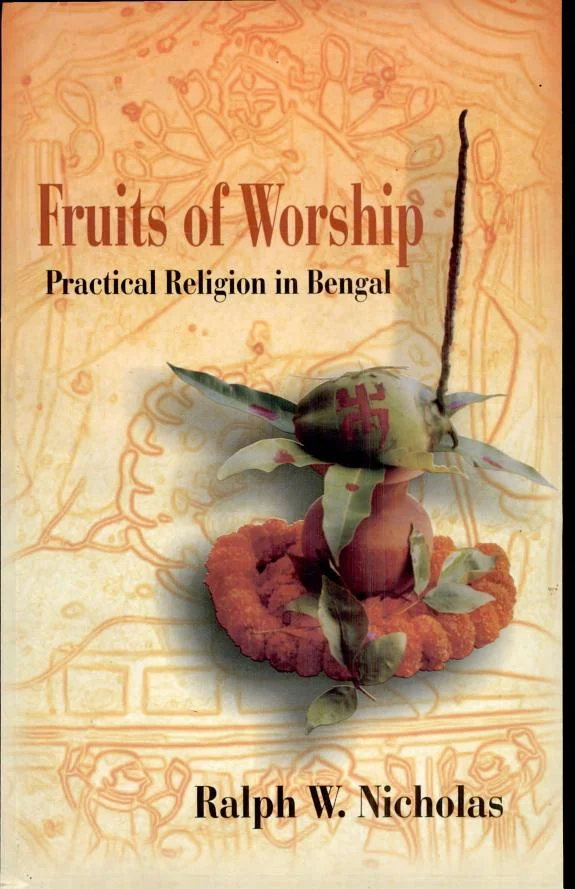
Fruits of Worship
 71
71

Fruits of Worship
Ralph W. Nicholas's "Fruits of Worship" delivers a remarkably thorough account of religious life in rural Bengal, focusing intently on the ordinary person's engagement with the divine. The book's signal strength lies in its granular detail, presenting a picture of Bengali attachment to goddesses that feels both intimate and academically rigorous. Nicholas meticulously analyzes myths surrounding calamities, offering a dual historical and structural perspective that illuminates the cultural logic of coping mechanisms. A particularly compelling section details the worship of Manasa, the serpent goddess, illustrating the intricate ways local deities are woven into the fabric of daily life and agricultural cycles. While the dense ethnographic detail is a major asset, the academic prose can occasionally be demanding for the casual reader, requiring sustained attention. Nevertheless, the work provides an unparalleled window into a specific, vibrant religious landscape. "Fruits of Worship" stands as a significant contribution to the study of lived religion.
📝 Description
71
Ralph W. Nicholas's 2003 book examines Bengali villagers' devotion to goddesses and their response to hardship.
Published in 2003, Fruits of Worship provides an anthropological and historical look at the religious lives of common people in rural Bengal. The book centers on the strong connection Bengalis feel toward various goddesses, showing how these figures shape everyday life. Nicholas analyzes the cultural and mythical systems that explain calamities, examining these stories historically and structurally to grasp their role in the community.
This study is for scholars and students of religion, anthropology, and South Asian culture. It appeals to readers interested in how religion is lived, especially outside Western contexts, and the links between myth, ritual, and dealing with hardship. Those wanting a deeper understanding of folk religion and its ties to broader cultural traditions will find it particularly useful.
This work fits within the ethnographic study of South Asian religions, a field that grew significantly from the mid-20th century. It specifically addresses goddess worship and how misfortune is religiously interpreted, contributing to academic discussions on the diverse practices within Indic religions. By focusing on rural Bengal, Nicholas offers a view of a region often less studied than major cities or national trends, providing specific insights into local religious interpretation and practice.
💡 Why Read This Book?
• Gain a granular understanding of Bengali goddess worship, moving beyond abstract theological concepts to the lived practices and beliefs surrounding deities like Manasa, as detailed in the book's ethnographic sections. • Learn how myths function not just as narratives but as active tools for interpreting and responding to calamities in rural Bengal, providing insights into cultural resilience and worldview. • Appreciate a unique, holistic view of the religious universe implicit in the villages of the Bengal Delta, a perspective grounded in Nicholas's detailed analysis of local customs and beliefs from the early 2000s.
⭐ Reader Reviews
Honest opinions from readers who have explored this book.
❓ Frequently Asked Questions
What specific goddesses are central to the religious practices described in Fruits of Worship?
The book prominently features the worship of goddesses central to Bengali folk religion, particularly Manasa, the serpent goddess, and often discusses other local manifestations of divine feminine power integral to village life.
How does Ralph W. Nicholas analyze the myths related to calamities in rural Bengal?
Nicholas examines these myths both historically, tracing their origins and evolution, and structurally, looking for underlying patterns and meanings that reveal how communities understand and cope with events like disease, drought, or natural disasters.
When was Fruits of Worship first published and by whom?
Fruits of Worship was first published in 2003. The author is Ralph W. Nicholas, who conducted extensive fieldwork to compile this study.
What is the primary geographical focus of the book?
The book's focus is exclusively on the religious life of ordinary people in rural Bengal, specifically within the villages of the Bengal Delta.
Does the book discuss the impact of modernization on these religious practices?
While the book primarily details the religious life as observed, its 2003 publication date means it captures a snapshot of practices before potentially significant shifts due to later modernization trends, offering a valuable historical baseline.
What does 'Fruits of Worship' signify in the context of the book?
The title likely refers to the tangible and intangible outcomes—the 'fruits'—that arise from the community's devotion and ritualistic 'worship', encompassing everything from agricultural prosperity to spiritual solace and social cohesion.
🔮 Key Themes & Symbolism
Goddess Veneration in Bengal
The book meticulously details the profound attachment of rural Bengali communities to various goddesses, moving beyond abstract divinity to explore the practical, everyday roles these deities play. Nicholas examines specific cults, like that of Manasa, the serpent goddess, illustrating how her worship is interwoven with agricultural cycles, health concerns, and social structures, providing a vital link between the human and the divine in the village context.
Mythology as Coping Mechanism
Nicholas analyzes how myths surrounding calamities—such as disease, famine, or natural disasters—function not merely as ancient stories but as active frameworks for understanding and enduring hardship. The structural and historical analysis reveals how these narratives provide psychological solace, social cohesion, and a perceived sense of control or meaning in the face of overwhelming adversity in the Bengal Delta.
The Religious Universe of Village Life
This work constructs a uniquely complete picture of the spiritual and ritualistic world inhabited by ordinary people in rural Bengal. It highlights the integration of religious beliefs and practices into every facet of life, from personal health to community well-being, offering an anthropological deep-dive into the implicit worldview shaped by local traditions and the veneration of powerful, often localized, divine forces.
Historical and Structural Myth Analysis
Beyond simply recounting myths, Nicholas applies rigorous methods to understand their formation and function. By analyzing myths both historically—tracing their development over time—and structurally—identifying recurring patterns and symbolic meanings—the book offers scholarly insights into the enduring power of these narratives and their role in sustaining cultural identity and religious practice.
💬 Memorable Quotes
Direct passages from the work, attributed to the author.
“The religious treatment of the calamities.”
— This phrase captures the book's focus on how communities utilize their spiritual beliefs and practices not just to explain, but to actively respond to and endure life's hardships and disasters.
“Bengali attachment to Goddesses.”
— This points to the core subject of widespread devotion and deep personal connection rural Bengalis feel towards various goddesses, treating them as active participants in daily life.
“Analysis of myths, both historically and structurally.”
— Nicholas employs academic rigor, examining the evolution of myths over time (historical) and their underlying patterns and meanings (structural) to understand their cultural significance.
“A uniquely complete picture of the world implicit in the culture of the villages of the Bengal Delta.”
— This highlights the book's achievement in presenting a holistic and detailed understanding of the worldview and interconnected beliefs that shape life in these specific rural communities.
“The religious life of ordinary people in rural Bengal.”
— This defines the book's scope, emphasizing its focus on the lived, everyday religious experiences of common individuals, rather than elite theology or urban practices.
🌙 Esoteric Significance
Tradition
While not strictly within a Western esoteric lineage like Hermeticism or Kabbalah, "Fruits of Worship" engages with concepts relevant to comparative mysticism and folk religion. It explores a form of immanent divinity, where the sacred is deeply embedded in the natural world and daily life, particularly through the veneration of powerful female deities. This appeals to certain animistic and earth-centered traditions found in various global spiritualities.
Symbolism
Key symbols include the serpent, embodied by the goddess Manasa, representing fertility, regeneration, and potentially dangerous power that must be appeased. The Ganges River and the delta landscape itself function as potent symbols of life, sustenance, and cyclical renewal, deeply tied to the deities and the villagers' spiritual cosmology. Calamities themselves become symbols of divine will or cosmic imbalance.
Modern Relevance
Contemporary scholars of South Asian religions and anthropologists continue to cite Nicholas's work for its detailed ethnography and analysis of goddess cults. It informs discussions on gender and religion, the role of local deities in maintaining cultural identity, and the resilience of traditional belief systems in the face of globalization. Practitioners of comparative religion seeking to understand diverse forms of divine feminine expression find it valuable.
👥 Who Should Read This Book
• Anthropologists and religious studies scholars specializing in South Asia, seeking detailed case studies on lived religion and myth analysis in rural Bengal. • Students of comparative mythology and folklore, interested in understanding how narratives about calamities shape cultural responses and worldviews. • Readers fascinated by folk religion and the worship of goddesses, who want to move beyond theoretical concepts to explore concrete practices and beliefs in a specific cultural context.
📜 Historical Context
Published in 2003, Ralph W. Nicholas's "Fruits of Worship" arrived during a period of sustained academic interest in the anthropology of religion and South Asian studies. The late 20th and early 21st centuries saw a growing emphasis on understanding 'lived religion'—the actual practices and beliefs of ordinary people—moving away from solely textual or doctrinal analysis. Nicholas's work contributes to this by focusing on rural Bengal, a region often studied through the lens of larger Indic traditions but possessing unique local manifestations. His detailed ethnographic approach builds upon earlier anthropological work in India, such as that of M.N. Srinivas, who studied social systems and religion in South India. While not directly engaging in polemics, Nicholas's specific focus on goddess cults and myth analysis implicitly contrasts with broader, more Sanskritic or pan-Hindu interpretations, offering a grounded, local perspective that resonated with scholars seeking nuanced cultural studies.
📔 Journal Prompts
The attachment to Goddesses in rural Bengal: How might these attachments reflect deeper societal needs or anxieties?
Analysis of myths surrounding calamities: What structural patterns emerge when comparing different disaster narratives?
The religious treatment of misfortune: Reflect on how ritual or belief systems provide comfort or agency.
The world implicit in village culture: Consider the relationship between the natural environment and spiritual beliefs.
Ralph W. Nicholas's ethnographic methodology: What are the strengths of focusing on ordinary people's religious lives?
🗂️ Glossary
Manasa
A prominent folk goddess of Bengal, primarily associated with snakes, fertility, and prosperity. Her worship often involves intricate rituals and narratives, particularly concerning protection from snakebite and ensuring good harvests.
Goddesses
In the context of the book, this refers to various female divine figures venerated in rural Bengal, often with localized cults and specific domains of influence, playing crucial roles in the villagers' religious lives.
Calamities
Events causing great damage, destruction, and misery, such as floods, droughts, epidemics, or famines. The book examines how religious beliefs and myths help communities interpret and cope with these occurrences.
Myths
Traditional stories, often concerning the early history of a people or their religious beliefs, that explain natural or social phenomena. Nicholas analyzes these both historically and structurally.
Bengal Delta
The vast alluvial delta formed by the confluence of the Ganges, Brahmaputra, and Meghna rivers in the Bay of Bengal. The book focuses on the rural culture and religious practices within this specific geographical region.
Structural Analysis
An academic approach that examines the underlying patterns, relationships, and organization within a system, in this case, myths, to understand their meaning and function.
Historical Analysis
An approach that studies the development and evolution of phenomena, such as myths or religious practices, over time to understand their origins and changes.
This book appears in 1 collection
🔮 Readers Also Liked
Browse all →








From the “Hinduism” Collection
View all →







More Free Sacred Texts & Gnosticism Books
View all →