Vedic Astronomy and Astrology Through Science, Wisdom and Commonsense
 61
61

Vedic Astronomy and Astrology Through Science, Wisdom and Commonsense


Celeste Moreau (Divination & Symbolism Reviewer) — Buddhike Indrasena's "Vedic Astronomy and Astrology" is a rare gem, an alchemical fusion of scientific rigor and profound spiritual wisdom. Indrasena navigates the complex currents of Vedic cosmology with exceptional clarity, demystifying ancient concepts for the modern seeker. The book’s strength lies in its ability to illuminate the symbolic language of the heavens, revealing how celestial alignments resonate with human experience on a deeply esoteric level. It’s an indispensable guide for those who wish to move beyond superficial astrological interpretations and connect with the ancient, sacred science of the stars. Highly recommended for serious students of Jyotish and cosmic philosophy.
📝 Description
61
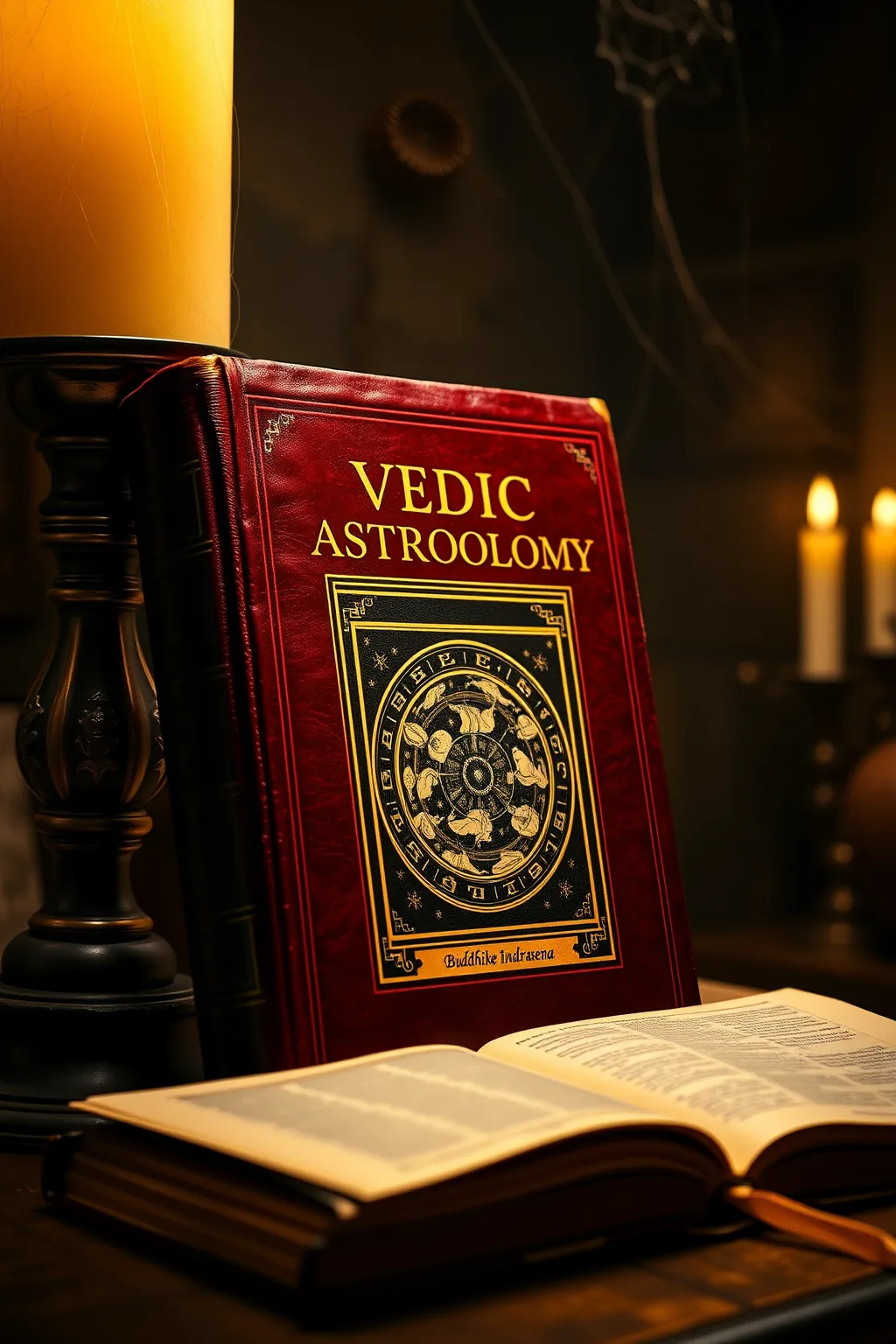
Buddhike Indrasena's 2020 book connects Vedic cosmology with scientific observation and practical reasoning.
In "Vedic Astronomy and Astrology: Through Science, Wisdom, and Commonsense," Buddhike Indrasena examines the Vedic view of the cosmos. This perspective sees the universe not just as physical objects, but as a conscious entity connected to human awareness. Indrasena aims to show how empirical data aligns with these ancient insights, focusing on the significance of sidereal movements. The book suggests that Vedic astrology offers more than just predictive methods; it presents a way to understand humanity's role in the universe. It highlights the relationship between the larger cosmos and individual lives, proposing a structure that underlies all existence.
The text encourages readers to consider the stars as guides to a divine plan. It moves beyond simple astronomical charts to discuss the philosophical implications of celestial patterns. Indrasena's approach integrates scientific understanding with traditional wisdom and everyday logic. The aim is to provide a balanced view of Vedic astronomy and astrology. This work is for those interested in the deeper connections between the heavens and human experience.
This book fits within the esoteric tradition that seeks to harmonize ancient spiritual knowledge with modern scientific understanding. It specifically engages with the Jyotisha system, a branch of Vedic learning that interprets celestial phenomena. Unlike purely academic or purely mystical approaches, Indrasena's work attempts a synthesis, suggesting that the symbolic language of Vedic astrology can be understood through logical reasoning and empirical observation. It draws on a lineage of thinkers who have looked to the stars for insight into universal laws and human destiny, seeking to validate these traditions through a commonsense lens.
💡 Why Read This Book?
Uncover the profound, often-overlooked spiritual dimensions of Vedic astrology. This book offers a unique synthesis of scientific observation and ancient wisdom, making the celestial realm accessible. Ideal for seekers yearning for deeper cosmic understanding, scholars exploring ancient knowledge systems, and practitioners seeking to enrich their astrological practice with philosophical depth and practical insights. Discover the universe's hidden language and your place within its grand design.
⭐ Reader Reviews
Honest opinions from readers who have explored this book.
❓ Frequently Asked Questions
What is the primary focus of Vedic Astronomy and Astrology?
The book focuses on the ancient Vedic perspective of the cosmos, integrating scientific observation with spiritual wisdom and philosophical understanding to reveal the interconnectedness of celestial movements and human destiny.
Is prior knowledge of astrology required to read this book?
While prior knowledge can enhance understanding, Indrasena's approach is designed to be accessible. The book builds a foundation, making it suitable for both beginners and experienced practitioners seeking a deeper, more holistic view.
How does this book differ from Western astrology?
It primarily utilizes the sidereal zodiac, aligning with astronomical observation, and delves into the philosophical and spiritual underpinnings of Jyotish, offering a distinct cultural and conceptual framework.
What kind of 'commonsense' is referred to in the title?
The 'commonsense' refers to the practical, logical application of Vedic principles that resonate with observable reality and intuitive understanding, grounding the esoteric in the tangible.
Can this book help in understanding personal life events through astrology?
Yes, by explaining the foundational principles and symbolic language of Vedic astrology, the book provides tools for understanding how celestial patterns may influence personal experiences and life paths.
🔮 Key Themes & Symbolism
The Celestial Blueprint
This theme explores the profound concept of the cosmos as an intelligent, ordered system, a divine blueprint that reflects universal laws and consciousness. It studies how the ancient Vedic seers perceived the planets and stars not merely as distant bodies, but as active agents of cosmic energy and archetypal forces influencing life on Earth. The book illuminates the intricate dance of celestial bodies as a language that speaks to the soul, offering insights into destiny, karma, and the interconnectedness of all existence.
Bridging Science and Esotericism
A central tenet of the work is the harmonious integration of empirical observation and scientific understanding with esoteric wisdom. Indrasena demonstrates how Vedic astronomy, with its precise calculations and celestial charting, is not at odds with spiritual insights but rather a profound expression of them. This theme addresses how ancient cosmologies held a sophisticated understanding of the universe that predates modern science in many respects, offering a richer, more holistic perspective on reality that encompasses both the material and the metaphysical.
The Wisdom of Jyotish
This theme unpacks the complex wisdom embedded within Jyotish, the Vedic system of astrology. It goes beyond predictive mechanics to explore the philosophical underpinnings, ethical considerations, and spiritual applications of this ancient science. Readers will discover how Jyotish serves as a tool for self-awareness, personal growth, and understanding one's dharma (purpose) within the grand cosmic unfolding. The book emphasizes its role in fostering a conscious relationship with the universe and navigating life's challenges with greater insight and equanimity.
💬 Memorable Quotes
Direct passages from the work, attributed to the author.
“Cosmic order is the mirror of inner harmony; when one is disturbed, the other reflects.”
— Emphasizes the fundamental Vedic principle of correspondence between the macrocosm (universe) and the microcosm (individual consciousness).
“To read the heavens is to read the sacred text of existence itself.”
— Positions Vedic astrology as a form of divine scripture, revealing universal truths and the underlying structure of reality.
“Wisdom is not found in knowing what will happen, but in understanding why.”
— Suggests that the true value of Vedic astrology lies in its capacity to offer deeper causal understanding rather than mere prediction.
“The sidereal dance is the rhythm of creation, a symphony of karma and consciousness.”
— Expresses the Vedic understanding of planetary motion as a dynamic, purposeful process intimately linked to universal causality and spiritual evolution.
💡 Key Ideas
Editorial paraphrase of the work's core concepts — not direct quotes.
The stars are not mere lights in the sky, but divine whispers guiding our soul's journey.
This quote highlights the Vedic view of celestial bodies as sentient forces carrying profound spiritual messages, not just astronomical phenomena.
🌙 Esoteric Significance
Tradition
This book is deeply rooted in the Vedic tradition of Jyotish, an ancient Indian system of astrology that views the cosmos as a sacred, interconnected web of consciousness. It is not merely a divinatory tool but a spiritual science, offering clear insights into karma, dharma, and the soul's journey. The esoteric significance lies in its ability to reveal the underlying divine order and the subtle energies that shape existence, guiding individuals towards spiritual realization and alignment with cosmic principles.
Symbolism
Key symbols in Vedic astrology include the planets (grahas) as archetypal forces, the zodiac signs (rashis) representing phases of cosmic manifestation, and the lunar mansions (nakshatras) offering deeper layers of subtle influence. The twelve houses (bhavas) symbolize different areas of life. Indrasena illuminates how these symbols are not arbitrary but deeply resonant with natural phenomena and psychological states, acting as a symbolic language to decode the universe's intricate workings and the individual's place within it.
Modern Relevance
In a world often characterized by fragmentation and a disconnect from nature, Vedic astronomy and astrology offer a powerful lens for reconnecting with cosmic rhythms and our own inner universe. The book's emphasis on wisdom and commonsense makes these ancient teachings accessible and applicable to modern life, providing tools for self-understanding, ethical decision-making, and fostering a deeper sense of purpose. It encourages a shift from a purely materialistic worldview to one that acknowledges the profound influence of consciousness and cosmic interconnectedness on human well-being.
👥 Who Should Read This Book
This useful work is a valuable collection for a diverse audience. **Beginners** seeking an entry point into the profound world of Vedic astrology will find its clear explanations and commonsense approach invaluable. **Scholars** of comparative mythology, ancient sciences, and spiritual traditions will appreciate its rigorous yet accessible synthesis of empirical and esoteric knowledge. **Spiritual seekers** yearning for a deeper understanding of their place in the cosmos and the underlying order of existence will find profound wisdom. **Astrology practitioners** looking to deepen their practice with the philosophical richness and unique perspective of the Vedic tradition will find this book an essential companion.
📜 Historical Context
The Vedic tradition, originating in ancient India, boasts a rich and unbroken lineage of astronomical observation and astrological interpretation that stretches back thousands of years. The texts of the Vedas themselves contain early astronomical references, and over centuries, this knowledge was systematized and elaborated upon, culminating in sophisticated systems like Jyotish. The development of Vedic astronomy was deeply intertwined with religious and ritualistic practices, requiring precise calendrical calculations for ceremonies and festivals. Philosophically, it was informed by concepts like Karma, Dharma, and reincarnation, viewing the celestial bodies as manifestations of divine will and cosmic law. This era saw the creation of complex mathematical models and observational tools, laying the groundwork for a worldview where the heavens were seen as a living, dynamic entity, a profound source of wisdom and guidance for human life. "Vedic Astronomy and Astrology Through Science, Wisdom and Commonsense" seeks to revive and reinterpret this ancient knowledge for the contemporary world.
📔 Journal Prompts
Reflect on a celestial event and consider its potential symbolic meaning in your life.
How does the Vedic concept of cosmic order resonate with your personal sense of balance or chaos?
What ancient wisdom from the stars can guide you in navigating a current life challenge?
Explore the relationship between your inner state and the perceived state of the cosmos as described in the book.
Consider a planetary influence discussed in the book and how it might manifest in your daily experiences.
🗂️ Glossary
Jyotish
The traditional Indian system of astrology, often translated as the 'science of light.' It encompasses astronomy, astrology, and philosophical interpretations of celestial influences on earthly life and human destiny.
Graha
Literally meaning 'seizer' or 'planet,' these are the celestial bodies (Sun, Moon, Mercury, Venus, Mars, Jupiter, Saturn, and the lunar nodes Rahu and Ketu) considered as active influences and karmic agents in Vedic astrology.
Rashi
The twelve zodiac signs used in Vedic astrology, corresponding to specific divisions of the ecliptic. They represent distinct energies and archetypes that color astrological interpretations.
Nakshatra
Lunar mansions; a system of 27 (or 28) divisions of the ecliptic based on the Moon's daily movement. They offer a more nuanced and detailed layer of interpretation in Vedic astrology.
Dharma
A complex concept encompassing one's duty, righteousness, purpose, and intrinsic nature. In Vedic astrology, understanding one's dharma is a key goal.
This book appears in 2 collections
🔮 Readers Also Liked
Browse all →









From the “Astrology” Collection
View all →









More Free Astrology & Cosmology Books
View all →