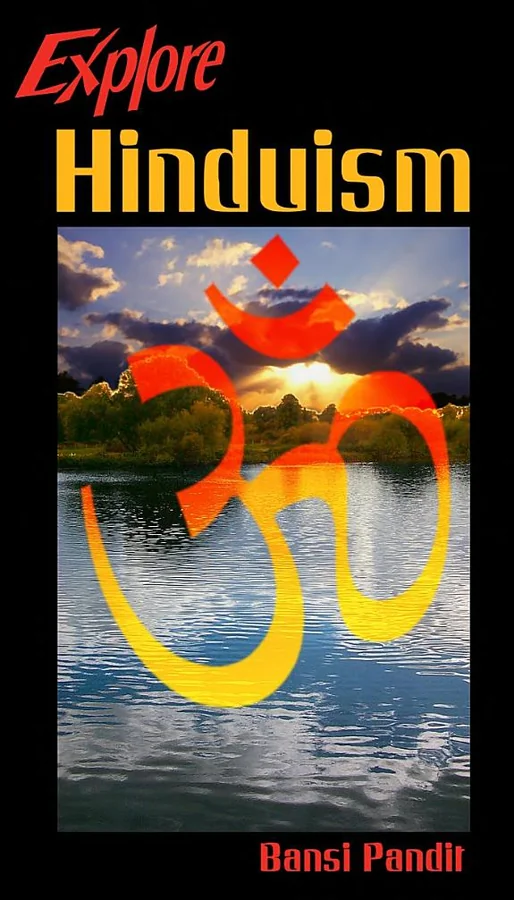
Explore Hinduism
 77
77

Explore Hinduism
Bansi Pandit's "Explore Hinduism" presents a meticulously researched overview, distinguishing itself from more devotional or introductory texts. Its strength lies in its analytical approach, dissecting the "diverse and often competitive strands" of Hindu traditions with academic rigor. Pandit is particularly adept at situating these practices within the framework of globalization, a perspective that feels especially relevant given the book's 2005 publication date. A notable passage examines the intricacies of major festivals, demonstrating how they function not merely as celebrations but as complex social and religious performances that have evolved over time. However, the book's academic tone, while a strength for scholars, might prove dense for casual readers seeking a more accessible entry point. It assumes a certain familiarity with religious studies terminology, occasionally leaving the uninitiated to backtrack. Ultimately, "Explore Hinduism" serves as a valuable, albeit scholarly, resource for understanding the multifaceted nature of Hindu traditions in a globalized world.
📝 Description
77
Bansi Pandit's 2005 book examines the diverse traditions that constitute Hinduism.
Published in 2005, Bansi Pandit's work scrutinizes the varied and often competing traditions that make up Hinduism, detailing its significant festivals and life-cycle rituals. The study situates these practices within the broader context of globalized religions, offering a framework for understanding their place in a modern, interconnected world. This book is written for students of comparative religion, scholars of South Asian studies, and individuals seeking an academic perspective on Hinduism. It speaks to readers who prefer rigorous analysis and historical context over devotional accounts. Those interested in the sociology and anthropology of religion, especially concerning large, established traditions, will find value here.
Pandit's book emerged during a period of increasing academic and public interest in non-Western religions. Globalization was accelerating, prompting discussions about how local traditions interact with and adapt to global religious trends. The book engages with scholarly debates about homogeneity and diversity within Hinduism, a topic examined by scholars like Diana Eck. The study highlights the concept of 'competitive strands' within Hindu traditions, suggesting an internal dynamism and interaction between different philosophical and ritualistic schools. It also examines the role of festivals and life-cycle rituals (samskaras) as critical markers of identity and community in a globalized context.
While not strictly an esoteric text itself, Pandit's work engages with the academic study of Hinduism, a tradition rich with esoteric philosophies and practices. The book's focus on 'competitive strands' and the internal dynamism of philosophical and ritualistic schools touches upon the varied paths to spiritual understanding within Hinduism, some of which are considered esoteric. By examining rituals and traditions, it provides a scholarly lens on the cultural expressions that have historically housed deeper spiritual inquiries and mystical traditions, placing them within a contemporary global framework.
💡 Why Read This Book?
• Gain an understanding of the "diverse and often competitive strands" of Hindu traditions, as explored by Bansi Pandit, providing a nuanced view beyond singular interpretations. • Learn how festivals and life-cycle rituals are examined in the context of globalized religions, offering specific insights into their evolving social and religious functions. • Appreciate the academic framework presented for understanding Hinduism's place among world religions, as detailed in the book's analysis of its 2005 publication context.
⭐ Reader Reviews
Honest opinions from readers who have explored this book.
❓ Frequently Asked Questions
What is the primary focus of Bansi Pandit's "Explore Hinduism"?
The book's primary focus is a scholarly study of the diverse and competitive strands within Hindu traditions, examining festivals and life-cycle rituals in the context of globalized religions.
When was "Explore Hinduism" first published?
"Explore Hinduism" was first published in 2005, placing its analysis within the early 21st-century context of global religious studies.
Does the book offer devotional guidance on Hindu practices?
No, "Explore Hinduism" offers an academic and analytical perspective, not devotional guidance. It examines traditions, festivals, and rituals from a scholarly viewpoint.
How does the book address the diversity within Hinduism?
It addresses diversity by studying the "diverse and often competitive strands" of Hindu traditions, highlighting the varied philosophical and ritualistic schools that exist.
What is the significance of examining Hinduism in the context of globalized religions?
Examining Hinduism in this context helps to understand how its traditions, festivals, and rituals interact with, adapt to, and maintain their identity amidst global influences and other major religions.
Who is the author of "Explore Hinduism"?
The author is Bansi Pandit, who first published this work in 2005.
🔮 Key Themes & Symbolism
Competitive Strands
The work emphasizes that Hinduism is not monolithic but comprises "diverse and often competitive strands." This concept moves beyond simplistic categorizations, suggesting an internal dialectic and variety of theological and practical approaches that coexist and sometimes contend. Pandit examines how these distinct schools of thought and practice shape the broader Hindu landscape, offering a more intricate understanding than many general overviews.
Ritual and Festival Dynamics
Pandit scrutinizes Hindu festivals and life-cycle rituals not just as cultural markers but as active sites of religious expression and social cohesion. The book analyzes how these practices function within the community and how their significance is negotiated, particularly when viewed against the backdrop of global religious trends. This perspective highlights the adaptive capacity of traditions.
Globalization and Religious Identity
A central theme is the examination of Hindu traditions within the context of globalized religions. This approach explores how local practices and beliefs interact with international forces, influencing and being influenced by other religious systems. The book provides a framework for understanding the ongoing negotiation of religious identity in an increasingly interconnected world, a crucial aspect of contemporary religious studies.
Academic Study of Religion
The book positions itself firmly within the academic study of religion, employing analytical and critical methods. It avoids devotional language, focusing instead on sociological, anthropological, and historical dimensions. This approach offers readers a scholarly lens through which to understand the complexities of Hinduism, distinguishing it from popular literature on the subject.
💬 Memorable Quotes
Direct passages from the work, attributed to the author.
“The book studies the diverse and often competitive strands of Hindu traditions.”
— This highlights the work's core analytical approach, recognizing Hinduism as a complex system with internal variations and dialogues rather than a single, unified doctrine.
“Examines Hindu festivals and life-cycle rituals.”
— This points to the book's focus on tangible practices and observances that structure Hindu life, providing concrete examples of the traditions discussed.
“Context of globalized religions.”
— This signifies the book's modern relevance, situating ancient traditions within contemporary global dynamics and comparative religious studies.
“Pandit's analysis offers a scholarly perspective.”
— This emphasizes the academic nature of the work, distinguishing it from devotional or purely historical accounts and highlighting its critical engagement with the subject matter.
“The work investigates the interplay between local traditions and global forces.”
— This interpretation underscores the book's examination of how Hinduism adapts and maintains its identity amidst increasing international religious and cultural exchange.
🌙 Esoteric Significance
Tradition
While "Explore Hinduism" operates primarily within the academic discipline of religious studies, its focus on the "diverse and often competitive strands" of Hindu traditions touches upon aspects often explored in esoteric lineages. Esoteric traditions frequently seek to understand the underlying universal principles within diverse cultural expressions. Pandit's analytical framework, by dissecting these strands, provides material for esoteric practitioners to identify commonalities or unique energetic expressions within different Hindu philosophical schools and ritual practices.
Symbolism
The book's examination of festivals and life-cycle rituals implicitly engages with Hindu symbolism. For instance, the concept of Samskaras (life-cycle rituals) carries profound symbolic weight, marking transitions and spiritual development. Festivals often embody cosmic narratives and divine interactions, rich with symbolic meaning. By analyzing these in a global context, Pandit's work offers a foundation for understanding how these symbols function and are perceived both internally and externally, relevant for esoteric interpretation.
Modern Relevance
Contemporary thinkers in comparative spirituality and integral spirituality draw on detailed analyses of major world religions like Hinduism. Pandit's work, by providing a nuanced academic overview of Hindu traditions, festivals, and rituals within a global context, serves as a valuable reference. It aids modern practitioners and theorists in understanding the complexities and adaptive nature of these traditions, informing contemporary discussions on interfaith dialogue and the evolution of spiritual practices in a globalized world.
👥 Who Should Read This Book
• Academic researchers in religious studies and South Asian cultures seeking a structured analysis of Hindu traditions, festivals, and rituals. • Students of comparative religion interested in understanding how Hinduism functions within the broader field of globalized religious movements. • Individuals with a background in Hinduism who wish to engage with a scholarly perspective on the diversity and competitive elements within its traditions.
📜 Historical Context
Published in 2005, Bansi Pandit's "Explore Hinduism" entered the academic discourse at a time when the impact of globalization on religious traditions was a significant area of study. The early 21st century saw increased interconnectedness, prompting scholars to re-evaluate how localized religions interacted with a globalized religious marketplace. Pandit's work engages with the ongoing scholarly debate about the internal diversity and potential conflicts within Hinduism, moving beyond essentialist views. The book's analytical approach aligns with contemporary scholarship in religious studies that prioritizes critical examination over purely descriptive or devotional accounts. While not a direct response to a specific event, its publication occurred during a period when scholars like Diana Eck were popularizing studies of Hinduism in the West, and the work contributes to this broader academic conversation by offering a structured analysis of tradition and ritual in a globalized world.
📔 Journal Prompts
The "diverse and often competitive strands" of Hindu traditions: identify one.
Analyze a specific Hindu festival's function within globalized religions.
Life-cycle rituals (samskaras) as markers of identity.
The relationship between local Hindu practices and global religious trends.
Compare a competitive strand within Hinduism to a similar dynamic in another religion.
🗂️ Glossary
Hindu traditions
The varied and often distinct religious philosophies, practices, and communities that fall under the umbrella term 'Hinduism'.
Competitive strands
Refers to the diverse, sometimes conflicting, schools of thought and practice within Hinduism that vie for adherents or influence.
Festivals
Celebrations or observances in Hinduism, often tied to deities, seasons, or mythological events, serving social and religious functions.
Life-cycle rituals
Ceremonies marking significant transitions in a person's life, such as birth, initiation, marriage, and death, also known as Samskaras.
Globalized religions
Religious traditions and practices that are influenced by, and interact with, the forces of globalization, including increased communication and cultural exchange.
Samskaras
The traditional Hindu rites of passage, marking key stages in an individual's life from conception to death, often considered purificatory or spiritual.
Scholarly examination
An analytical and critical approach to a subject, typically based on research, evidence, and academic methodology, rather than personal belief.
This book appears in 1 collection
🔮 Readers Also Liked
Browse all →





From the “Hinduism” Collection
View all →






More Free Sacred Texts & Gnosticism Books
View all →