From Platonism to Neoplatonism

 81
81

From Platonism to Neoplatonism
Philip Merlan's From Platonism to Neoplatonism, first published in 1960, remains a critical scholarly resource for tracing the philosophical lineage from Plato to the influential school of Neoplatonism. Merlan excels at dissecting complex philosophical arguments, offering a clear, if dense, exposition of how core Platonic ideas were adapted and transformed. His meticulous attention to the development of concepts like the 'One' and the theory of Forms provides a solid foundation for understanding this pivotal transition. However, the book's academic rigor, while its strength, can also be a limitation; it assumes a significant prior knowledge of Greek philosophy, making it less accessible to the casual reader. The detailed analysis of the intermediary stages between Plato and Plotinus, specifically the work of figures like Ammonius Saccas and the early Academy, is particularly illuminating, showcasing the gradual shifts in thought. Merlan offers a precise, scholarly account of a crucial intellectual evolution.
📝 Description
81
Philip Merlan's 1960 book traces the philosophical path from Plato to Neoplatonism.
Philip Merlan's From Platonism to Neoplatonism, first published in 1960, examines the philosophical connections between Plato's Academy and the emergence of Neoplatonism. Merlan tracks the progression of central ideas and concepts across centuries, detailing the intellectual currents that informed this significant ancient philosophical system. The book serves as a core text for grasping the philosophical foundations that would influence later esoteric thought.
This study is aimed at academics specializing in ancient philosophy, particularly those focused on Plato, Aristotle, and the Hellenistic and Roman eras. Students of classical studies, comparative religion, and intellectual history will also find it valuable. Individuals studying Western esotericism and its philosophical origins will benefit from Merlan's analysis, which clarifies the conceptual shifts involved.
Merlan's research appeared during a time of renewed academic interest in classical philosophy, aided by advances in textual criticism. Published in 1960, it addressed ongoing scholarly discussions about the links and divergences between Platonic ideas and their later interpretations, especially by figures like Plotinus. The work synthesized existing research and introduced fresh perspectives on the intellectual climate of the Roman Empire.
While primarily a work of academic philosophy, From Platonism to Neoplatonism illuminates the intellectual bedrock of Western esotericism. Neoplatonism, particularly as developed by Plotinus and his successors, became a crucial philosophical framework for later mystical and occult traditions. Merlan's detailed analysis of concepts like emanation, the divine One, and the soul's journey provides readers with the philosophical vocabulary and conceptual architecture that informed figures and movements within Hermeticism, Gnosticism, and later magical philosophies. Understanding this lineage is key to appreciating the philosophical underpinnings of many esoteric systems.
💡 Why Read This Book?
• Gain a precise understanding of how Plato's theory of Forms was reinterpreted by figures like Plotinus, moving from immutable Ideas to a more dynamic, emanative structure, as detailed in Merlan's analysis of the transition. • Grasp the philosophical underpinnings of Neoplatonic cosmology, particularly the concept of the One and its hierarchical emanation of reality, a core subject explored extensively from the book's original 1960 publication. • Appreciate the intellectual lineage leading to later esoteric thought by examining the specific philosophical arguments and conceptual shifts Merlan outlines, connecting the Hellenistic period to subsequent mystical traditions.
⭐ Reader Reviews
Honest opinions from readers who have explored this book.
❓ Frequently Asked Questions
What is the primary focus of Merlan's From Platonism to Neoplatonism?
The book meticulously traces the philosophical evolution from Plato's original doctrines to the development of Neoplatonism, examining how concepts were reinterpreted and transformed over centuries by various schools and thinkers.
Who were the key figures discussed in relation to Neoplatonism's origins?
While Plato is the starting point, the work heavily discusses the foundational role of figures like Plotinus and the intellectual milieu of the Roman era, as well as earlier interpreters who shaped the transition.
When was Philip Merlan's From Platonism to Neoplatonism first published?
The original publication date for Philip Merlan's seminal work was 1960, positioning it within mid-20th-century scholarship on classical philosophy.
What makes this book important for understanding esoteric traditions?
It provides the philosophical and historical context for many Neoplatonic ideas that later became foundational elements within Western esoteric thought, offering clarity on their intellectual origins.
Does the book cover the influence of Neoplatonism on later philosophers?
While its primary focus is the development *towards* Neoplatonism, Merlan's work implicitly sets the stage for understanding its vast subsequent influence on medieval, Renaissance, and modern philosophical and mystical thinkers.
What specific Platonic concepts are examined in their Neoplatonic transformation?
Key concepts include the theory of Forms, the nature of the Good and the One, the structure of the soul, and the relationship between the intelligible and sensible worlds, all of which underwent significant reinterpretation.
🔮 Key Themes & Symbolism
The Evolution of the Forms
Merlan meticulously details how Plato's concept of eternal, immutable Forms, existing in a separate realm, was progressively reinterpreted. The work traces this evolution through various philosophical schools, culminating in the Neoplatonic view where the Forms are often seen as immanent within the divine intellect or as aspects of the emanative process originating from the One. This transformation is crucial for understanding the shift from a more static metaphysical framework to one emphasizing divine outpouring and hierarchical existence.
The Concept of the One
Central to Neoplatonism is the concept of the ultimate, transcendent One, from which all reality emanates. Merlan examines the antecedents of this idea in Plato and its subsequent development, particularly through the philosophical work of Plotinus. The book explores the philosophical challenges and solutions proposed for understanding a principle that is beyond being and knowledge, and how this concept provided a unifying metaphysical ground for the Neoplatonic system.
The Soul's Journey
The Neoplatonic understanding of the human soul, its divine origin, descent into the material world, and potential ascent back to its source, is a significant theme. Merlan investigates how these ideas developed from Platonic dialogues, focusing on the philosophical arguments for the soul's immortality and its tripartite nature. The work illuminates the philosophical framework that would later be adopted and adapted by esoteric traditions seeking spiritual liberation and union with the divine.
From Academy to Neoplatonism
This theme addresses the historical and intellectual trajectory of the Platonic school itself. Merlan charts the shifts in doctrine and emphasis from the Old Academy through Middle Platonism to the emergence of Plotinus and his followers. It highlights how specific philosophical problems and the engagement with other intellectual traditions, such as Stoicism and Aristotelianism, spurred the redefinition of Platonic thought, laying the groundwork for a distinct Neoplatonic philosophy.
💬 Memorable Quotes
Direct passages from the work, attributed to the author.
“The work explores the reinterpretation of Plato's theory of Forms.”
— This highlights Merlan's focus on how subsequent philosophers, particularly Neoplatonists, adapted Plato's core ideas about perfect, eternal archetypes to fit their own metaphysical systems, often emphasizing emanation and hierarchy.
“The book examines the philosophical lineage connecting Plato to Plotinus.”
— This points to Merlan's central thesis: tracing the intellectual 'family tree' of ideas, showing how the foundational concepts introduced by Plato were systematically developed and transformed over centuries, leading to the distinct philosophy of Neoplatonism.
“Merlan analyzes the development of the concept of the One.”
— This signifies the book's deep dive into one of Neoplatonism's most crucial and abstract concepts – the ultimate source of all reality, which is beyond being – and its philosophical antecedents.
“Key concepts such as the soul's ascent are traced.”
— This indicates the book's engagement with the ethical and spiritual dimensions of Neoplatonism, showing how philosophical doctrines were linked to a path of spiritual purification and return to the divine source.
💡 Key Ideas
Editorial paraphrase of the work's core concepts — not direct quotes.
The study addresses the evolution of Platonic metaphysics.
This emphasizes that Merlan is not just summarizing Plato, but critically assessing how the very structure of reality, as understood through Platonic philosophy, was fundamentally altered and expanded upon by later thinkers.
🌙 Esoteric Significance
Tradition
This work is foundational for understanding the philosophical lineage of Western esoteric traditions, particularly those influenced by Neoplatonism. It maps the intellectual terrain from which Gnostic, Hermetic, and later Renaissance magical and mystical philosophies drew heavily. By detailing the philosophical evolution of concepts like emanation and the One, Merlan provides the scholarly bedrock for appreciating how these abstract ideas served as metaphysical frameworks for esoteric practices and cosmologies.
Symbolism
While not a text on symbolism itself, Merlan's analysis illuminates the conceptual underpinnings of esoteric symbolism. For instance, the Neoplatonic hierarchy of being, stemming from the ineffable One, provides a structure that informs the symbolic mapping of the cosmos found in many esoteric systems. The concept of the soul's journey, often represented through allegorical or symbolic narratives, is given philosophical depth by Merlan's exploration of its origins and development from Platonic thought.
Modern Relevance
Contemporary thinkers and practitioners within fields like depth psychology (particularly Jungian analysis), comparative mysticism, and various forms of modern paganism and Hermeticism frequently engage with Neoplatonic philosophy. Merlan's rigorous exposition helps these individuals understand the sophisticated philosophical arguments and historical context that shaped the ideas they explore, providing a scholarly grounding for their more intuitive or experiential approaches.
👥 Who Should Read This Book
• Students of Classical Philosophy: Those beginning or continuing their studies of Plato, Aristotle, and the Hellenistic schools will find a crucial bridge that illuminates the development of Western thought. • Scholars of Western Esotericism: Individuals researching the philosophical roots of Hermeticism, Gnosticism, Kabbalah, and Renaissance magic will gain essential context for these traditions. • Intellectual Historians: Researchers interested in the evolution of metaphysical and cosmological ideas in antiquity and their impact on subsequent centuries will find a detailed and authoritative account.
📜 Historical Context
Published in 1960, Philip Merlan's From Platonism to Neoplatonism emerged during a period of intense scholarly activity focused on classical antiquity. The mid-20th century saw significant re-evaluations of ancient philosophical texts, building upon philological advances and historical methodologies. Merlan's work engaged directly with ongoing academic debates concerning the continuity and radical departures within the Platonic tradition, particularly the philosophical innovations of Plotinus and his school. It offered a systematic counterpoint to interpretations that might oversimplify the transition from Plato's original Academy to the later Neoplatonic movement. The intellectual climate was also influenced by existentialism and phenomenology, which, while not directly addressed, provided a backdrop for examining subjective experience and consciousness, themes relevant to Neoplatonic thought. Merlan's scholarship provided a crucial academic anchor for understanding the philosophical underpinnings that would later inform various strands of Western esotericism.
📔 Journal Prompts
The reinterpretation of Plato's Forms, as traced by Merlan, and its impact on metaphysical thinking.
Ammonius Saccas's role in shaping Neoplatonic thought, as presented in the historical context.
The philosophical arguments for the transcendent One and its emanative process.
The Neoplatonic concept of the soul's descent and ascent, and its personal implications.
Connecting Merlan's analysis of Platonic continuity to specific esoteric doctrines studied.
🗂️ Glossary
Platonism
The philosophical system originating with Plato, characterized by the theory of Forms, dualism between the sensible and intelligible worlds, and emphasis on reason and dialectic.
Neoplatonism
A philosophical school that developed from Plato's teachings, most notably through Plotinus, emphasizing the transcendent One, emanation, and the soul's ascent to the divine.
The One
In Neoplatonism, the ultimate, transcendent, and ineffable source of all reality, from which all things emanate in a hierarchical order.
Forms (or Ideas)
In Plato's philosophy, eternal, perfect, and unchanging archetypes that exist in an intelligible realm, serving as the true reality of which sensible objects are imperfect copies.
Emanation
The Neoplatonic doctrine that all reality flows or proceeds from the ultimate divine source (the One) in a necessary, hierarchical outpouring, without diminishing the source.
Intelligible Realm
The non-material, eternal, and perfect area of the Forms or Ideas, accessible only through reason and intellect, as opposed to the sensible, material world.
Hellenistic Philosophy
The philosophical traditions that flourished in the Greek-speaking world from the death of Alexander the Great (323 BCE) to the rise of the Roman Empire, including Stoicism, Epicureanism, and Skepticism.
🔮 Readers Also Liked
Browse all →







More by Merlan, Philip
All books →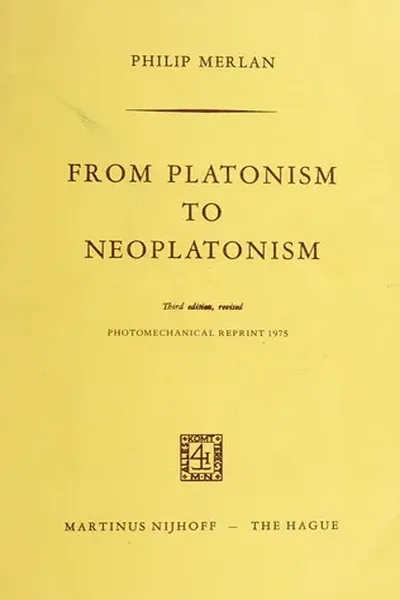

More Free Occult Philosophy Books
View all →