From Center to Circumference
 78
78

From Center to Circumference
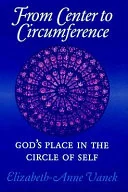
Elizabeth-Anne Vanek’s From Center to Circumference offers a refreshing perspective on spiritual discernment, moving beyond ethereal notions to ground divine communication in the fabric of everyday life. Her assertion that God 'plays at both the center and the circumference of our self awareness' is particularly compelling, suggesting an active, pervasive divine engagement rather than a distant one. The strength of the book lies in its practical orientation; it provides a accessible framework for identifying spiritual signals in mundane events, a valuable tool for many seekers. However, the 1996 publication date means some of the language and conceptualization, while clear for its time, may feel somewhat dated to readers steeped in contemporary esoteric discourse. A limitation is the generality of 'signs of God's call,' which, while intended to be universal, might benefit from more specific symbolic or archetypal examples. The core concept of integrating inner and outer spiritual experience, however, remains a potent and enduring insight.
📝 Description
78
Elizabeth-Anne Vanek's 1996 book, From Center to Circumference, argues divine guidance appears in daily life.
Originally published in 1996, From Center to Circumference by Elizabeth-Anne Vanek and Elizabeth-Anne Stewart proposes that spiritual awareness is not separate from everyday existence. The book suggests divine guidance is actively present within concrete life circumstances, not just in abstract thought. It provides a method for recognizing these 'signs of God's call,' encouraging a unified approach to spiritual engagement.
This work speaks to individuals who sense a spiritual calling but find it difficult to connect with their daily realities. It offers practical ways to merge one's inner spiritual life with external actions and choices. Readers interested in practical spirituality, discernment, and integrating the sacred into the mundane will find value here.
Published in the mid-1990s, a time of renewed interest in personal spirituality, Vanek's book approached divine communication from a Western perspective, rooted in a Judeo-Christian framework but open to the divine's presence in all self-awareness. This differed from contemporaries often focused on Eastern traditions or specific occult systems. Vanek's method aimed at a direct discernment of divine signals within everyday life, acknowledging the sacred in ordinary experience.
💡 Why Read This Book?
• Learn a practical method for discerning spiritual guidance in everyday occurrences, as detailed in the book's exploration of 'concrete situations.' • Understand how to recognize divine presence not just in meditation, but in the 'circumference' of your daily life, as Vanek suggests. • Gain insight into integrating your inner spiritual awareness with your outer actions, a core principle of the 'center to circumference' dynamic presented.
⭐ Reader Reviews
Honest opinions from readers who have explored this book.
❓ Frequently Asked Questions
When was From Center to Circumference first published?
From Center to Circumference was first published in 1996 by Elizabeth-Anne Vanek and Elizabeth-Anne Stewart.
What is the main theme of From Center to Circumference?
The book's central theme is about finding and recognizing divine guidance or 'God's call' within the concrete, everyday situations of one's life.
Who are the authors of From Center to Circumference?
The authors are Elizabeth-Anne Vanek and Elizabeth-Anne Stewart, with the first publication dating back to 1996.
What kind of spiritual guidance does the book offer?
It offers practical guidance on how to discern spiritual messages and calls to action that are immanent in daily life, not just in abstract contemplation.
What does the title 'From Center to Circumference' refer to?
The title refers to the idea that divine presence and guidance can be found at the core of our being ('center') and extend outwards into all aspects of our experience and the external world ('circumference').
Is this book suitable for beginners in spirituality?
Yes, the book is described as a basic guidebook, making it suitable for those new to discerning spiritual calls in their daily lives.
🔮 Key Themes & Symbolism
Immanent Divine Guidance
The work posits that divine communication, or 'God's call,' is not an abstract or distant phenomenon but is actively present and discernible within the mundane, concrete situations of everyday life. This challenges the notion of a purely transcendent deity, emphasizing instead a divine immanence that permeates all experiences. Vanek encourages readers to view their daily routines, challenges, and interactions as potential conduits for spiritual insight and direction, fostering a more integrated and present approach to faith.
Self-Awareness as Locus
The book identifies 'self-awareness' as the primary arena where divine interaction occurs. This awareness is conceptualized as having both a 'center'—the core of one's being, intuition, and inner consciousness—and a 'circumference,' which encompasses the external world, actions, relationships, and daily circumstances. The interplay between these two aspects is crucial for recognizing divine signals, suggesting that true spiritual perception requires attention to both our inner landscape and our outward engagement with reality.
Discernment of Signs
A core practical element is the development of skills to 'find the signs' of divine calling. This involves cultivating a heightened sensitivity to subtle cues, synchronicities, and inner promptings that arise from the integration of center and circumference. The book serves as a guidebook to interpreting these signs, offering a method for distinguishing divine guidance from mere personal desires or external influences, thereby empowering individuals to make spiritually aligned choices.
Integration of Spiritual and Material
From Center to Circumference advocates for a holistic spiritual practice where the sacred is not separated from the secular. It bridges the gap between spiritual aspirations and the practical demands of life, asserting that these are not mutually exclusive but are, in fact, intertwined. By recognizing divine presence in the 'concrete situations,' readers are encouraged to live more fully integrated lives, where spiritual growth is an ongoing process woven into the very fabric of their existence.
💬 Memorable Quotes
Direct passages from the work, attributed to the author.
“God plays at both the center and the circumference of our self awareness.”
— This core concept suggests that divine presence is not confined to our inner spiritual core but also actively manifests and interacts within the outer circumstances and experiences of our lives, encompassing the entirety of our consciousness.
“finding the signs of God's call to us in the concrete situations of our lives.”
— This highlights the book's practical focus: it's a guide to identifying divine direction not in abstract teachings, but in the tangible events and challenges that constitute our daily existence.
“a basic guidebook to finding the signs of God's call”
— This description underscores the accessible nature of the work, positioning it as an introductory text for those seeking practical methods to connect with spiritual guidance.
“God plays at both the center and the circumference”
— This concise phrase captures the book's central metaphor, illustrating the dual nature of divine immanence—present within the individual and also throughout their external world.
💡 Key Ideas
Editorial paraphrase of the work's core concepts — not direct quotes.
the realization that God plays at both the center and the circumference of our self awareness.
This paraphrased concept emphasizes the experiential outcome of the book's teachings—a profound understanding of the pervasive and many-sided nature of divine engagement with human consciousness.
🌙 Esoteric Significance
Tradition
While not strictly adhering to a single esoteric lineage, From Center to Circumference draws heavily from Western mystical traditions, particularly those emphasizing divine immanence and the possibility of direct communion with the sacred. It shares common ground with Christian contemplative traditions and Gnostic ideas that locate the divine within the human self. The work departs from more rigid theological interpretations by focusing on personal discernment within a personal framework, aligning with modern esoteric principles of experiential spirituality and individual revelation.
Symbolism
The central metaphor of 'center to circumference' is itself a potent symbolic representation. The 'center' can symbolize the divine spark within, the soul, or the individual's core consciousness, often depicted in esoteric traditions as a point of light or inner sanctuary. The 'circumference' symbolizes the manifest world, the sphere of one's life and experiences, the macrocosm mirroring the microcosm. The book uses these archetypal symbols to illustrate how divine presence is simultaneously internal and external, a unified field of experience.
Modern Relevance
Contemporary thinkers and practitioners engaged in fields like integral spirituality, practical theology, and mindfulness-based approaches to life might find Vanek's framework relevant. Her emphasis on discerning divine calls in 'concrete situations' prefigures modern discussions on finding meaning and purpose in everyday work, relationships, and challenges. The book's approach to integrating inner spiritual life with outward action continues to inform discussions on holistic living and the application of spiritual principles in secular contexts.
👥 Who Should Read This Book
• Individuals seeking to connect their spiritual beliefs with practical, everyday decision-making, especially those who find traditional religious frameworks too abstract. • Seekers interested in developing a personal practice of spiritual discernment, learning to identify divine guidance in the mundane flow of life. • Readers exploring Western mystical or contemplative approaches to spirituality who desire a guidebook focused on immanent divine presence rather than solely transcendent concepts.
📜 Historical Context
Elizabeth-Anne Vanek's From Center to Circumference, first published in 1996, emerged during a period of significant spiritual exploration in the West. Following the peak of the New Age movement, many individuals were seeking accessible, practical frameworks for personal spiritual growth that moved beyond rigid dogma. Vanek's work resonated with this trend by offering a method for discerning divine guidance within everyday life, a concept that found favor among those disillusioned with overly esoteric or purely intellectual approaches to spirituality. In contrast to the rise of online spiritual communities or the burgeoning interest in Eastern philosophies, Vanek provided a more grounded, Western-centric perspective on spiritual awareness. Her approach can be seen as aligning with a broader societal shift towards psychospiritual integration, where inner experience was increasingly seen as directly linked to outward action and the interpretation of daily events.
📔 Journal Prompts
Reflect on a 'concrete situation' from this week and analyze potential 'signs of God's call' within it.
How does the concept of divine presence at the 'center' of your self-awareness manifest in your daily actions?
Explore how the 'circumference' of your daily life offers opportunities for spiritual connection.
Identify one sign of divine guidance you've previously overlooked and consider its significance.
Consider the interplay between your inner spiritual 'center' and your outward 'circumference' in a recent decision.
🗂️ Glossary
God's Call
The concept of divine guidance or an inner prompting from a higher power, interpreted as being discernible within the tangible events and circumstances of everyday life.
Concrete Situations
The practical, everyday occurrences, challenges, decisions, and interactions that form the fabric of a person's daily existence, as opposed to abstract spiritual contemplation.
Self-Awareness
The state or capacity of being conscious of one's own personality, thoughts, feelings, and existence, serving as the primary arena for recognizing divine presence.
Center
Refers to the innermost core of one's being, consciousness, or spiritual essence, often associated with intuition, inner knowing, or the soul.
Circumference
Represents the outer boundaries of one's experience, encompassing the external world, daily activities, relationships, and manifest circumstances of life.
Signs
Subtle indicators, synchronicities, or intuitive nudges that are interpreted as messages or guidance from a divine source, found within concrete situations.
Discernment
The ability to judge well, particularly in distinguishing divine guidance from other influences or personal desires, through careful observation and introspection.
This book appears in 1 collection
🔮 Readers Also Liked
Browse all →








From the “Shadow Work” Collection
View all →




More Free Occult Philosophy Books
View all →