When Everything Changes, Change Everything
 71
71

When Everything Changes, Change Everything
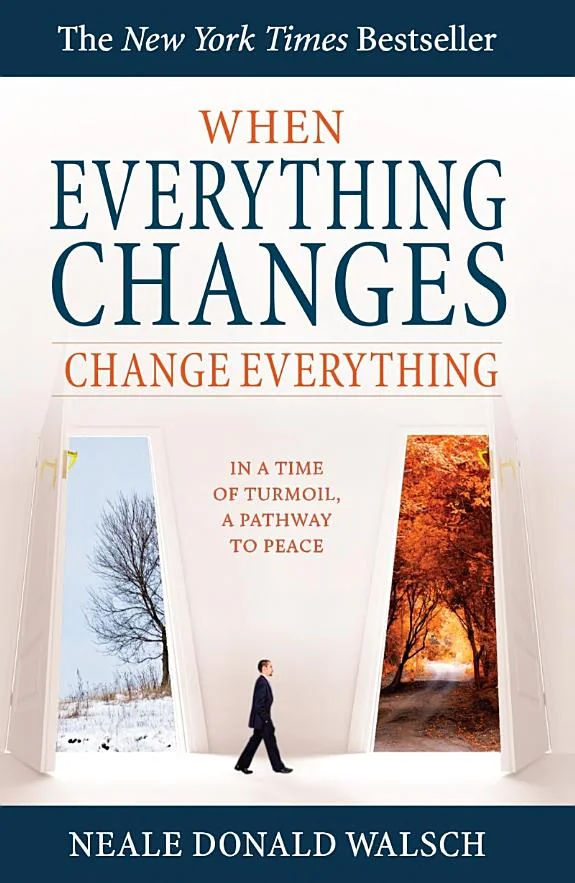
Neale Donald Walsch's *When Everything Changes, Change Everything* tackles the inevitable disruptions of life with a familiar, encouraging tone. The book shines when it dissects the common human tendency to cling to the past, illustrating how this resistance often exacerbates suffering during transitions. Walsch effectively uses relatable scenarios—relationship breakdowns, career shifts, health setbacks—to underscore his central thesis: that embracing change is not just advisable but essential for growth. A particular strength lies in his ability to reframe loss not as an absence but as a space cleared for something new to emerge. However, the work occasionally veers into a generalized optimism that might feel insufficient to those grappling with profound, intractable suffering; the emphasis on internal mindset shifts, while valid, can sometimes overlook the complex external factors at play. Walsch’s 2009 publication offers a direct, accessible approach to a perennial human challenge. Ultimately, the book serves as a gentle but persistent reminder to adjust our sails when the winds of life inevitably shift.
📝 Description
71
Neale Donald Walsch's 2009 book, *When Everything Changes, Change Everything*, argues that life's upheavals are opportunities for growth.
Published in 2009, *When Everything Changes, Change Everything* by Neale Donald Walsch addresses how people handle major life shifts. Walsch suggests that periods of significant change, whether personal, professional, or health-related, are not just times of difficulty but also moments for personal development. The book presents a way to view these transitions as chances for growth, encouraging readers to accept transformation instead of fighting it. It examines the psychological and spiritual aspects of adjusting to new situations, offering advice on using the energy of change for self-understanding and finding a new direction.
This book is for anyone experiencing major life changes like losing a job, ending a relationship, or facing health issues. It speaks to those feeling overwhelmed and looking for a different perspective on their circumstances. Readers interested in personal growth, spiritual development, and accepting life's constant movement will find it relevant. It also appeals to those who have read Walsch's earlier works, as it continues his discussions on life and human potential.
Written in 2009, this book emerged during a period of global financial instability and a growing interest in self-help and spiritual thought. It aligns with the New Age and New Thought movements that gained traction in the late 20th century. Walsch's work contributes to a larger discussion about finding meaning during uncertain times, resonating with authors who focus on present awareness and accepting reality. The book's emphasis on internal transformation connects it to traditions that view external circumstances as reflections of inner states.
💡 Why Read This Book?
• Learn to recognize the inherent growth potential within life's most challenging transitions, a perspective distinct from typical coping mechanisms. Walsch’s 2009 work frames these moments as deliberate opportunities, not mere setbacks. • Discover how to actively reframe personal crises, moving beyond mere acceptance to a proactive embrace of transformation, a key tenet explored throughout the book. • Gain a spiritual perspective on unavoidable change, fostering trust in life’s unfolding process even when circumstances feel overwhelming, as detailed in his exploration of consciousness.
⭐ Reader Reviews
Honest opinions from readers who have explored this book.
❓ Frequently Asked Questions
What is the central message of Neale Donald Walsch's 'When Everything Changes, Change Everything'?
The book's core message, first published in 2009, is that periods of significant life change, often perceived as losses, are actually profound opportunities for personal growth and transformation. It encourages embracing these shifts rather than resisting them.
Who is the target audience for this book?
This book is primarily for individuals experiencing major life transitions, such as job loss, relationship endings, or health issues, who are seeking a new perspective and guidance on adapting and growing through these challenges.
How does 'When Everything Changes, Change Everything' approach the concept of loss?
Walsch reframes loss not as an endpoint but as a necessary clearing of space. The book suggests that loss creates the void necessary for new experiences, growth, and a redefined sense of self to emerge.
Does the book offer practical steps for managing change?
Yes, while emphasizing a philosophical and spiritual perspective, the book offers guidance on shifting one's mindset, embracing the unknown, and consciously participating in the process of change to foster personal evolution.
What is Neale Donald Walsch known for besides this book?
Neale Donald Walsch is widely recognized for his 'Conversations with God' series, which began in 1995 and explored profound spiritual and philosophical questions through a dialogue format, establishing him as a prominent voice in contemporary spirituality.
When was 'When Everything Changes, Change Everything' originally published?
The book 'When Everything Changes, Change Everything' was first published in 2009, placing it within a period of significant global economic and social flux.
🔮 Key Themes & Symbolism
Embracing Life Transitions
The central theme revolves around viewing significant life changes—whether endings of relationships, careers, or health states—not as terminal points but as dynamic junctures for profound personal evolution. The book encourages readers to move beyond resistance and fear, positing that true growth stems from actively engaging with and accepting the new circumstances that arise. Walsch's 2009 work suggests that life's inherent flux is not something to be endured but a fertile ground for self-discovery and redirection, urging a conscious participation in the process.
Consciousness and Reality
Walsch explores the power of human consciousness in shaping our perception and experience of reality, particularly during times of upheaval. He posits that our internal response—our thoughts, beliefs, and attitudes—plays a central role in how we navigate external events. The work suggests that by consciously choosing to adopt a perspective of opportunity rather than loss, individuals can actively influence their emotional and spiritual outcomes, transforming crisis into a catalyst for positive change.
The Nature of Loss
This theme redefines the concept of loss within the context of change. Instead of viewing loss solely as an absence or a depletion, the book presents it as a necessary clearing of space. This space, it argues, is essential for new beginnings, personal expansion, and the emergence of a transformed self. By understanding loss as a precursor to growth, readers are encouraged to trust the process of life, even when it involves letting go of what was familiar and cherished.
Spiritual Trust and Acceptance
A significant aspect of the book is the cultivation of spiritual trust and acceptance. Walsch advocates for a belief in an underlying order or wisdom guiding life's unfolding, even amidst apparent chaos. This perspective encourages readers to surrender the need for absolute control and to find peace in accepting what is, while simultaneously remaining open to the possibilities that change brings. It's about finding resilience not by fighting circumstances, but by aligning with them.
💬 Memorable Quotes
Direct passages from the work, attributed to the author.
“New circumstances represent not just loss but the possibility of growth.”
— This core idea highlights Walsch's reframing of difficult life events. It suggests that endings, though painful, are inherently fertile grounds for personal development and the emergence of new potentials, shifting the focus from what is gone to what can become.
“The author posits that our internal response to external events significantly determines our experience of them.”
— This interpretation of a key concept underscores the book's focus on consciousness. It suggests that while external circumstances may be unavoidable, our subjective experience is heavily influenced, and potentially transformed, by our own mindset and perspective.
“Embracing change is not just advisable but essential for growth.”
— This statement captures the book's imperative call to action. It elevates adaptation from a mere coping strategy to a fundamental requirement for personal evolution, suggesting that stagnation occurs when we fail to align with life's dynamic nature.
💡 Key Ideas
Editorial paraphrase of the work's core concepts — not direct quotes.
In each instance of change—whether it is the end of a relationship, loss of a job, or health crisis—the challenges that each individual must confront include embracing change...
This paraphrased concept emphasizes the universality of change and the immediate need for adaptation. It points to specific, relatable examples of life disruption, framing them as universal tests of our ability to embrace rather than resist life's inevitable transformations.
Loss creates the void necessary for new experiences, growth, and a redefined sense of self.
This quote offers a powerful redefinition of loss. It presents it not as an endpoint but as a crucial, often uncomfortable, prerequisite for positive transformation and the creation of a new, expanded identity.
🌙 Esoteric Significance
Tradition
While not strictly adhering to a single esoteric lineage, Walsch's work draws heavily from New Thought and the broader New Age movement, which itself synthesizes elements from various spiritual traditions, including Hermeticism and Eastern philosophies. The emphasis on the power of consciousness to shape reality aligns with Hermetic principles like 'As Above, So Below' and the concept of mentalism. It departs from more dogmatic or ritualistic traditions by focusing on direct, personal spiritual experience and psychological transformation as the primary vehicles for enlightenment and well-being.
Symbolism
The book doesn't rely on overt, ancient symbols but uses the concept of 'change' itself as a powerful, dynamic symbol. This symbolizes the alchemical process of transformation, where base elements (difficult circumstances) are transmuted into gold (personal growth and wisdom). Another implicit symbol is the 'void' or 'space' created by loss, representing the fertile ground of potentiality, akin to the Gnostic concept of the Pleroma before creation, or the Taoist notion of 'Wu Wei' (non-action) as a state of receptivity.
Modern Relevance
Walsch's ideas on conscious change and reframing resonate strongly with contemporary psychological approaches like Cognitive Behavioral Therapy (CBT) and Acceptance and Commitment Therapy (ACT), albeit from a spiritual rather than purely clinical standpoint. Modern proponents of positive psychology and personal development, as well as many online spiritual communities and coaches, draw upon the core tenets presented in this book to guide individuals through life transitions, emphasizing agency and inner resilience in a rapidly evolving world.
👥 Who Should Read This Book
• Individuals experiencing significant life transitions, such as career changes, relationship endings, or health challenges, who feel overwhelmed and seek a reframed perspective. • Seekers of spiritual growth interested in understanding how to harness difficult circumstances as catalysts for personal evolution and self-discovery. • Readers familiar with Neale Donald Walsch's 'Conversations with God' series who wish to explore his insights on navigating life's inevitable shifts and embracing transformation.
📜 Historical Context
When Neale Donald Walsch's *When Everything Changes, Change Everything* was released in 2009, the world was grappling with the fallout of the global financial crisis, making themes of change, loss, and resilience particularly resonant. This period saw a continued flourishing of self-help and spiritual literature, with authors like Eckhart Tolle (whose *A New Earth* was a bestseller in 2008) emphasizing mindfulness and acceptance. Walsch’s work contributed to this ongoing conversation, building upon the foundations of New Thought and New Age philosophies that had gained significant traction since the late 20th century. Unlike more academic explorations of existentialism or stoicism, Walsch's approach offered a spiritually-oriented, accessible framework for understanding and navigating personal crises. The book engaged with a public increasingly seeking guidance on how to find meaning and purpose amidst economic uncertainty and rapid societal shifts, positioning itself as a contemporary guide to spiritual adaptation.
📔 Journal Prompts
The concept of 'change as opportunity'—how does this reframe your current challenges?
Your personal experience of 'loss' as a clearing for new beginnings.
How does your internal response shape your experience of external life events?
Reflecting on the idea of 'spiritual trust' during periods of uncertainty.
Identifying moments when embracing change led to unexpected growth in your life.
🗂️ Glossary
Embracing Change
The active, conscious process of accepting and engaging with life's transitions rather than resisting them, viewing them as potential avenues for growth and transformation.
Possibility of Growth
The inherent potential for personal development, learning, and evolution that exists within periods of significant life alteration, often revealed when old structures dissolve.
New Circumstances
The altered conditions or realities that arise following a period of change, representing a departure from previous states of being, relationships, or environments.
Confronting Challenges
The act of facing and dealing with the difficulties and obstacles presented by life changes, requiring a shift in perspective from passive suffering to active engagement.
Redefinition of Self
The process through which an individual revises their sense of identity and purpose in response to profound life events, often leading to a more authentic or expanded self-concept.
Life Transitions
Significant shifts or changes in an individual's life, such as ending a relationship, losing a job, or experiencing a health crisis, which necessitate adaptation and adjustment.
Spiritual Perspective
Viewing life events and personal experiences through a lens of deeper meaning, purpose, and connection to something larger than oneself, often emphasizing inner wisdom and trust.
This book appears in 1 collection
🔮 Readers Also Liked
Browse all →








From the “Self-Realization” Collection
View all →







More Free Occult Philosophy Books
View all →