Depth Coaching
 74
74

Depth Coaching
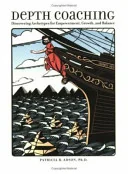
Patricia R. Adson’s Depth Coaching offers a welcome counterpoint to the often-simplified landscape of early 21st-century life coaching. By explicitly grounding her methodology in Carol S. Pearson’s archetypal work, Adson provides a framework for coaches and therapists that encourages a more profound engagement with clients’ personal narratives. The book’s strength lies in its detailed explication of the coach's role as a facilitator of symbolic journeys, moving beyond mere goal-setting to address the deeper currents of an individual’s development. One particularly effective section details the necessary attitudes for a depth coach, emphasizing presence and non-judgment. However, the text occasionally leans towards academic language, which might present a slight barrier for those entirely new to psychological theory. While the 2004 publication date means some references feel of their time, the core principles remain potent. Depth Coaching provides a valuable lens for understanding the transformative potential of guided self-exploration.
📝 Description
74
Patricia R. Adson's Depth Coaching, published in 2004, maps a model for guiding profound personal development.
This book is not a typical self-help guide. Instead, it lays out the principles and methods for effective coaching, specifically when applied to deep personal change. Adson structures the coaching relationship as a guided process. The coach helps the coachee explore their internal world, much like a hero's quest. The work stresses the need for specific skills, attitudes, and an ethical approach for those assisting others with major life transitions and self-discovery.
The book targets professionals who facilitate personal growth. Therapists interested in using archetypal psychology, life coaches wanting to improve their methods, and counselors dealing with existential questions will find its applications useful. It also appeals to those curious about the dynamics of psychological development. It offers a clear way to understand how potential is realized and how supportive connections foster deep self-awareness. This is for readers who aim to help others achieve real internal shifts, moving beyond simple advice.
Published in 2004, Depth Coaching emerged as the life coaching field was professionalizing but often lacked theoretical depth. Adson grounds this practice in established psychological thought, particularly Carol S. Pearson's archetypal psychology. This book connects to a broader interest in Jungian psychology and its influence on understanding personal narratives and symbolic life within development and even business contexts. Adson translates these complex ideas into practical coaching applications.
💡 Why Read This Book?
• You will learn to frame personal growth as an archetypal hero's journey, a concept explored in Carol S. Pearson's foundational work, offering a narrative structure for client sessions. • You will acquire specific skills for 'deep listening' and facilitating exploration of personal mythology, moving beyond superficial problem-solving to address core developmental issues. • You will understand the ethical and attitudinal requirements for coaches aiming to support profound self-understanding, as detailed in the book's guidance for facilitators.
⭐ Reader Reviews
Honest opinions from readers who have explored this book.
❓ Frequently Asked Questions
What is the central metaphor used in Depth Coaching for personal development?
The book utilizes the 'hero's journey' as its central metaphor. This concept, drawn from mythology and archetypal psychology, frames personal growth as a transformative quest involving challenges, discoveries, and eventual integration.
Who is Carol S. Pearson and what is her connection to Depth Coaching?
Carol S. Pearson is a key figure in archetypal psychology and co-developer of the Pearson-Marr Archetypes. Her work provides the theoretical underpinnings for Adson's coaching model, particularly regarding the exploration of archetypal patterns in personal development.
What distinguishes 'depth coaching' from standard life coaching according to the book?
Depth coaching, as outlined by Adson, focuses on facilitating profound self-understanding and personal transformation by engaging with an individual's deeper psychological and archetypal landscape, rather than solely on achieving external goals.
What skills does Depth Coaching emphasize for facilitators?
The book highlights skills such as 'deep listening,' the ability to hold space for clients' explorations, understanding archetypal dynamics, and cultivating specific facilitating attitudes like presence and non-judgment.
When was Depth Coaching first published?
Depth Coaching was first published on January 1, 2004. This places it within a period of significant growth and theoretical development in the field of life coaching.
Can therapists benefit from reading Depth Coaching, or is it only for life coaches?
Therapists can significantly benefit, as the book offers tools for exploring personal developmental issues and integrating archetypal perspectives into therapeutic practice, aligning with psychodynamic and Jungian approaches.
🔮 Key Themes & Symbolism
Archetypal Hero's Journey
The book frames personal development as an archetypal hero's journey, a concept deeply rooted in mythology and Jungian psychology. This perspective suggests that individuals, when guided effectively, undertake a quest involving trials, encounters with symbolic figures, and eventual transformation. Adson posits that coaches act as guides or mentors on this inner voyage, helping individuals to recognize and engage with the universal patterns of the psyche that shape their life experiences and potential.
Facilitating Deep Listening
A central to depth coaching is the practice of 'deep listening.' This goes beyond simply hearing words; it involves attuning to the unspoken, the symbolic language of the unconscious, and the emotional undercurrents of a client's narrative. Adson emphasizes that this skill allows the coach to perceive the deeper patterns and archetypal movements at play in a client's life, enabling more impactful guidance and support for genuine self-understanding.
The Coach as Container
Adson explores the vital role of the coach in creating a safe and supportive 'container' for the client's exploration. This container is a psychological space where individuals can express vulnerable emotions, confront difficult truths, and engage with transformative processes without fear of judgment or rupture. The coach's presence, ethical grounding, and understanding of psychological dynamics are crucial in maintaining this essential space for depth work.
Personal Mythology
The book suggests that each individual possesses a unique 'personal mythology'— a complex web of beliefs, stories, and symbolic associations that shape their identity and life path. Depth coaching involves helping individuals to uncover, understand, and potentially revise these narratives. By engaging with one's personal mythology, individuals can gain insight into recurring patterns and unlock new possibilities for growth and self-realization.
💬 Memorable Quotes
Direct passages from the work, attributed to the author.
“The coach's role is to facilitate the coachee's own journey of self-discovery.”
— This highlights the core principle that depth coaching is not about the coach imposing solutions, but about empowering the individual to navigate their inner world and find their own answers.
“Understanding archetypal patterns is key to unlocking deeper meaning.”
— This points to the influence of Jungian psychology, suggesting that recognizing universal human patterns helps individuals understand their personal experiences within a broader, meaningful context.
“Depth coaching requires specific attitudes and skills beyond mere problem-solving.”
— This emphasizes that effective coaching for personal transformation necessitates a particular mindset and a set of advanced facilitative techniques focused on psychological depth.
“The concept of the hero's journey provides a map for personal transformation.”
— This interpretation underscores the book's central metaphor, presenting the hero's journey not just as a story structure, but as a practical framework for understanding and guiding significant personal change.
“Creating a safe container is essential for profound psychological exploration.”
— This principle underlines the importance of the therapeutic relationship and environment, ensuring that clients feel secure enough to engage with potentially challenging inner material.
🌙 Esoteric Significance
Tradition
Depth Coaching draws significantly from the tradition of Analytical Psychology, particularly the Jungian exploration of archetypes and the collective unconscious. While not strictly an esoteric text in the vein of Hermeticism or Kabbalah, it applies these psychological frameworks to personal development in a manner that aligns with esoteric principles of inner work and self-realization. The book translates complex psychological concepts into practical tools for transformation, echoing the pedagogical aims of many esoteric schools that seek to guide individuals toward greater self-awareness and integration.
Symbolism
The primary symbol explored is the 'hero's journey,' a universal narrative archetype representing the process of transformation, challenge, and return. Adson uses this motif to structure the understanding of a client's life path. Another key symbolic concept is the 'personal mythology,' representing the unique inner story that shapes an individual's identity and actions. Understanding and engaging with these symbolic narratives is presented as crucial for unlocking potential and navigating life's challenges from a place of deeper wisdom.
Modern Relevance
Adson's work remains relevant today for coaches, therapists, and counselors interested in integrating archetypal psychology into their practice. Contemporary approaches in somatic psychology, narrative therapy, and integral coaching often echo the principles of depth work outlined in the book. Thinkers and practitioners who emphasize the importance of myth, story, and symbolic understanding in human development continue to find value in Adson's structured approach to facilitating profound personal change.
👥 Who Should Read This Book
• Therapists and counselors seeking to deepen their understanding of client dynamics by integrating archetypal perspectives and narrative exploration into their practice. • Life coaches aiming to move beyond surface-level goal achievement and facilitate more profound personal transformation and self-discovery for their clients. • Students of Jungian psychology and archetypal studies interested in practical applications of these theories in a coaching or facilitative context.
📜 Historical Context
Published in 2004, Patricia R. Adson’s Depth Coaching entered the scene as the life coaching industry was rapidly expanding, often characterized by a focus on practical goal-setting and motivational techniques. Adson’s work provided a much-needed theoretical anchor, grounding coaching practices in the established principles of depth psychology, particularly the archetypal work pioneered by Carl Jung and further developed by figures like Carol S. Pearson. This period saw a growing interest in Jungian concepts across various fields, including literature, film studies, and personal development, as practitioners sought to understand the deeper symbolic and mythical dimensions of human experience. While mainstream coaching often focused on pragmatic outcomes, Adson’s approach aligned more closely with psychotherapeutic traditions, emphasizing internal transformation and the exploration of personal mythology. The book offered a compelling alternative for coaches and therapists seeking to engage clients on a more profound psychological level, distinguishing itself from the more superficial approaches prevalent at the time.
📔 Journal Prompts
The hero's journey as a framework for your current life situation.
Identifying archetypal patterns present in your personal mythology.
Reflecting on moments of 'deep listening' in your own life.
The nature of the 'container' you create for vulnerable self-expression.
Skills and attitudes necessary for guiding others through personal development.
🗂️ Glossary
Archetype
Universal, archaic patterns and images that derive from the collective unconscious and are the psychic counterpart of a biological factor. In depth coaching, these patterns inform understanding of human motivation and behavior.
Hero's Journey
A narrative archetype, popularized by Joseph Campbell, describing a common template of adventure and transformation found in myths and stories worldwide. Adson applies this as a model for personal growth.
Depth Coaching
A coaching approach focused on facilitating profound self-understanding and personal transformation by engaging with an individual's deeper psychological and archetypal landscape.
Personal Mythology
An individual's unique set of beliefs, stories, symbols, and images that shape their identity, worldview, and life path. Understanding this mythology is key to depth coaching.
Deep Listening
A coaching skill involving attentive, non-judgmental listening that perceives not only the spoken words but also the underlying emotions, symbols, and archetypal patterns.
Container
The safe psychological space created by the coach, allowing the coachee to explore vulnerable feelings and transformative processes without fear.
Self-Understanding
The process of gaining insight into one's own character, motivations, and behavior, particularly concerning deeper psychological and symbolic dimensions.
This book appears in 1 collection
🔮 Readers Also Liked
Browse all →









From the “Archetypes” Collection
View all →







More Free Occult Philosophy Books
View all →