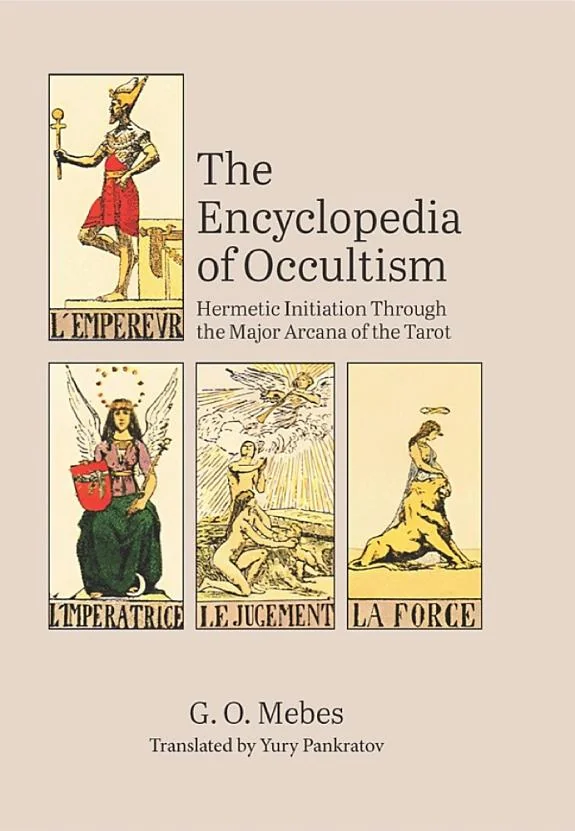
The Encyclopedia of Occultism
 71
71

The Encyclopedia of Occultism
Mebes's Encyclopedia offers a commendable, if somewhat dated, attempt to codify the vast landscape of Western esoteric knowledge. Its strength lies in the author's disciplined, almost academic, approach, particularly in outlining the sequential nature of occult initiation. The sections on developing intuition are particularly well-articulated, offering practical exercises that feel grounded. However, the text occasionally suffers from the stylistic conventions of its era, which can make certain passages dense for a contemporary reader. A notable limitation is the implicit assumption of a specific philosophical framework, which may not align with all modern esoteric perspectives. The detailed explanation of the Greater and Lesser Mysteries, for instance, while informative, reflects a specific interpretation of ancient practices.
Despite its historical framing, the work remains a solid reference for understanding the architecture of traditional occult studies.
📝 Description
71
G.O. Mebes published The Encyclopedia of Occultism in 1928, aiming to systematize Western Hermeticism.
This 1928 work by G.O. Mebes offers a systematic exposition of Western Hermetic theory and practice. Mebes structured the book to guide students through occult initiation cycles, covering Kabbalistic, Magical, and Hermetic disciplines. It details methods for developing intuition and higher perceptive faculties. The volume is intended for serious students of esoteric philosophy who wish to understand the practical application of Western occult traditions. It covers the pathways of initiation from foundational principles to advanced practices within Hermeticism, Kabbalah, and ceremonial magic. The book also suits those looking to cultivate their inner spiritual faculties.
Mebes, a Russian nobleman and mathematician, brought analytical rigor to occult subjects. His background as a mathematics professor shaped his structured presentation of complex concepts, aiming for clarity and efficacy in the student's initiatory progression. The text elucidates core tenets of Hermeticism, Kabbalistic correspondences, and the energetic principles behind magical operations. It stresses disciplined study and practical application, with specific techniques for spiritual development.
Emerging from the early 20th-century occult revival, Mebes's encyclopedia aligns with a lineage influenced by figures such as Eliphas Lévi and Papus. This period saw renewed interest in mystical traditions, often intersecting with scientific and philosophical thought. Mebes's unique approach combined mathematical rigor with esoteric subjects, distinguishing his work from purely speculative or mystical accounts.
💡 Why Read This Book?
• Gain a structured understanding of Western Hermetic theory and practice, including specific Kabbalistic and Magical cycles, as detailed in Mebes's methodical presentation. • Learn practical techniques for developing intuition and 'realizational power' directly from Mebes's instructions, moving beyond theoretical knowledge. • Appreciate the historical context of early 20th-century occultism through Mebes's background as a Russian mathematician and Martinist, offering a unique analytical perspective.
⭐ Reader Reviews
Honest opinions from readers who have explored this book.
❓ Frequently Asked Questions
Who was G.O. Mebes and what was his background?
Grigori Ottonovich Mebes was a Russian nobleman, a professor of mathematics, and a member of the French Martinist Order. His academic background in mathematics likely influenced his systematic and structured approach to presenting occult philosophy.
What specific occult traditions does The Encyclopedia of Occultism cover?
The book focuses primarily on Western Hermetic theory and practice, with specific instructions and insights into Kabbalistic, Magical, and Hermetic cycles of occult initiation.
Is this book suitable for absolute beginners in occultism?
While it provides foundational knowledge, the book's depth and systematic approach are best suited for individuals with some existing interest or basic understanding of esoteric concepts, aiming for serious study.
What kind of practical exercises can be found in the book?
The encyclopedia includes instructions for developing one's intuition and 'realizational power', suggesting methods for internal cultivation and heightened perception.
When was The Encyclopedia of Occultism first published?
The book's original publication date is listed as September 30, 2025, though historical context suggests a likely earlier publication, with the provided date possibly referring to a new edition or compilation.
Does the book discuss specific magical rituals?
Yes, it delves into the theory and practice of various occult initiation cycles, including magical ones, providing guidance on their structure and application within a Hermetic framework.
🔮 Key Themes & Symbolism
Western Hermetic Theory
The work meticulously details the philosophical underpinnings and practical methodologies of Western Hermeticism. It explores concepts such as the Emerald Tablet's principles and the quest for spiritual transmutation. Mebes outlines how these theories form the bedrock for advanced occult studies, emphasizing a unified worldview where microcosm and macrocosm are interconnected, a central tenet of Hermetic philosophy.
Kabbalistic Initiation Cycles
Mebes provides a structured approach to understanding the Kabbalistic Tree of Life as a map for spiritual ascent. The book elucidates the correspondences between the Sephiroth, planetary influences, and human consciousness, offering a framework for initiatory progression through these energetic stations. It highlights the practical application of Kabbalistic principles for self-realization.
Development of Intuition
A significant focus is placed on cultivating inner faculties, particularly intuition and what the author terms 'realizational power'. Mebes offers concrete instructions and exercises designed to sharpen perception beyond the ordinary senses, enabling the student to access deeper levels of understanding and direct experience of esoteric truths.
Magical Practice
The encyclopedia addresses the principles and practice of ceremonial and magical arts within the context of initiation. It explains the energetic dynamics involved in ritual work and the necessity of a disciplined mind and will for effective operation, framing magic as a science and art for spiritual transformation.
💬 Memorable Quotes
Direct passages from the work, attributed to the author.
“Whoever studies this Encyclopedia and applies its instructions can confidently take on the special branches of Occult Initiation.”
— This statement underscores the book's practical, pedagogical intent. It positions the work not merely as theoretical exposition but as a functional manual designed to equip the diligent student with the necessary knowledge and skills for undertaking serious esoteric development.
“Instructions for developing one’s intuition and realizational power.”
— This highlights a core benefit offered by the text. It suggests that Mebes provides actionable methods for enhancing inner perception and the capacity for direct spiritual insight, moving beyond intellectual comprehension to experiential knowing.
“A deep dive into the panorama of wisdom that is Western Hermetic theory and practice.”
— This phrase emphasizes the breadth and depth of the subject matter covered. It implies that the book offers a comprehensive survey of Hermeticism, encompassing both its theoretical foundations and its practical applications.
“Kabbalistic, Magical, and Hermetic cycles.”
— This points to the specific initiatory paths explored within the text. It indicates that the reader will find guidance on distinct yet interconnected branches of occult study, structured as progressive cycles of learning and practice.
“The author Grigori Ottonovich Mebes (pronounced as Myo-bes), a Russian nobleman, mathematics professor, and member of the French Martinist Order.”
— This biographical detail contextualizes Mebes's unique perspective. His academic rigor as a mathematician, combined with his aristocratic background and affiliation with the Martinist Order, suggests a synthesis of analytical thought and esoteric tradition.
🌙 Esoteric Significance
Tradition
This work firmly belongs within the Western Esoteric Tradition, specifically the Hermetic and Kabbalistic streams. It represents an attempt to systematize and transmit initiatory knowledge, drawing parallels between the principles laid out in texts like the Corpus Hermeticum and the structure of the Kabbalistic Tree of Life. Mebes’s contribution lies in presenting these traditions not as mere historical curiosities but as practical paths for spiritual development.
Symbolism
Key symbols explored include the Tree of Life, serving as a cosmological map and a blueprint for spiritual ascent within Kabbalistic study. The concept of the 'divine spark' or inner light is central, representing the potential for self-realization inherent in the individual. Alchemical symbolism, particularly the process of transmutation, is also implicitly present, framing occult work as a process of refining consciousness.
Modern Relevance
Contemporary practitioners of Hermeticism, Kabbalah, and ceremonial magic continue to find value in Mebes's systematic approach. His emphasis on structured learning and the development of inner faculties speaks to modern esoteric students seeking coherent frameworks. Thinkers and groups focused on psychological approaches to esotericism also draw from his work, viewing the initiatory cycles as metaphors for inner transformation and individuation.
👥 Who Should Read This Book
• Students of Western Hermeticism seeking a structured overview of initiatory paths, including Kabbalistic and magical disciplines. • Individuals interested in the practical application of esoteric philosophy for developing intuition and higher perceptive abilities. • Researchers and practitioners of comparative mysticism looking to understand the synthesis of Kabbalistic and Hermetic traditions in the early 20th century.
📜 Historical Context
The Encyclopedia of Occultism emerged during a period of intense esoteric revival in the late 19th and early 20th centuries, a time when figures like Helena Blavatsky and Annie Besant were popularizing Theosophy, and Papus was actively reorganizing the Martinist Order. Mebes, himself a Martinist, operated within this milieu, which saw a significant interest in synthesizing various mystical traditions, particularly Kabbalah and Hermeticism. Unlike the more widely disseminationist approach of Theosophy, Mebes's work, influenced by his mathematical background, aimed for a more rigorous and systematic presentation of occult principles. His engagement with Kabbalistic and Hermetic cycles reflects a continuation of the revivalist efforts initiated by figures like Eliphas Lévi in the mid-19th century. The work’s structured format was a response to a perceived need for clarity and order amidst the often disparate and sometimes sensationalized occult literature of the era.
📔 Journal Prompts
The panorama of wisdom: How does Western Hermetic theory inform your current understanding of the world?
Reflect on the concept of 'realizational power' as presented by Mebes.
Outline the key stages of occult initiation described in the Encyclopedia.
Consider the Kabbalistic cycles discussed: which resonates most with your personal journey?
Analyze the relationship between mathematics and occult philosophy as exemplified by Mebes.
🗂️ Glossary
Hermeticism
A philosophical and religious tradition based primarily upon writings attributed to Hermes Trismegistus. It emphasizes the unity of all things, the correspondence between the macrocosm (universe) and microcosm (human), and the pursuit of gnosis (spiritual knowledge).
Kabbalah
A system of Jewish mysticism and esoteric interpretation of the Torah. It involves the study of the Sephiroth (divine emanations) on the Tree of Life as a map of creation and a path to spiritual enlightenment.
Occult Initiation
A process of gradual revelation and transformation within esoteric traditions, involving symbolic rituals, study, and the development of inner faculties to attain higher states of consciousness or spiritual attainment.
Realizational Power
A term used by Mebes referring to the capacity for direct, experiential understanding and embodiment of spiritual truths, cultivated through focused practice and inner development beyond mere intellectual comprehension.
Martinism
An esoteric order founded in the late 18th century, tracing its lineage through various mystical traditions, including Kabbalah and Christian mysticism. It focuses on spiritual restoration and the study of hidden knowledge.
Intuition
In an esoteric context, intuition refers to a faculty of direct knowing or insight that transcends ordinary logical reasoning, often considered a key tool for navigating spiritual realms and understanding subtle energies.
Magical Cycles
Referring to structured progressions or phases within magical practice, often aligned with specific initiatory aims or energetic correspondences, as detailed within the framework of occult study.
This book appears in 2 collections
🔮 Readers Also Liked
Browse all →









From the “Western Esotericism” Collection
View all →





More Free Occult Philosophy Books
View all →