Lost secrets of the gods
 73
73

Lost secrets of the gods
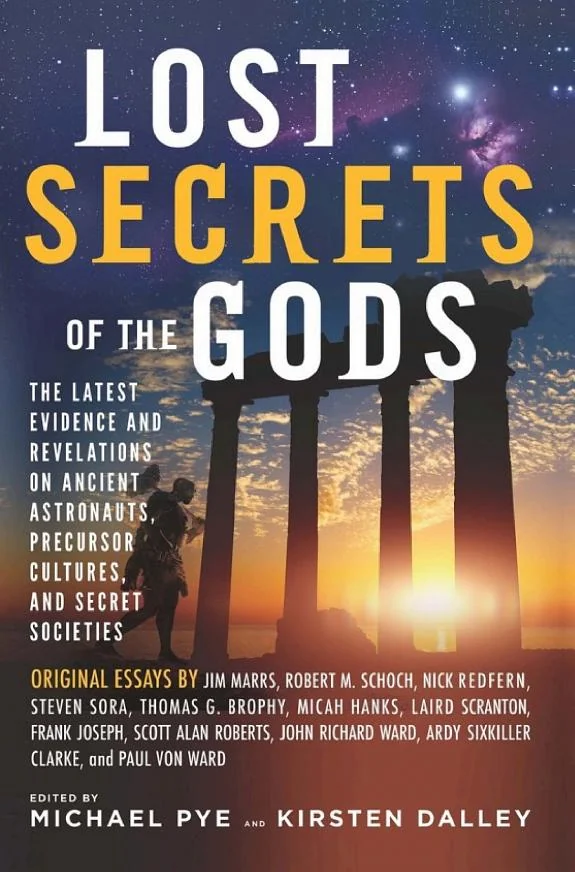
Pye and Dalley’s "Lost Secrets of the Gods" offers a rigorous deconstruction of Gnostic cosmology, moving beyond sensationalist interpretations to present a scholarly framework. The strength of the work lies in its meticulous examination of primary sources, particularly the Nag Hammadi codices, to trace the lineage of divine concepts. A notable passage discusses the intricate hierarchy of aeons within the Pleroma, demonstrating how these spiritual emanations functioned in Gnostic thought. However, the book's academic density can be a barrier for readers not well-versed in patristic literature or Hellenistic philosophy. Its focus remains tightly on theological and cosmological structures, with less emphasis on the lived experience or social implications of Gnosticism. The authors’ interpretation of the Archons as cosmic jailers, while standard, could have benefited from exploring more nuanced views on their function. This is a valuable resource for specialists, providing a clear, albeit dense, overview of Gnostic metaphysics.
📝 Description
73
Michael Pye and Kirsten Dalley's 2014 work, Lost Secrets of the Gods, examines early Christian and Gnostic interpretations of divinity.
Published in 2014, Lost Secrets of the Gods by Michael Pye and Kirsten Dalley offers an academic look at how early Christians and Gnostics understood divine beings. The authors investigate ancient texts that were not included in the Bible, showing how these writings described gods and their relationships with people. They trace the development of ideas about spiritual beings like aeons and archons, and the nature of the divine as it was seen by groups before the Council of Nicaea.
The book concentrates on Gnostic beliefs about a complex hierarchy of spiritual levels that came from a supreme, hidden God. It looks into the philosophical roots of these systems, finding links to earlier Greek traditions. Pye and Dalley analyze important Gnostic writings, such as those found in the Nag Hammadi library, to shed light on these often misunderstood religious movements. Their study aims to clarify the historical and intellectual background of early esoteric Christianity.
This book situates itself within the study of Gnosticism, a diverse set of religious and philosophical movements that flourished in the early centuries CE. Gnosticism often presented a dualistic worldview, positing a flawed creator god and a higher, true God from whom emanations (aeons) descended. Its adherents sought salvation through gnosis, or direct, intuitive knowledge of the divine. Lost Secrets of the Gods examines how these ideas contrasted with and developed alongside early orthodox Christianity, drawing on primary texts to understand their unique systems of belief and cosmology.
💡 Why Read This Book?
• Gain an understanding of the Pleroma, the Gnostic divine totality, and its constituent Aeons, offering a perspective on spiritual emanations distinct from mainstream Abrahamic theology, as detailed in the book's exploration of Gnostic cosmologies. • Grasp the role of Archons and the Demiurge in Gnostic thought, learning how these figures represent cosmic forces that shape the material world and impede spiritual ascent, a concept central to the book's analysis of Gnostic cosmology. • Explore the concept of Gnosis, or direct spiritual knowledge, as the primary means of salvation in Gnostic traditions, understanding its significance as presented through the lens of early Christian heterodoxies examined in the text.
⭐ Reader Reviews
Honest opinions from readers who have explored this book.
❓ Frequently Asked Questions
What is the primary focus of 'Lost Secrets of the Gods'?
The book primarily focuses on the theological and cosmological systems of early Gnostic movements, particularly their interpretations of divinity, the spiritual realm (Pleroma), and the nature of creation, drawing heavily on texts discovered from the mid-20th century onwards.
Which ancient texts are central to the research in this book?
Key texts include those found in the Nag Hammadi library, such as the Gospel of Thomas and the Apocryphon of John, which provide direct insight into Gnostic beliefs and myths that are not present in the canonical Bible.
How does the book differentiate Gnostic ideas from orthodox Christianity?
It highlights key divergences, such as the Gnostic concept of a flawed Demiurge as creator of the material world (contrasting with the orthodox benevolent God) and the emphasis on 'gnosis' for salvation rather than faith or works alone.
What is the 'Pleroma' according to the authors?
The Pleroma is presented as the totality of divine powers and emanations, the spiritual realm originating from the supreme, unknowable God, which Gnostic systems describe in intricate detail.
Are the 'Archons' depicted as evil in the book?
The book generally depicts Archons as rulers of the material cosmos who, often ignorant of the higher spiritual realm, can obstruct humanity's path to salvation or 'gnosis', though their role is explored with academic nuance.
Who are the authors Michael Pye and Kirsten Dalley?
Michael Pye was a professor of religious studies specializing in early Christianity and Gnosticism. Kirsten Dalley is also a scholar in the field of religious studies, contributing to the academic understanding of ancient esoteric traditions.
🔮 Key Themes & Symbolism
Gnostic Cosmology
The book meticulously reconstructs the complex Gnostic understanding of the cosmos, positing a divine realm (Pleroma) populated by emanations called Aeons. It details how this spiritual totality contrasts with a flawed material world, often created by a lesser deity known as the Demiurge. The work emphasizes the hierarchical structures and intricate relationships within the Pleroma, offering a counter-narrative to prevailing early Christian doctrines. This cosmology serves as the framework for understanding the Gnostic view of humanity's spiritual predicament and the path to liberation through knowledge.
The Nature of Divinity
Central to the book is the Gnostic conception of the ultimate God as transcendent, unknowable, and utterly separate from the material creation. This supreme being is understood to have emanated lesser divine beings, or Aeons, who collectively form the Pleroma. The text examines how this radical distinction between the true God and the creator of the material world (the Demiurge) shaped Gnostic theology. It explores the diverse ways different Gnostic schools articulated the nature of these divine emanations and their relationship to humanity's spiritual essence.
Archons and the Material World
Pye and Dalley analyze the role of Archons, often depicted as cosmic rulers or intermediaries who govern the material universe. These figures are frequently portrayed as ignorant or even hostile to the divine spark within humanity, acting as gatekeepers or jailers of the soul. The book investigates the Gnostic view that the material world is a prison designed by these Archons and the Demiurge, intended to keep humanity unaware of its divine origins. Understanding the Archons is crucial to grasping the Gnostic emphasis on escaping the material realm through spiritual insight.
Gnosis as Liberation
The core of Gnostic salvation lies in 'gnosis' – direct, intuitive, and experiential knowledge of the divine. 'Lost Secrets of the Gods' explains that this knowledge awakens the trapped divine spark within individuals, allowing them to recognize their true origin and ascend back to the Pleroma. The book contrasts this path of esoteric knowledge with the faith-based or ritualistic paths of more orthodox religions of the era, highlighting Gnosticism's unique approach to spiritual liberation.
💬 Memorable Quotes
Direct passages from the work, attributed to the author.
“The Pleroma is the totality of the divine powers, a spiritual area of emanations.”
— This highlights the Gnostic concept of a complex, layered spiritual universe, distinct from a singular, anthropomorphic deity. It points to an intricate divine structure where 'powers' are not just abstract forces but entities within a cosmic system.
“Archons sought to keep humanity ignorant of its divine origins.”
— This interpretation underscores the Gnostic belief in cosmic forces actively working against spiritual awakening. It frames the material world as a controlled environment designed to obscure truth and prevent souls from returning to their divine source.
“Gnosis offers a path of liberation from the material prison.”
— This emphasizes the salvific power of knowledge in Gnosticism. It suggests that true freedom is not achieved through external means but through internal realization and the attainment of secret, spiritual understanding.
“The Demiurge, creator of this world, was often seen as inferior to the true God.”
— This points to a fundamental Gnostic dualism, separating the flawed material creator from a perfect, transcendent divine principle. It challenges the traditional attribution of creation to an all-good God, introducing a more complex theological dichotomy.
“Aeons are divine emanations within the spiritual fullness.”
— This defines the basic building blocks of the Gnostic divine realm. It explains that the 'gods' are not independent beings but expressions or extensions of a singular, ultimate divine source, existing in a state of spiritual completeness.
🌙 Esoteric Significance
Tradition
This work fits within the academic study of Gnosticism, a complex spiritual and philosophical tradition that emerged in the early centuries CE, often considered a significant branch of esoteric thought. While not a practitioner's manual, it clarifies the intricate cosmologies and soteriological paths characteristic of Gnostic systems, which have influenced later Western esoteric movements like Hermeticism and certain strains of Renaissance esotericism.
Symbolism
Key symbols explored include the "Pleroma," representing the divine fullness and spiritual totality; "Aeons," the emanations of the supreme God that populate this realm; and the "Archons," often depicted as rulers of the material cosmos who obscure divine truth. The "Demiurge" symbolizes a flawed creator, distinct from the ultimate God. These symbols articulate a worldview where the material is secondary and liberation comes through understanding.
Modern Relevance
Contemporary thinkers and practitioners interested in non-dualistic philosophies, the nature of consciousness, and critiques of materialist worldviews often draw upon Gnostic concepts. Schools exploring consciousness studies, depth psychology, and certain forms of modern esotericism find resonance in the Gnostic emphasis on inner knowledge ('gnosis') and the idea of a divine spark trapped within the mundane.
👥 Who Should Read This Book
• Students of Comparative Religion: Those examining the diverse field of early religious movements will find a clear exposition of Gnostic beliefs that diverged from nascent orthodox Christianity. • Researchers of Esoteric Traditions: Scholars and practitioners interested in the roots of Western esotericism will gain insight into foundational Gnostic cosmologies and concepts that influenced later traditions. • Readers of Ancient Philosophy: Individuals studying Hellenistic and Neoplatonic thought will appreciate the book's analysis of Gnostic philosophical underpinnings and its engagement with contemporary intellectual currents.
📜 Historical Context
Published in 2014, "Lost Secrets of the Gods" emerged in an academic landscape significantly shaped by the 1945 discovery of the Nag Hammadi library. This find revolutionized the study of Gnosticism, providing primary sources that moved beyond the often-hostile accounts of orthodox Church Fathers like Irenaeus. The book engages with scholars like Elaine Pagels, whose work in the late 20th century popularized Gnostic studies. The era in which Gnosticism flourished, roughly the 2nd and 3rd centuries CE, was a period of intense religious syncretism and philosophical inquiry in the Roman Empire. Competing schools of thought included Stoicism, Platonism, and various mystery cults, all of which influenced or were influenced by Gnostic ideas. The reception of Gnostic texts was largely one of suppression by the emerging orthodox Christian establishment, making scholarly reconstruction a challenging but vital task.
📔 Journal Prompts
The Pleroma as a conceptual framework for understanding divine totality.
Reflecting on the Archons' role in maintaining ignorance.
The implications of the Demiurge for understanding creation narratives.
How the concept of Gnosis relates to personal spiritual realization.
Comparing the Gnostic Aeons with other divine hierarchies in mythology.
🗂️ Glossary
Pleroma
In Gnostic cosmology, the totality of divine powers and emanations originating from the supreme, unknowable God. It represents the spiritual realm or fullness.
Aeons
Divine beings or emanations that populate the Pleroma in Gnostic systems. They represent various aspects or powers of the supreme God.
Archons
Cosmic rulers or intermediaries in Gnostic thought, often depicted as governing the material world and obstructing humanity's path to spiritual liberation.
Demiurge
A creator deity in Gnostic philosophy, often identified with the God of the Old Testament, responsible for the flawed material universe and distinct from the supreme, transcendent God.
Gnosis
Direct, intuitive, and experiential knowledge of the divine. In Gnosticism, it is the key to spiritual awakening, liberation, and salvation.
Nag Hammadi Library
A collection of Gnostic and early Christian texts discovered in Egypt in 1945, providing crucial primary source material for understanding these traditions.
Soteriology
The doctrine of salvation. In Gnosticism, salvation is typically achieved through the attainment of gnosis.
🔮 Readers Also Liked
Browse all →









More by Michael Pye, Kirsten Dalley
All books →


More Free Occult Philosophy Books
View all →