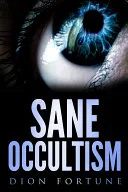
Sane Occultism
 76
76

Sane Occultism
Dion Fortune’s "Sane Occultism" offers a much-needed dose of critical thinking to the often-unfettered world of esoteric exploration. Rather than dismissing the occult, Fortune, writing in the early 20th century, champions a disciplined, psychologically sound approach. Her strength lies in her ability to articulate complex ideas with clarity, grounding them in a framework of personal responsibility and mental hygiene. The chapter on "Meditation and Psychism" is particularly valuable, differentiating genuine psychic development from mere hallucination or wishful thinking.
A limitation, however, is the inherent subjectivity when discussing concepts like past lives or group karma; while Fortune presents them logically, empirical verification remains elusive for the skeptical reader. Nevertheless, her insistence on ethical conduct and mental balance as foundational to occult practice provides a robust counterpoint to more reckless esoteric trends. The book serves as a vital reminder that the path of occultism is not a flight from reality but an engagement with its deeper, often challenging, dimensions.
📝 Description
76
Dion Fortune published "Sane Occultism" in 1930, advocating for a disciplined, rational approach to the esoteric.
Published in 1930, Dion Fortune's "Sane Occultism" argues that occult study requires intellectual rigor and ethical consideration, not mere superstition. Fortune posits the existence of psychic phenomena and a deeper reality but warns against uncritical acceptance or sensationalism. She stresses that genuine occultism depends on a balanced mind and a grounded perspective, differentiating it from delusion. This work is suited for individuals curious about psychic phenomena, astrology, or past lives who are wary of fringe beliefs.
Students of Western Esotericism, especially those interested in the Golden Dawn tradition, will find Fortune’s practical and ethical framework useful. The book is also for practitioners seeking to understand the psychological and ethical foundations of their work, ensuring a healthy engagement with advanced spiritual disciplines. Fortune, a trained psychoanalyst, aimed to introduce psychological and ethical clarity to discussions often marked by sensationalism and credulity during the early 20th century's occult revival.
Emerging in the wake of World War I, a period of heightened interest in spiritualism, "Sane Occultism" addressed a public appetite for mystical experience that often led to credulity. Dion Fortune, working within the milieu of early 20th-century esoteric societies, sought to counter sensationalism with a psychoanalytically informed perspective. Her approach distinguished itself from more flamboyant occult expressions, emphasizing grounded practice and mental discipline within traditions like the Golden Dawn.
💡 Why Read This Book?
• You will learn to distinguish between genuine psychic phenomena and self-deception by examining Fortune's criteria for "Meditation and Psychism," a concept central to her approach to psychic development. • You will gain a framework for ethical engagement with esoteric disciplines by understanding Fortune's discussions on "Authority and Obedience in Occultism," providing guidance for navigating spiritual hierarchies. • You will develop a critical lens for evaluating occult claims through Fortune's analysis of "Credulity in Occult Research," equipping you to discern valid information from misinformation.
⭐ Reader Reviews
Honest opinions from readers who have explored this book.
❓ Frequently Asked Questions
What is Dion Fortune's definition of occultism in 'Sane Occultism'?
Dion Fortune defines occultism not as mere superstition, but as a field of study and practice requiring intellectual discipline and ethical consideration, focusing on a deeper reality accessible through balanced psychic development.
What is the significance of 'sane' in the book's title?
The 'sane' aspect highlights Fortune's emphasis on psychological balance, mental hygiene, and rational inquiry as essential prerequisites for engaging with occult practices, contrasting with uncritical or pathological approaches.
When was 'Sane Occultism' originally published?
Dion Fortune's 'Sane Occultism' was first published in 1930, a period marked by widespread interest in spiritualism and the occult.
Does the book discuss specific occult societies?
Yes, the work explores concepts like 'Group Karma In Occult Societies' and 'Secrecy In Occult Fraternities,' discussing the dynamics and ethical considerations within such groups.
What is Fortune's stance on astrology in 'Sane Occultism'?
Fortune addresses 'The Use And Abuse Of Astrology,' advocating for its responsible application as a tool for self-understanding and psychological insight, rather than for deterministic prophecy.
What are some of the dangers of occultism discussed?
Fortune warns against 'Psychic Pathologies' and 'Mental Trespassing,' emphasizing the importance of maintaining mental health and ethical boundaries to avoid psychological harm or spiritual corruption.
🔮 Key Themes & Symbolism
Psychic Hygiene and Balance
Fortune posits that effective occult practice hinges on mental and emotional equilibrium. She scrutinizes 'Meditation and Psychism,' differentiating between genuine spiritual insight and mere psychic delusion or 'Psychic Pathologies.' This theme underscores the necessity of a stable psyche for navigating deeper realities, warning against the dangers of 'Mental Trespassing' and advocating for rigorous self-awareness to prevent psychological fragmentation. The work insists that the occultist must be grounded in reality before attempting to explore beyond it.
Ethical Framework for Esotericism
A central tenet of 'Sane Occultism' is the imperative of ethical conduct within esoteric disciplines. Fortune addresses the responsibilities inherent in occult study, particularly concerning "Authority and Obedience In Occultism" and the role of "Secrecy In Occult Fraternities." She critically examines the potential for misuse of occult knowledge and power, including the controversial "Left-Hand Path" and its relation to "Occultism And Immorality." This theme champions a moral compass as indispensable for any genuine spiritual progression.
Rational Investigation of the Occult
Fortune challenges the prevalent credulity surrounding occult phenomena in her era. In "Credulity In Occult Research," she advocates for a discerning and critical approach, urging practitioners to apply logic and psychological understanding. She examines tools like Astrology and Numerology not as mystical dogma, but as systems with potential for insight when used responsibly. The work encourages a balanced perspective, seeking to explain the occult through reasoned inquiry rather than blind faith.
Karma and Group Dynamics
The concept of "Group Karma In Occult Societies" is explored, highlighting how individuals within a collective undertaking share karmic consequences. Fortune discusses the intricate web of relationships and responsibilities that bind members of esoteric orders. This theme examines the interconnectedness of practitioners and the impact of collective actions on individual spiritual trajectories, emphasizing that occult work often extends beyond the solitary practitioner to encompass a shared destiny.
💬 Memorable Quotes
Direct passages from the work, attributed to the author.
“Credulity is the arch-enemy of the occult researcher.”
— This statement directly addresses the need for critical thinking within esoteric studies. Fortune warns against accepting occult claims without question, emphasizing that a skeptical yet open mind is crucial for genuine discovery and avoiding self-deception.
“The occultist must be sane before he can be occult.”
— This captures Fortune's core philosophy: psychological health and mental stability are fundamental prerequisites for engaging with esoteric practices. True occultism requires a balanced mind, not one prone to delusion or pathology.
“We must not abuse the powers we are learning to control.”
— This highlights the ethical dimension of occultism. Fortune stresses the importance of moral responsibility in the use of psychic abilities or esoteric knowledge, cautioning against exploitation or harm.
“Psychism is the faculty of the soul, not of the brain.”
— This interpretation suggests that psychic abilities stem from a deeper spiritual aspect of the individual, distinct from purely physical or mental processes. It implies a connection to a subtler reality beyond the material.
“The use and abuse of astrology are two very different things.”
— This points to Fortune's nuanced view on astrological practices. She acknowledges its potential value for self-understanding but strongly cautions against its misapplication, deterministic interpretations, or reliance on charlatans.
🌙 Esoteric Significance
Tradition
Fortune's work is deeply rooted in the Western Esoteric Tradition, particularly the Hermetic and Qabalistic currents that influenced the Hermetic Order of the Golden Dawn. "Sane Occultism" functions as a bridge, translating complex Qabalistic and magical principles into a more accessible, psychologically informed framework. It departs from purely ritualistic or dogmatic interpretations by integrating psychoanalytic insights, emphasizing the inner work and ethical development of the practitioner as paramount.
Symbolism
While "Sane Occultism" is primarily philosophical, it implicitly engages with core esoteric symbolism. The concept of the 'Self' or 'Higher Self' represents the divine spark within, a recurring motif in Hermeticism. The 'path' itself is a fundamental symbol of spiritual journey and initiation, requiring balance and discernment. Fortune's discussion of 'Psychic Pathologies' can be seen as symbolic of the shadow self or lower nature that must be integrated or overcome on the path to wholeness.
Modern Relevance
Fortune's emphasis on psychological integration and ethical practice continues to resonate with contemporary esoteric practitioners and scholars. Modern psychological approaches to spirituality and the study of consciousness often echo her concerns about mental balance and responsible exploration. Thinkers and groups focused on integral spirituality, embodied cognition in esoteric practice, and the ethical dimensions of consciousness studies find her work a foundational text for understanding the psychological underpinnings of the occult.
👥 Who Should Read This Book
• Aspiring occultists and esoteric students seeking a foundational text on ethical practice and psychological preparedness. • Individuals interested in the history of Western Esotericism, particularly the early 20th-century occult revival and its intellectual currents. • Psychotherapists and counselors exploring the intersection of psychology, spirituality, and the human psyche's engagement with the unseen.
📜 Historical Context
Dion Fortune penned "Sane Occultism" in 1930, a period when the occult landscape in Britain was vibrant yet often sensationalized. Following the collective trauma of World War I, many sought solace and meaning in spiritualism, Theosophy, and various esoteric orders, including those stemming from the Hermetic Order of the Golden Dawn. Fortune, a trained psychoanalyst, sought to counter the prevailing credulity and psychological instability often associated with occult pursuits. Her work stood in contrast to more flamboyant figures like Aleister Crowley, advocating for a disciplined, psychologically grounded approach. While contemporaries like W.B. Yeats explored similar mystical themes, Fortune's emphasis on mental hygiene and ethical responsibility offered a distinct, more sober perspective within the burgeoning field of Western Esotericism.
📔 Journal Prompts
The distinction between "Meditation and Psychism" as presented by Fortune.
The ethical implications of "Authority and Obedience In Occultism" for your own spiritual path.
Analyzing "Credulity In Occult Research": what are your personal biases?
Reflecting on "Group Karma" within your own social or spiritual affiliations.
The definition and dangers of "Mental Trespassing" in daily life.
🗂️ Glossary
Occultism
The study and practice of hidden or secret knowledge, concerning the supernatural, spiritual, and paranormal, requiring disciplined inquiry and ethical consideration.
Psychism
The faculty or ability to perceive or influence through means beyond the five senses, understood by Fortune as a function of the soul rather than the brain.
Group Karma
The concept that individuals within a collective entity or society share karmic consequences resulting from their shared actions and responsibilities.
Left-Hand Path
A term in esoteric traditions referring to paths that emphasize individualism, self-deification, and sometimes transgressive practices, often contrasted with the 'Right-Hand Path' of conformity and spiritual service.
Psychic Pathologies
Mental or emotional disorders arising from or exacerbated by uncontrolled or improperly managed psychic experiences or occult practices.
Mental Trespassing
The act of intruding upon another's mental or psychic space without consent, potentially causing psychological harm or disruption.
Esotericism
Teachings or practices intended for or understood by only a small number of people with specialized knowledge or initiation, often concerning spiritual or mystical realities.